Tribal tattoos are bold black patterns pulled from indigenous marking traditions, but the distance between wearing the look and wearing the meaning has tripped up outsiders since the 1990s.
Leo Zulueta spent years in Samoa and Borneo studying the real thing before he translated its visual logic into something Western shops could use without claiming cultural genealogy.
His 1992 founding of Black Wave Tattoo in Los Angeles turned that research into a recognized art form, and the distinction he drew still holds: a hand-tapped Samoan pe’a is a genealogical record earned through weeks of ritual pain, while a machine-lined neo-tribal sleeve borrows only the shape.
Knowing which side of that line you stand on matters before the needle starts.
1. Polynesian Tattoos
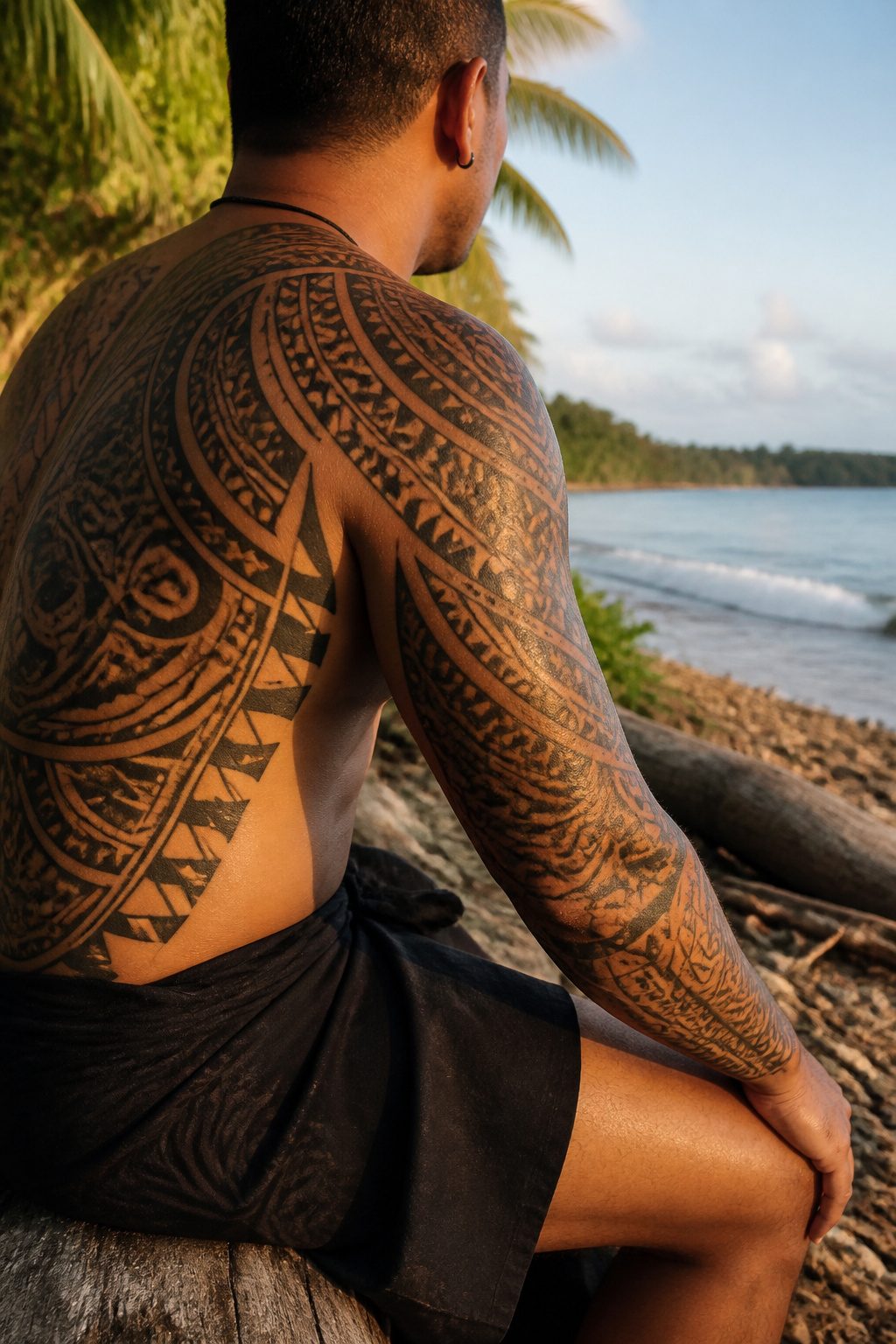
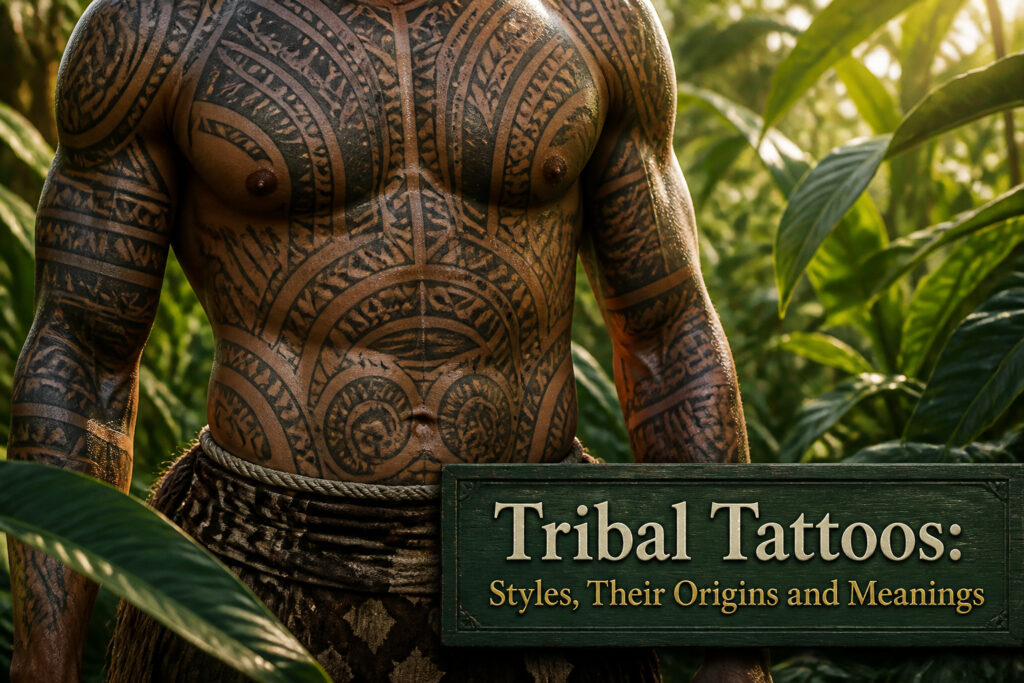
Polynesian tattoos carry some of the most intricate patterns in tribal work, with spirals, stacked squares, connected waves, and symmetrical layouts that read as bold graphic statements from across a room.
In Polynesian cultures, these designs are called tatau, and the meaning runs deeper than appearance: rank, family lineage, and personal achievements are all encoded in the placement and choice of symbols.
The traditional method involves hand-tapping with tools made from shark teeth, bones, and other natural materials, a process that takes weeks and serves as a rite of passage, particularly for the Samoan pe’a for men and malu for women.
The modern tribal style that swept Western shops in the 1990s traces directly to Leo Zulueta, who began tattooing professionally in 1981 after Don Ed Hardy encouraged him toward the profession.
Zulueta, born in 1952 and often called the father of modern tribal tattooing, researched Polynesian and Bornean traditions in the field, then translated their visual logic, solid black fills, high contrast, and repeating patterns, into compositions that honor the aesthetic without claiming specific cultural genealogy.
His 1992 founding of Black Wave Tattoo in Los Angeles helped establish neo-tribal as a legitimate art-historical branch rather than costume.
2. Māori Ta Moko
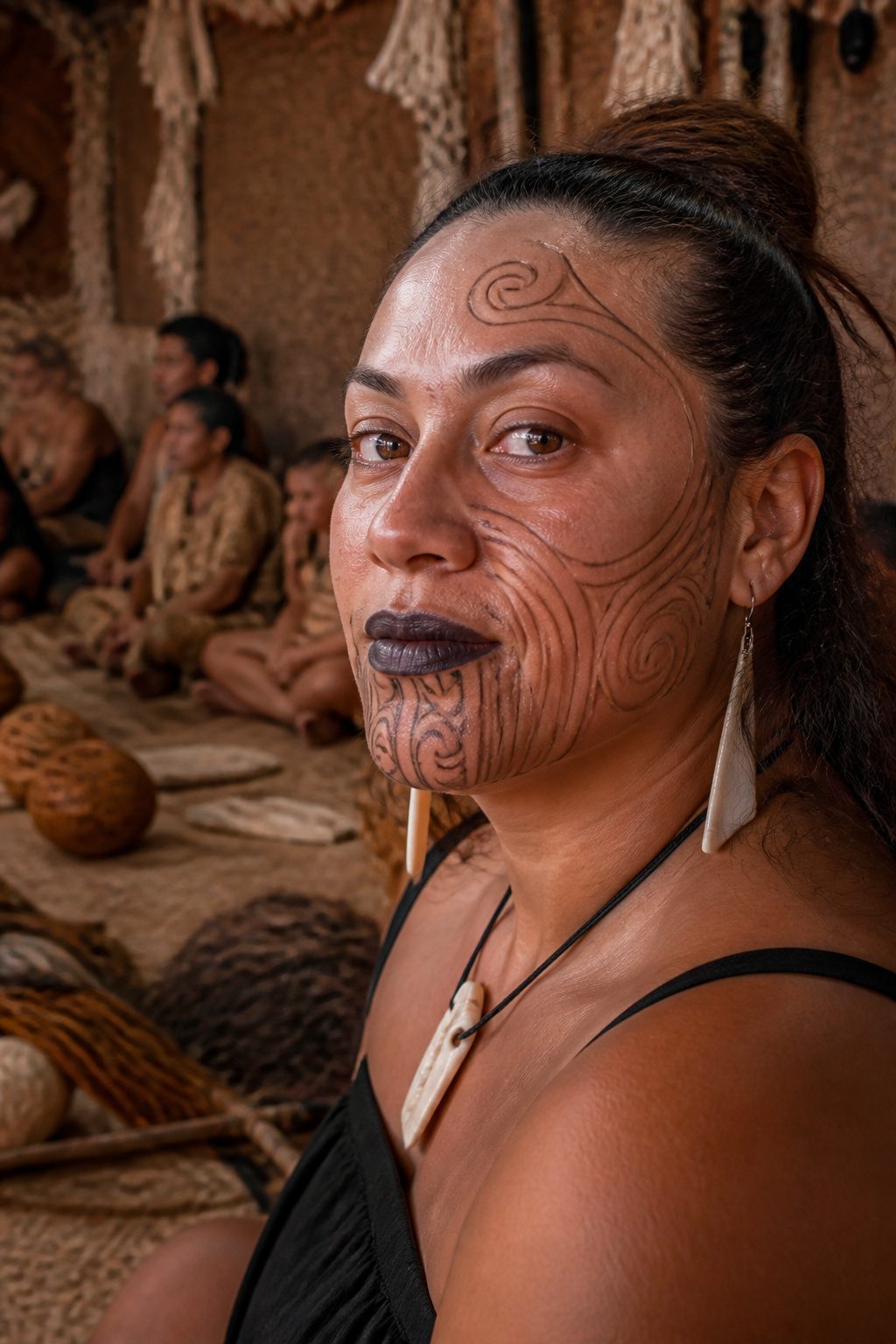
Māori ta moko sits apart from every other style in this list, and the difference is physical before it is cultural. The skin was not punctured with needles in the way most tattooing works.
A bone chisel called an uhi carved furrowed grooves into the face, and pigment was pressed into those channels afterward. That is why old moko looks carved rather than printed, and why the term "tattoo" is technically a stretch.
Those grooves hold information. Spirals and curved patterns follow the contours of the face, but they are not decorative choices.
Each placement encodes whakapapa, the wearer’s genealogy and lineage, along with rank and personal history. A trained eye reads them the way another culture reads a family crest or a written record.
The moko is tied to mana, and it is treated as tapu, sacred and restricted.
Facial moko in particular is understood by Māori and wider Polynesian commentators as closed to those without the descent and the ceremony to receive it.
Wearing it otherwise is described not as imitation but as identity theft, a strong phrase and one worth taking seriously. The culture did draw a boundary, though, and then opened a door beside it.
Kirituhi, which translates as skin writing, uses Māori visual elements but carries no genealogical or ceremonial claim. It exists precisely so that people without the whakapapa to wear true moko have a respectful option.
3. Celtic Knotwork
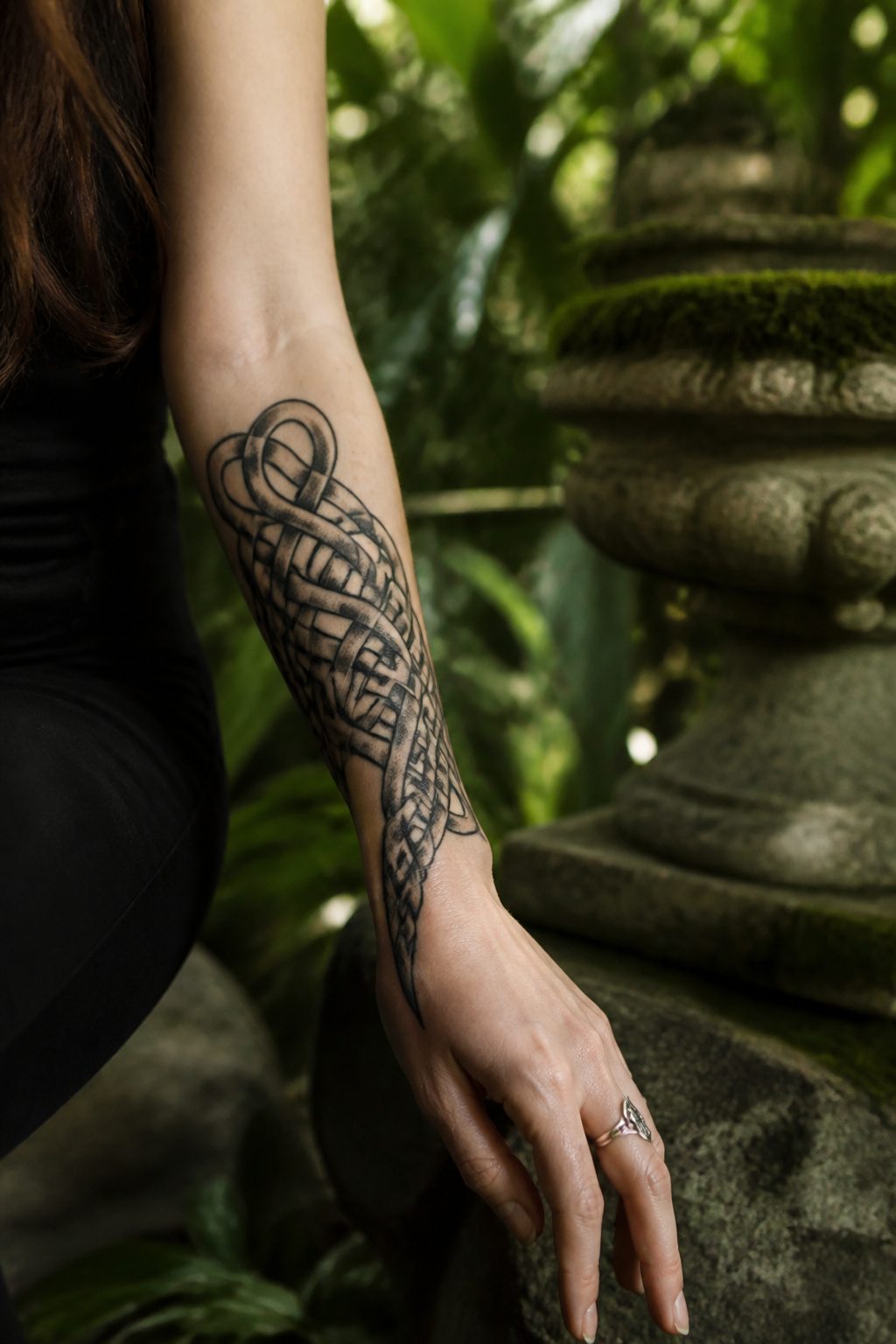
Celtic knotwork builds its meaning right into the structure: endless interwoven lines with no clear beginning or end, a visual argument for eternity and the interconnectedness of life.
The spirals work the same way, each curve opening into the next so that growth and transformation read as continuous rather than finished events.
These designs come from the ancient Celtic cultures of Ireland, Scotland, and Wales, and they still carry that regional weight.
You will see knotwork most often worked into armbands, back pieces, or larger sleeves where the pattern has room to repeat and interlock. Animals and crosses sometimes anchor the design, with the knotwork serving as connective tissue between larger elements.
The standalone option exists too, a single knot or spiral at wrist or shoulder without the full sleeve commitment. What decides the placement is how much continuity the pattern needs to read as endless rather than cropped.
4. Samoan Pe’a and Malu
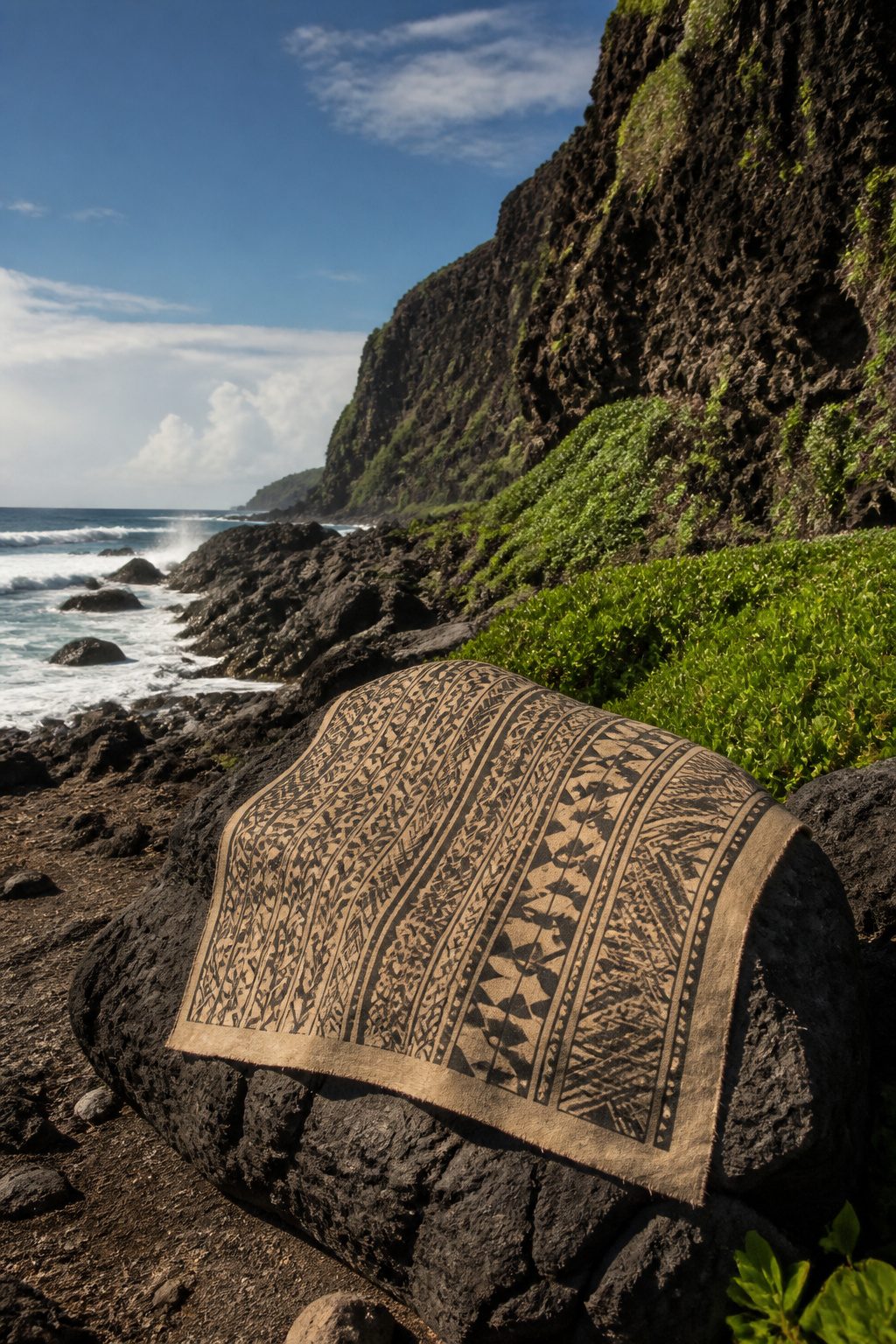
The pe’a and malu sit at the center of Samoan tattoo tradition, and the distinction between them is strict. The pe’a covers men from mid-torso to knees, a massive design earned through weeks of hand-tapping with traditional needles.
The malu, placed on women from upper thigh to behind the knee, carries equal cultural weight but marks a different social role. Both represent a rite of passage into adulthood, not decoration.
I came away from reading about this process struck by what the commitment actually means.
The sessions stretch across days or weeks, the skin stretched by assistants while the artist taps ink in with a tool of bone or boar tusk.
The pain itself is part of the meaning; finishing proves courage and earns the right to certain titles and responsibilities within the community. This is not the 1990s Western "tribal" sleeve, the kind Leo Zulueta popularized from magazine pages.
The pe’a and malu are genealogical records, spiritual protection, and social contract all at once.
What stops many outsiders is the method itself. Machine work cannot replicate the ritual or the social meaning embedded in the hand-tapped line.
A few practitioners now travel to conventions to demonstrate the technique, which has helped preserve it past the colonial era when missionaries suppressed the practice.
If you are considering Samoan design elements, the honest choice is between aesthetic reference and full cultural participation. The two are not the same thing, and the tattoo community has grown less patient with people who pretend otherwise.
5. Native American Symbols
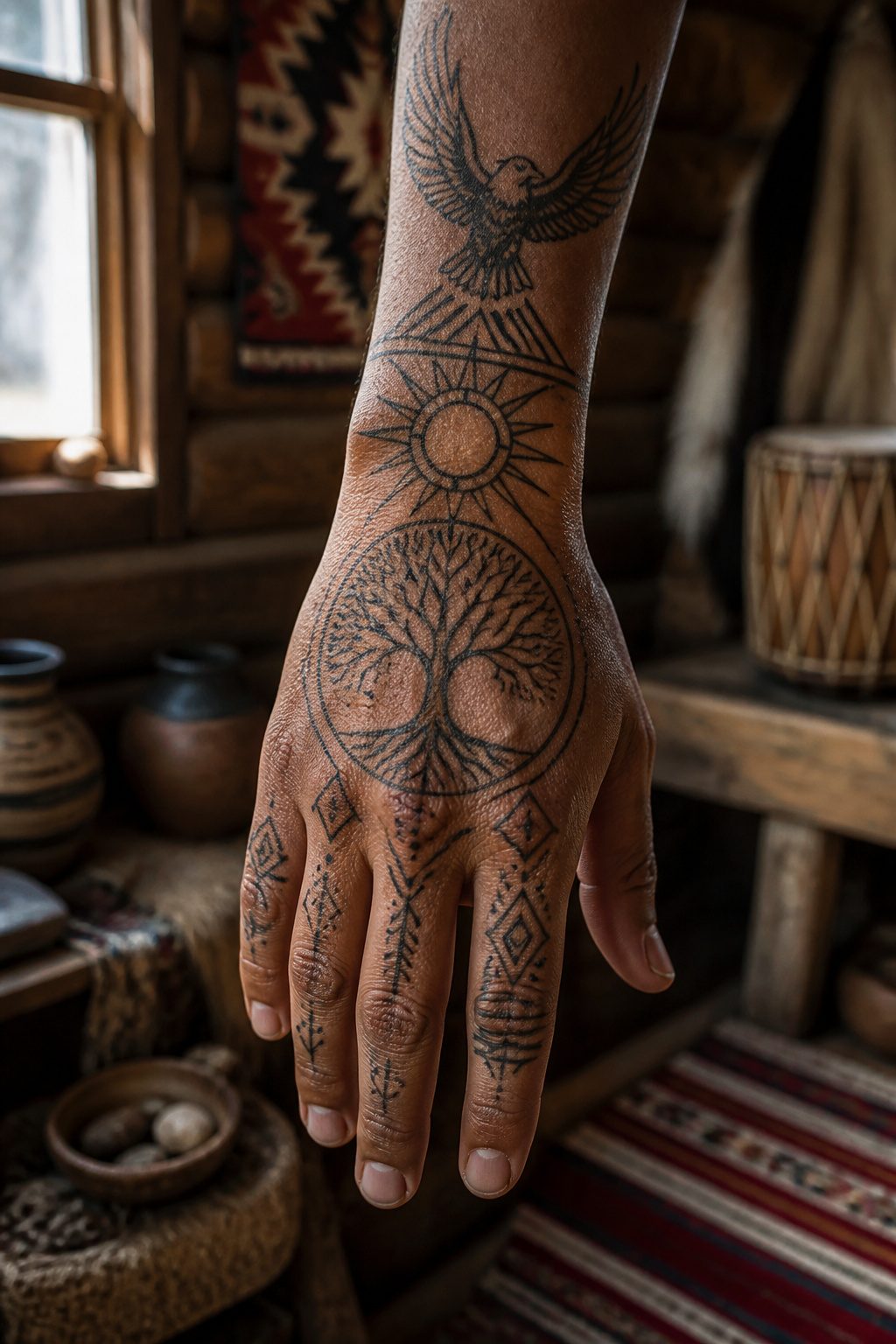
Native American tattoo traditions carry animal and celestial symbols that mark tribal identity and spiritual connection. The sun stands for life and energy, a meaning that runs through many tribal systems, not just one.
Eagle imagery signals freedom and vision in these traditions, while turtles carry their own weight in related tribal work, representing longevity and peace.
Shark teeth appear in Polynesian design as a protection symbol, strength and adaptability packed into a repeating pattern, and the same protective intent shows up in Native American geometric work even when the form differs.
Feathers tie back to birds and the freedom they represent, spirals mark growth and transformation, and the tree of life carries strength with interconnectedness.
A tribal tattoo’s meaning stays personal, reflecting the wearer’s own journey or heritage rather than a dictionary entry. The motifs overlap across cultures enough that you should know which tradition you’re drawing from before the needle starts.
6. Aztec Geometry
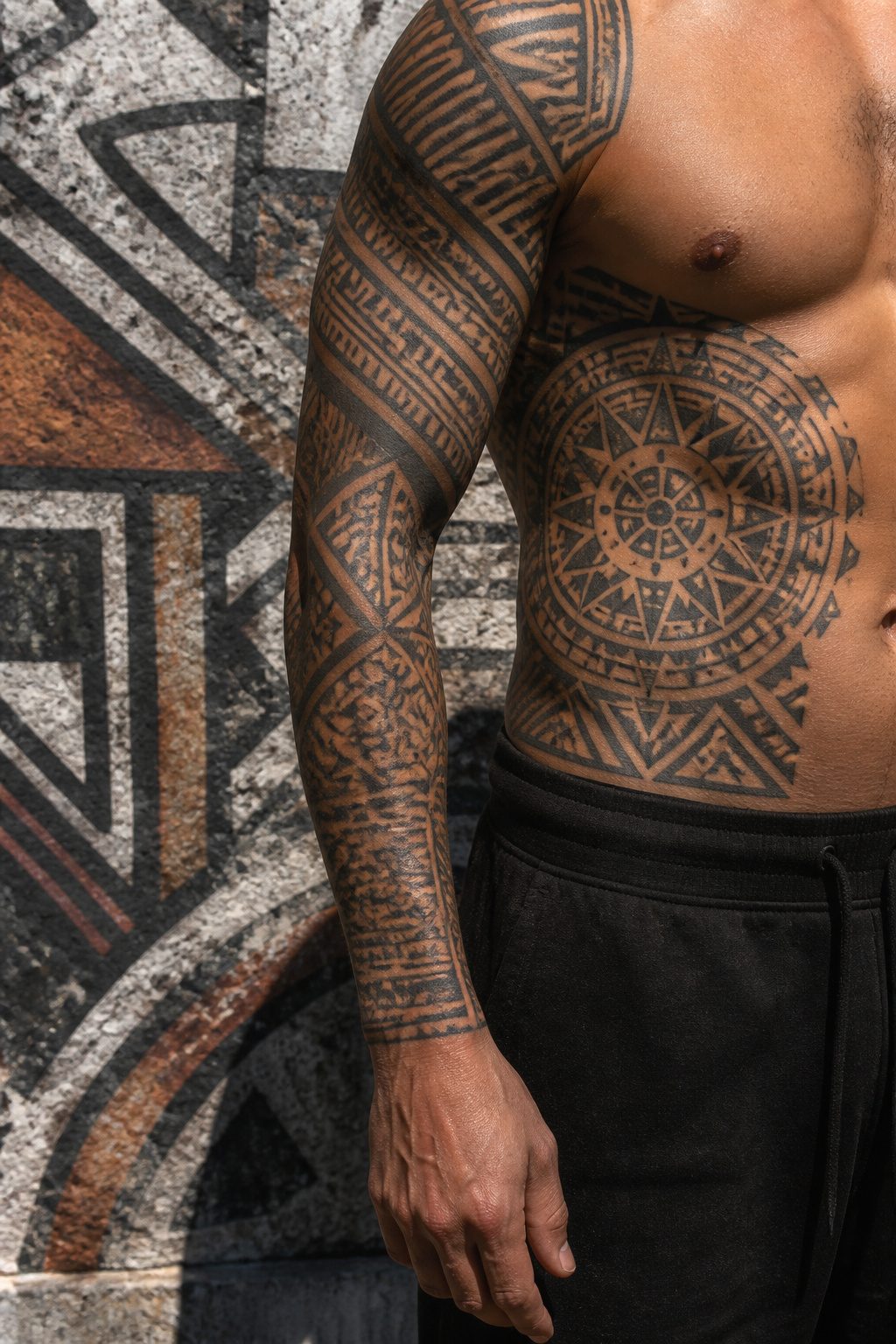
Aztec geometry sits at the center of Mesoamerican tribal tattoos in a way that feels almost architectural. The designs rely on complex geometric patterns and interlocking shapes like triangles, squares, and circles arranged in strict symmetry.
Balance matters enormously here, so a chest piece or sleeve demands advance planning to keep the composition from collapsing into visual noise.
The symbols layered inside these shapes carry specific weight. Quetzalcoatl, the feathered serpent, signals wisdom, fertility, and creation.
The sun god stands for strength and power. Eagles, jaguars, maize, and flowers fill out the visual vocabulary, each tied to deities or natural forces that governed ritual life.
Animals and earthly elements like water, earth, and plants integrate cleanly into the geometric framework rather than floating as isolated images.
What draws me to these designs, studying how they functioned, is the social and ritual context built into the pattern itself.
The stone carvings that preserve this work suggest tattooing carried similar ceremonial weight, though the exact extent of Aztec tattooing remains unknown.
The interlocking shapes create a visual system where every element reinforces the others, a density that rewards close looking and punishes careless placement.
7. African Marking Traditions
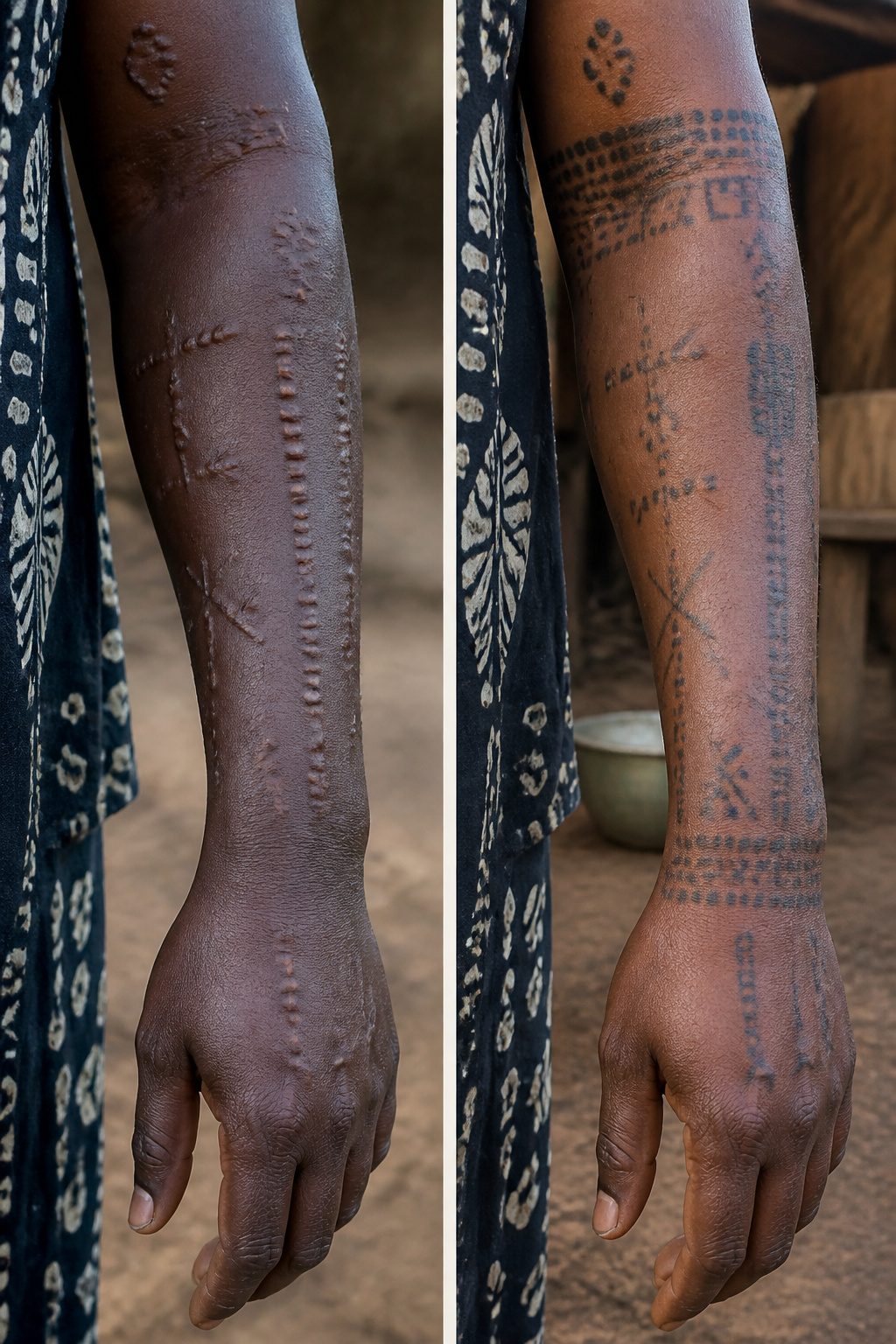
African marking traditions vary so widely that no single style defines the continent. In West Africa, Adinkra symbols carry specific weight: the Aya fern stands for endurance, while the Duafe comb from Ashanti culture speaks to feminine beauty and patience.
These geometric marks were never purely decorative. They announced clan ties, recorded proverbs, or marked a person’s station in the community hierarchy.
The line between scarification and tattooing blurs in several regional practices. Some communities used raised keloid patterns cut into skin, then rubbed with ash or dye to darken the scar.
Others applied pigment directly through puncture, closer to what modern parlors call hand-poking.
The Ndebele of Southern Africa built entire visual languages from layered geometry, where the complexity of a woman’s house paintings and her skin marks rose together with her social standing.
North African traditions absorbed Arab and European influences over centuries, producing looser, more figurative work than the rigid geometry common farther south. That regional split still matters if you are choosing a design.
A pattern pulled from Moroccan Berber heritage reads differently than one drawn from Ndebele or Ashanti sources, and mixing them without attention to origin flattens the meaning both carried.
8. Geometric Neo-Tribal
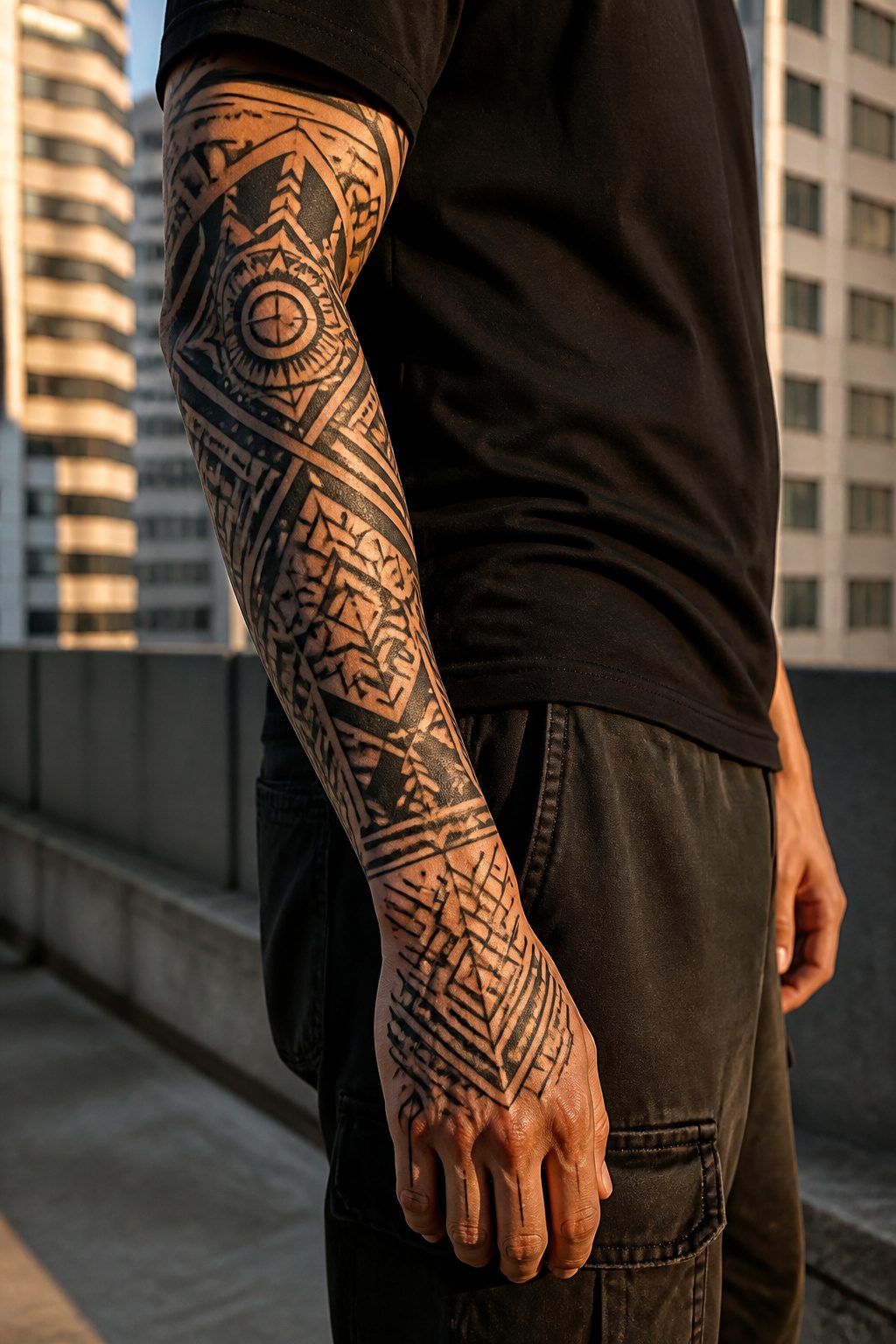
Geometric neo-tribal tattoos strip the spiritual context from traditional patterns and rebuild them as pure visual architecture.
Leo Zulueta started this approach in 1981 at his Spiral Tattoo studio, taking inspiration from Borneo, Samoa, and Fiji but deliberately removing the cultural meaning to create something new.
By the 1990s, artists like Alex Binnie in London were pushing this further, with Xed Lehead and Tomas Tomas developing the bold linework that would eventually feed into today’s geometric tattooing.
The style keeps the heavy black bands and symmetrical layouts of indigenous work, but the resemblance stops there. Contemporary artists like Thomas Hooper and Jondix work in this lineage, while others branch into even more abstract territory.
Black Symmetry pulls from psychedelic patterning; Gerhard Wiesbeck builds his compositions from electronic circuit diagrams. These offshoots, sometimes called cybersigilism or techno-tribal, share the same origin: tribal aesthetics processed through modern design rather than inherited ritual.
What separates geometric neo-tribal from the "tramp stamps" and bicep bands that watered down the look in the 2000s is intentionality.
The earlier wave chased trendiness; this one treats the form as a legitimate abstract vocabulary, customizable with color, shading, or purely monochrome precision.
The result is highly personal work that reads as tribal-influenced without claiming to be tribal itself, a distinction that matters when the alternative is wearing someone else’s sacred markings as decoration.
9. Cyber and Minimalist Styles
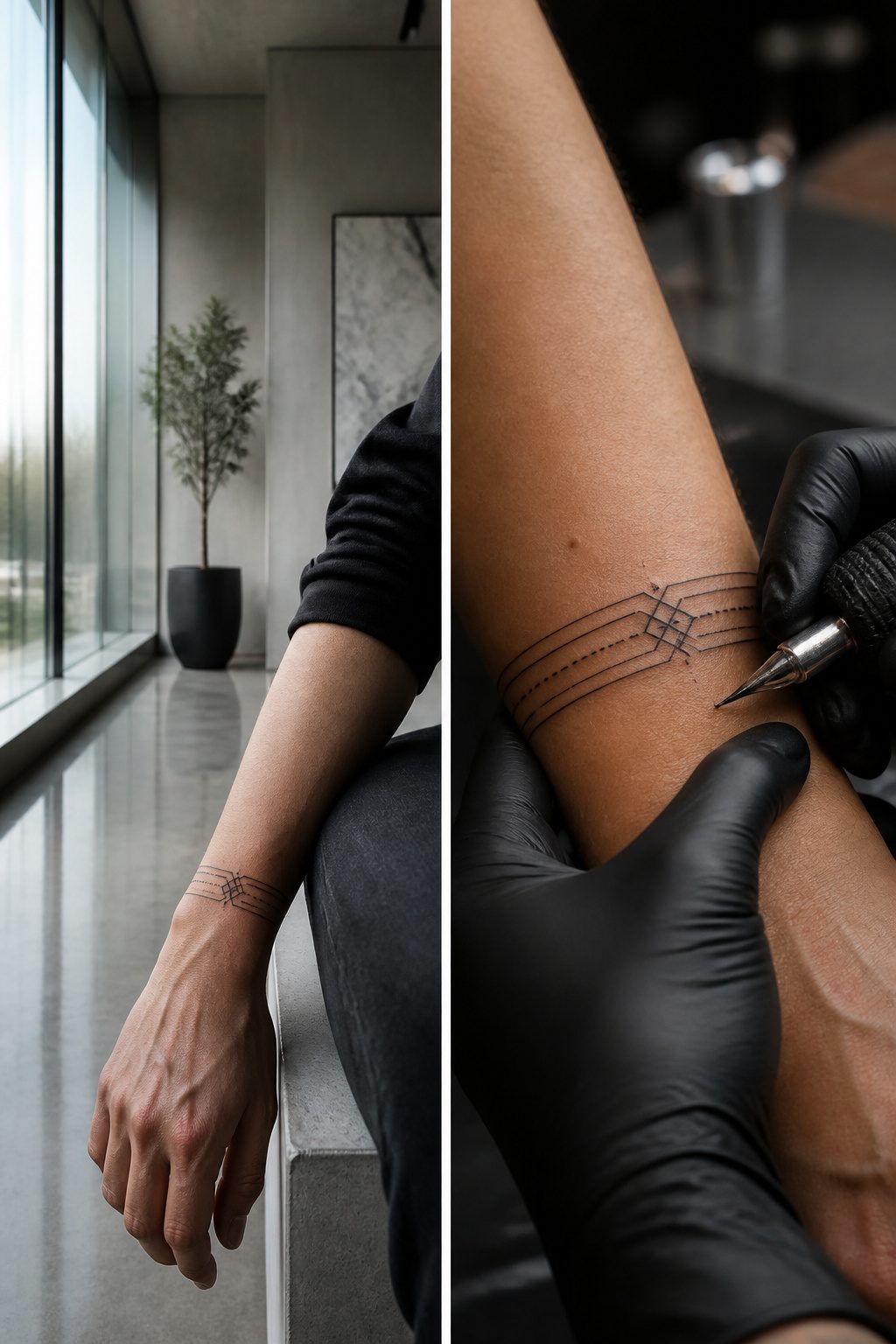
The late ’80s neotribal wave splintered into two paths, and one of them kept shrinking.
Minimalist tribal strips the aesthetic down to clean lines and smaller placements: a single band around a wrist, a reduced shoulder piece, the thorn-like interlocks scaled to fit behind an ear.
What survives is the visual logic, not the coverage area. The style works when you want the reference without the commitment of a half-sleeve.
Cyber tribal runs the opposite direction, but it borrows from the same break.
Where neotribal went large and abstract in London studios, this strain grafts circuitry aesthetics onto tribal geometry: straight-line matrices where curves once dominated, hard angles suggesting data flow, negative space functioning like cutouts in a motherboard.
The Y2K revival has pushed this forward; the simplified tribal of that era mixes naturally with tech imagery for anyone who grew up on both.
Neither style carries the cultural load of true Polynesian or Māori work. That is the trade.
What you gain is adaptability: a minimalist piece ages with your other ink instead of dominating it, and cyber tribal reads as designed rather than inherited.
The question is whether you want the tribal reference to whisper or to signal a specific decade’s nostalgia.
What the Patterns Mean
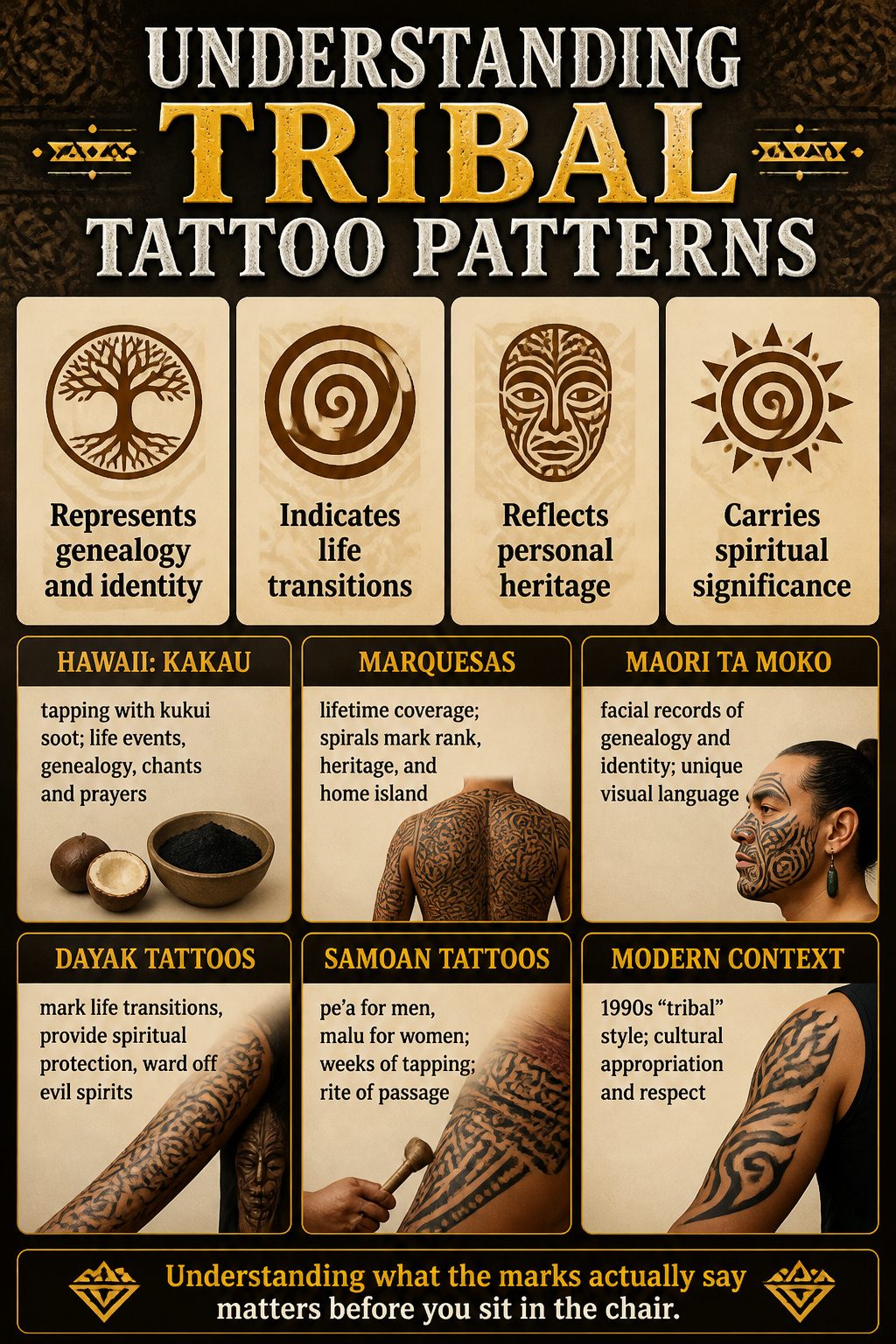
Tribal patterns read as documents, not decoration. In Hawaii, the word kakau means to strike or place upon, describing the tapping itself.
Pigment came from the soot of the kukui, the candlenut tree. The marks tracked adulthood, marriage, achievement, and mourning, and stood as visible genealogy, with chants and prayers understood as part of what put them there.
In the Marquesas, coverage grew across a whole lifetime: spirals around a warrior’s eyes, spirals on a chief’s thighs, no two bodies the same because each recorded a specific person’s heritage, home island, and family position.
The Maori ta moko used the body, especially the face, as a canvas for genealogical records and personal identity. Each spiral, curve, and line held specific meaning, creating a visual language unique to the wearer and their clan.
Borneo’s Dayak people used tattoos to mark life transitions, provide spiritual protection, and ward off evil spirits. The Samoan pe’a for men and malu for women required weeks of hand-tapping and represented a rite of passage into adulthood.
Understanding what the marks actually say matters before you sit in the chair. The geometry stops being a pattern and starts being a sentence only when you know the language.
Celtic knotwork, drawn more from illuminated manuscripts and stone carvings than direct tattooing evidence, carried symbolism related to eternity and nature. The modern "tribal" style that gained popularity in the 1990s sparked ongoing conversations about cultural appropriation and respect.
A design chosen for visual impact alone risks wearing someone else’s identity as ornament.
Hand-Tapping Against Machine Work
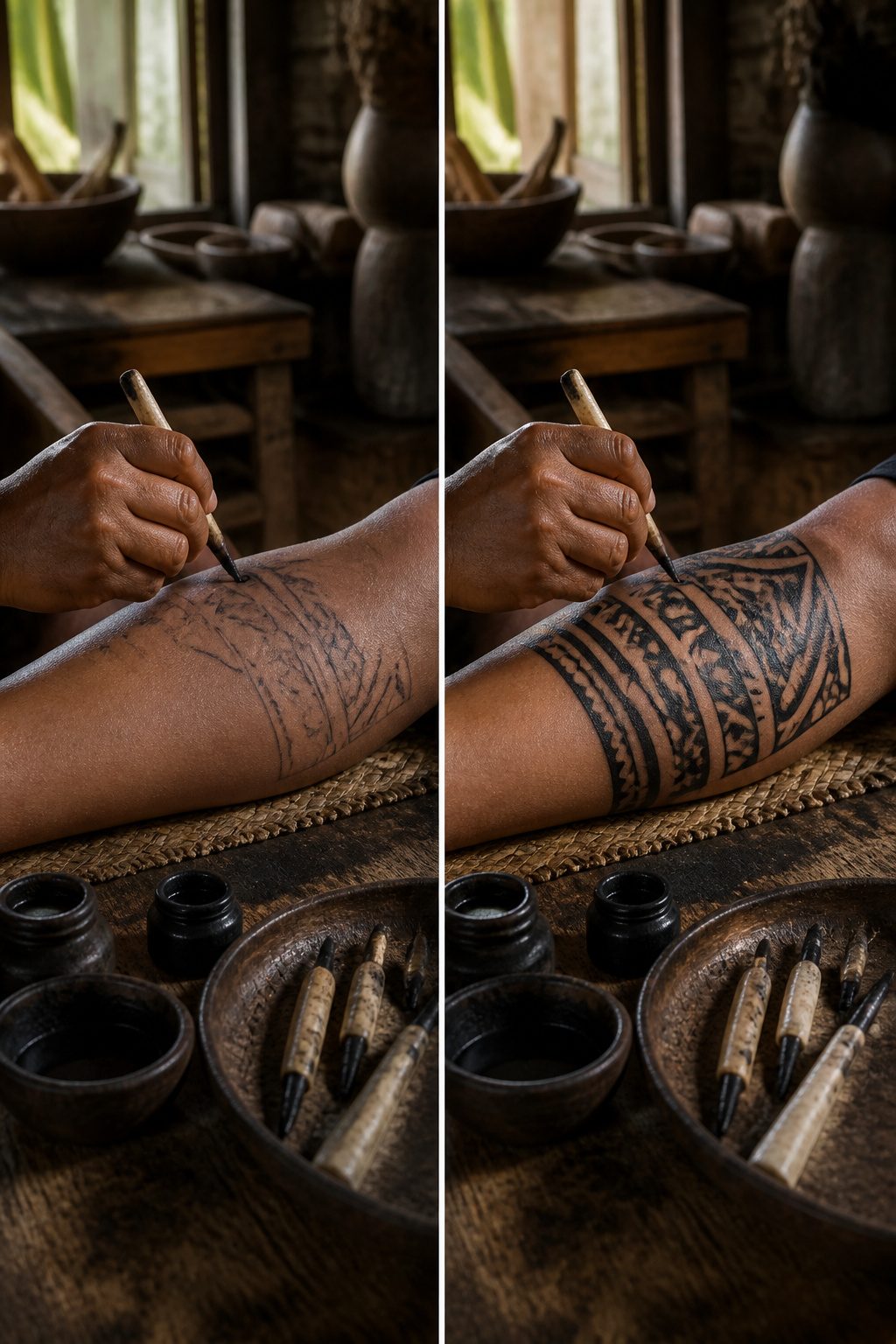
Hand-tapping a tattoo with a chisel and needle of bone or shell takes hours longer than a machine session, and the skin heals rougher.
In Samoa, the pe’a for men and the malu for women required weeks of this work, the tapping itself a rite rather than a shortcut.
The soot from the kukui candlenut tree carried the pigment in Hawaiian kakau, and the chants that accompanied it were understood as part of what put the marks there. The method was never separable from the meaning.
A coil machine can reproduce the geometry, but it cannot reproduce the genealogy. The Marquesas spirals around a warrior’s eyes recorded a specific home island and family position; no two bodies matched because no two lives matched.
When the needle is electric, the pattern becomes decoration. When it is tapped by hand with natural tools, it stays closer to a document.
The choice facing anyone drawn to tribal work in 2026 is exactly this: machine precision honors the aesthetic, but only hand-tapping preserves the practice as a lived ritual.
Some artists now train in both, and their price reflects the difference in time. What you are paying for, though, is not merely the hours.
It is whether the geometry stays a pattern or becomes a sentence.
Black Ink and Negative Space
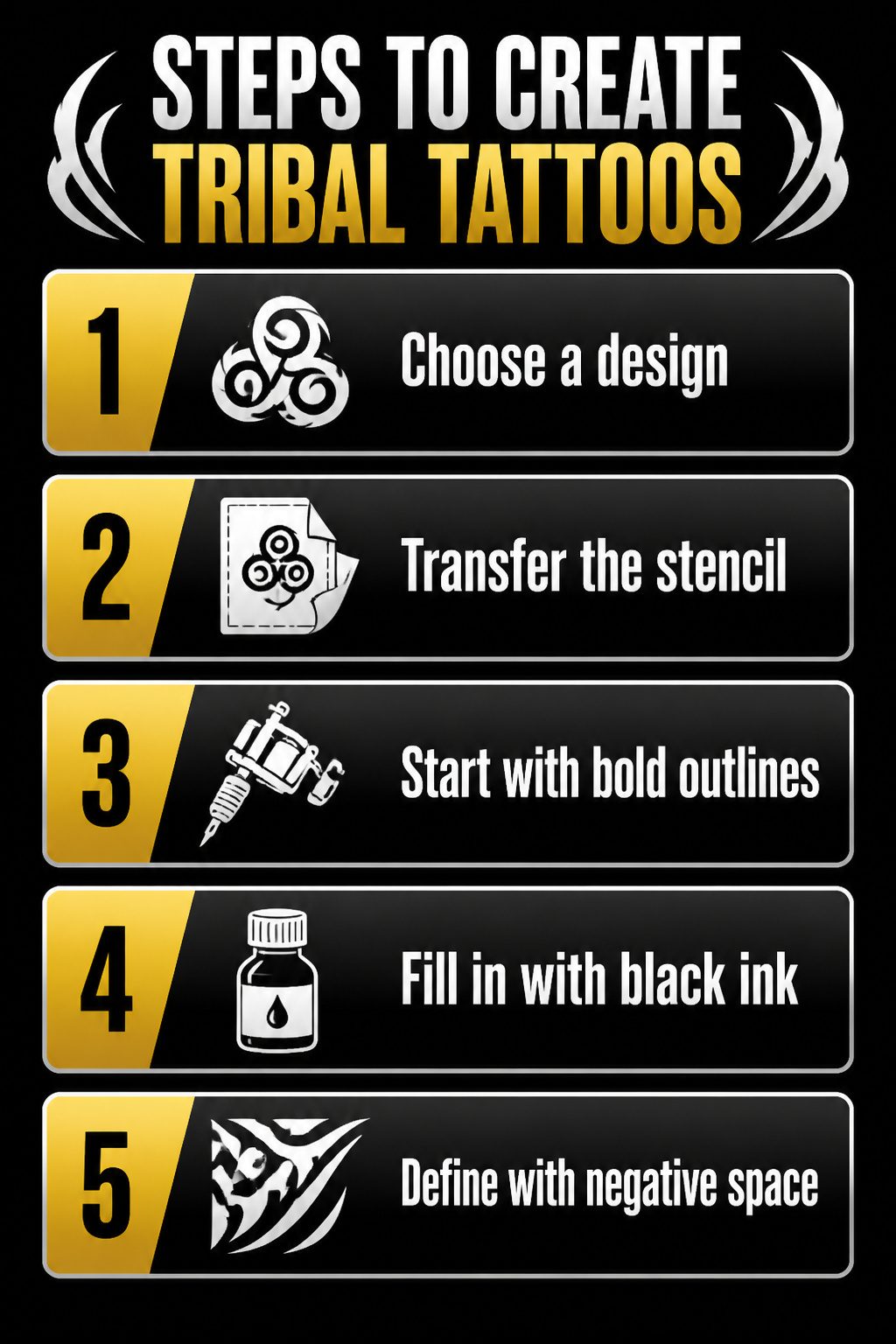
Bold black ink and negative space are the two tools that make a tribal tattoo read from across a room.
The ink sits in solid, saturated fills with no shading gradients to soften it; the skin left bare does the work that gray wash would in another style.
Curved lines, spirals, and interlocking shapes create rhythm, but the real movement comes from how those shapes wrap around a shoulder or forearm rather than sitting flat against it.
Thick lines taper to thin ones, swell again, and the contrast between black and skin defines the form without any representational image.
Maori work pushes this further, using thinner spirals and more deliberate blank areas so the absence of ink shapes the design as much as the ink itself.
Placement follows bone and muscle: a piece that traces the deltoid curve or runs the length of the back stays legible for years because the body itself completes the geometry.
The Neo-Tribal Movement
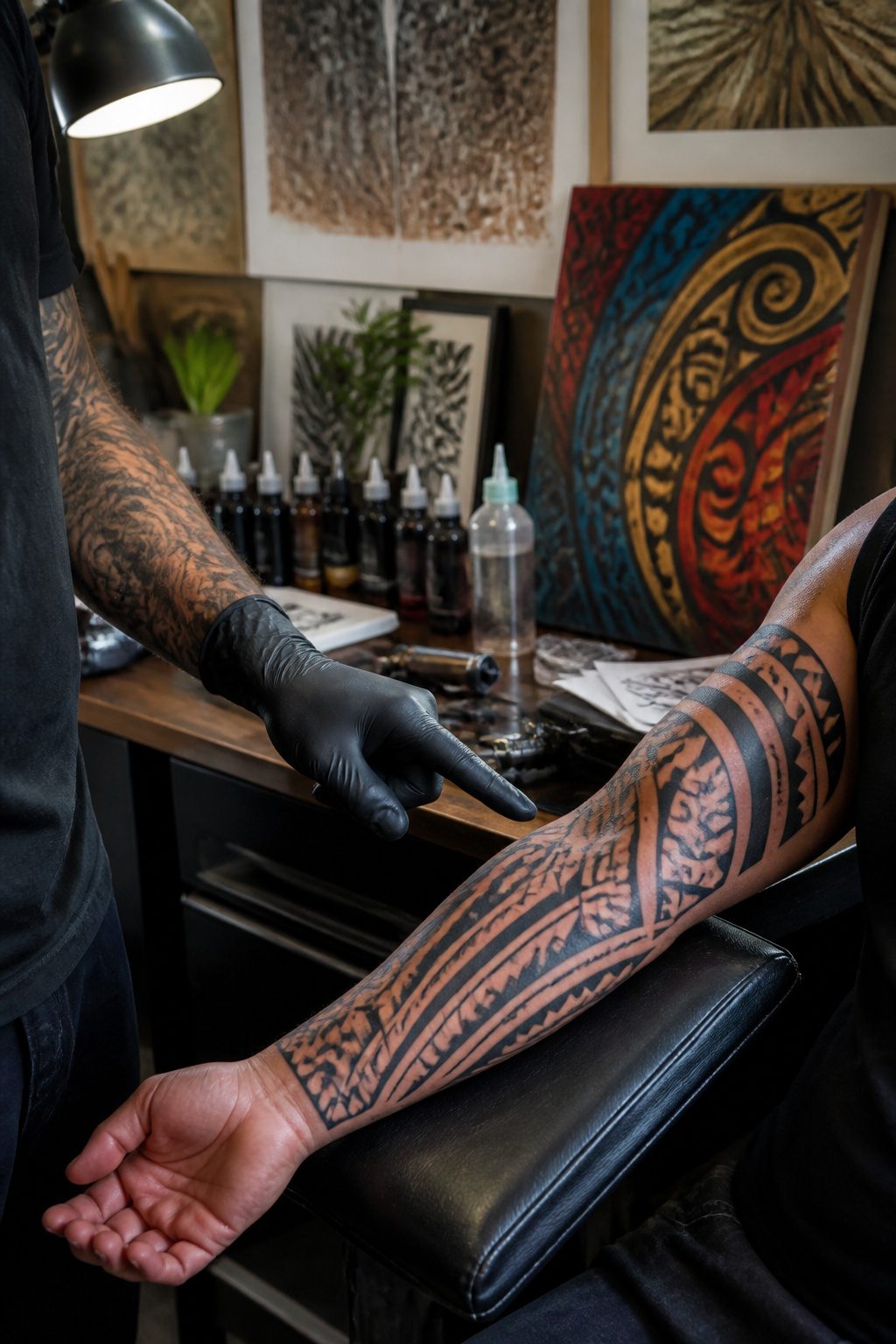
The neo-tribal movement took shape in the late 1970s when a few artists started pulling the visual logic out of Pacific Rim tattooing and building something new with it.
Leo Zulueta, born in 1952 and raised partly in Hawaii and California, found his way to Bornean Iban tattooing in the 1970s.
Don Ed Hardy nudged him toward tattooing professionally in 1981, and by the early 1990s Zulueta had published a booklet of his tribal-derived work that helped spark the wider revival.
He founded Black Wave Tattoo in Los Angeles in 1992, and his field research in Samoa and Tahiti fed into a style that borrowed the bold-fill, high-contrast graphic logic of Polynesian and Bornean work without replicating any single culture’s genealogy.
That distinction matters. Zulueta did not copy; he translated.
He brought solid black fills, graphic contrast, and repeating pattern into a Western scene running mostly on American traditional color work.
The result was an open lineage, descended from indigenous traditions and in dialogue with them, but not claiming to be them.
By 1989, Modern Primitives had documented the trend alongside piercing, and London’s Alex Binnie pushed it further from his IntoYou studio, engaging artists like Xed Lehead and Tomas Tomas who in turn influenced the geometric tattooing of Thomas Hooper and Jondix.
Contemporary neo-tribal keeps that same route: it takes the visual principles and composes fresh designs, sometimes blending in color, shading, or abstract elements that traditional work never carried.
The style has also splintered into offshoots like cybersigilism and cyber tribal, where artists such as Gerhard Wiesbeck pull from electronic circuits or psychedelic patterning to evolve the form again.
Respect and Cultural Appropriation
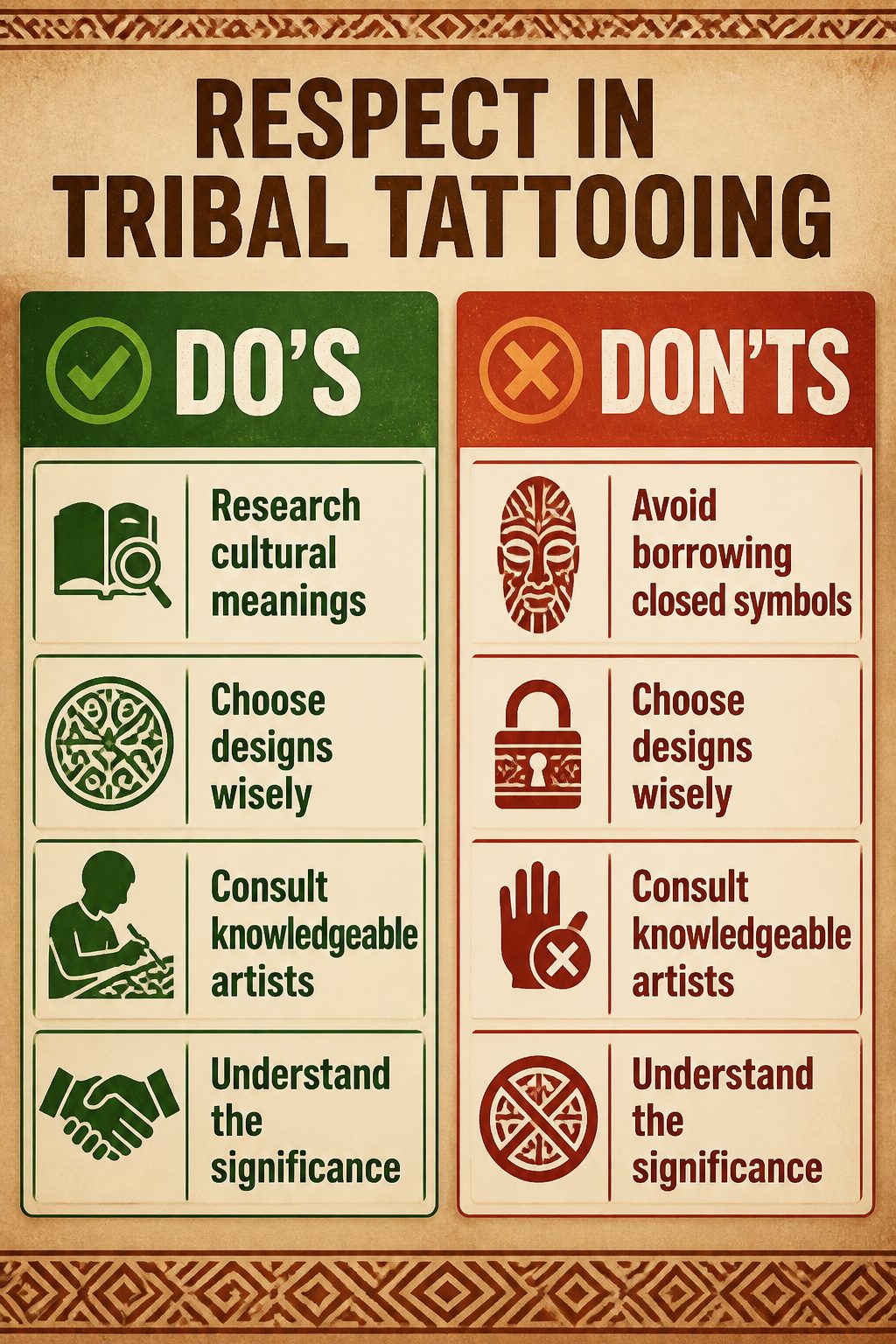
The term "tribal" as a tattoo style only took off in the 1990s, largely through artists like Leo Zulueta studying traditional practices and adapting them for Western shops. That modernization sparked real conversations about appropriation that are still unresolved.
If a design draws from Polynesian, Māori, or Dayak traditions, wearing it without understanding its role as social rank, genealogical record, or spiritual protection treats a living language like wallpaper.
Before committing, ask what the specific motifs mean and whether they belong to a closed practice. Some symbols mark clan membership or life transitions; others were earned, not chosen.
An artist who demonstrates cultural awareness matters here. The best portfolios show respectful adaptation rather than direct copy, and the best consultations involve questions about your connection to the tradition.
Two paths sit in front of you. One: work with someone who has studied the specific tradition and can guide appropriate use.
Two: choose modern geometric approaches that borrow tribal’s bold black saturation and line flow without lifting closed symbols. The second route avoids the risk entirely.
Either way, hesitant ink coverage or careless symbol selection compromises more than the tattoo’s look; it flattens centuries of meaning into pure decoration.
Frequently Asked Questions
What are the different styles of tribal tattoos?
The main styles include Polynesian tatau with spirals and waves; Māori ta moko with carved facial grooves; Celtic knotwork with endless interwoven lines; Samoan pe’a for men and malu for women; Native American animal and celestial symbols; Aztec geometric patterns with deities and interlocking shapes; African Adinkra symbols and scarification traditions; geometric neo-tribal that borrows visual logic without cultural claims; and cyber or minimalist offshoots that shrink or tech-ify the aesthetic.
What do tribal tattoos symbolize?
Traditional tribal tattoos encode rank, family lineage, personal achievements, and spiritual protection rather than serving as pure decoration.
Polynesian tatau record genealogy and social standing; Māori ta moko function as facial documents of whakapapa and mana; Samoan pe’a and malu mark adulthood through weeks of hand-tapping pain.
Modern neo-tribal styles deliberately strip away these meanings to create abstract visual compositions, which changes what the wearer is actually communicating.
How do I choose a tribal tattoo design?
Start by deciding whether you want aesthetic reference or cultural participation, since the two are not interchangeable. Research whether your chosen motifs belong to a closed practice, like Māori facial moko, or have respectful alternatives like kirituhi for outsiders.
Consult an artist who can demonstrate cultural awareness and who asks about your connection to the tradition rather than just selling a bold black pattern.
If you lack that connection, modern geometric approaches that borrow tribal’s visual saturation without lifting sacred symbols avoid appropriation risks entirely.