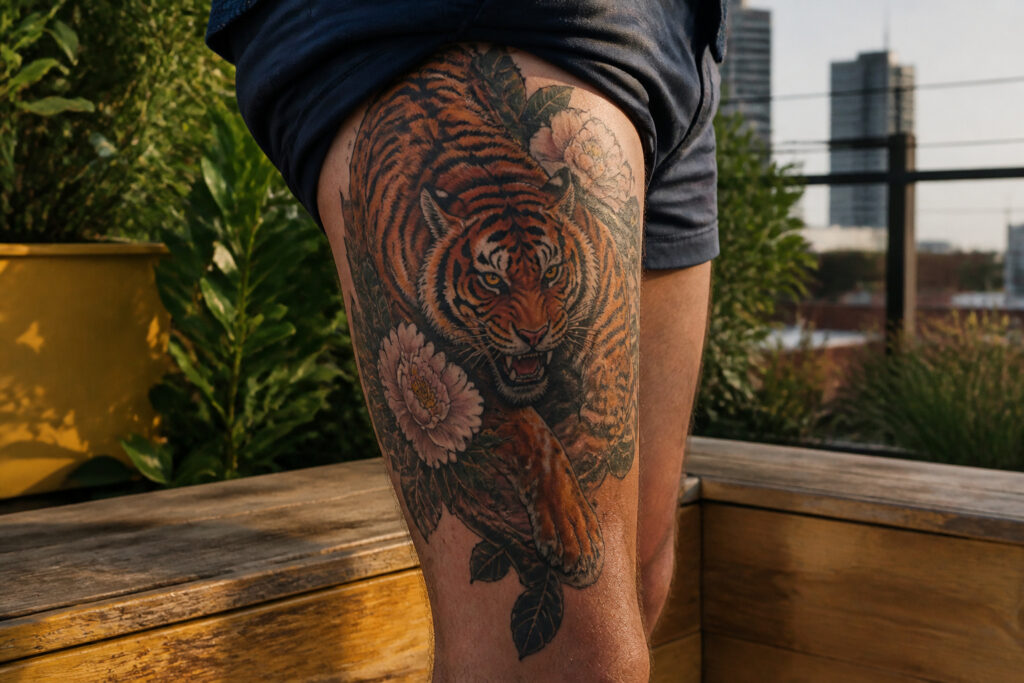
Thigh tattoo ideas for men range from single-session minimalist pieces to 15-hour full leg sleeves, and the deciding factor is usually how much of the leg you are willing to commit. The catch is that the thigh’s size tempts people to think bigger is always better, which is not true for fine line work that denim seams will grind down within two years. The front thigh’s broad, flat muscle preserves symmetry for animal portraits and mandalas in a way the side or back of the leg cannot, but wrap the same design around to the inner thigh and the pain jumps sharply.
1. Animal Tattoos
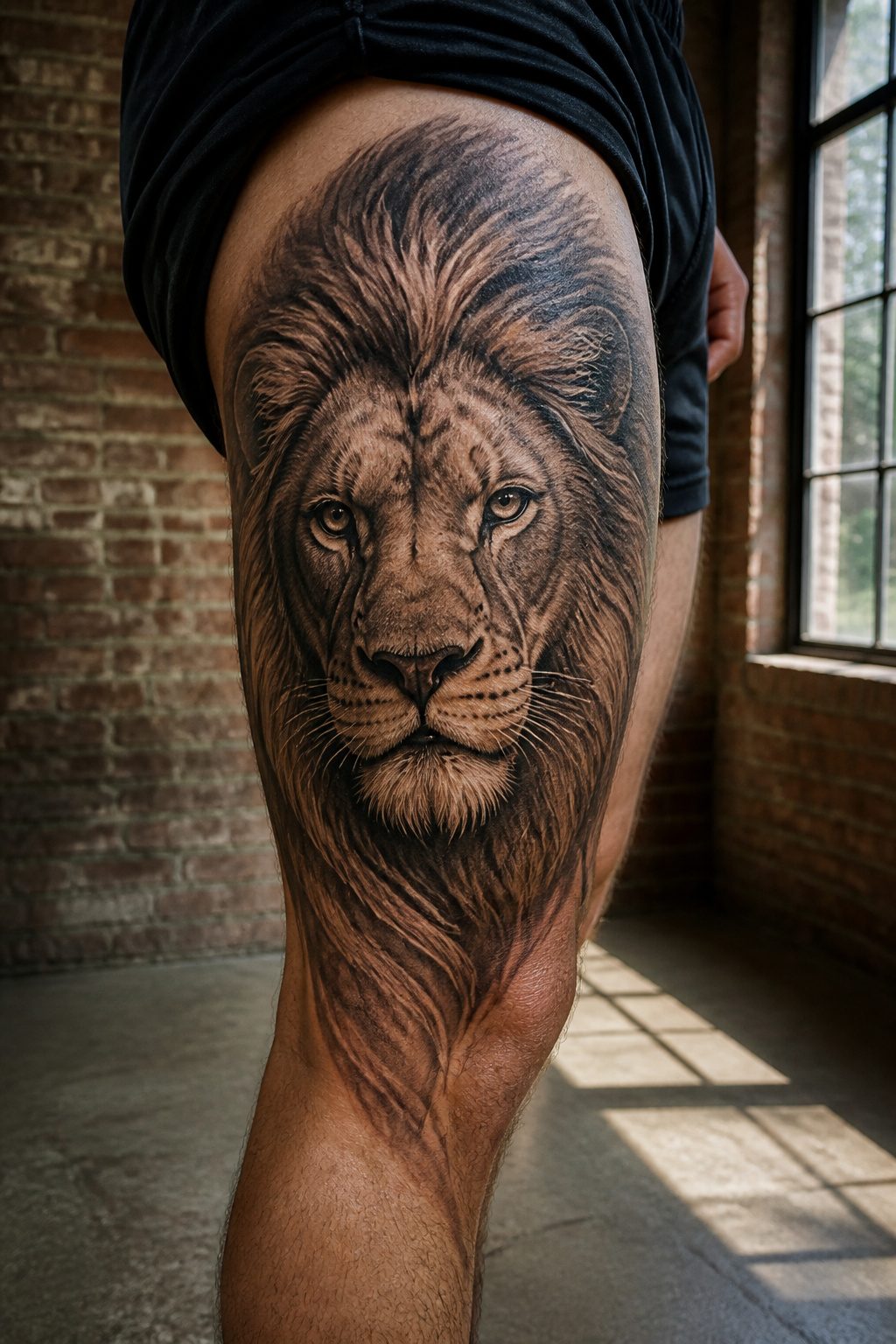
Animal portraits rank among the most requested thigh tattoo ideas for men, with lion, wolf, and dragon designs leading the pack. The thigh’s thick muscle structure gives these pieces a living quality; the design shifts subtly as the quadriceps flex and relax, so the animal never reads as static.
A full lion portrait works especially well here, though the commitment is real. Sessions typically run 6 to 8 hours for a complete piece, which most artists split across two or three appointments. The front thigh placement remains the standard choice for symmetrical animal heads, since the broad, flat canvas preserves the proportions that side placement can stretch.
Wolf portraits follow a similar logic but tend to read more vertical, which suits the thigh’s length. Neutral shading dominates these pieces; the menacing tone of a wolf portrait usually loses something in bright color.
Dragons occupy a different territory. The thigh’s wraparound potential lets the body coil from front to side or even extend toward the knee, something the flatter muscle groups of the chest or back struggle to accommodate. The scale of the thigh matters here. A lion or wolf demands room for facial detail, and a dragon needs even more real estate to keep the scales from turning to mush.
2. Tribal Tattoos
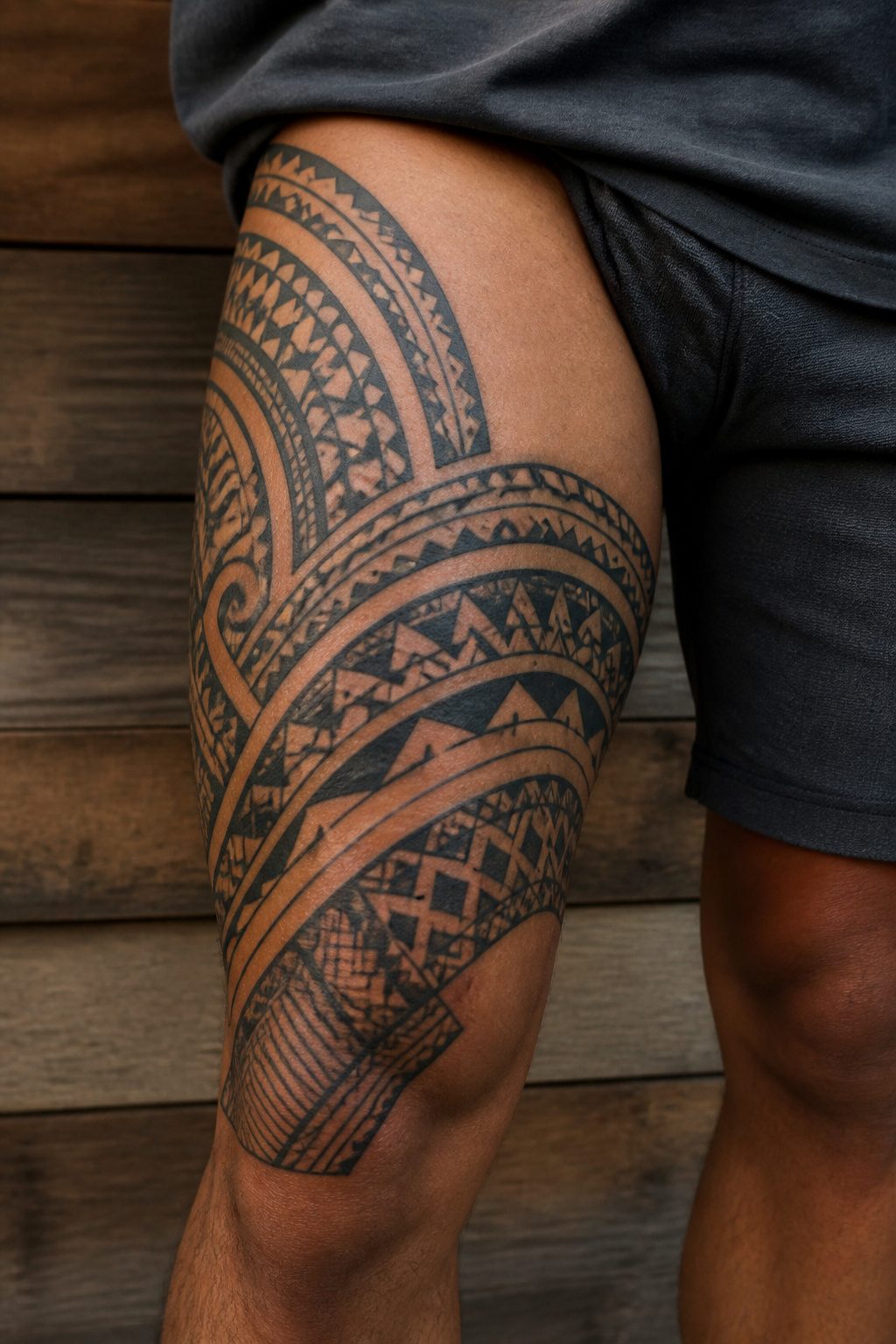
Tribal patterns sit differently on the thigh than they do on the arm or chest. The muscle and the curve of the leg give the design a natural wrap, and the best work follows that line rather than fighting it. In Polynesian and Maori traditions, these marks carried weight: they signaled warrior status, recorded lineage, and were earned through ritual rather than chosen from a wall. A thigh piece that wraps the leg honors that tradition more honestly than one that sits flat like a poster. The wrap matters more than the individual symbol if you want the cultural reference to read as respect rather than decoration. Pain sits lower here than on bone, which helps for the density of fill these designs need, but the session count still adds up. Plan for multiple sittings, and expect the artist to map the flow while you stand so the geometry stays true when you move.
3. Geometric Tattoos
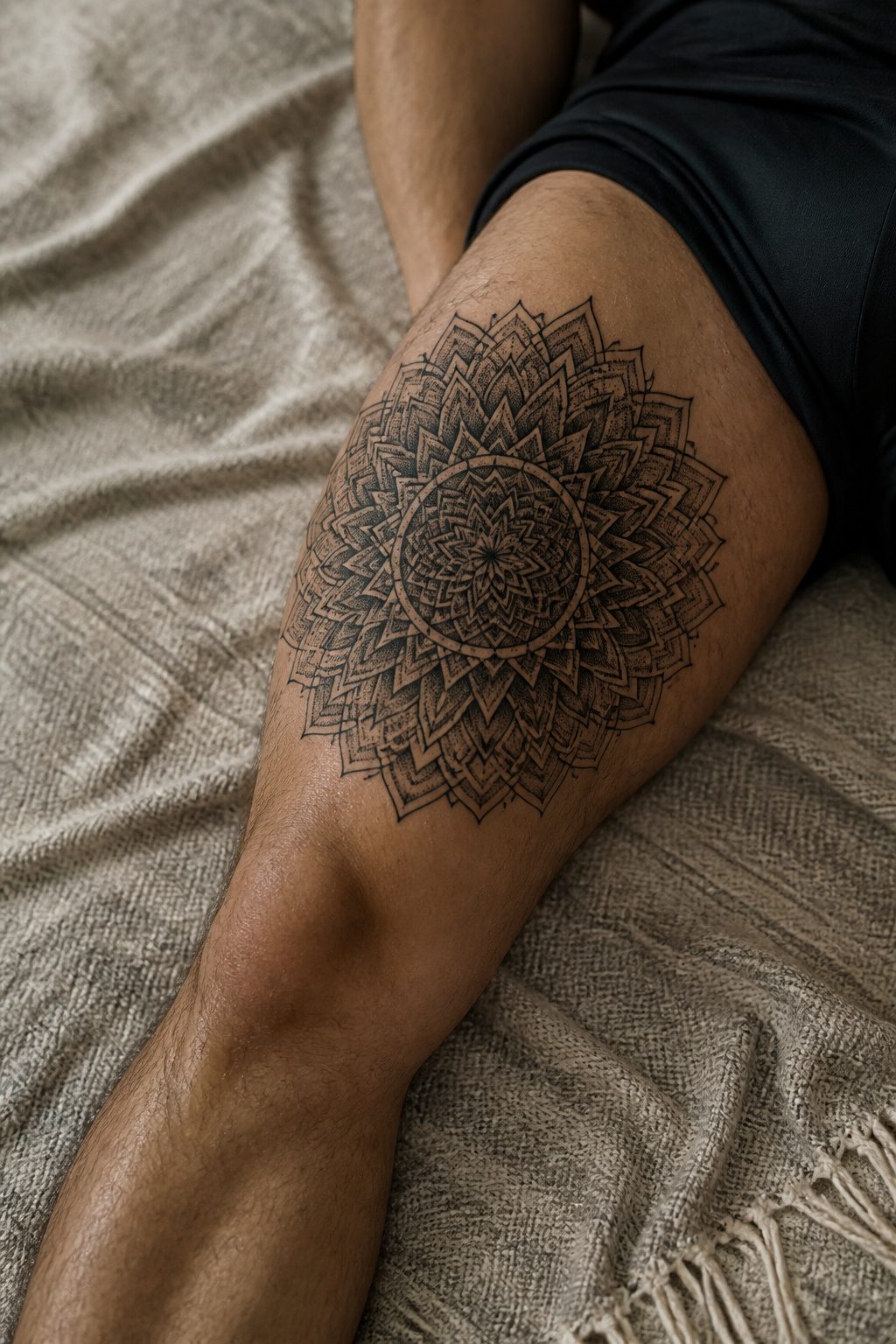
Sacred geometry lives on skin when the thigh gives it room to breathe. A full Metatron’s Cube or Flower of Life needs the flat, broad plane the front thigh offers; the same design warps on a curved shoulder or forearm. Dotwork builds these patterns slowly, point by point, and the density reads differently depending on placement. Run the composition with the muscle grain and the eye travels smoothly up the leg. Angle it across the quadriceps and the pattern fights the body’s own lines, which creates tension that some artists use deliberately.
The back thigh, softer and less defined, suits looser geometric flows. A mandala-centered piece here can ripple outward without the bone structure interrupting it. I’ve seen clients bring reference images of perfect digital circles and leave disappointed; skin stretches, sits, and ages, so the tattoo settles into something more organic than the original file. The best geometric work accounts for that shift from day one, spacing the linework to allow for the spread that happens in the first two years.
4. Religious Tattoos
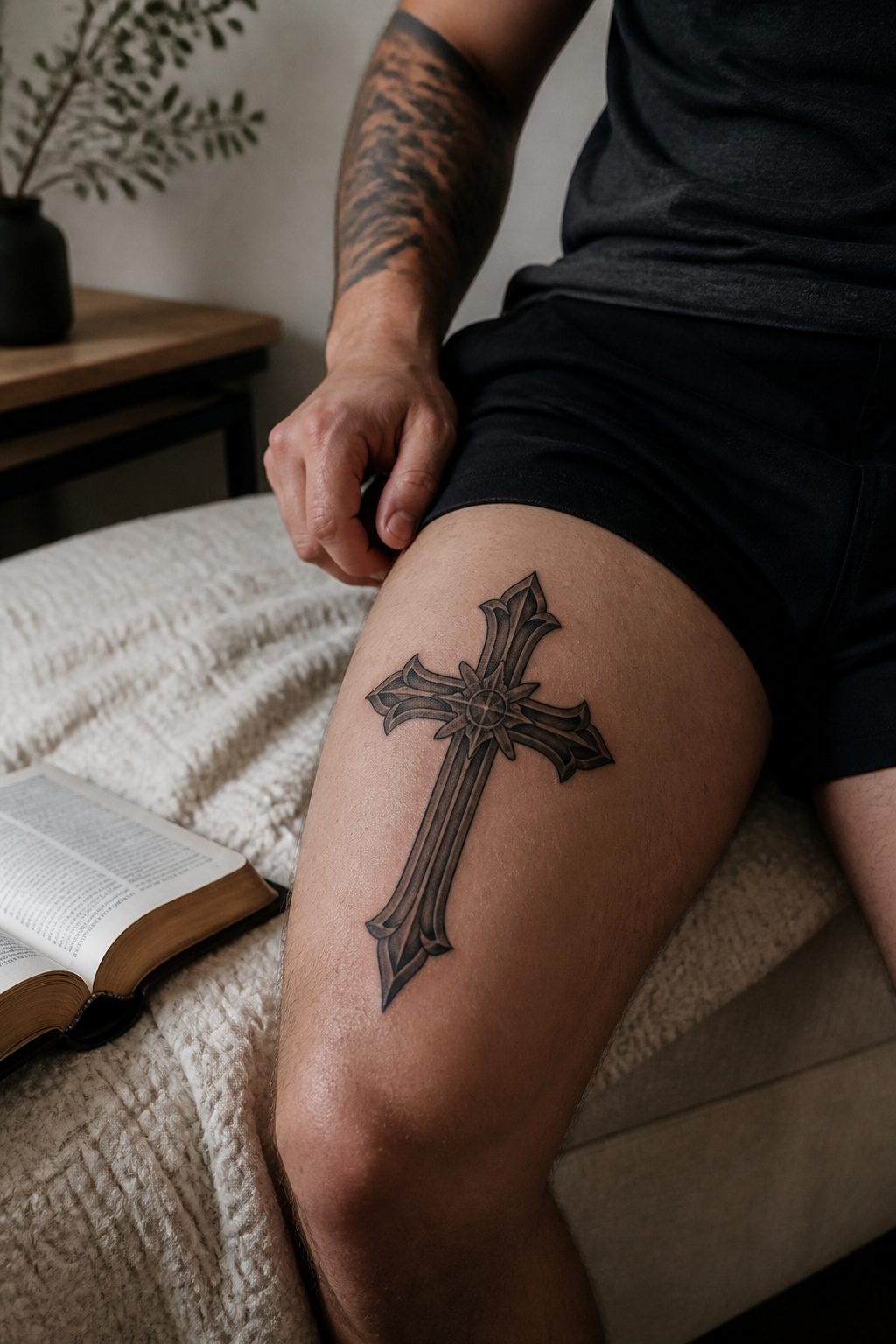
The thigh’s flat front plane draws symmetrical designs like crosses and rosary beads straight and true, something the curved side or back of the leg fights against. That same placement keeps the work under a standard pair of chinos without thought, which matters when the ink carries personal weight rather than public statement. A depiction of Jesus, cross symbols, or other Christian imagery sits here like a private anchor, visible to the wearer and whoever they choose to show, invisible to a conference room or a first date that isn’t there yet. The vertical run from hip to knee also suits a rosary dropped down the leg, beads spaced to the scale of the muscle beneath. Pain sits moderate on the front thigh, less than the back where skin pulls tighter over tendon, so longer sessions for detailed work stay tolerable. For men who want faith marked permanently but not performatively, this placement respects both the belief and the practical life built around it.
5. Skull Tattoos
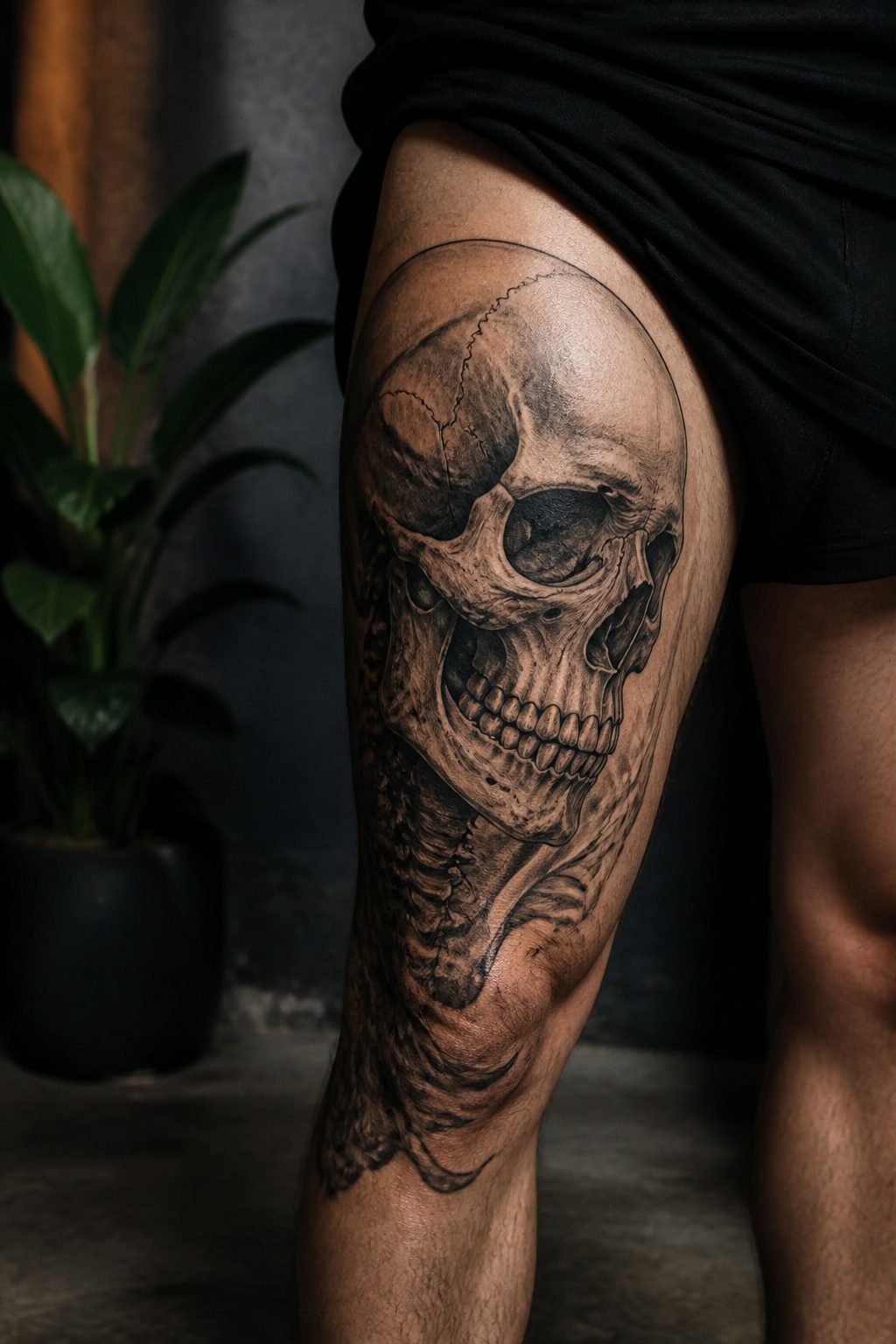
A skull on the thigh carries weight that a shoulder or forearm rarely manages. The bone sits right there under the skin, and the muscle gives the artist a flat, stable plane to work on. That matters when you’re pushing detail into the teeth or the hollows around the eye sockets, places where a smaller piece would blur together inside a year.
The thigh’s real advantage is scale. An anatomical skull with every suture line and zygomatic arch drawn true needs room, and the upper leg has it. The same goes for a Day of the Dead piece: the marigold patterns around the orbit, the filigree across the forehead, the color gradients in the nasal cavity. Try that on a calf and the artist spends half the time fighting the curve.
Stylized versions hold up too. A traditional skull with thick black lines and limited shading reads clean from across the room, and the muscle movement adds life to the grin in a way static skin cannot. What separates a thigh skull from a generic one is the space to let the jawline drop, to show the full row of teeth, to let smoke or roses or whatever companion element you want wrap without crowding the main event.
Vertical orientation wins here. A skull running from hip to knee uses the whole canvas, and the natural taper of the leg frames the face the way a portrait frame should. Horizontal placements across the front of the thigh tend to fight the body’s lines and age poorly as the skin shifts.
6. Fine Line Tattoos
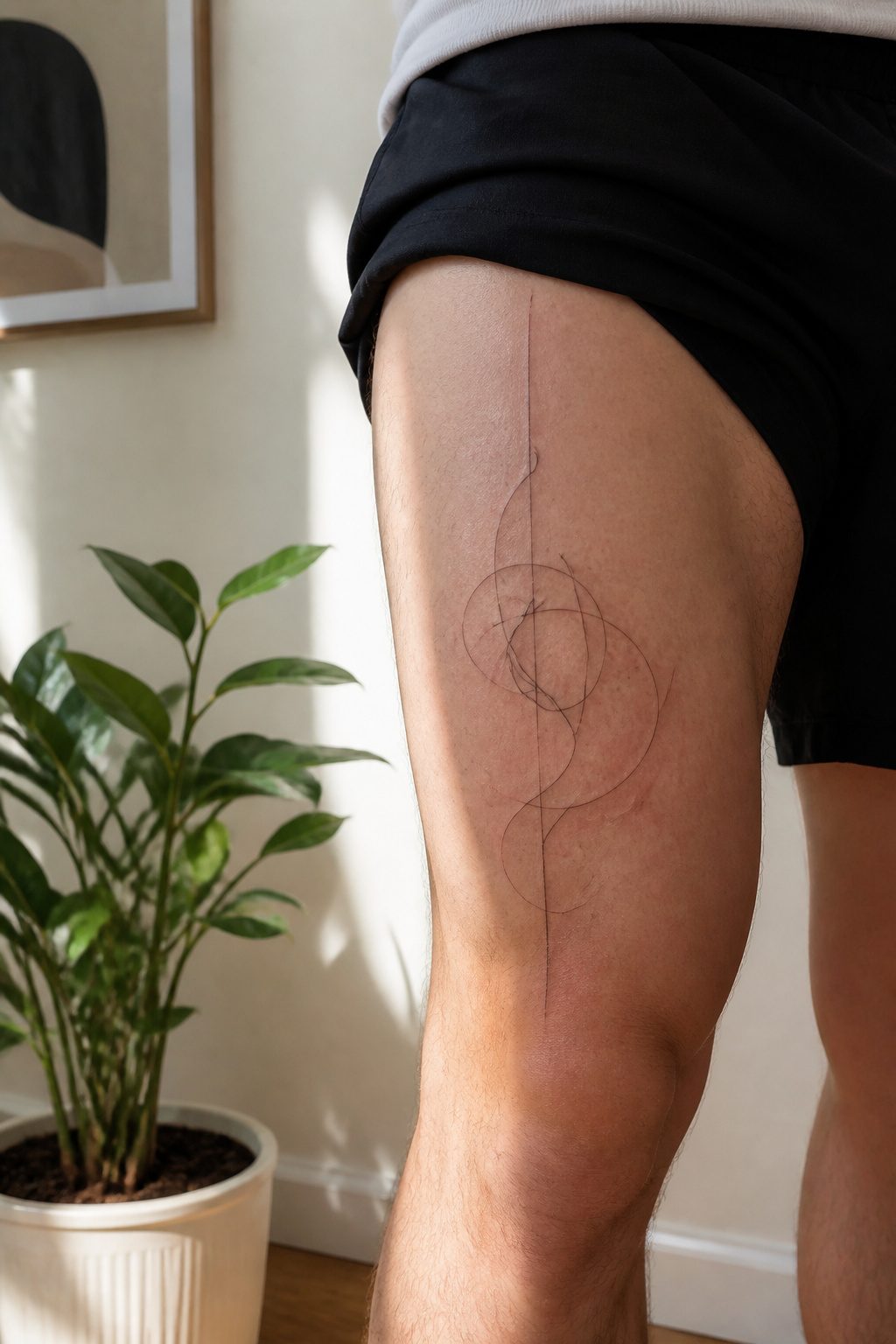
Single-needle work sits surprisingly well on the thigh, where the flat planes give a clean canvas for thin, continuous lines that would warp on bonier spots. The muscle padding keeps the needle steady, so an artist can pull long, unbroken strokes without the skin bouncing the way it does over ribs or ankles. What changes the math is friction. Denim seams rub the inner thigh with every step, and even outer-thigh fabric wears against the ink through daily movement. That contact breaks delicate lines down faster here than on a protected area like the upper arm under a sleeve. Plan on touch-ups at roughly the two-year mark if you want the piece to stay crisp, and budget for that maintenance upfront rather than treating it as a surprise failure. The style still earns its place for men who want something understated under shorts or readable only at close range, but the thigh asks more of fine line work than gentler placements do.
7. Anime Tattoos
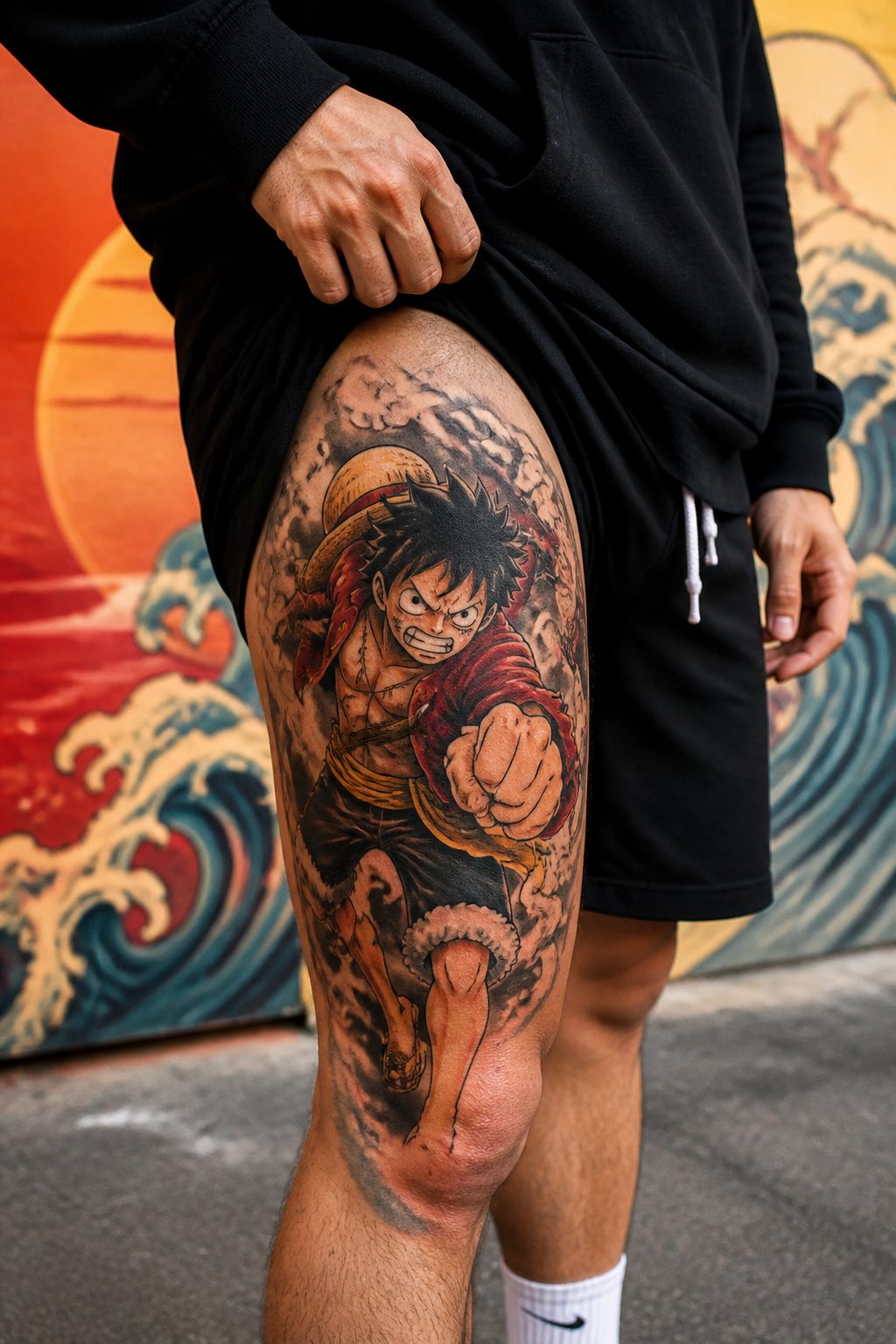
Anime tattoos have moved from niche request to steady appointment in most shops, and the thigh is where a lot of that work lands. The front and outer thigh carry enough muscle and fat to cushion the needle, which keeps the pain relatively low and lets artists schedule longer sessions. That matters more here than with black-and-grey styles, because color saturation is what makes or breaks a character portrait. Flat tones read as unfinished; the gradients in hair and skin need time to layer and settle.
The upper leg also gives one of the largest flat areas on the body, so a full scene with background detail is actually feasible. A half-sleeve on the arm forces compression; the same composition on the thigh breathes. You can still cover it with pants for work, let it show in shorts. The tradeoff sits at the inner thigh and the wraparound, where skin thins and nerve endings multiply. If your design pushes there, expect a sharper jump in discomfort and plan the color packing for the outer panel first.
8. Mandala Tattoos
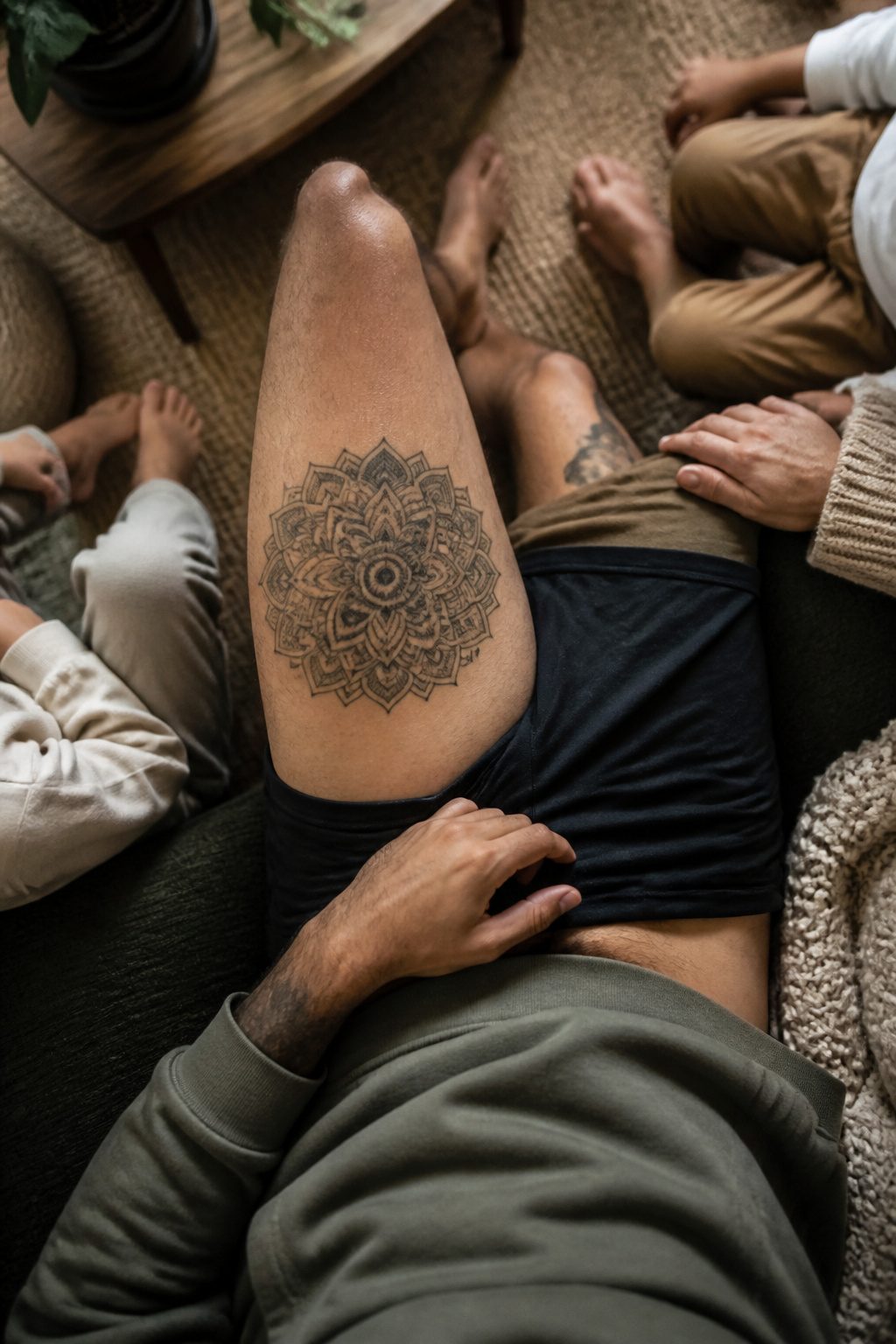
A circular mandala sits dead center on the front thigh better than almost anywhere else on the body. The shape of the muscle gives the design a natural frame, and the symmetry reads instantly even from across a locker room. Wrap it around the side and the pattern elongates, turning the same geometry into something that follows the leg’s vertical line rather than fighting it.
The spiritual roots run deep. Mandalas originated as Hindu and Buddhist symbols of the universe and the self, tools for meditation and healing. Men who choose them now often push the linework darker and heavier than the delicate, feminine interpretations you see most often. The weight of the black ink changes the whole tone, more architectural than ornamental, closer to a shield than a decoration.
That darker approach also ages better on larger muscle groups. Fine lines blur and soften over time; bold geometry holds its structure. Ask your artist to test the weight against your skin tone before the session starts, because the same black reads differently on everyone.
9. Minimalist Tattoos
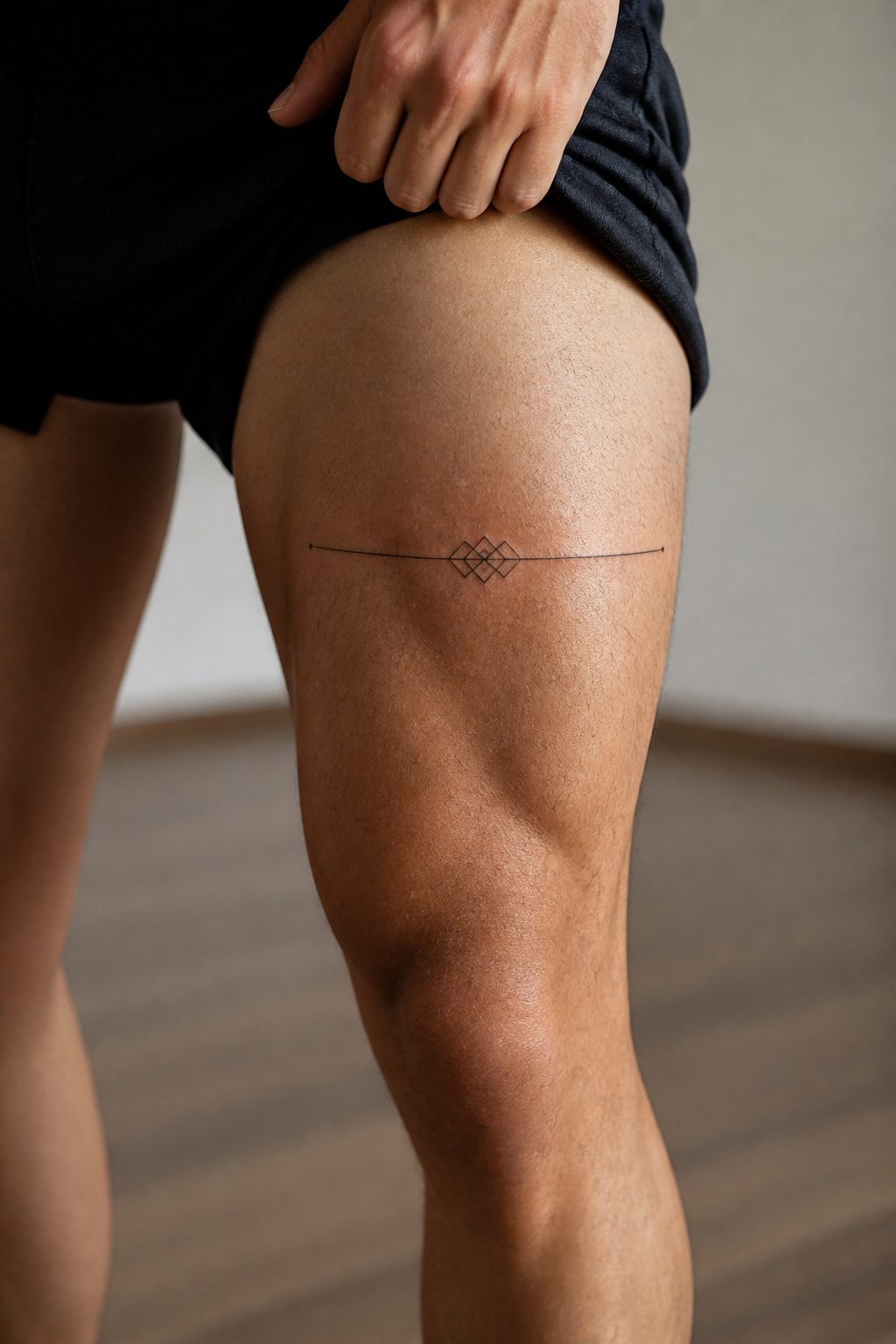
Small thigh tattoos read differently on this canvas than they do on wrists or ankles. A single thin line or a spare geometric shape that looks intentional on an ankle can feel stranded on a large thigh, so placement matters more for visual balance here. The area just above the kneecap, where the quad muscle starts, gives a small design enough structure to hold its own. It also hides easily under pants or longer shorts, which matters if your workplace or family events still call for coverage.
The sources lean toward bolder, larger work for masculine leg pieces, and I think that advice is worth weighing. A minimalist tattoo on a thigh can still work, but it needs negative space used deliberately, not as an afterthought. The side thigh offers a longer vertical line that suits a slim design better than the broad front plane. If you are set on something small, ask your artist to map the exact spot against your muscle structure. A design that floats in the center of a large thigh often looks off; one that follows the leg’s natural line reads as chosen, not shrunk down from something bigger.
10. Cover-Up Tattoos
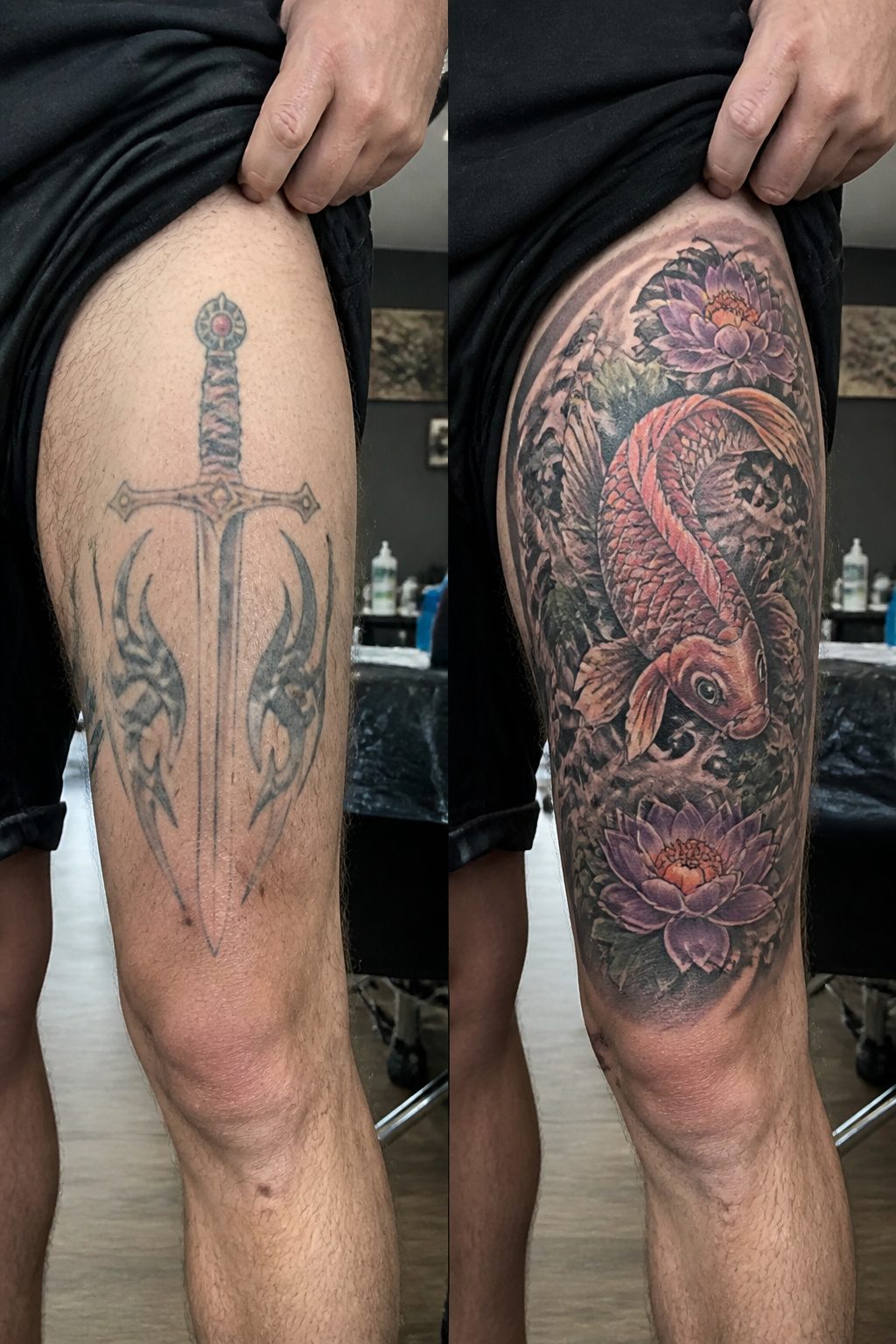
The thigh’s size and relatively flat surfaces make it one of the most forgiving places to hide old work. A blown-out tribal piece from ten years ago or a name you’d rather not explain both disappear under the right new design, because an artist has room to build depth and draw the eye somewhere else entirely.
Darker new designs work best. Light gray wash that reads fine on untouched skin won’t cover saturated black ink underneath. Bold linework and heavy black shading give the artist something to layer over the old pigment instead of fighting it. Color can work, but the ink is transparent to a degree, so the tones need enough saturation to show up against both the old tattoo and your skin tone.
A consultation matters more here than with fresh skin. Scar tissue from the original tattooing changes how new needles deposit ink, and blown-out lines have spread in ways a photo won’t reveal. The artist needs to see the old piece in person, feel how the skin has healed, and map what can actually be done over it. Skip this step and you risk a third session to fix what the second one didn’t cover.
11. Full Leg Sleeves
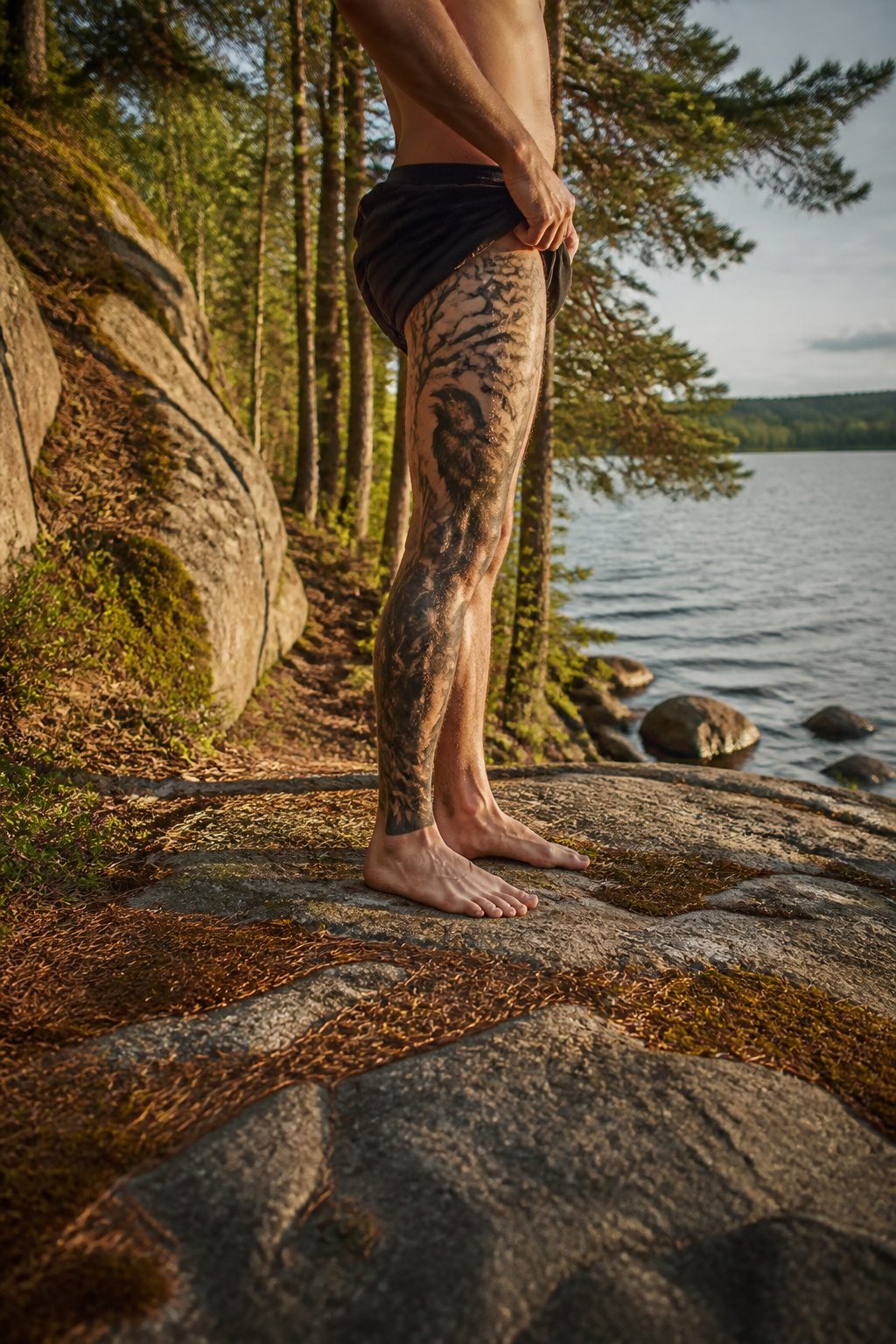
Full leg sleeves that run thigh-to-ankle or hip-to-knee demand more planning than smaller thigh pieces because the canvas is large and the story has to hold together across every inch. Budget 8 to 15 hours minimum, usually split across multiple sessions over weeks or months, with the thigh often inked first to set the spacing and flow for everything below. Japanese Irezumi and American Traditional are the styles most commonly chosen for this scale, both built to read clearly from a distance and age well across the long stretch of skin. The cost runs high and is billed hourly, so the time estimate matters to your wallet as much as your calendar. A tree branch with a raven focal point, running foot to outer thigh, shows how traditional imagery can carry the full length without feeling scattered. If your design packs meaning that needs room to breathe, the full leg is where it gets the space it needs.
What Thigh Tattoos Cost
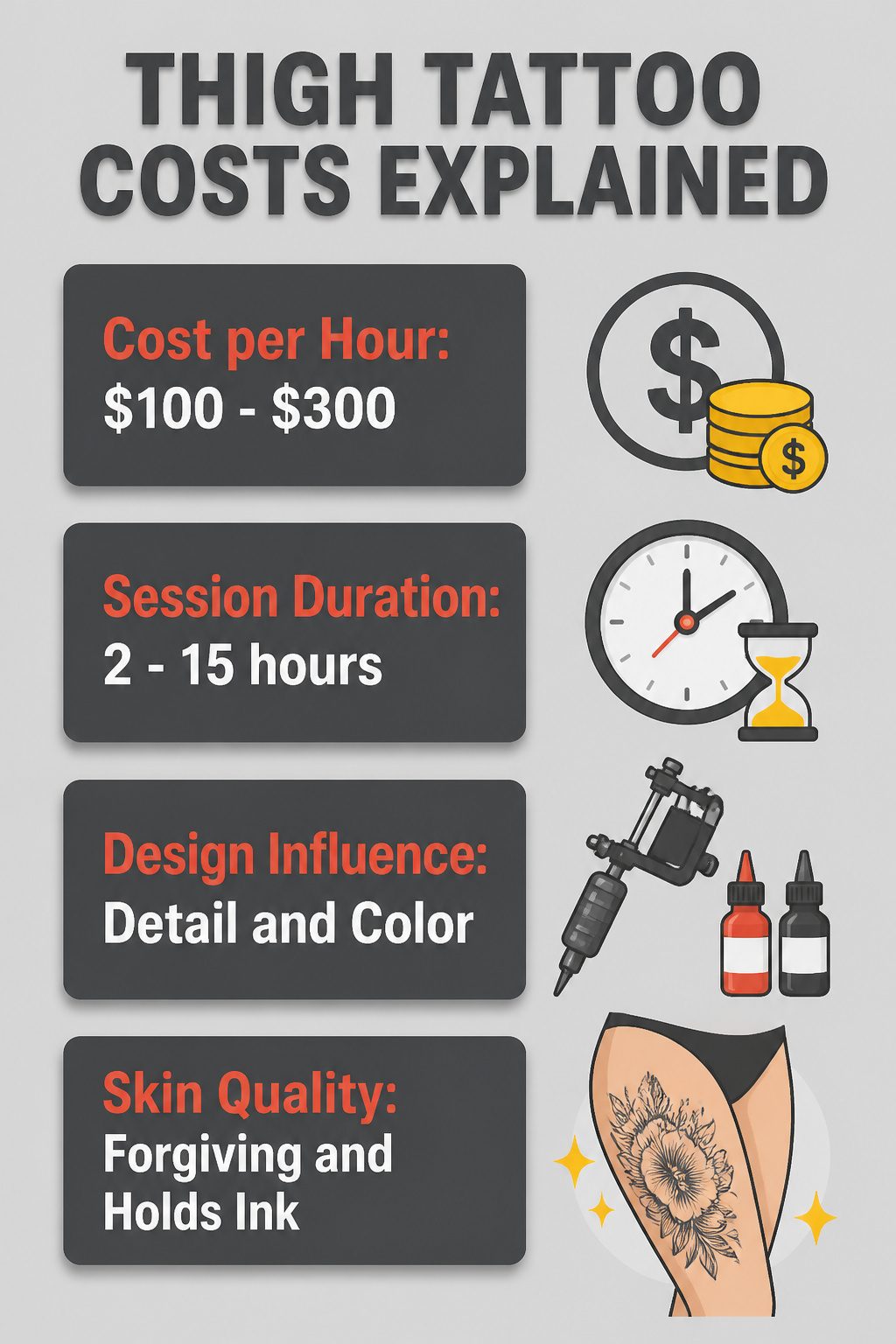
Most reputable artists in the United States charge $100 to $300 per hour, and the thigh’s sheer size means the bill adds up fast. A palm-sized design might sit for two or three hours, while a full front thigh piece can run eight to twelve hours, sometimes stretching to fifteen for dense work. What drives the price up is straightforward: an artist with a booked-out calendar and a strong portfolio commands the top of that range, color ink demands more time and skill than black and grey, and heavy detail slows the needle way down. I have watched friends sticker-shock themselves by budgeting for the small piece they pictured, not the large canvas they actually asked for. The skin on your upper leg is forgiving and holds ink well, which makes it worth doing right the first time. Saving for the artist you want beats finding out later why the cheaper option had openings.
Where It Hurts Most
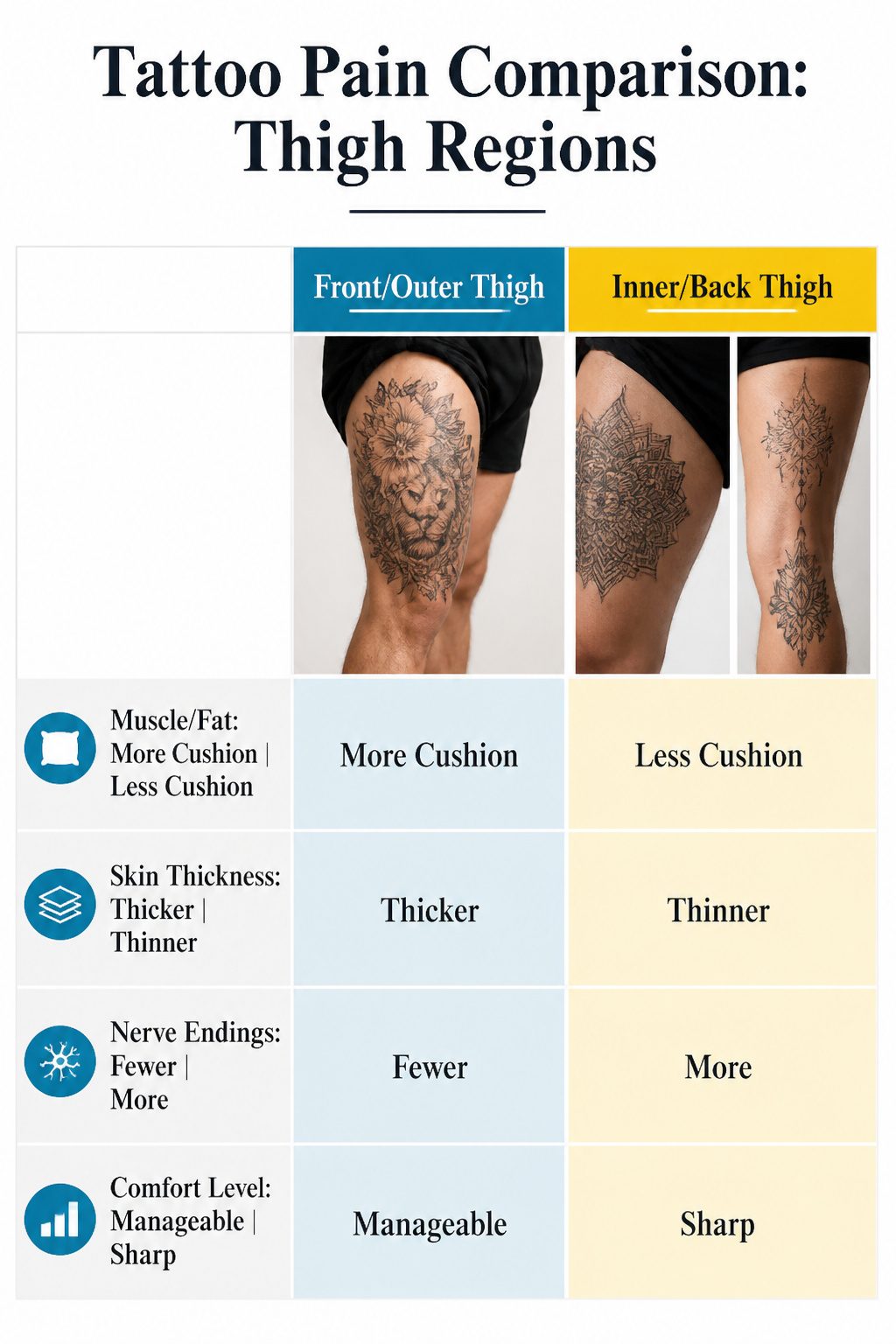
The front and outer thigh carry more muscle and fat, which cushions the needle and keeps the sting manageable. Skin there is thicker, so the session stays tolerable even when the design sprawls across a large area. Wrap the piece around to the inner thigh or the back of the leg, though, and the sensation sharpens. Those spots run thinner on skin and denser on nerve endings, especially closer to the groin or the crease under the buttocks. The back of the knee hurts for the same reason; the body guards that bend more carefully.
A larger tattoo adds its own challenge simply from clock time. More hours in the chair means more cumulative wear on the skin, even if any single minute feels the same. For men with heavy muscle and low body fat, the outer thigh can actually turn more sensitive; less padding sits between the needle and the tissue beneath. The inner thigh and hamstring area are the spots to brace for, while the front and outer face of the thigh let you settle in and keep the session moving.
Healing and Aftercare
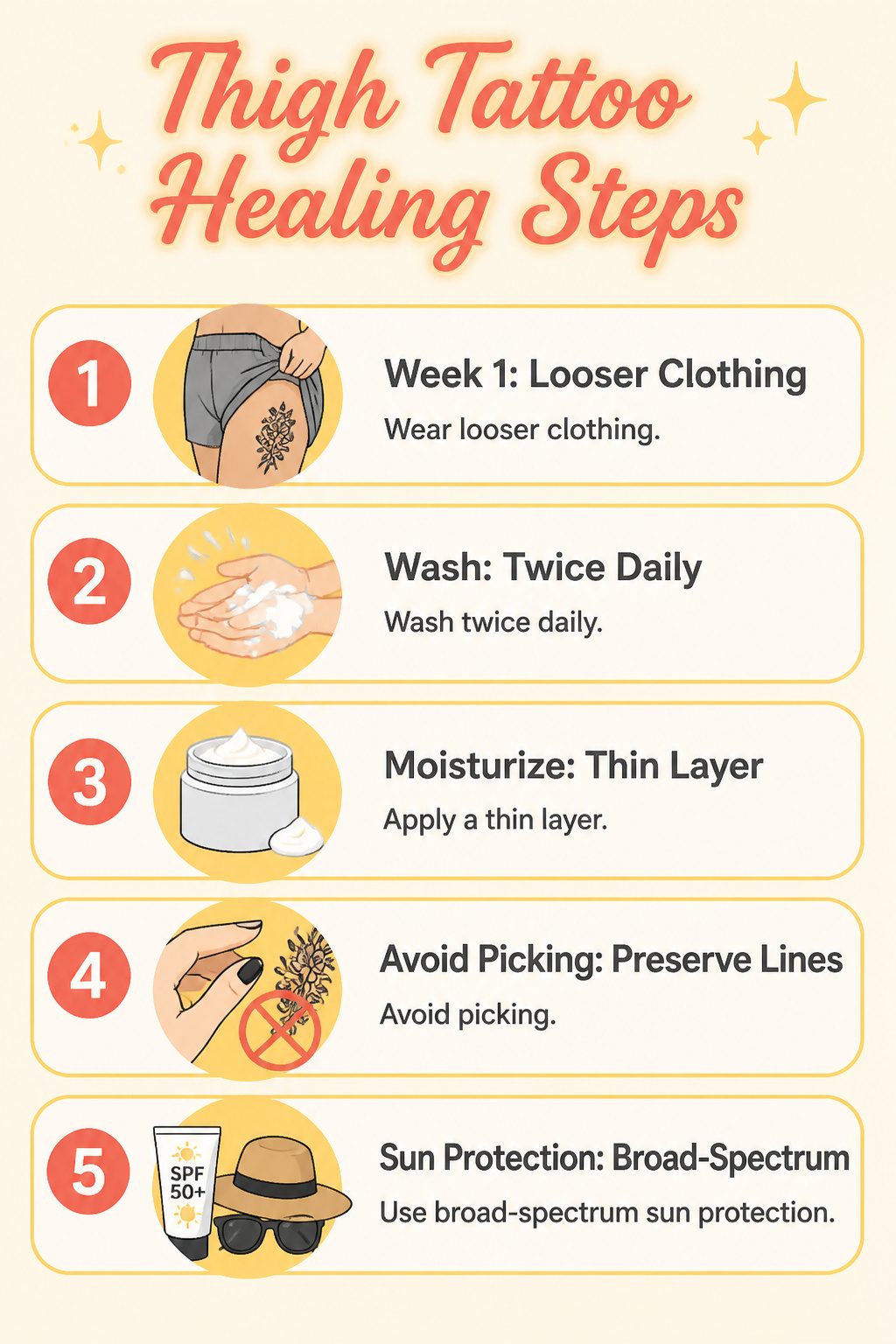
A thigh piece needs about two to three weeks to fully heal, and the real enemy during that stretch is friction from your pants. The first week matters most: looser clothing keeps the fabric from rubbing raw skin and pulling at the fresh ink. I learned that timing the appointment for a Friday helps, since weekend errands usually mean softer clothes anyway.
Washing twice daily with warm water and a gentle, unscented soap, then patting dry with something clean and disposable, heads off the bacteria that thrive in warm, covered spots. A thin layer of plain, fragrance-free moisturizer keeps the skin supple without suffocating it. The urge to pick at peeling flakes is real, but leaving them alone preserves the lines your artist laid down.
Long-term, sun protection keeps the pigment from muting into a washed-out version of itself. The thigh spends more time covered than a forearm or shoulder, which helps, but summers of shorts and beach days add up. Shade and clothing do most of the work; when skin is exposed, a broad-spectrum block applied once the tattoo has fully closed prevents the ultraviolet fade that turns bold blacks into dull grays.
Preparing for Your Appointment
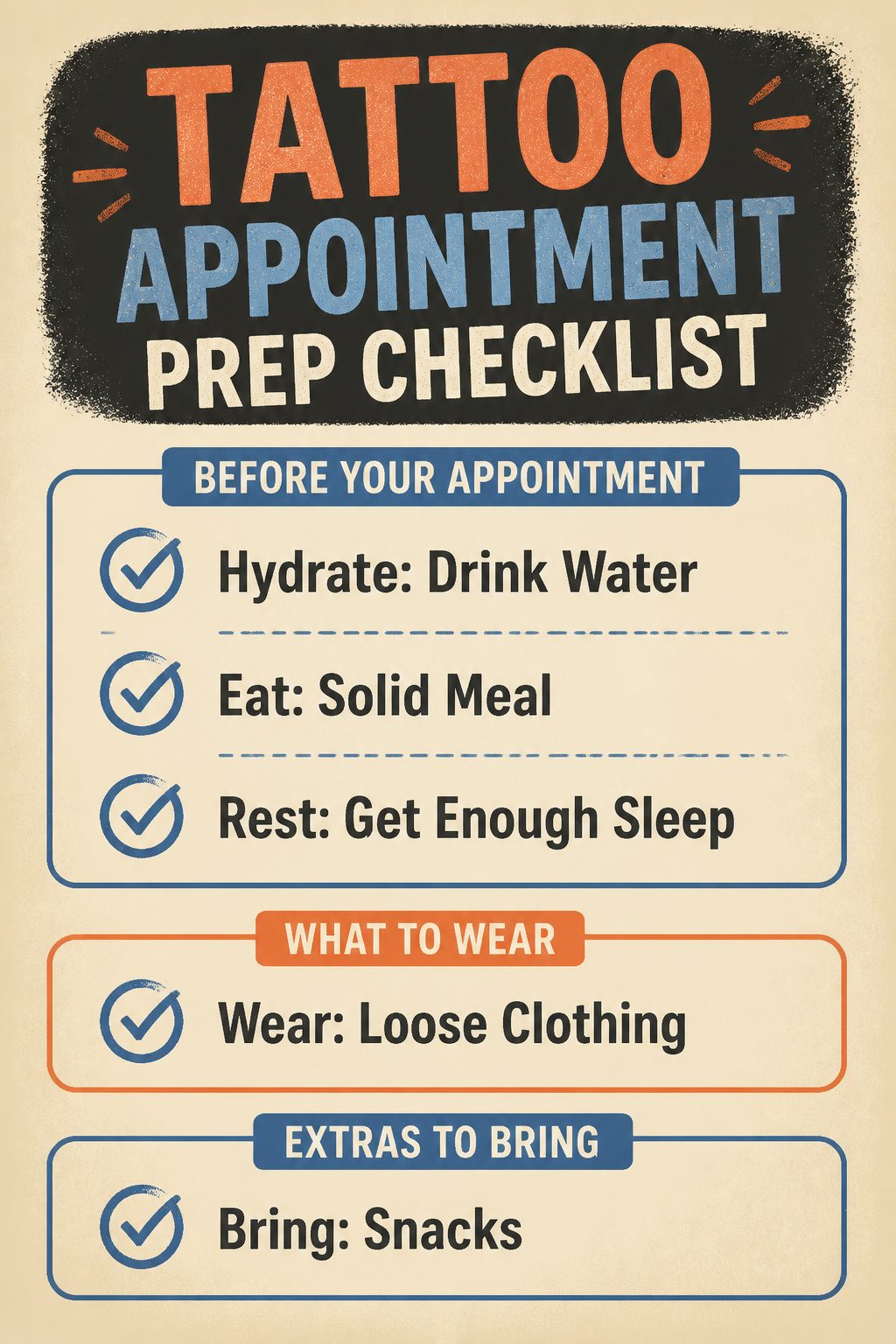
- Drink plenty of water in the days before your appointment. Hydrated skin takes ink better and the session moves faster.
- Eat a large, solid meal beforehand. Blood sugar can drop hard during a long sit, and a steady stomach keeps you in the chair without the dizziness that sends some guys to the floor.
- Wear loose shorts or pants that roll up easily. The artist needs clean access to the whole thigh, and tight fabric rubbing fresh lines for hours turns a long day into a longer one.
Frequently Asked Questions
Do thigh tattoos hurt?
The front and outer thigh hurt less than most spots because the muscle and fat cushion the needle. The inner thigh and hamstring area sting more, since the skin runs thinner and the nerves cluster denser there. A long session still wears on you from clock time alone, even if any single minute feels manageable.
How long does it take to create a men’s thigh tattoo?
A palm-sized piece might take two or three hours, while a full front thigh design can run eight to twelve hours and sometimes stretch to fifteen for dense work. Artists usually split larger pieces across multiple appointments. The real variable is detail: heavy linework and color packing slow the needle way down.
What is the most attractive tattoo placement on a man?
Thigh tattoos rank high because the large canvas lets designs flow with the leg’s musculature, emphasizing strength and movement. The placement also hides easily under pants for professional settings and shows only when you choose. That combination of visual impact and control appeals to a lot of guys.
How should I prepare for a thigh tattoo appointment?
Drink plenty of water for several days beforehand so your skin takes ink smoothly. Eat a large, solid meal right before you arrive to keep blood sugar steady through the sit. Wear loose shorts or pants that roll up easily; the artist needs clean access, and tight fabric rubbing fresh lines turns a long day into a longer one.
Why isn’t my thigh tattoo healing yet?
Thigh tattoos often heal slower than average because the area takes constant friction from pants and movement. The first week matters most: looser clothing, twice-daily washing with gentle unscented soap, and a thin layer of plain moisturizer all help. If two or three weeks pass with no improvement, contact your artist to rule out infection or aftercare issues.