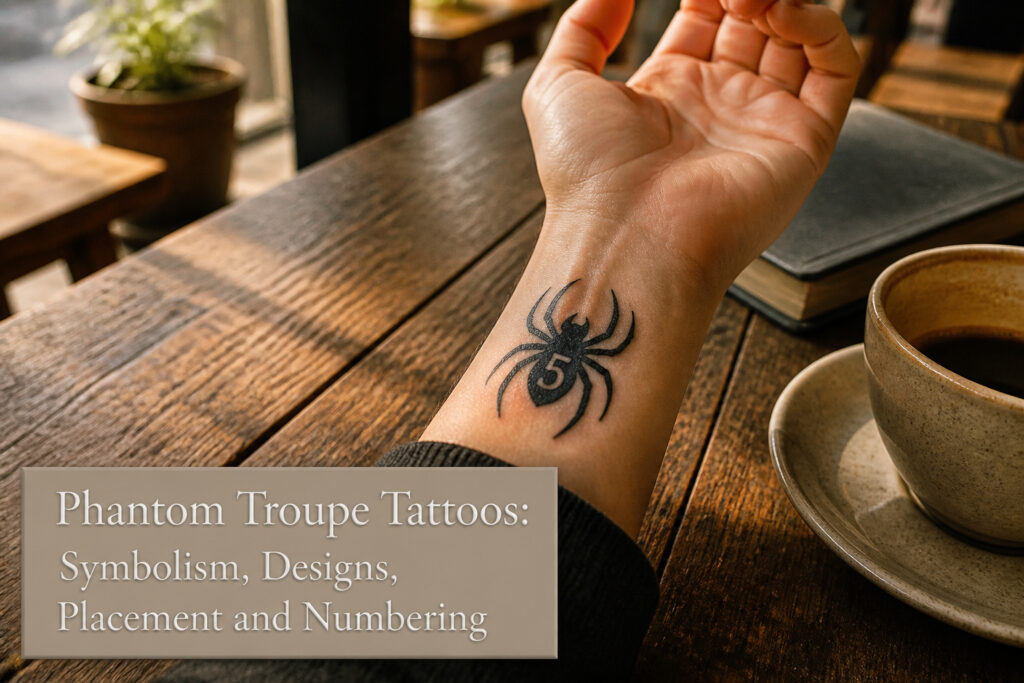
Phantom Troupe tattoos are permanent inkings of the twelve-legged spider emblem from Hunter x Hunter, worn by fans who identify with the series’ found-family outlaws. The catch is that the numbered detail inside the spider, ranging from 0 to 12, signals how deep your reference goes, and fans at conventions will read that digit instantly. The design only works if the line weight stays crisp; a friend of mine watched his blur into unreadable gray within two years because the artist went too light on the black.
Tattoo Symbolism
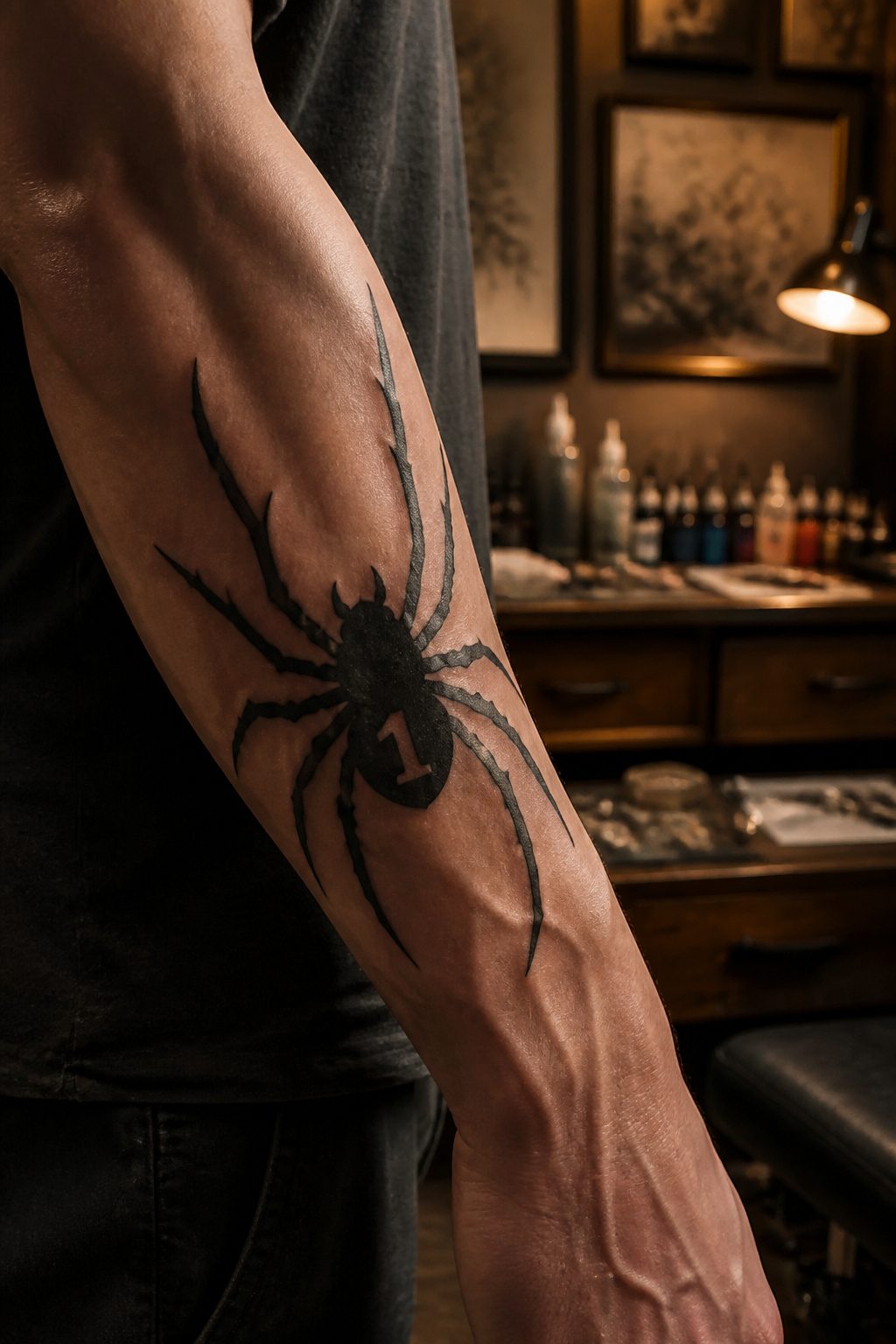
The Phantom Troupe spider tattoo carries weight because chosen family sits at its center, not blood relation. The twelve-legged emblem marks membership in a group that operates outside every law and still holds tighter than most legitimate bonds. That tension, between being cast out and being claimed, is what pulls people toward the design.
For fans who grew up feeling mismatched with their surroundings, the spider reads as recognition rather than villain worship. The Troupe’s members steal, kill, and protect each other with equal ferocity. Moral complexity is the point: no one is redeemed, no one is dismissed. The tattoo suits someone who has built their own circle from other strays and understands that loyalty does not require respectability.
The outsider symbolism runs deeper than simple rebellion. A spider builds its own structure, lives in margins, and survives through patience and collective threat. Wearing that mark says you have done the same, or you are still doing it. The design resonates most with people who found strength through loss and found family after leaving the one they were given.
Tattoo Design Variations
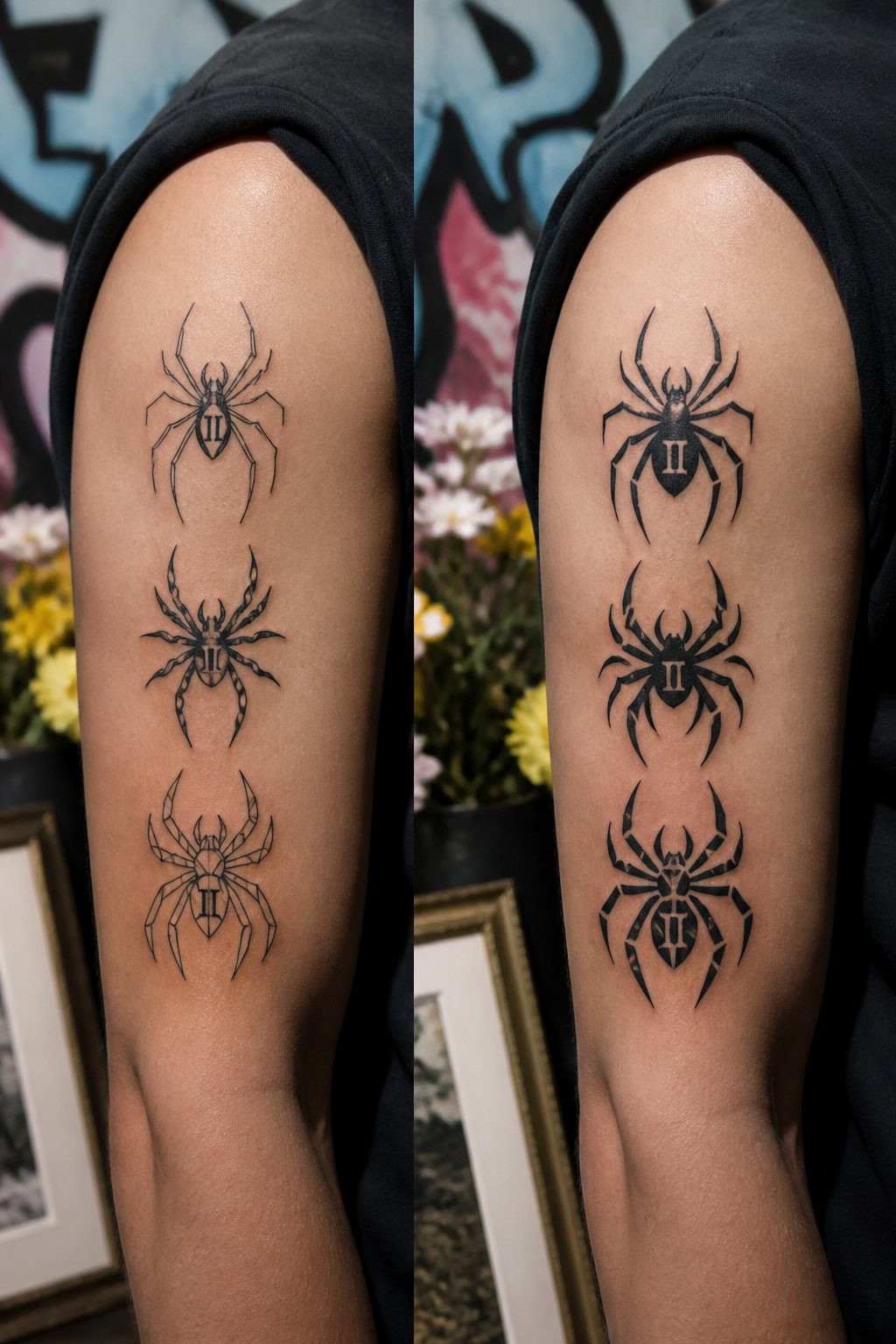
The twelve-legged spider emblem shifts dramatically depending on how the artist handles the line. In a minimalist treatment, the legs reduce to clean geometry, the body to a single oval, and the whole mark reads like a coded symbol rather than a creature. That restraint leaves room for a wearer to tuck a number, a name, or a small character detail into the negative space without crowding the composition.
Tribal styling pushes the opposite direction. Heavy black bars, hooked terminals, and symmetrical framing turn the spider into something totemic, almost carved. The aggressive energy suits placement on a shoulder or calf where muscle shape can carry the weight of solid blackwork. An artist experienced in blackwork is worth seeking out here; crisp edges soften over time, and tribal lives or dies on its precision.
Watercolor loosens everything. Translucent crimson, violet, or indigo bleed around the spider outline, suggesting the grief and instability that run through the series itself. The style reads lighter than blackwork, but it needs careful linework underneath to keep the emblem recognizable as color settles and fades. Character silhouettes or ink-splatter textures can push the piece toward illustration, though that risks dating the tattoo to a specific manga panel.
Traditional American styling, with its bold outlines and limited palette, treats the spider as a classic flash piece. The familiar visual language makes the anime reference legible even to viewers who miss the source, and the thick lines age more forgivingly than finer work. What separates a personal piece from a straightforward copy is usually one deliberate alteration: a leg count adjusted, a color swapped for birthstone hue, the body merged with a clock or rose from separate personal vocabulary.
Tattoo Placement
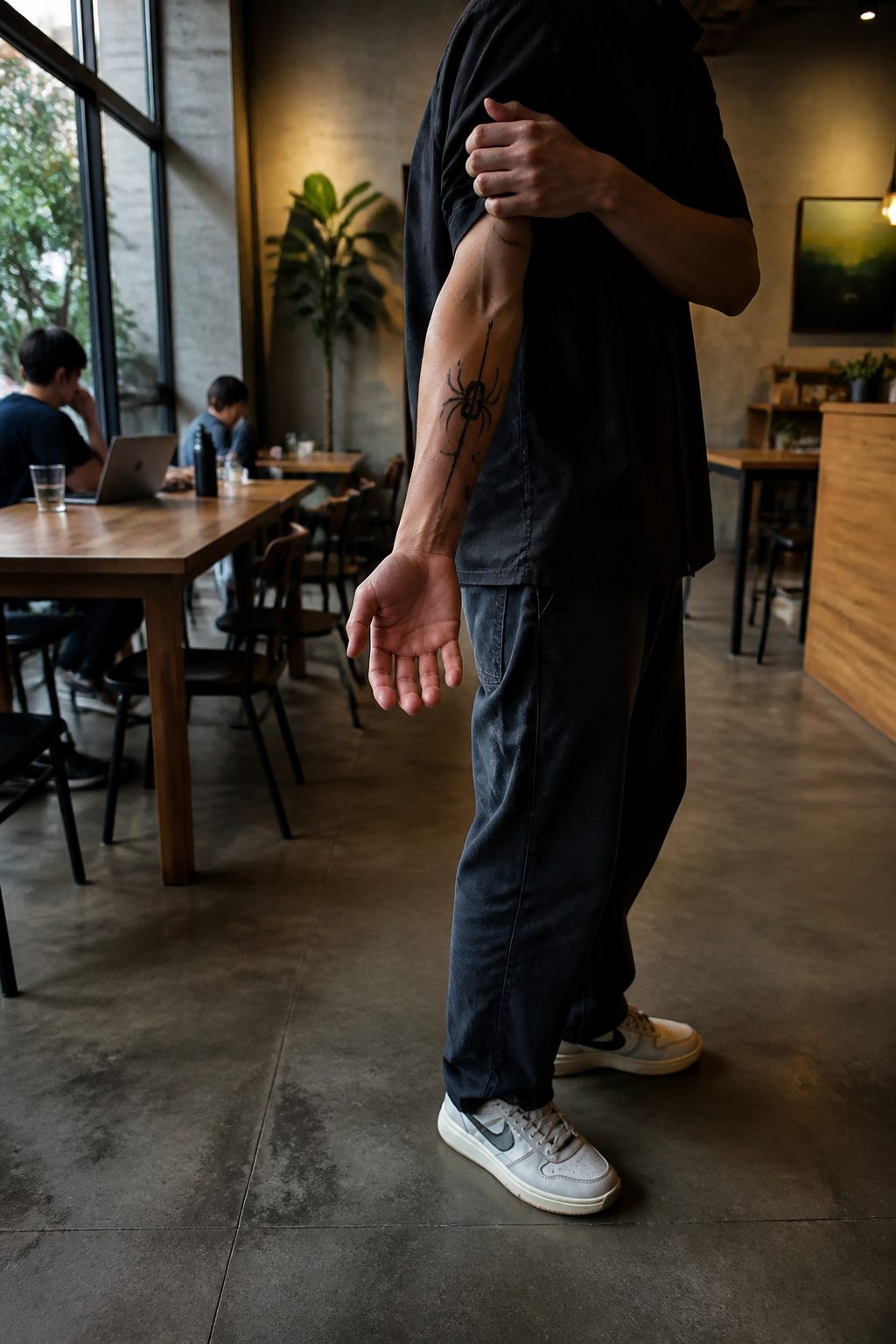
The forearm, upper arm, and chest remain the most common placements for a Phantom Troupe spider, mostly because the shape reads cleanly at a glance and the wearer sees it daily. A larger composition, say a full group scene with layered manga detail, needs the real estate of the thigh, ribs, or back. For something less immediately visible, a smaller design on the wrist or ankle keeps the reference private. Clean lines matter more than size here; overly fine interior marks blur over time, so the artist should simplify the legs and let negative space do the work. The chest and sternum can carry a more dramatic single emblem if you want the tattoo to feel like an announcement rather than a whisper. Smaller tattoos behind the ear or near the collarbone trade visibility for understatement, a choice that fellow fans tend to recognize while everyone else walks past.
Character-Specific Tattoos
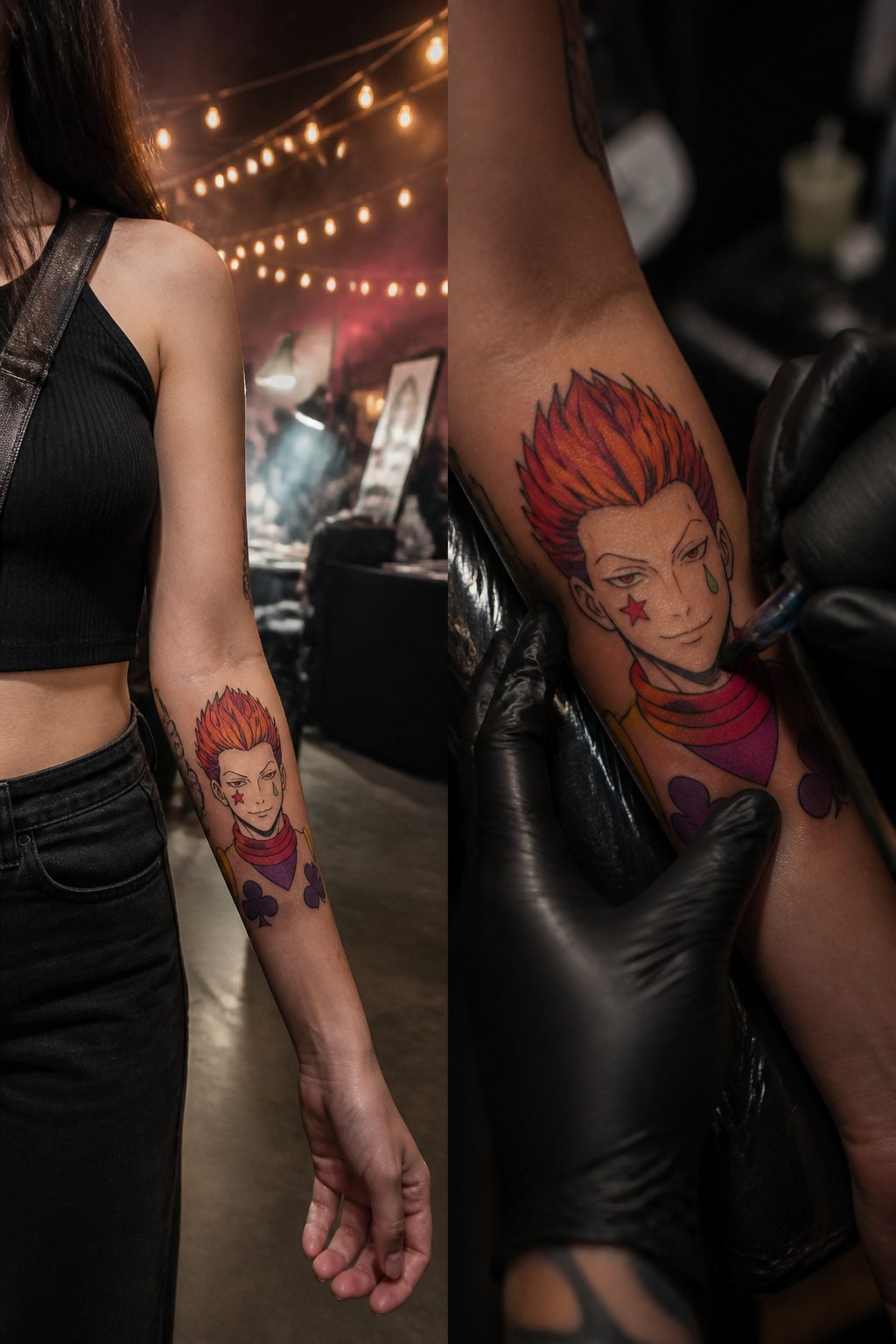
Character-specific Phantom Troupe tattoos pull from visual details that separate one member from the next. A Chrollo piece might work in the cross on his coat or the bandage motif from his fight with Zeno, while Hisoka’s teardrop and star face paint translates cleanly to bold color work that reads even at smaller sizes. Feitan’s umbrella and raised collar silhouette suit a narrow placement like the outer forearm or along the ribs.
What distinguishes these from the standard spider emblem is narrative density. The twelve-legged mark announces affiliation; a character piece signals which version of that loyalty you mean. Someone who sat with the Yorknew City arc and watched Chrollo lose his Nen to Kurapika carries a different attachment than a reader who came in during the Succession Contest. The tattoo becomes a timestamp.
The risk is dating yourself to a single arc. Hisoka’s 2011 anime color scheme differs from the manga’s palette, and Togashi’s own shifting art style means a panel-accurate Chrollo from 1998 looks stiff beside a 2023 interpretation. My preference leans toward compositional elements, the coat’s high collar or the texture of Feitan’s wrappings, rather than facial portraits that fight skin texture and aging. Character ink demands either an artist who knows Hunter x Hunter’s panel rhythm or a client willing to explain why a bandaged hand matters enough to wear permanently.
Tattoo Numbering
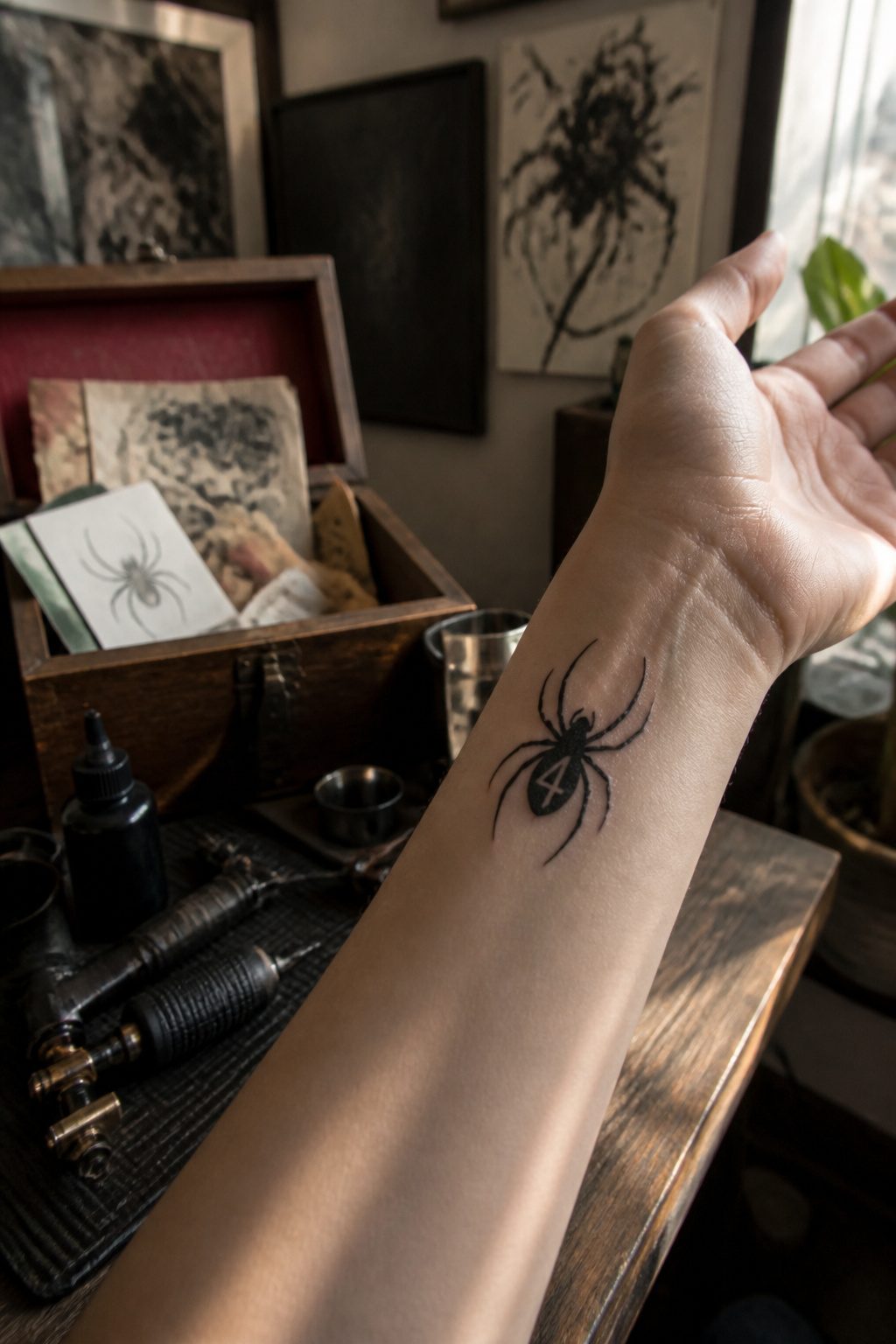
Each Phantom Troupe tattoo carries a number from 0 to 12 stamped inside the spider’s abdomen, and no two active members share the same one. The system runs 0 through 12 rather than 1 through 13, which leaves room for interpretation about who holds 0 and whether that slot belongs to the leader or sits outside the hierarchy entirely. Chrollo, the founder, has worn it. Hisoka once carried the 4, though his membership ended the way most do in that group.
The numbering is not sequential by rank or seniority, and the story never explains how a newcomer draws or receives a number. Replacement works by combat: kill a member, take their place, and presumably their number comes with it. For someone choosing this for their own ink, the practical question is whether to copy a known member’s number or claim an unused one. A 7 or an 11 lets the tattoo read as Troupe-inspired without cosplaying a specific character. Picking 0 or 4 invites more scrutiny, since those tie directly to Chrollo and Hisoka and fans will recognize the reference instantly.
The spider itself is the public symbol. The number is the detail that separates a fan who did the reading from one who liked the look. That distinction matters most at conventions, where the placement and number together signal how deep the reference goes.
Cultural Impact in Conventions and Cosplay
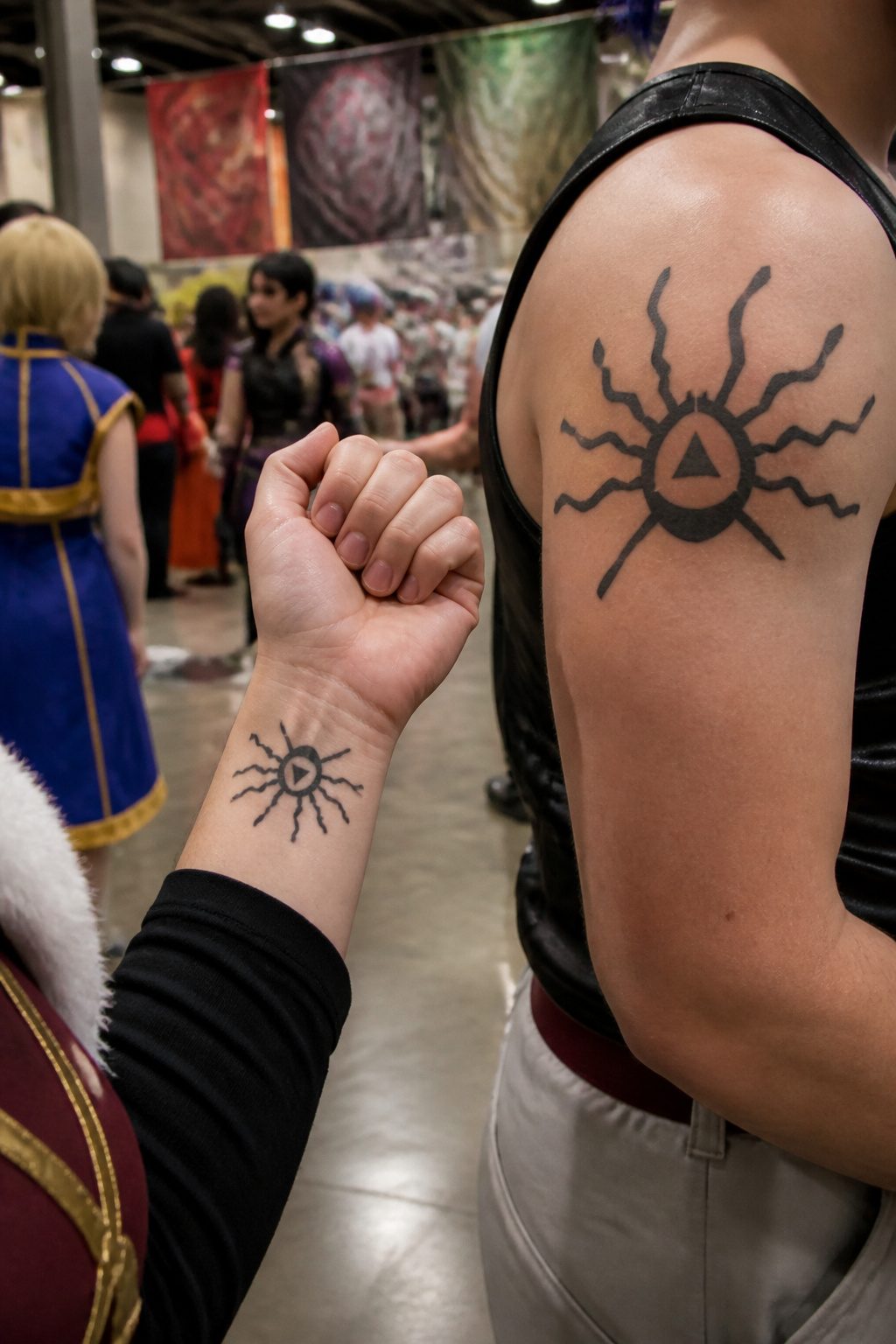
Phantom Troupe tattoos have become a quiet signal in United States convention halls, visible enough that another fan recognizes the spider emblem from across a crowded vendor floor. The design works as both personal expression and membership badge. Someone wearing the numbered spider on a wrist or shoulder can choose how loudly they broadcast their fandom; a full sleeve of Chrollo’s cross and Nen imagery reads differently than a small spider mark tucked behind an ear, but both get the nod from those who know the source.
Cosplay communities use the tattoo as a finishing detail that survives after the costume comes off. A Hisoka cosplayer might add the troupe emblem as a temporary piece for accuracy, while a dedicated collector gets the same mark permanently to carry the character past the convention weekend. The spider insignia functions here the way band patches once did at punk shows: immediate identification of shared reference, without needing to explain the preference for morally complicated characters or stories about loyalty under pressure.
What separates this from generic anime ink is the numbering system. Wearing a specific member’s digit, Uvogin’s 11 or Shizuku’s 8, signals a deeper attachment than the emblem alone. At a crowded convention after-party, two strangers spotting matching troupe numbers have an instant conversation starter that skips the usual introduction. The tattoo does the work of announcing what arc mattered to you and what kind of fan you are.
Personal Stories Behind the Ink
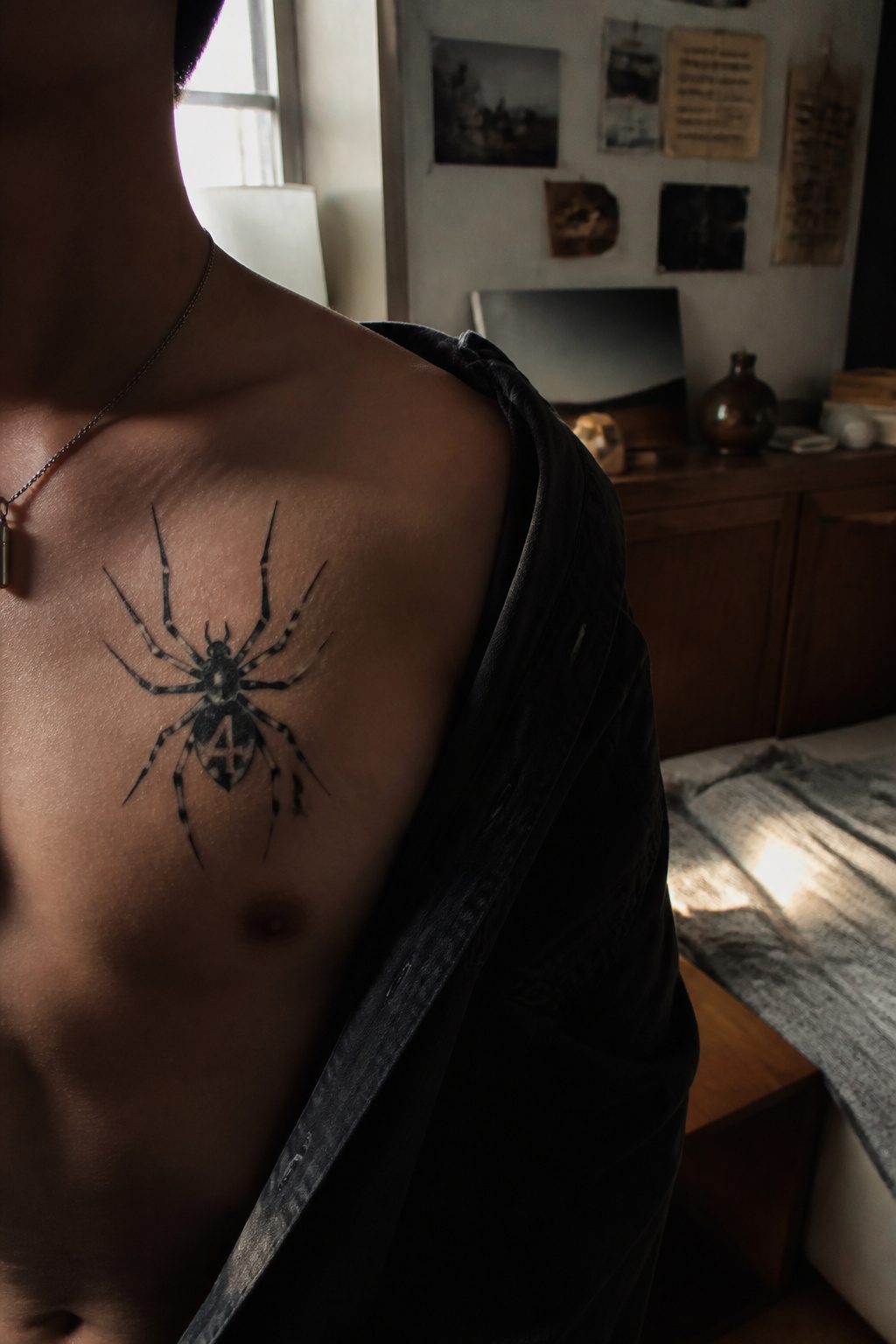
The choice to wear a Phantom Troupe tattoo usually runs deeper than fandom. The spider emblem carries weight for people who found their people outside the usual circles, the same way the Troupe itself operates as a found family bound by loyalty rather than blood. For someone who built strength through loss or isolation, the mark can read as a private reminder that survival does not require fitting in.
What draws wearers to this specific ink is its comfort with moral complexity. The series refuses to paint the Troupe as simply heroic or villainous, and that gray space resonates with anyone who has lived through experiences that do not tidy up into easy narratives. The tattoo becomes a way to honor the parts of yourself that resist being explained or domesticated.
Some connect the spider to a tight-knit community they actually belong to, a circle as fierce and complicated as the one in the story. Others wear it as a tribute to friendships forged through difficulty rather than convenience. The emblem works because it suggests collective identity built from distinct, even dangerous, individual personalities, not in spite of them. That tension between standing apart and belonging somewhere is what keeps the design from reading as mere merchandise.
What to Know Before You Commit
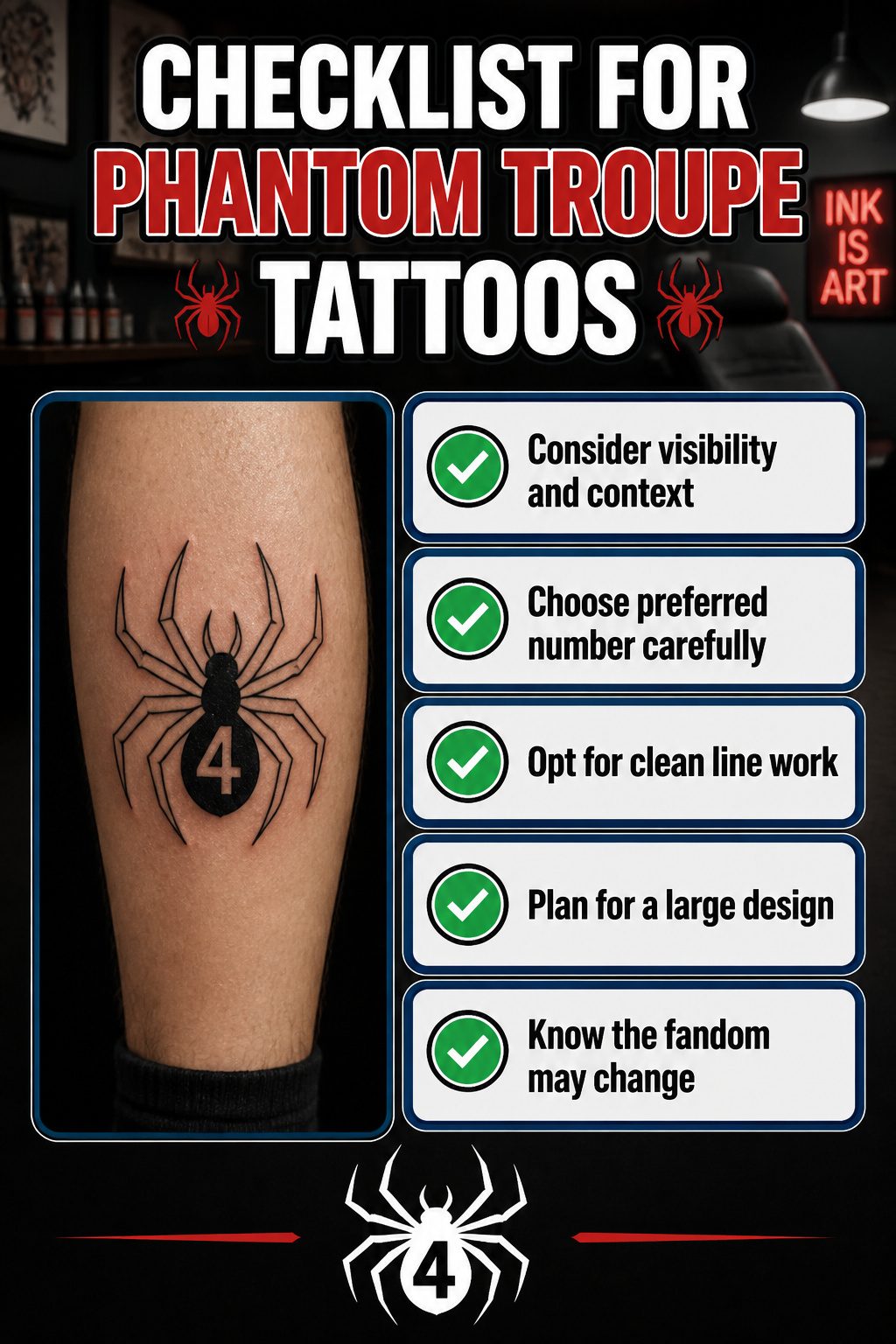
The spider emblem marks fictional criminals, and that fiction follows you outside convention halls. A forearm or calf placement reads clearly at a glance, which works for showing off at anime meetups but also means coworkers, relatives, and strangers in line at the grocery store see a twelve-legged spider with no context. The numbered detail inside the spider is not widely recognized, so most viewers just see the symbol, not the membership system behind it.
The number itself carries weight the original story never fully explains. Members display 0 through 12, yet the assignment method remains unknown even to fans. Picking a favorite character’s digit is common, though that choice locks you to a specific role in a group of thieves and killers. Clean line work ages better than heavy black fill on a design this geometric, especially at smaller sizes behind the ear or near the wrist where ink tends to blur over time. A larger chest or back piece gives the spider room to stay readable, but also commits more skin to a motif that may not outlast your current fandom phase.
Finding an Artist Who Gets Anime Ink
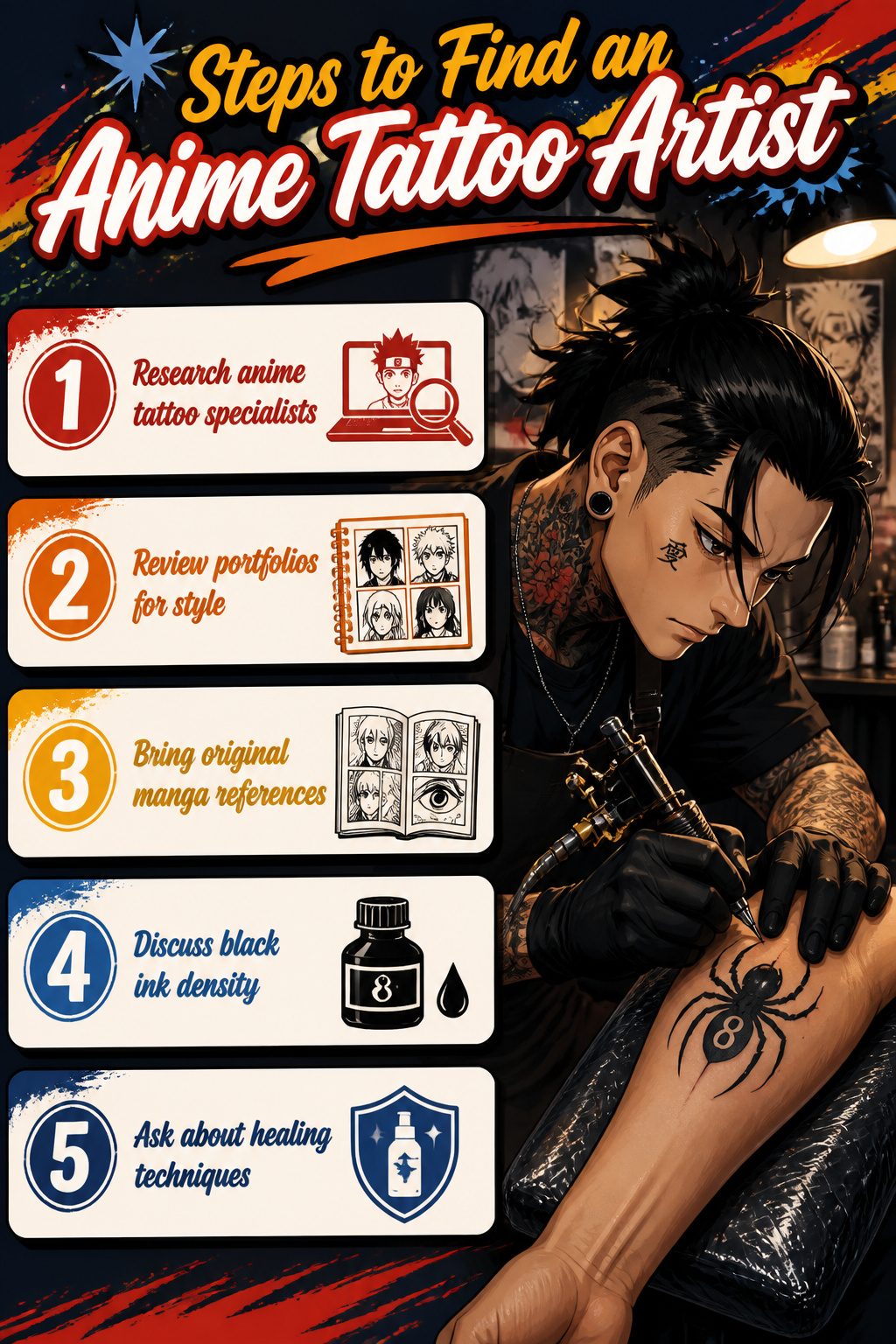
Anime-style tattoos need a specialist, and the line weight on that spider emblem will make or break the piece. In a portfolio, look for crisp blackwork and characters rendered with clean edges rather than soft shading. A Phantom Troupe spider has to read instantly at any size, which means the legs need uniform strokes and the body needs solid saturation without muddy grays.
When you bring reference material, bring the manga panels, not just screenshots. The original ink lines show the artist exactly what the creator intended, and the numbered spider has to match that precision or it looks like generic clip art. Ask how they plan to keep the black from healing into a blue-gray blob, because the emblem’s impact is almost entirely negative space against saturated ink.
I learned this the hard way watching a friend’s Troupe tattoo soften within two years. The legs blurred together where the artist had gone too light, and the number inside became unreadable. The fix was a heavy-handed coverup that tripled the original line weight. If your artist hesitates on holding that black dense and even, the spider loses its bite entirely.
Frequently Asked Questions
What does the Phantom Troupe tattoo symbolize?
The tattoo stands for chosen family built outside blood relation and loyalty that does not demand respectability. It suits people who found their people among other strays and who understand survival through patience and collective strength. The spider itself, building structure in margins, speaks to anyone who built identity after loss or isolation.
Where are the best places to get a Phantom Troupe tattoo?
The forearm, upper arm, and chest are most common because the shape reads cleanly and stays in daily view. Larger compositions need the thigh, ribs, or back. Smaller placements behind the ear, on the wrist, or near the collarbone keep the reference private while fellow fans still spot it.
What are the different styles of Phantom Troupe tattoos?
Minimalist treatments reduce the spider to clean geometry and leave room for numbers or small details in negative space. Tribal styling uses heavy black bars and hooked terminals for a totemic, aggressive presence. Watercolor adds translucent color bleed around the outline, though it needs careful linework underneath to keep the emblem recognizable. Traditional American bold outlines and limited palette treat the spider as classic flash and age more forgivingly.
How is the numbering of the Phantom Troupe tattoos determined?
Each member carries a unique number from 0 to 12 inside the spider’s abdomen, but the story never explains how numbers are assigned or how newcomers receive them. Replacement happens by combat, so killing a member and taking their place presumably brings their number with it. Fans who get this ink often choose an unused number like 7 or 11 to avoid cosplaying a specific character, while 0 or 4 tie directly to Chrollo and Hisoka and draw instant recognition.