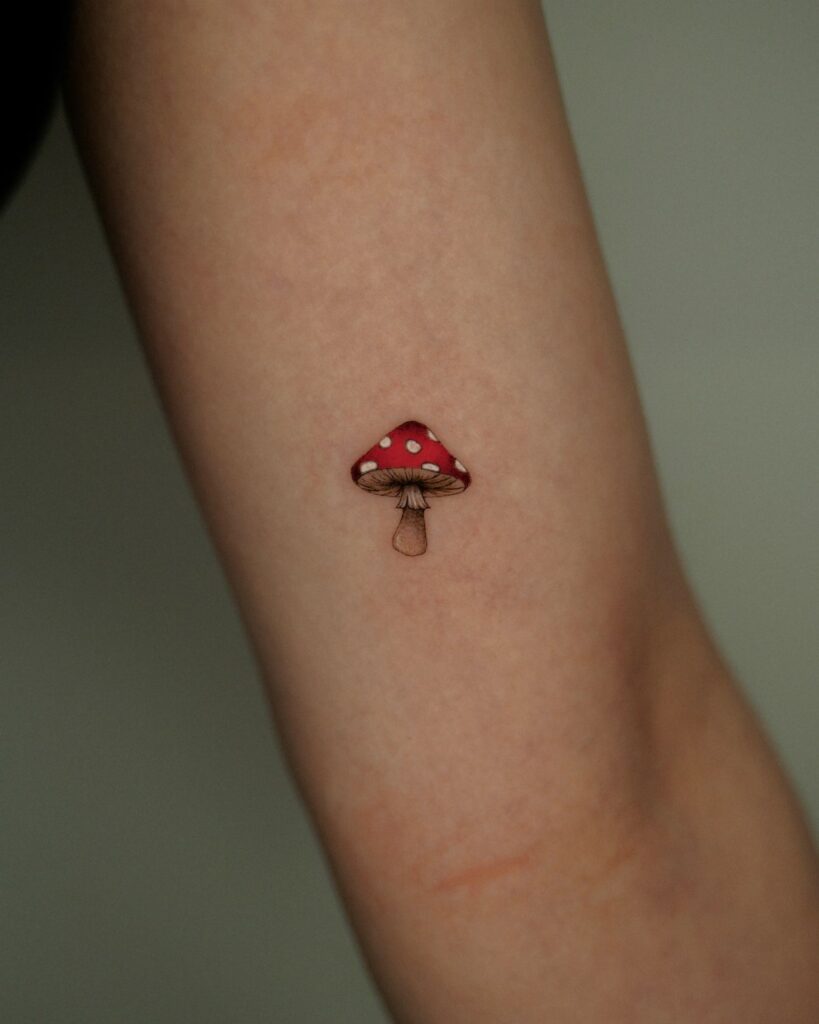
The 10 ideas below run from a quarter-sized inner arm piece to a full thigh of architectural fairy-tale detail, and the deciding factor is how much room you have and whether you need to hide it.
1. Small Mushroom Tattoo
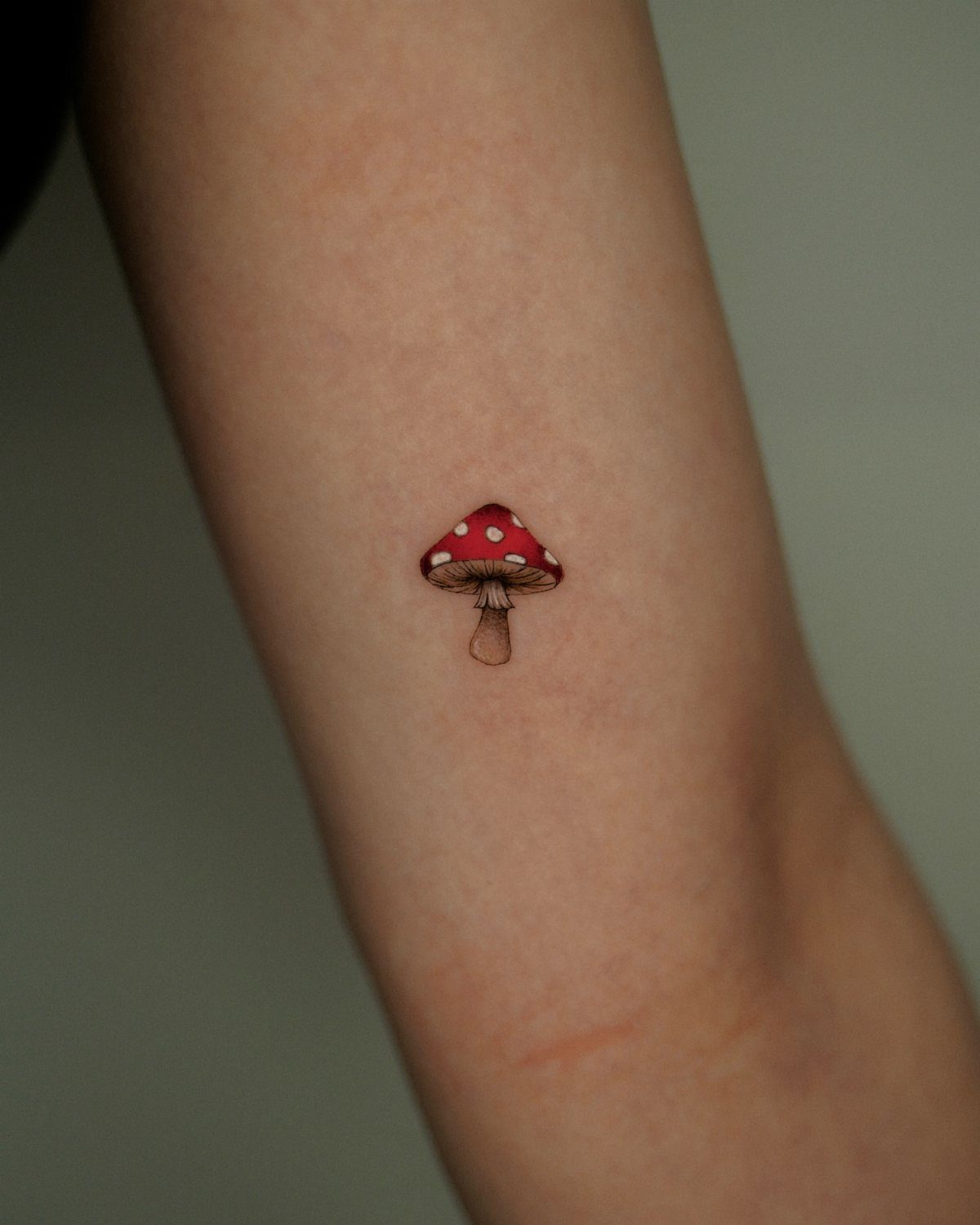
A small mushroom tattoo hides or shows depending on what you wear, which matters more than the design itself.
A small mushroom on the inner arm, about the size of a quarter, works best with a faded red cap and white spots that read as vintage rather than bright.
I would ask the artist to keep the black outline thin; a heavy line on something this small turns blobby fast. The stem disappearing into grass gives it a finished look without adding much skin real estate.
Best for a first tattoo or someone who needs office coverage.
2. Mario Mushroom Tattoo
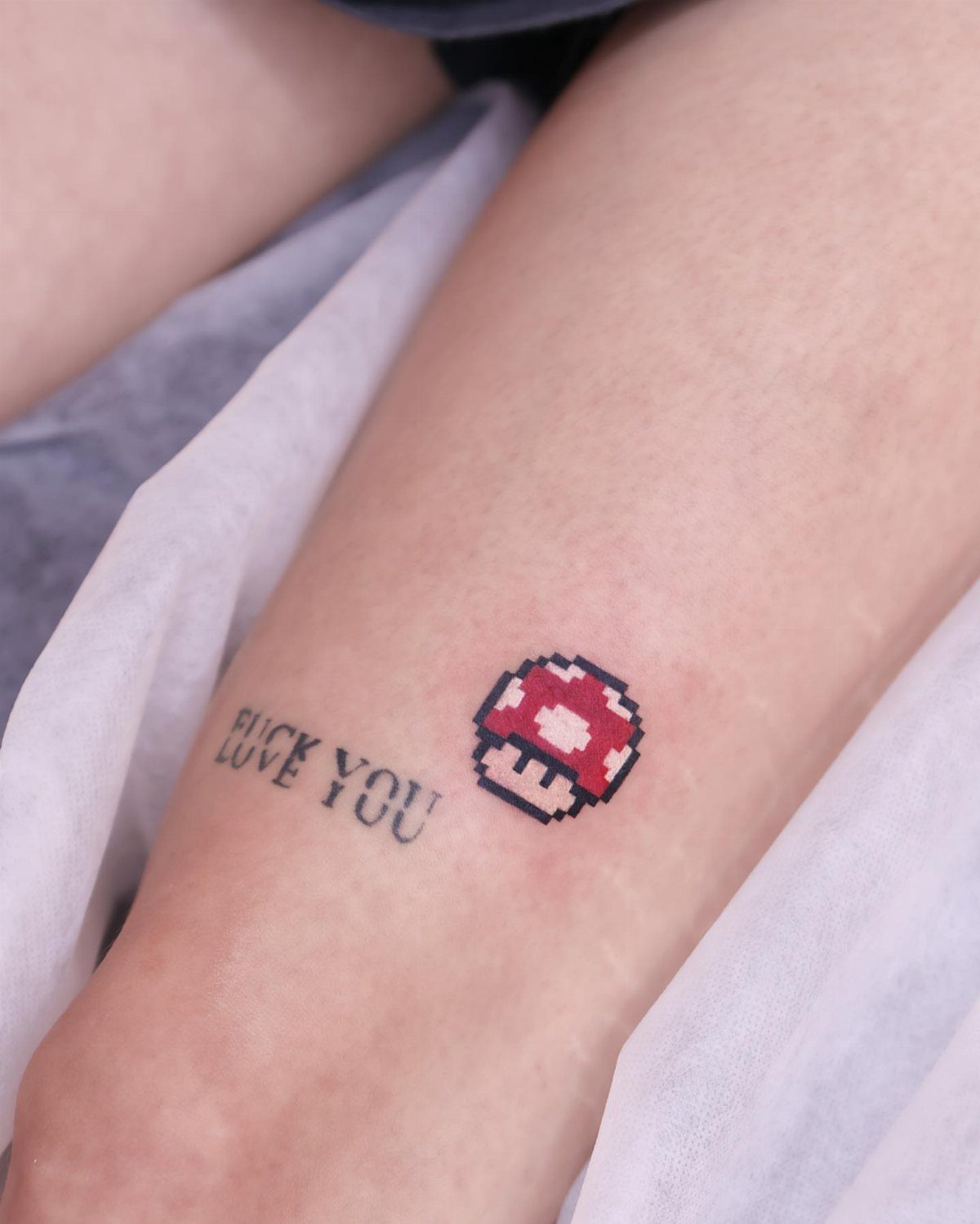
The Mario mushroom works because the 8-bit shape is already a symbol; the viewer reads it instantly without explanation. Pixel art tattoos need a specialist, though.
The straight lines and limited palette look easy but blur fast if the artist freehands what should be exact. The classic red cap with two white dots is the 1-Up variant, not the Super Mushroom with three.
I would stick with the two-dot version; the spacing is more forgiving on skin. Pair it with text only if the lettering is the same pixel font, or the styles fight.
3. Minimalist Mushroom Tattoo
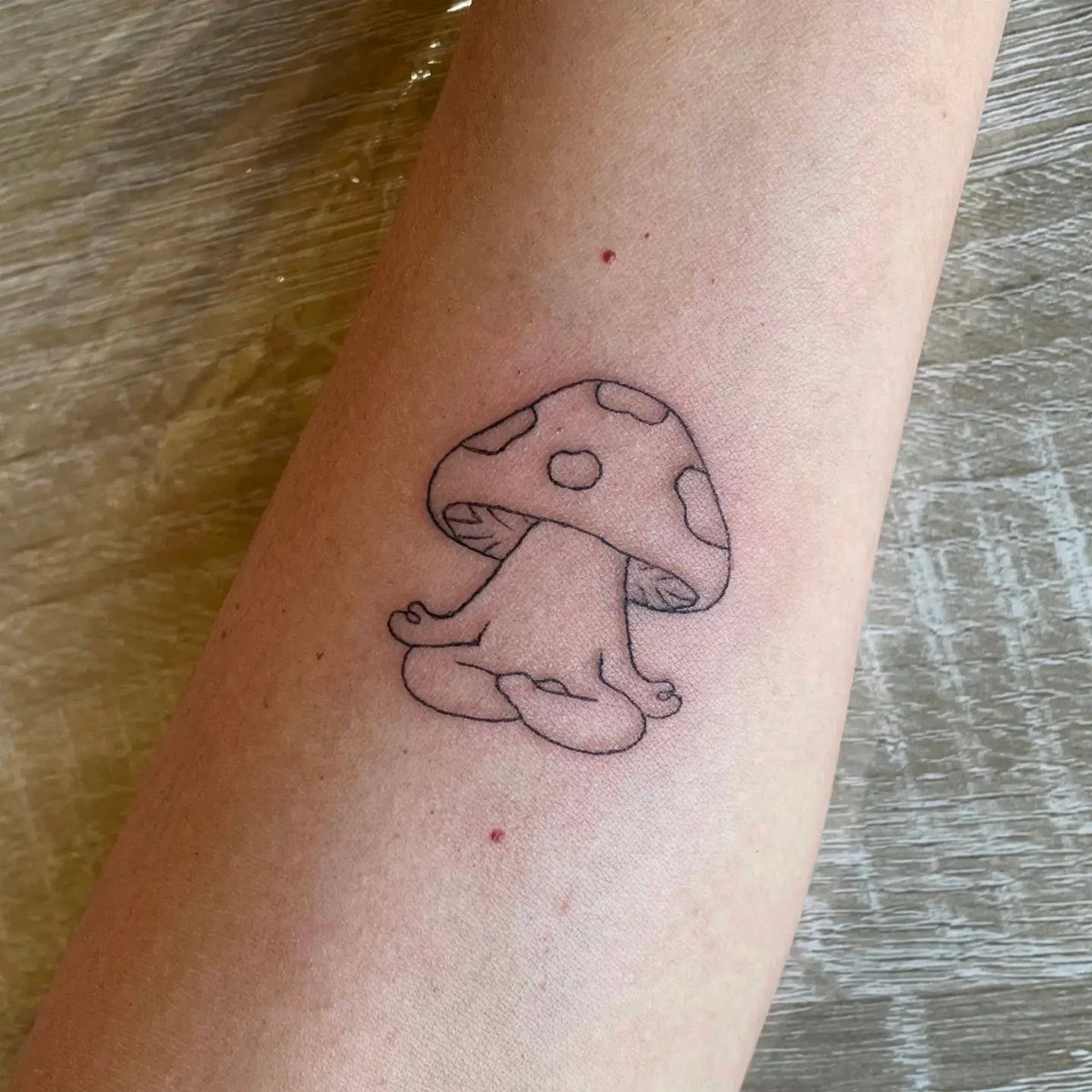
Minimalist mushroom tattoos live or die by line weight. A single-needle outline with no fill ages better than shaded work in this size range.
The cap has slight interior striping and the grass at the base hides the volva, the cup-like structure at the stem bottom. That is a smart move; the volva complicates a simple design without adding meaning most viewers catch.
Ask for the grass if you want grounding, skip it for a floating look. Either way, keep the total size small or the fine lines spread.
4. Psychedelic Mushroom Tattoo
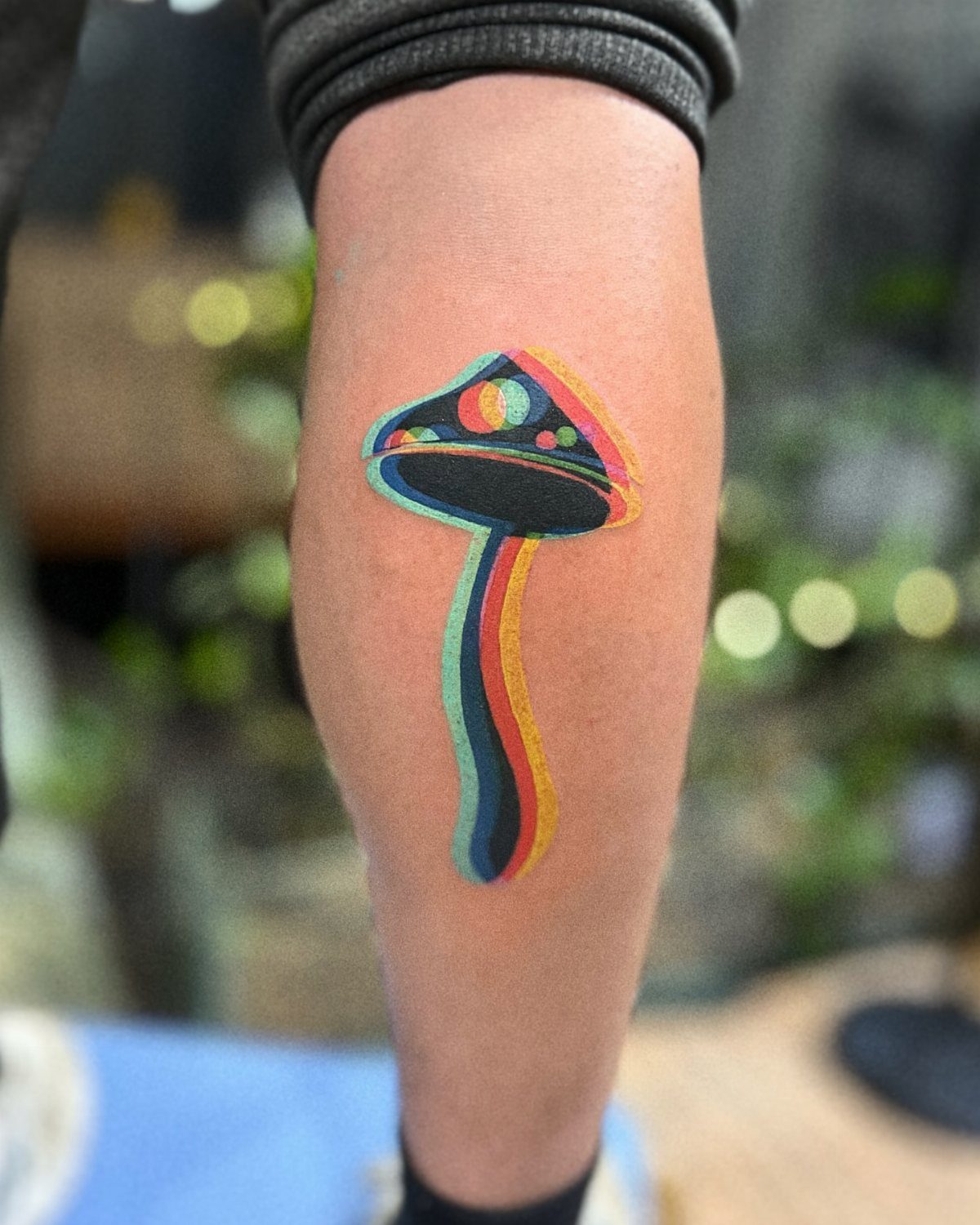
Psychedelic mushroom tattoos risk looking like generic rainbow explosions unless the color has a logic. The photo uses chromatic aberration, that red-blue split from old 3D images, which gives the swirl a reference point rather than chaos.
Four red caps with blue and pink rays shooting outward create the hallucinatory effect without needing every color in the wheel. I would limit the palette to three hues maximum; more than that and the eye has nowhere to rest.
This style needs space, so plan for at least palm-sized. Not for someone who wants to forget it is there.
There are a staggering 180 species of hallucinogenic mushroom in existence. These mushrooms contain some amount of psilocin and psilocybin, which can produce a comparable experience to LSD.
5. Cute Mushroom Tattoo
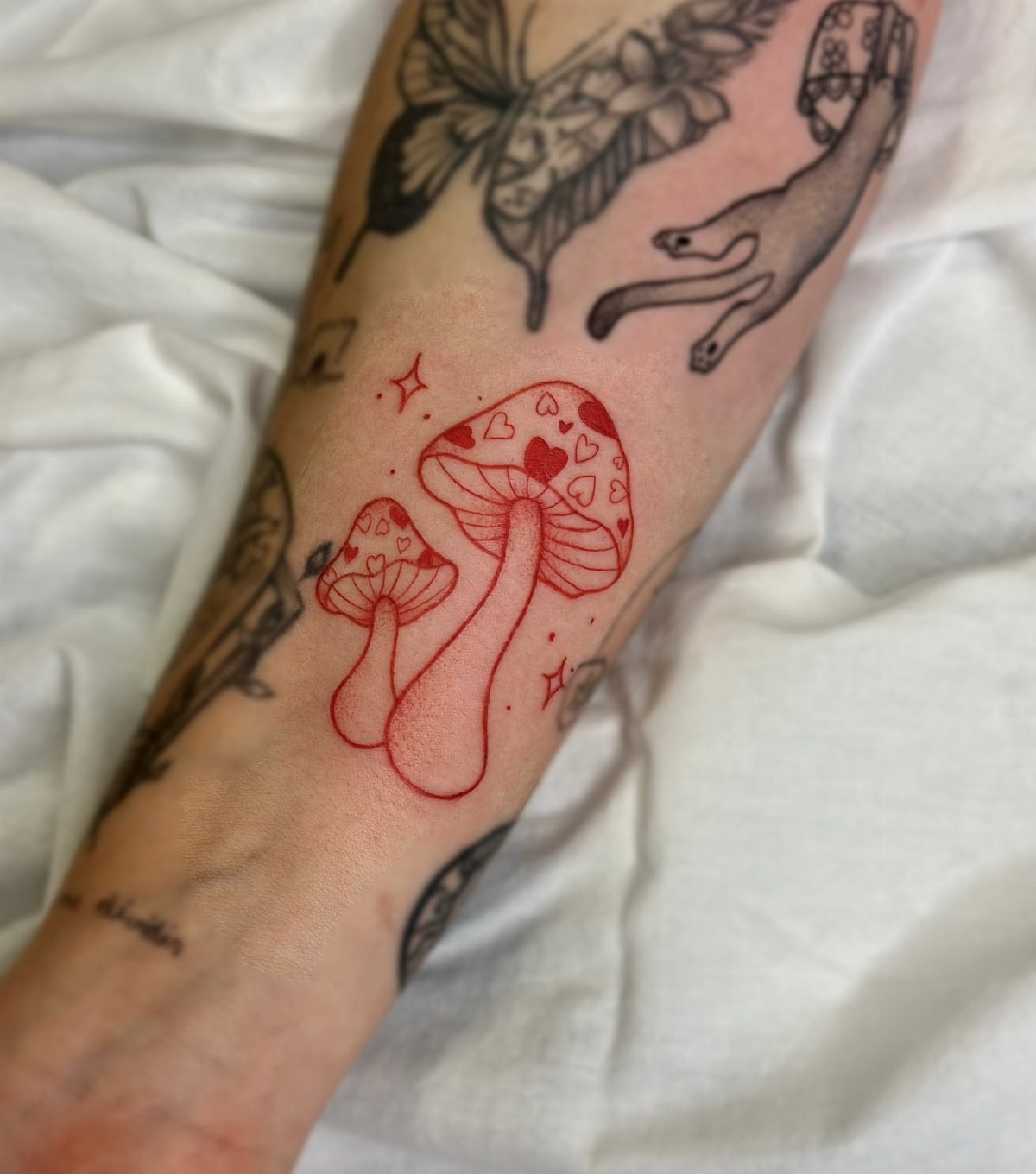
Cute mushroom tattoos borrow from cartoon logic: hearts on the cap, sparkles around the shape, the stem turned into a tiny house with a door and window.
The photo uses red ink rather than black, which changes the whole mood; it reads as illustration rather than traditional tattoo. The 3D effect comes from a hollow where stem meets cap, a single dark spot that suggests shadow.
I would add that detail even if simplifying everything else; without it, the house reads flat. Best for upper arms or calves where the curve of the muscle gives the mushroom a slight tilt, like it grew there.
6. Morel Mushroom Tattoo
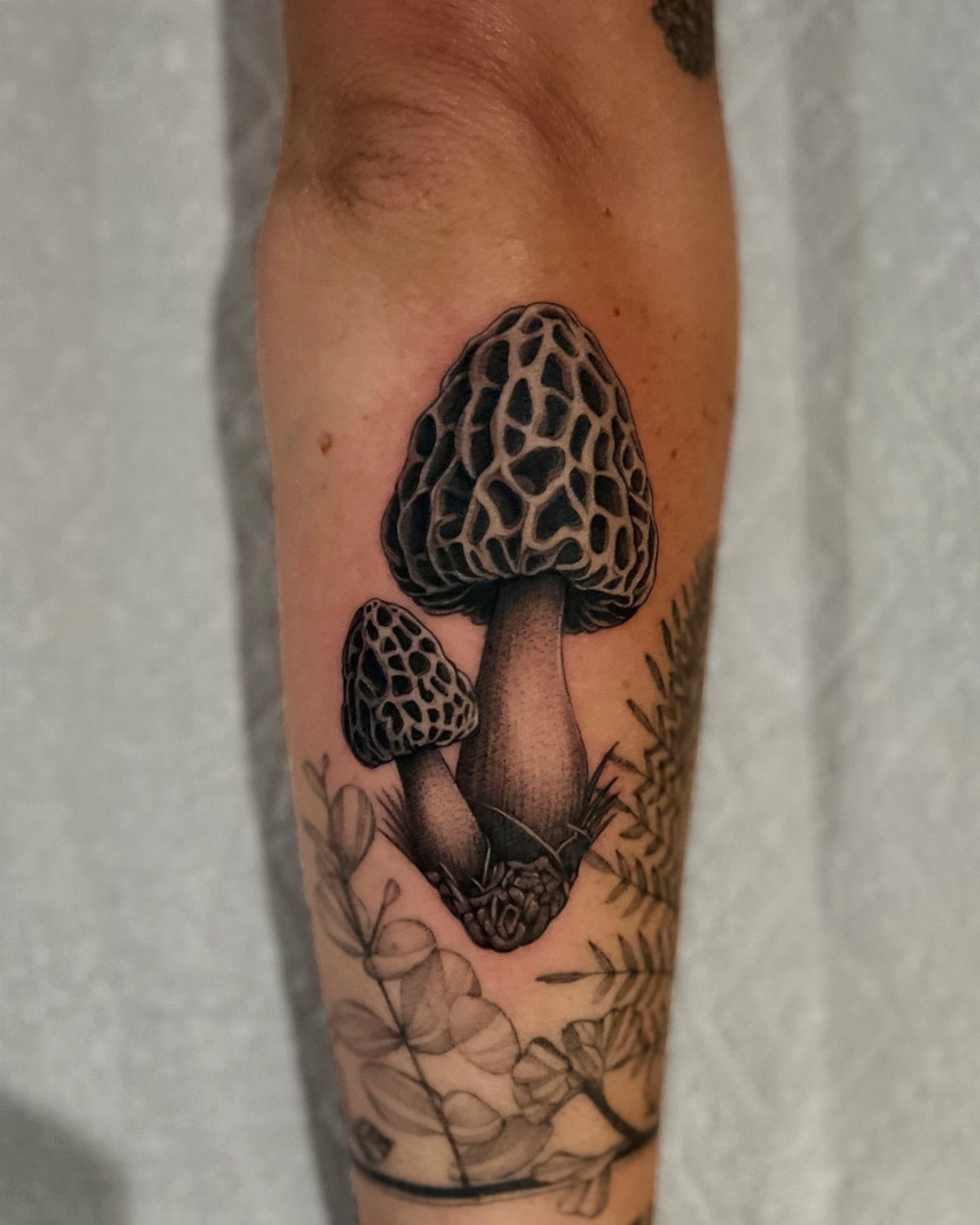
Morel tattoos suit people who actually hunt them. The honeycomb cap is the hardest texture to render in black and grey; deep black spots against lighter grey ridges are the only way the pattern reads as dimensional rather than dirty.
A brown wash on the stem separates it from the cap without needing color. Surrounding botanicals suggest a sleeve in progress, but a single morel stands alone fine.
I would place it where the cap points up, not sideways; the elongated shape looks wrong horizontal.
7. Traditional Mushroom Tattoo
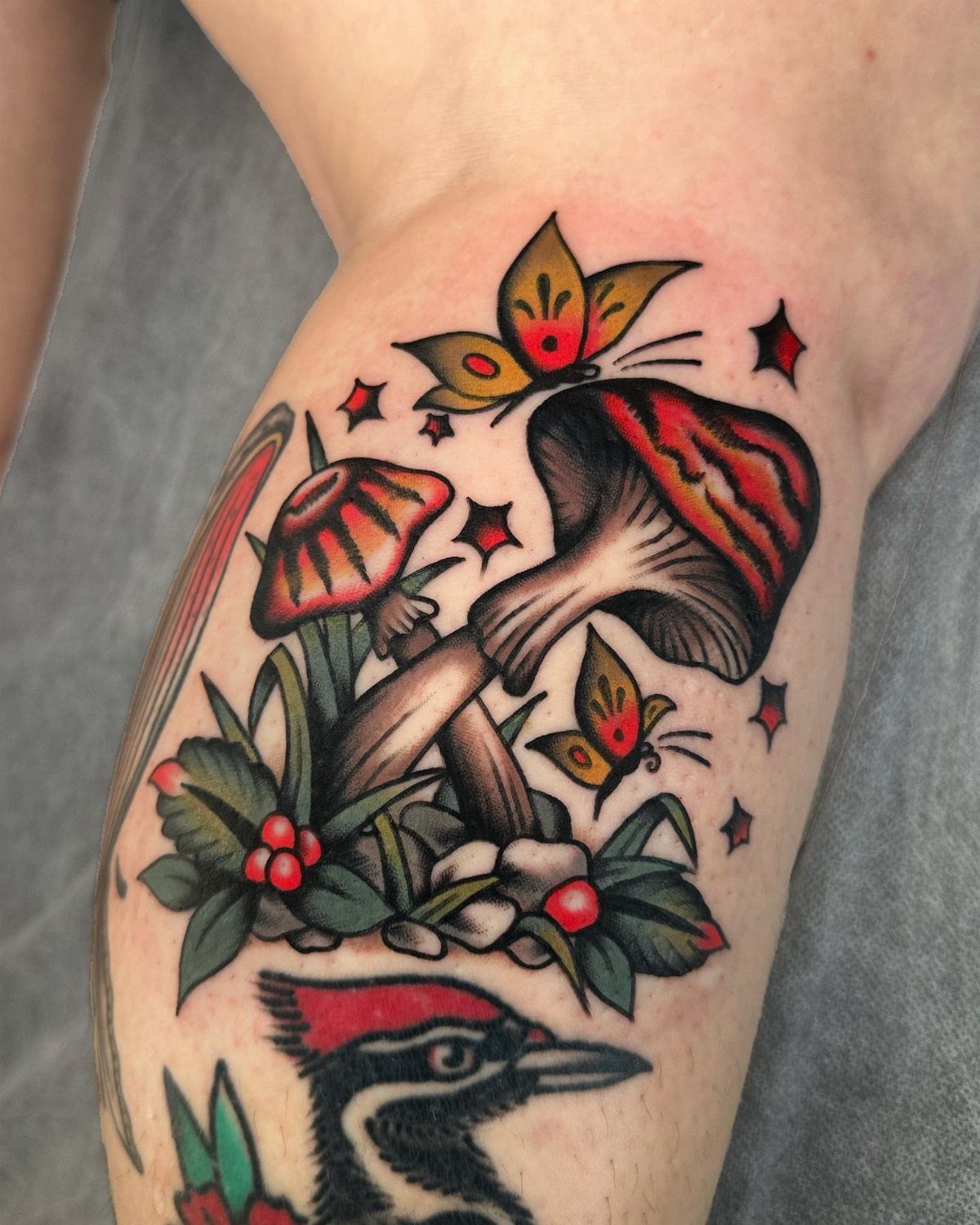
American traditional framing puts the mushrooms among butterflies, berries and leaves rather than treating them as a standalone subject, which helps the design age evenly on a calf or outer arm.
The line weight needs room to breathe, so I’d place this no smaller than a palm. Someone who wants a nature piece without the soft edges of watercolor or realism gets a tattoo that still reads clearly once healed.
8. Realistic and Botanical
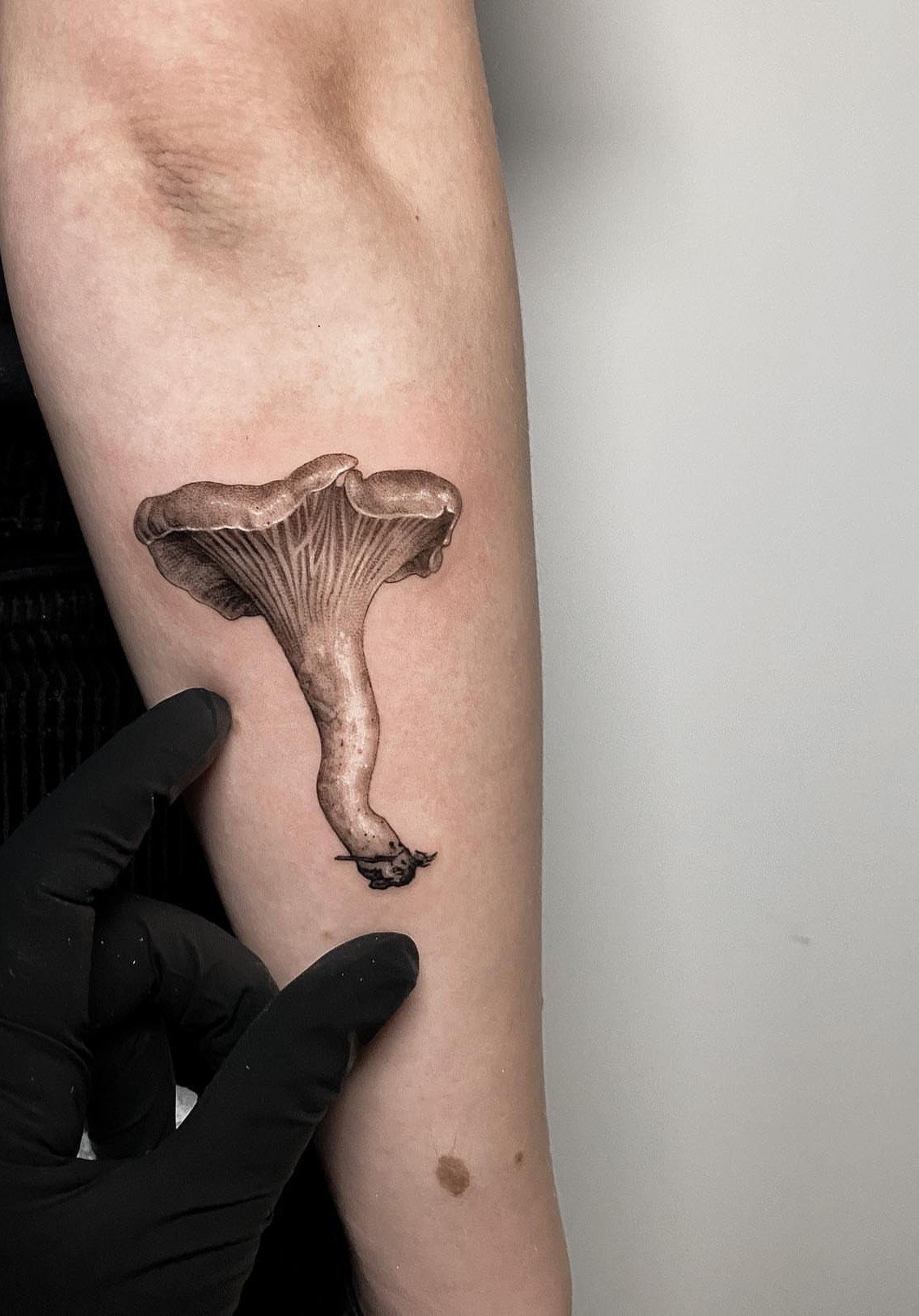
A single chanterelle or morel rendered in sepia and brown tones suits an inner forearm or rib panel where the viewer leans in close.
The value here is specificity; you are choosing one species you have actually found or eaten, not a generic toadstool, and the artist needs reference photos of that exact mushroom in that exact light.
Leaves or flowers can frame the composition, though I find they compete with the gill texture unless kept in softer focus.
This style demands an artist with botanical portfolio work; a realism specialist without plant experience often misses the weight and moisture of the flesh. Check their healed photos, not just fresh work.
9. Whimsical and Fantastical
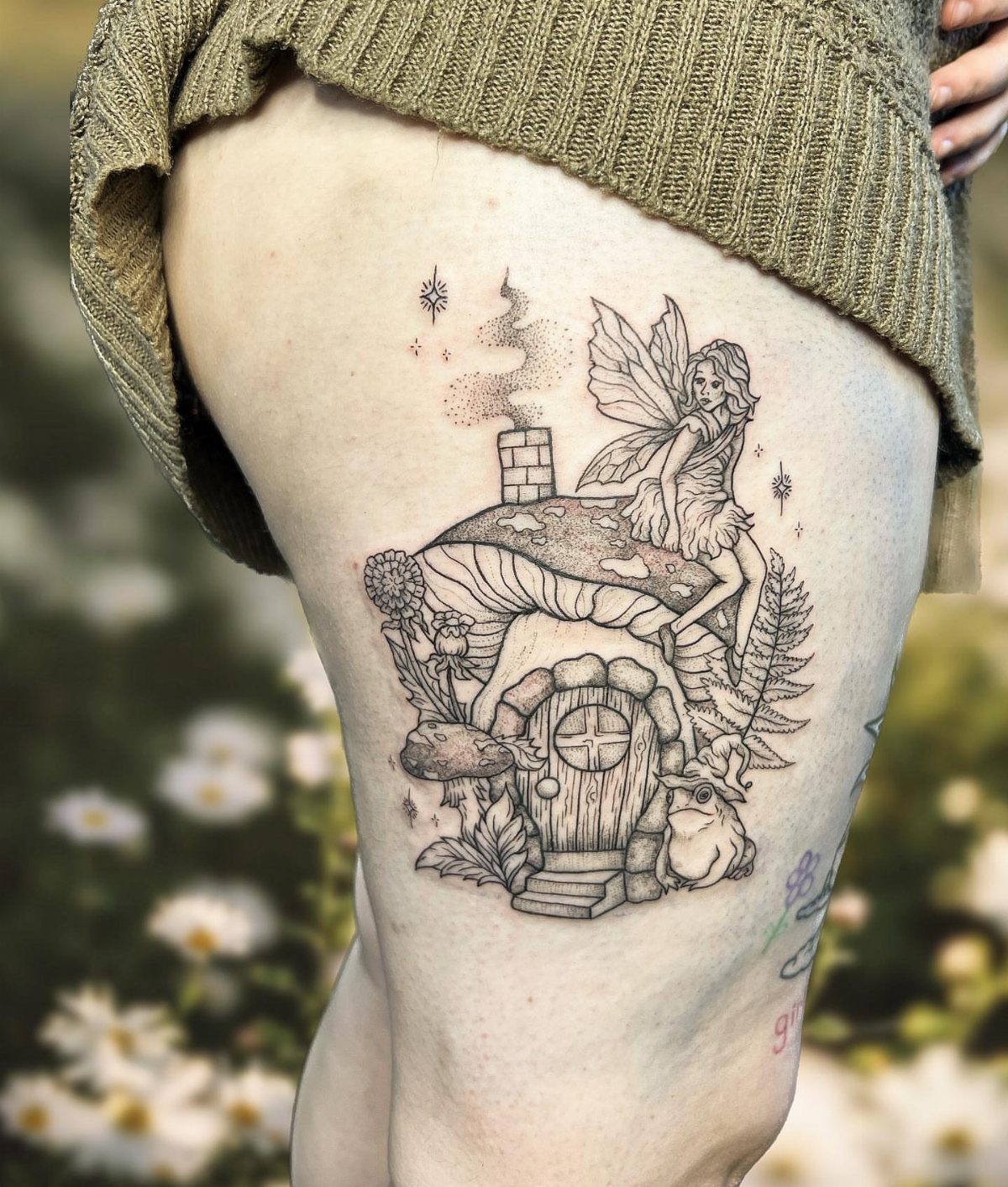
A mushroom cottage with a fairy perched on the roof turns the body into a storybook page.
Black and grey keeps the detail from turning muddy as it settles, and the thigh offers enough flat ground for the architectural lines of a door and roof to hold their shape.
Fairies, gnomes or a frog at the threshold give the piece motion; the eye travels from the creature to the house to the surrounding plants.
This is the choice for someone who grew up on Arthur Rackham or Brian Froud and wants that nostalgia visible.
The risk is dating; I’d keep the fairy’s face small and stylized rather than portrait-realistic, so it stays a type rather than a specific era’s beauty standard.
10. Abstract Mushroom Tattoo
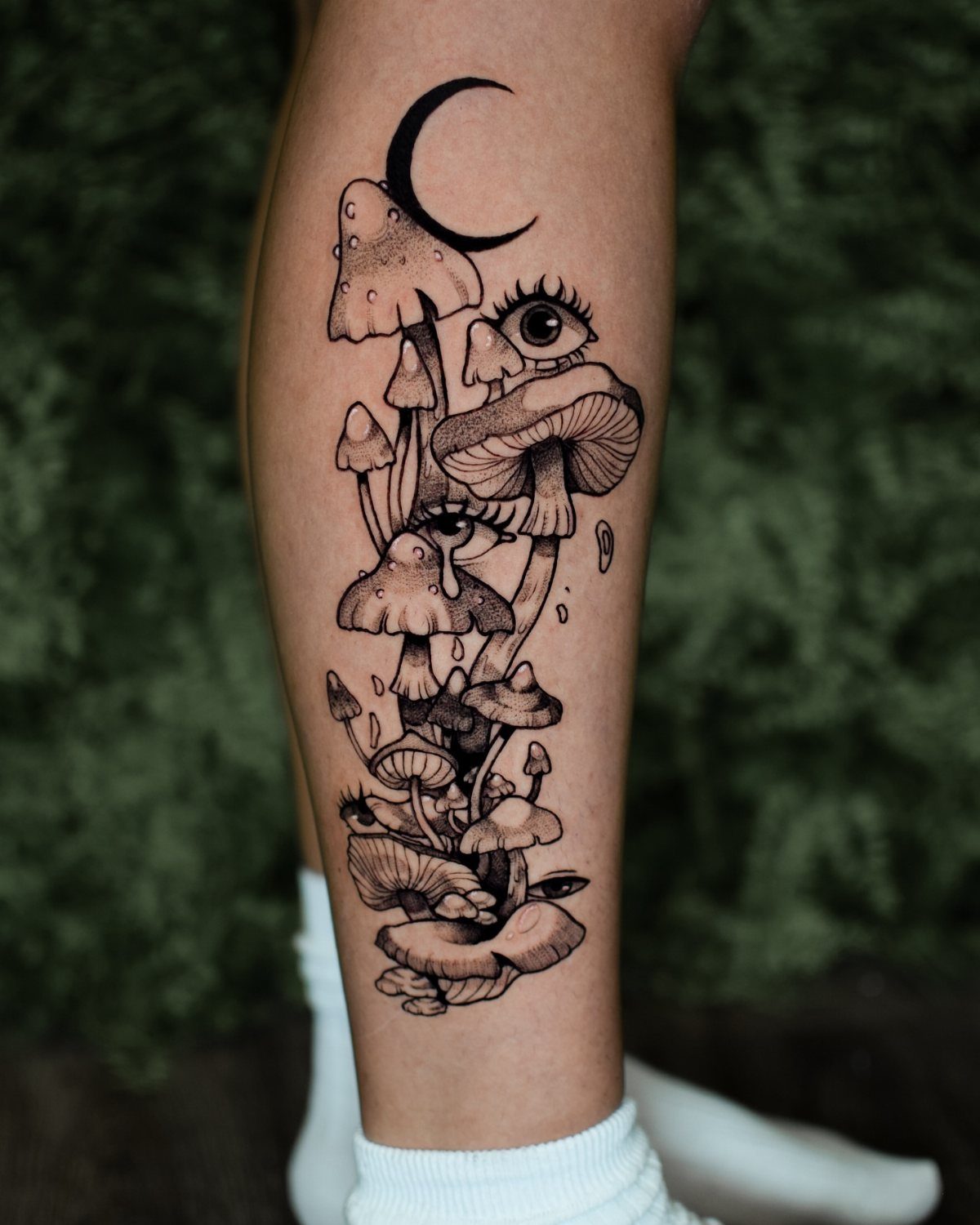
Crying eyes merged into mushroom caps and a crescent moon overhead turn the familiar silhouette into something unsettling. A vertical leg placement lets the stem elongate toward the ankle while the cap spreads across the calf.
Surrealist work like this depends on the artist’s draftsmanship in eyes and hands, so I’d ask to see their custom drawings before committing, not just their tattoo portfolio.
The mushrooms need not be any real species; the distortion is the point. Someone with a collection of darker illustrative pieces already on their body will find this fits naturally.
A first tattoo in this style can read as abrupt unless you build toward it.
Cultural Significance
Mushrooms carry weight in tattoo work because they have meant something specific across centuries, not because they look interesting.
In Celtic and Norse stories, fairy rings were circles where magical creatures gathered; a ring of mushrooms still signals that folklore in a design.
Shamanic traditions in several indigenous cultures used mushrooms as doorways, which is why the psychedelic style reads as spiritual rather than merely colorful to some wearers.
Since the 1960s, the mushroom has marked counterculture and self-directed consciousness; that history is why a simple red cap can announce an entire worldview without text.
Chinese medicine treated certain mushrooms as longevity symbols, a quieter meaning that suits brown ink and botanical framing.
The growth cycle itself matters: mushrooms appear overnight and vanish just as fast, so a tattoo of one can stand for rapid personal change or the shortness of a phase the wearer wants marked.
Pick the meaning that matches your reason for sitting in the chair; the artist can adjust the visual language to match.
Customization Options
A mushroom keeps its shape even when you add a moon, a face, or a color scheme that belongs to you alone.
I would pair a species you actually hunt or cook with the knife, basket, or cutting board you use; the objects turn a generic nature image into your specific practice.
For someone tracking recovery or growth, the stem can split to show rings like a tree trunk, with dates placed at the divisions.
Color carries meaning the list entries do not always spell out: red ink reads as illustration, black and grey as traditional, brown wash as botanical. A moon phase overhead shifts a cottage scene from storybook to personal timeline.
The grass at the base of a minimalist piece can be replaced with something local to your region, fern or sage or pine needles, and the tattoo still reads as mushroom-first.
Ask the artist to draw the custom element separately before fitting it to the cap or stem; a detail that works on paper may crowd the curved surface of a calf or forearm.
Popularity Among Groups
Nature enthusiasts gravitate toward morel and chanterelle pieces, the specificity signaling real field time rather than a passing aesthetic interest.
The psychedelic crowd since the 1960s has used the mushroom as counterculture shorthand, though the 1-Up pixel variant reaches a different generation entirely.
I have noticed that the abstract and surreal pieces tend to collect on people who already have darker illustrative work; a first tattoo in that style often reads as abrupt unless the wearer builds toward it over time.
The small hidden pieces and the large leg placements serve different daily lives, office coverage versus visible statement, and that practical split matters more than any group identity.
Frequently Asked Questions
What does the mushroom tattoo mean?
Mushroom tattoos usually signal personal growth, since the word itself means to develop fast and the organism appears and disappears quickly. The cycle of life is another common reading.
Celtic and Norse lore placed spirits at fairy rings, and Chinese medicine long used mushrooms as emblems of health and longevity. Since the 1960s, the psychedelic varieties have also stood for counterculture and self-discovery.
What are some tattoos to avoid?
A few subjects carry more risk than reward. A heavy black outline on a small mushroom turns blobby as it ages.
A pixel-art Mario mushroom demands an artist who specializes in clean edges; freehand straight lines tend to blur over time. Psychedelic pieces with more than three hues give the eye nowhere to rest.
Surrealist or abstract mushrooms can look out of place as a first piece unless you already have darker illustrative work elsewhere on your body.