
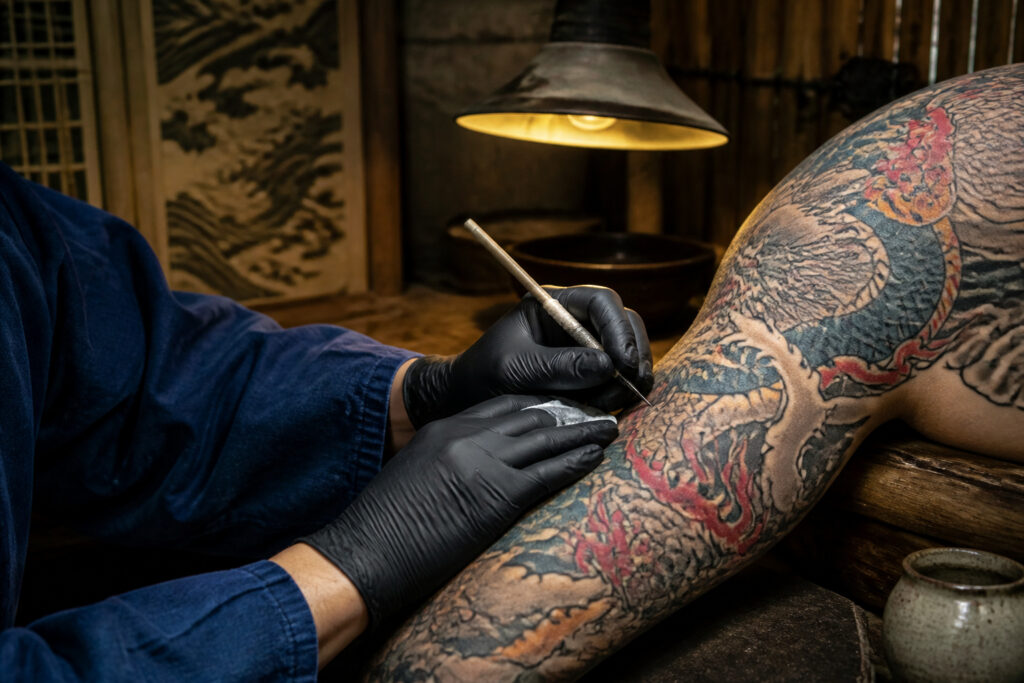
Traditional Japanese tattoos, or irezumi, are full-body artworks built by hand over years of sessions, not quick decorative pieces you can hide under a shirt collar.
The stigma that follows them is real and lasting: visible ink still gets you turned away from public baths and gyms across Japan, a social cost that surprises many Western collectors who fly to Tokyo specifically to sit for the slower, more painful tebori method.
That hand-poking technique, pushing ink with a sashibo needle rather than an electric machine, produces the velvety depth and layered saturation that define the form, and it has not changed substantially since the Edo period firemen and laborers first wore these marks as badges of outlaw brotherhood.
History of Irezumi
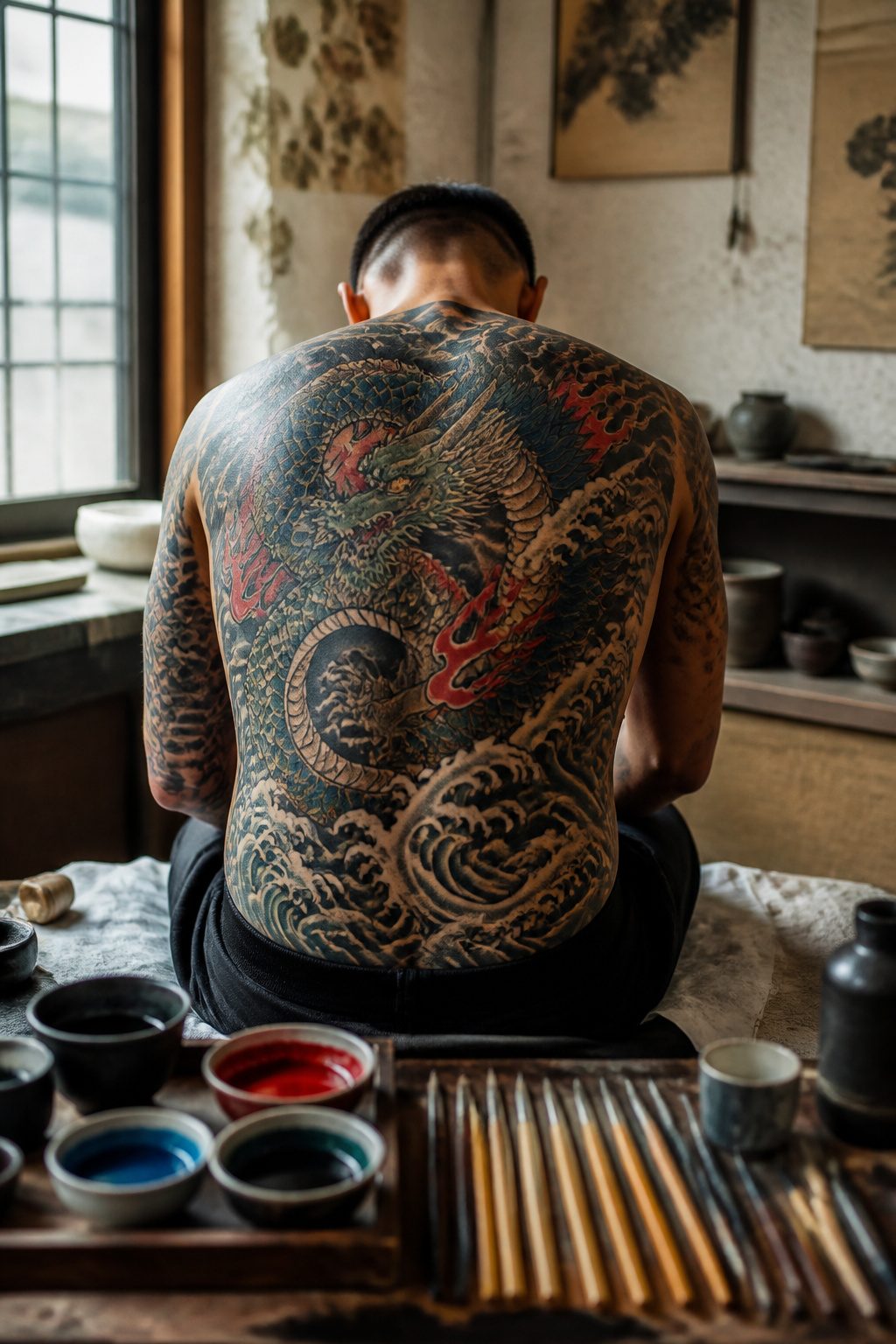
The word irezumi literally means "inserting ink," a plain description for a practice that reaches back to the Jōmon period around 10,000 BC.
Clay figurines from that era carry facial markings that may be the earliest evidence of tattooing in the Japanese archipelago.
By the Yayoi period, Chinese visitors to Kyushu noted designs worn as spiritual symbols and status markers, though the Nihon Shoki later records tattooing confined to the Tsuchigumo people.
The Kofun period brought a turn: tattoos became punishment marks for criminals, a stigma that would shadow the art for centuries.
What changed everything was the Edo period from 1603 to 1868. Woodblock printing flourished, and in 1757 the first Japanese edition of Suikoden, a Chinese novel of outlaw heroism, arrived with lavish ukiyo-e illustrations.
Utagawa Kuniyoshi’s 1827 print series The 108 Heroes of the Popular Suikoden showed rebels covered neck-to-knee in dragons, tigers, and waves.
Laborers, firefighters, and gamblers saw themselves in those tattooed heroes and began wearing the same imagery as marks of bravery and brotherhood.
Some scholars argue wealthy merchants also wore expensive irezumi beneath their clothes, barred by sumptuary laws from displaying riches any other way.
The visual grammar set then still governs the form: bold flat color, stark outlines, and backgrounds of wind bars, clouds, and waves that mean something specific and are chosen to agree with the main subject in season, element, and mood.
The Meiji government banned the practice in 1872, pushing it underground for seventy-six years, but the Edo-era vocabulary never disappeared.
Cultural Significance
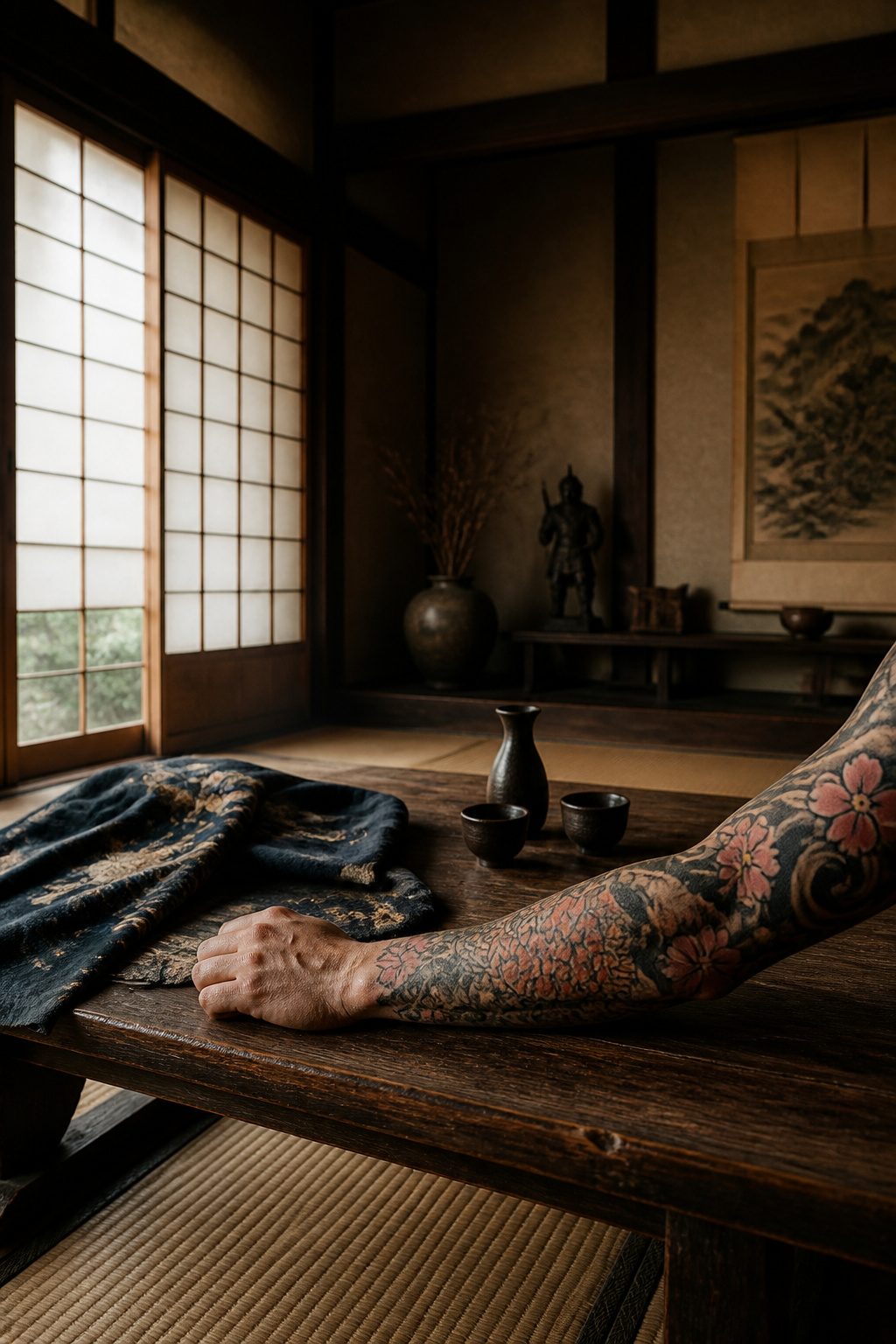
Punitive tattoos in Japan date to the Kofun period, roughly 250–600 AD, when authorities branded criminals with marks they could not hide.
A line across the arm or the character for "dog" on the forehead turned the body into a public record of disgrace, and that association between ink and criminality hardened into stigma that outlasted the practice itself.
The shift began during the Edo period (1600–1868). Former convicts started covering their marks with decorative work, but the real change came from a Chinese novel, Suikoden, whose tales of heroic outlaws spread through ukiyo-e woodblock prints.
The rebels depicted were tattooed, brave, and defiant against corrupt power. Working-class Japanese saw themselves in those images, and tattoos became a way to reclaim identity outside rigid social order.
Organized crime absorbed this symbolism most completely. The yakuza, active since the 1600s, used full-body suits to display wealth, loyalty, and the endurance to survive hours of hand-poking.
The commitment was irreversible; the art marked membership for life. Artists like Horiyoshi III of Yokohama built reputations serving this clientele, with members seeking him out specifically because, as he told VICE in 2017, "Yakuza always want the best."
The stigma that began as state punishment had become, for some, a source of pride and proof of belonging.
Symbolism in Tattoos
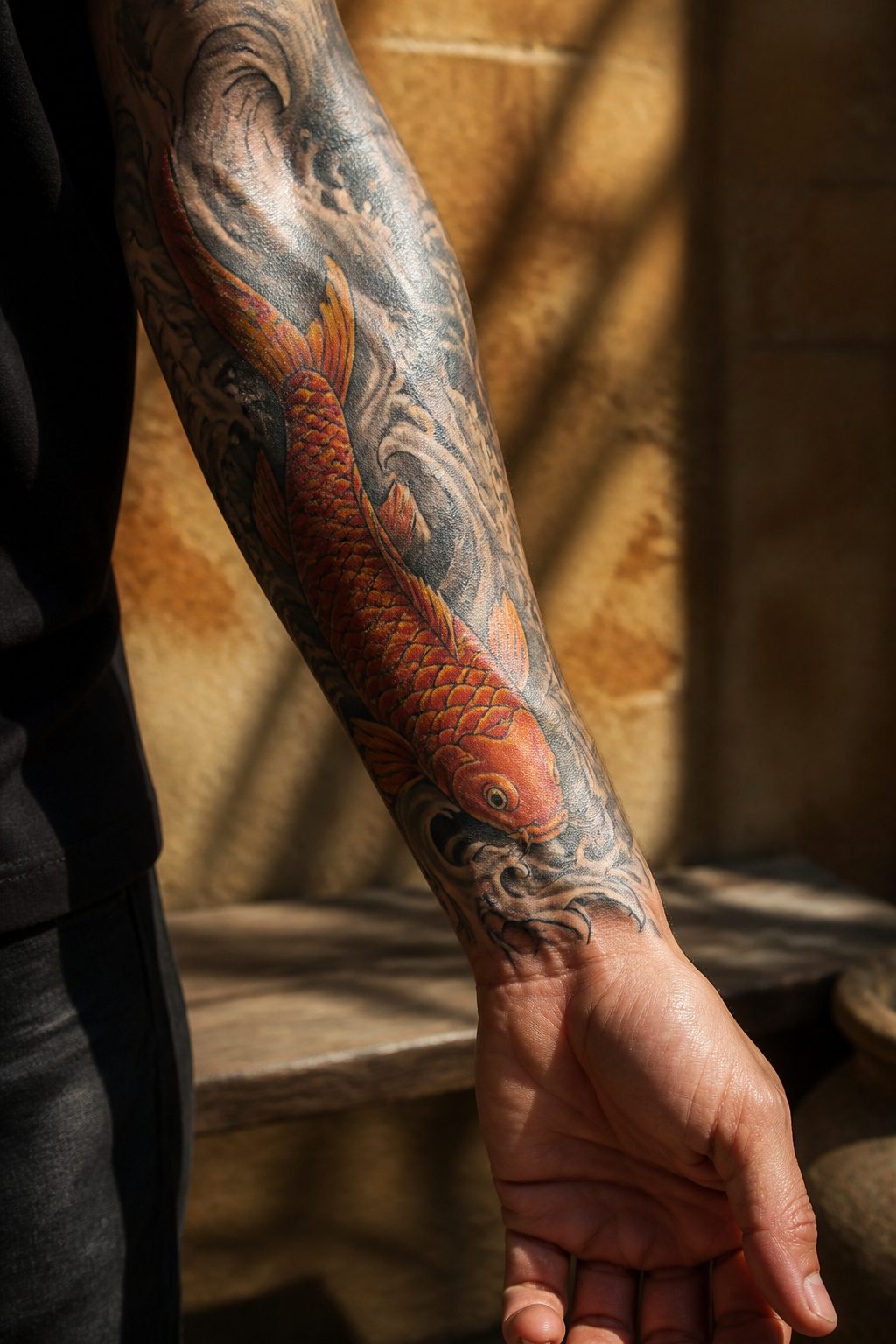
A koi swimming upstream carries weight because of the story attached to it. Chinese sources as old as the Book of the Later Han describe carp gathering at the Dragon Gate waterfall on the Yellow River each spring.
The one that clears the falls becomes a dragon.
That single image, perseverance turning into transformation, is what Japanese tattooers still draw on when they place a koi along a forearm or up the ribs, water running with it so the fish has somewhere to go.
The dragon, or ryu, borrows its body from half a dozen creatures: camel’s head, snake’s neck and belly, koi scales, hawk or eagle talons, stag horns. Its meaning sits in that composite form.
A dragon manipulates rain and storms for people’s benefit, so the tattoo marks wisdom and strength rather than raw power.
Cherry blossoms work differently. They are keshoubori, secondary elements that set season and mood, but they carry their own charge.
The samurai code took the brief bloom as emblem of a life that should be lived well because it ends. Paired with koi in strict traditional work, they actually clash: carp run in autumn, cherry blossoms open in spring.
Mixing them is a modern tolerance, not an older convention.
The hannya mask comes from Noh theater, not folklore or religion. It plays a woman whose jealousy and grief have turned her demonic.
Horns, gold eyes, a mouth that reads as laughing from one angle and weeping from another.
Color marks social standing in the play: white for nobility, red for a peasant, the deepest red or black for a soul so far gone it no longer resembles the woman it was. As a tattoo, the hannya rewards size.
The horns, the teeth strands, the brow furrow disappear first when the piece shrinks below palm size.
Its oldest pairing is with a snake, from the Dōjōji legend in which Kiyohime, betrayed by the monk Anchin, becomes a serpent and melts the bell he hides under.
Tebori and Modern Techniques
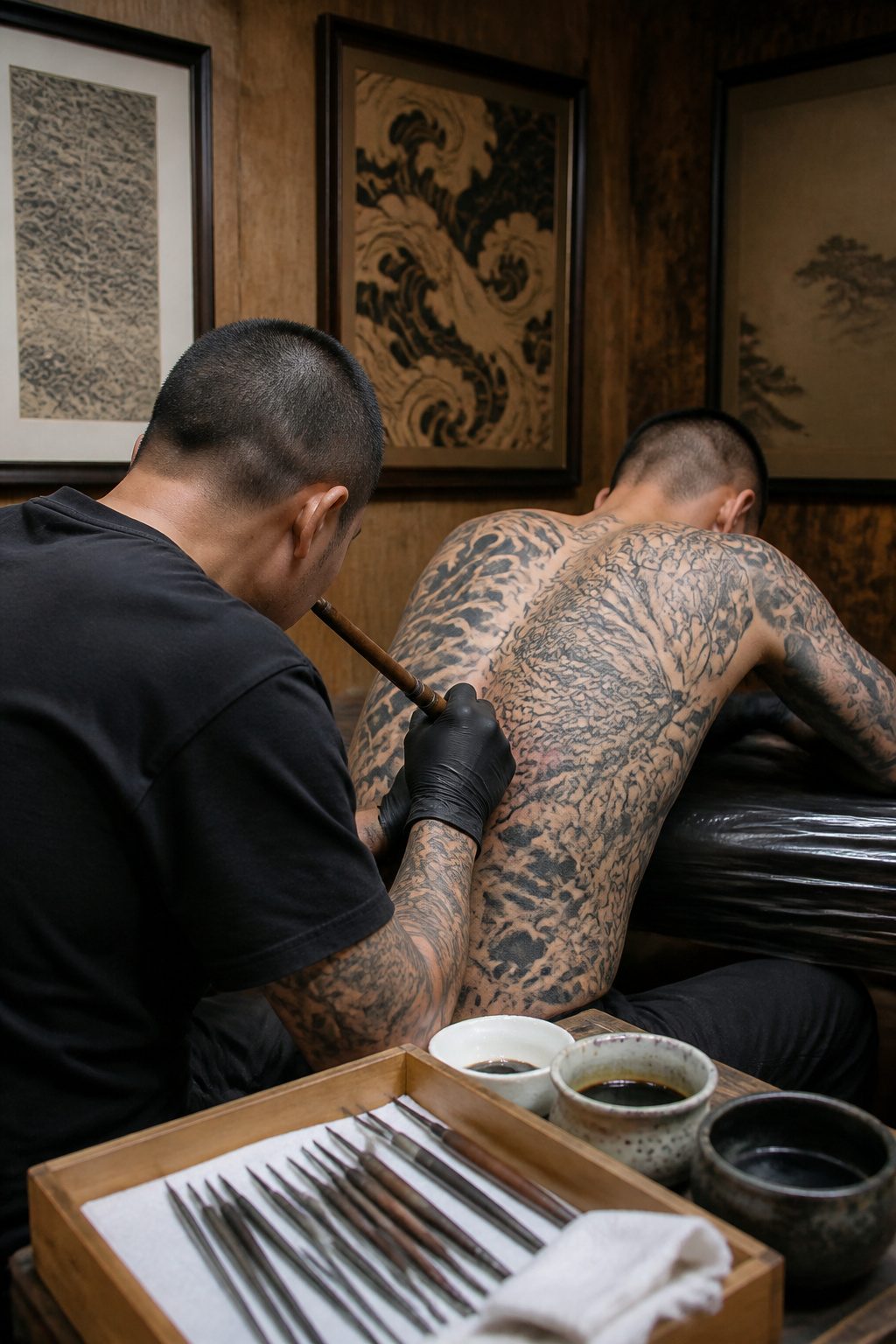
The gap between tebori and modern tattooing is not just about tools. It is about time, and what that time buys.
A modern electric machine punches the skin roughly a hundred times per second. The tebori artist, working with a sashibo or nomi, pushes each deposit of ink by hand.
The rhythm is slower, quieter, and far more physically demanding for the horishi.
What takes hours with a machine can stretch across years: full-body works in the Edo period commonly ran two to five years, a pace that still holds for traditional pieces today.
Some collectors say the pain differs too. The hand method builds sensation gradually rather than in the rapid-fire bursts of a machine.
Healing, according to some accounts, moves faster afterward. But the real distinction sits in the result.
Machine work lays down a sharp, consistent line, almost like drawing with pen. Tebori pushes ink into the skin in layers, building a saturation that reads as depth, a velvety black that appears almost three-dimensional.
The color ages differently, more softly, with a texture that painters recognize.
So why do artists still choose this? The physical toll is higher, the income lower for the hours spent.
Yet the method carries the weight of the tradition itself. The horishi who practices tebori is not merely copying a style from the Edo period; they are continuing the actual labor that produced it.
For clients, enduring the longer process becomes part of what the tattoo means. The mark is earned differently, and the skin keeps that difference.
Design Elements and Composition
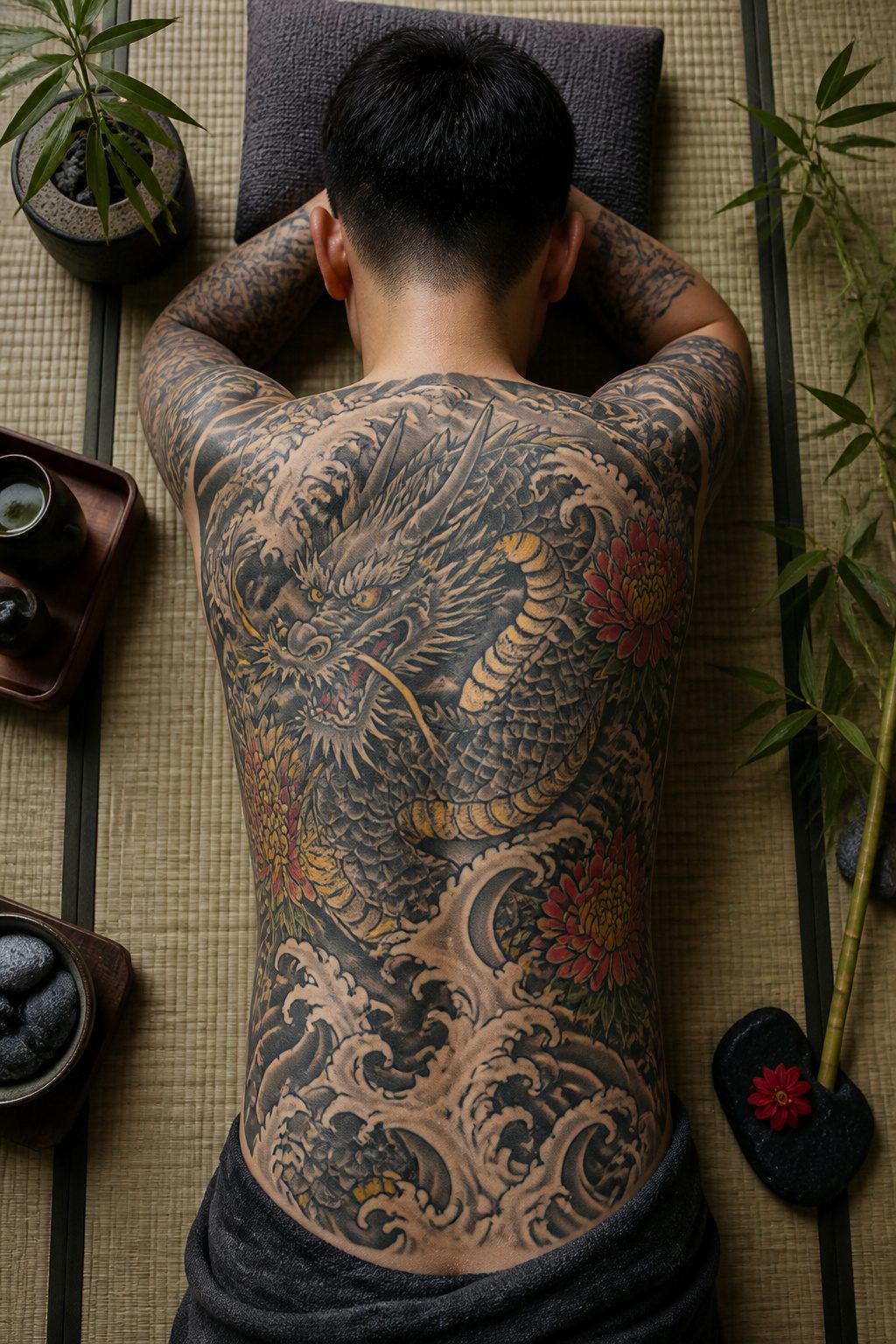
Traditional Japanese tattoos are built around a single, unified composition rather than a collection of separate pieces.
The entire design, whether an arm sleeve or a full backpiece, is planned as one continuous image with a main subject and a fully integrated background.
That background is called gaku, and it does far more than fill space. Water, wind bars, and clouds create context around the central figure and tie the whole narrative together.
Waves follow the body’s natural curves, accentuating musculature and giving the piece its sense of movement. A skilled artist maps these elements onto the skin’s S-shaped flow lines so the tattoo looks as though it belongs there.
What struck me, reading through how these pieces are planned, is the deliberate avoidance of empty space. In Western tattooing, negative space can be a design choice; in traditional Japanese work, it reads as unfinished.
The gaku completes the world being built on the skin. There is also a strict harmony of seasons: autumn maple leaves would never appear alongside spring cherry blossoms, because the tattoo must present a believable, coherent scene.
Modern Perception
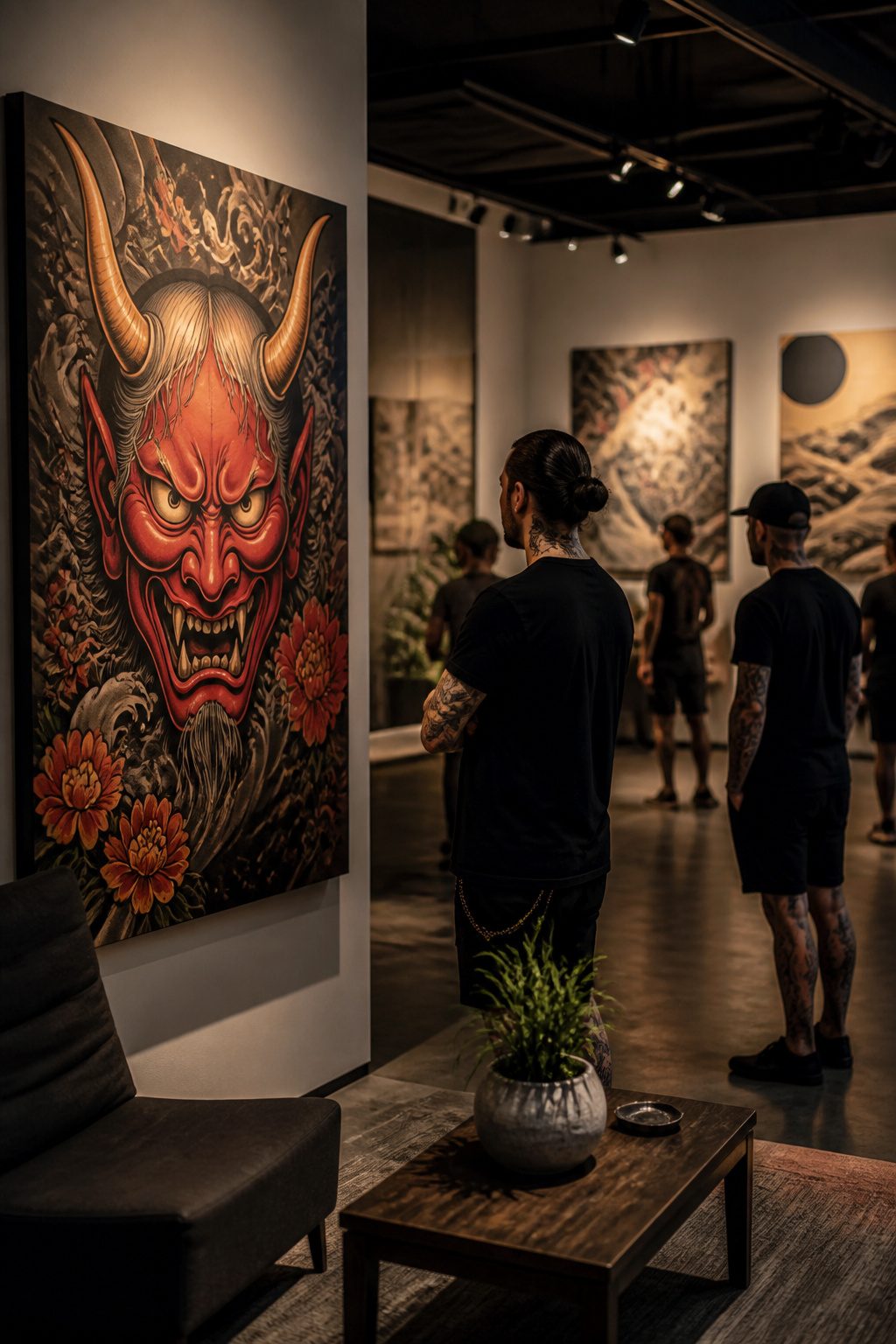
The resurgence of traditional Japanese tattoos outside Japan has been unmistakable over the last decade.
Western collectors now fly to Tokyo or Osaka specifically to sit for hours under the hand poke method, paying premium rates for work they could get faster and cheaper at home.
Social media accelerated this demand, full sleeves and back pieces photographed in hotel bathrooms and posted before the skin even calms. What strikes me, watching this unfold, is how the meaning shifts across borders.
A koi swimming upstream, read in Osaka as perseverance against social pressure, becomes in Brooklyn a general symbol of personal struggle, stripped of the specific class and occupational histories that shaped it.
The practice remains heavily stigmatized in Japan itself, where visible ink still bars entry to public baths, gyms, and certain workplaces.
I have read accounts of younger Japanese artists training in tebori specifically to serve foreign clients, their own countrymen largely unavailable as a market.
The irony is plain: the tradition survives partly because Westerners treat it as heritage art, while within Japan it carries the mark of criminal association that has dogged it since the Edo period.
Collectors I have spoken with often express surprise at this disconnect, having assumed their reverence for the form was shared at its source.
Common Motifs and Their Meanings
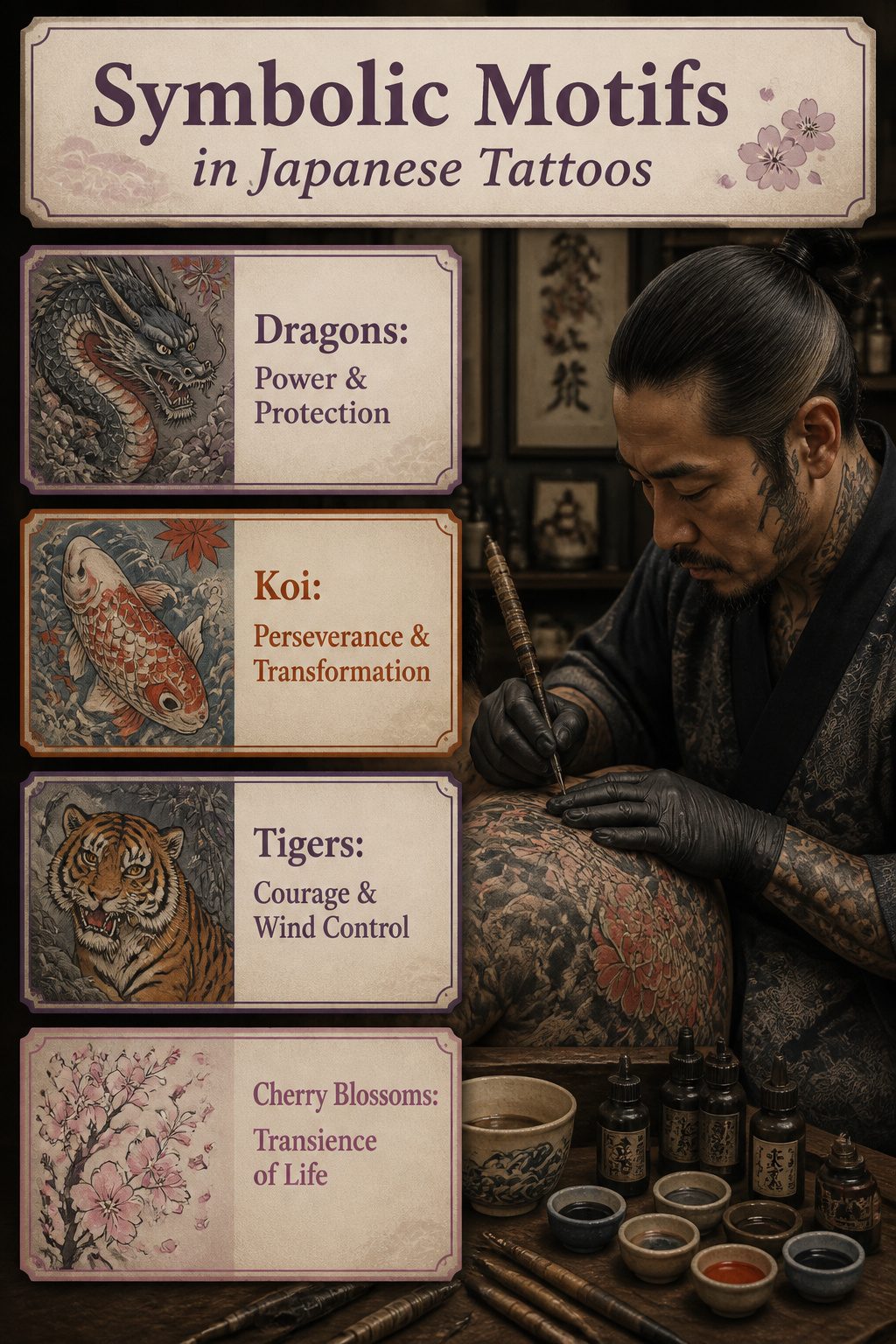
Traditional Japanese tattooing draws on a fixed symbolic vocabulary where each motif carries a settled meaning and a conventional placement. Dragons signal benevolent power, wisdom, and protection of Buddhism, typically rendered as back pieces or full sleeves spiraling the arm.
Koi fish embody perseverance and transformation, swimming upstream along limbs or ribs. Tigers represent courage and wind control, set on outer arms or thighs to ward off evil spirits and disease.
Cherry blossoms mark the transience of life and the samurai code, scattered as sleeve filler or across shoulders. Peonies, called the "king of flowers," stand for wealth and masculine bravery, often paired beside lions and dragons.
Chrysanthemums carry the imperial seal’s association with longevity and perfection, while background waves and clouds are never mere filler: waves signal nature’s power, and clouds represent change and the divine realm, linking panels across the whole composition.
Clients rarely choose single images in isolation. A dragon paired with a tiger creates tension between sky and earth.
Koi beneath maple leaves trace a season of struggle and passing time. The finished piece becomes a personal narrative written in a shared visual language, with each combination telling a story unique to the wearer.
Full-Body Styles
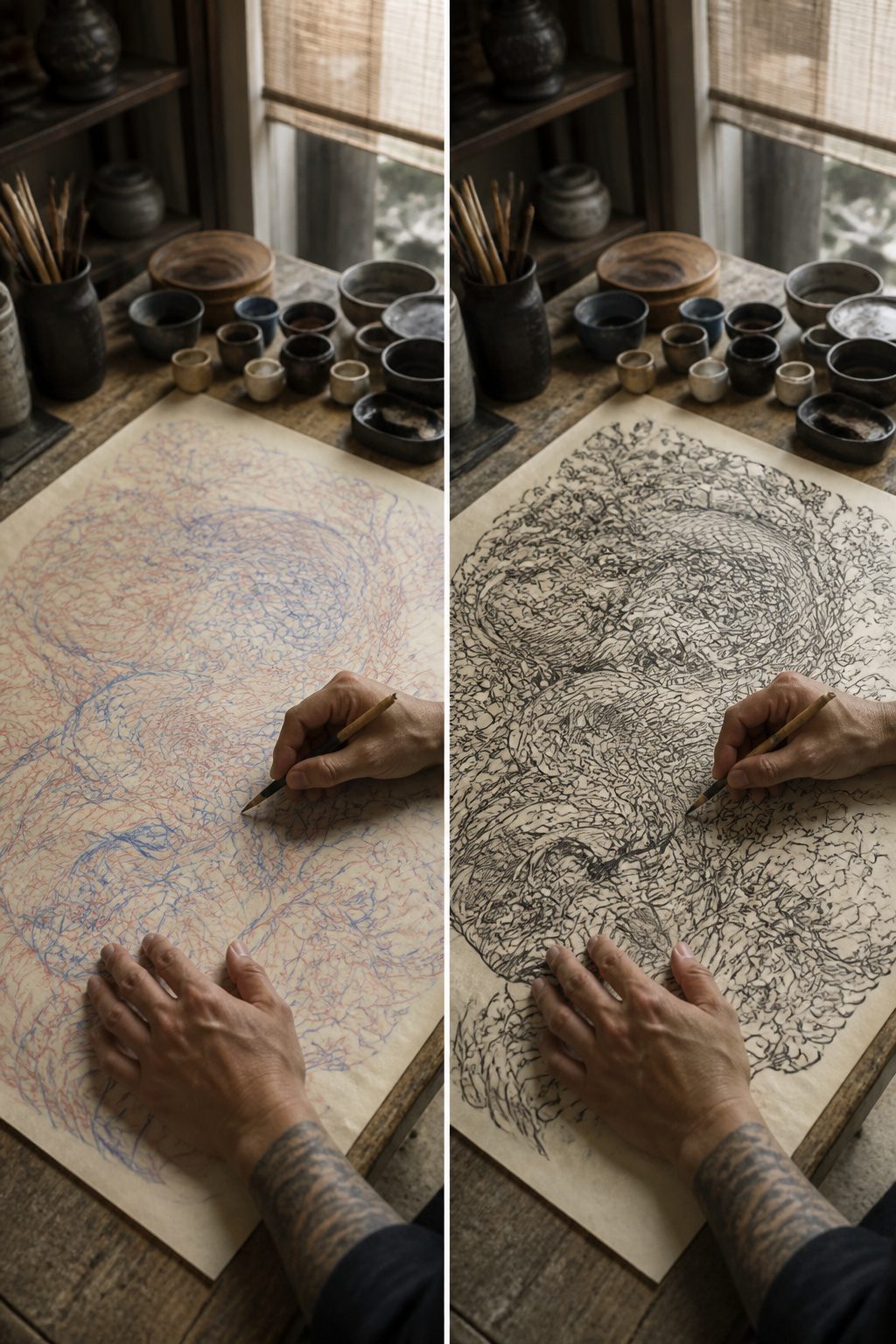
Traditional Japanese tattooing plans the body as a garment rather than a collection of separate images, and the two most extreme garments are the donburi and the munewari.
A donburi covers torso, back, and upper legs completely, named after the deep rice bowl decorated everywhere except its rim; only the genital area is left unmarked.
The munewari leaves an unmarked strip running down the center of the chest and belly, so the work reads like an open workman’s coat when the wearer is shirtless.
Both formats demand years of sessions and a single coherent design, which is why historically they were associated with firemen, manual laborers, and organized crime: groups whose lives were already outside mainstream respectability and who had the time, pain tolerance, and reason to commit to something that cannot be hidden.
Choosing between them now comes down to how much coverage you want and whether you need the option of appearing unmarked from the front.
Neo-Japanese Tattoos
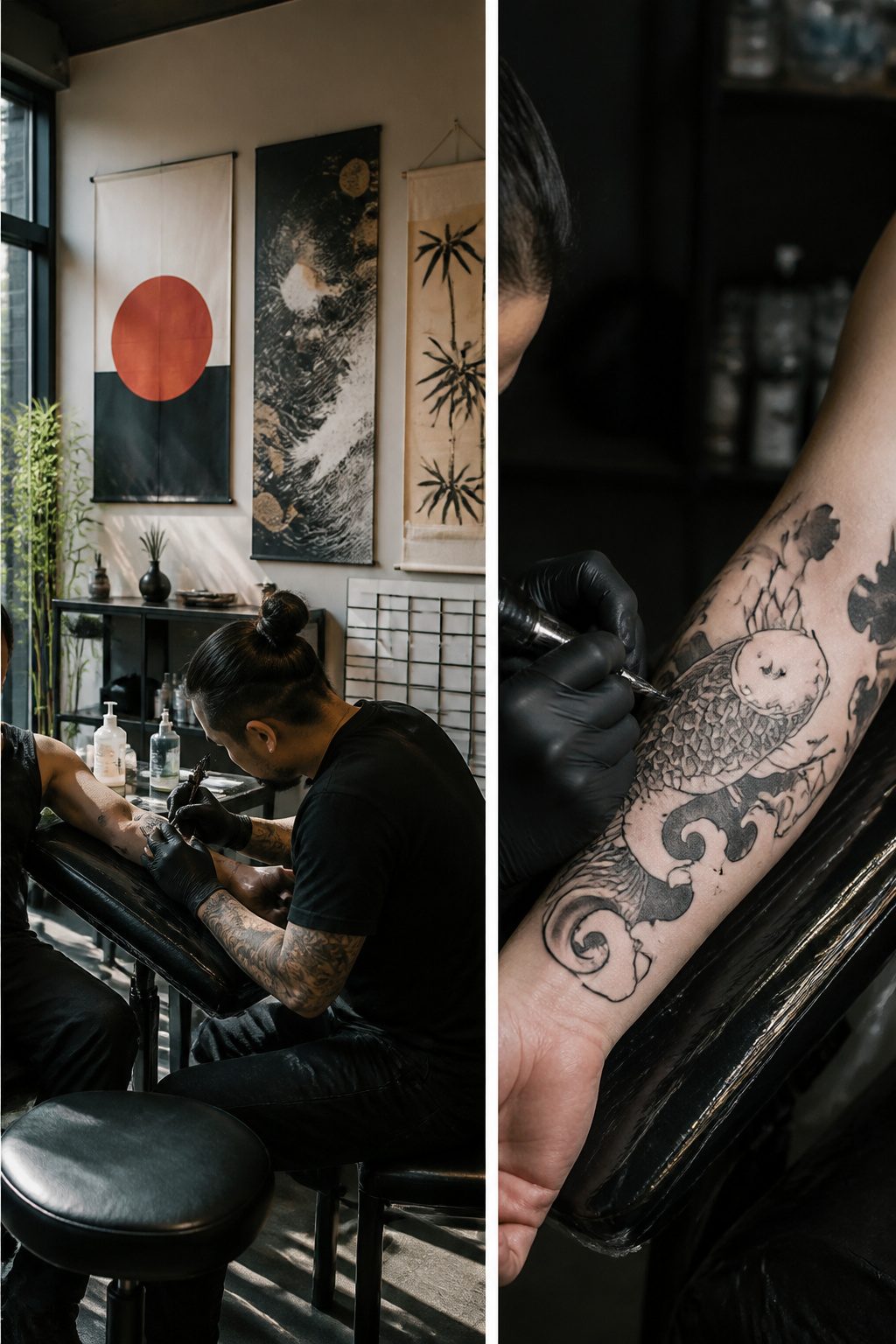
Some artists working today treat the classical rules of irezumi less as law than as vocabulary.
Gakkin, who left Kyoto for Amsterdam, works freehand directly on skin and shapes each piece to the body’s curves rather than to a preset template.
He pulls from traditional Japanese painting and architecture, but manga and modern art feed in too, and he works almost exclusively in black ink, letting that limitation keep the elegance of older work while the imagery stays contemporary.
The style that emerged, sometimes called Neo-Japanese, took clearer shape in the late 20th century and found its audience in the United States and Europe during the 2000s as images of Japanese art became easier to find and study.
Dragons and koi still appear, but so do pop culture references and abstract shapes that classical Japanese tattooing would not have allowed.
For clients drawn to the visual weight of irezumi, the hybrid offers recognizable symbols without the commitment to a full traditional system they may not personally claim.
What Tattoos Mean in Japan Today
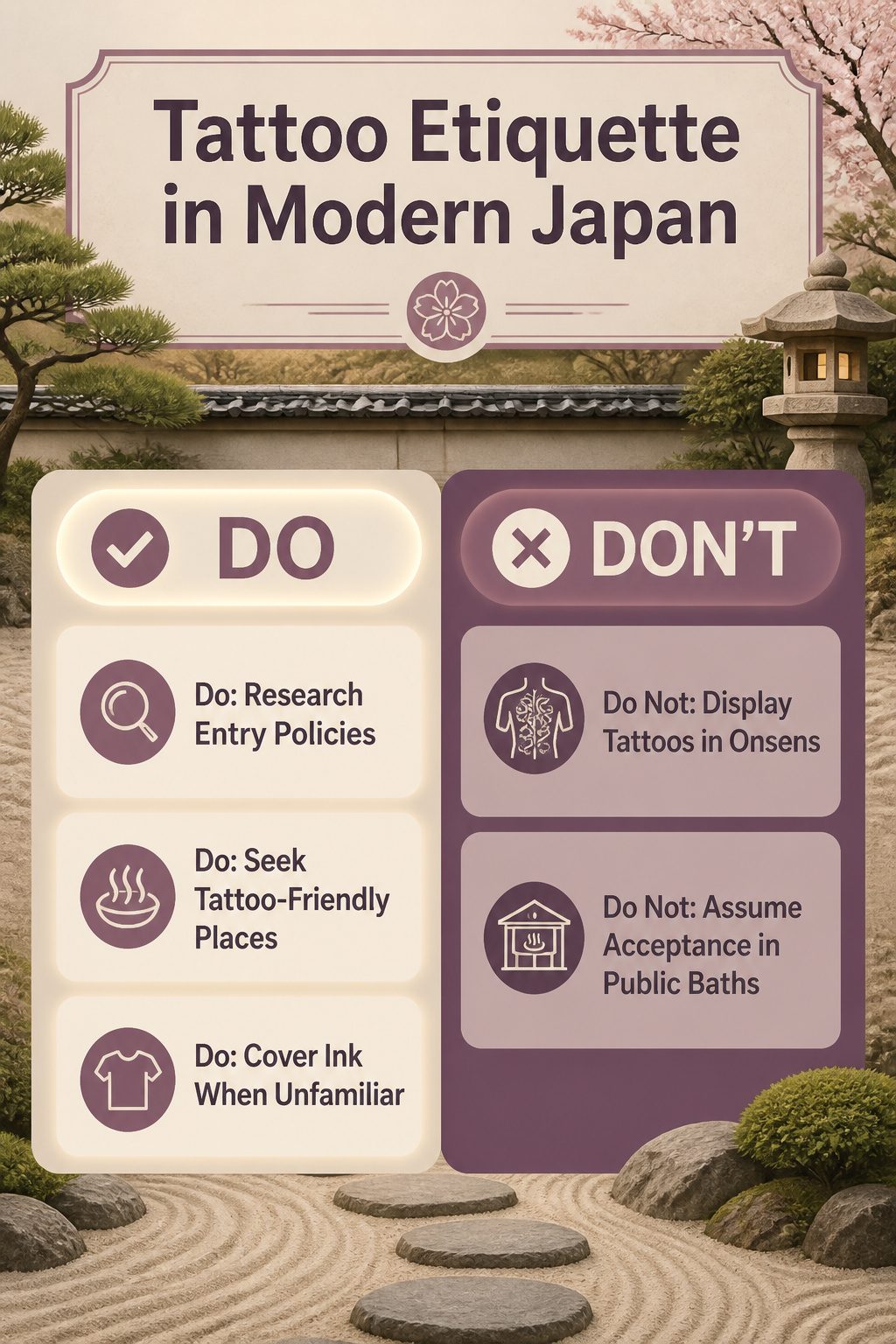
Tattooing has been legal in Japan since 1948, yet the social cost of wearing visible ink remains steep.
Many onsen and public baths still turn away tattooed guests outright, a practice that began in the 1980s and 1990s when businesses sought to distance themselves from yakuza presence.
The association was cemented earlier by a wave of gangster films between 1960 and 1970 that stamped full-body horimono onto the public imagination as criminal insignia.
The irony is unevenly applied. Sento, the neighborhood public baths that serve households without their own facilities, have never barred tattoos, since access there is treated as a public necessity rather than a leisure choice.
Private gyms and swimming pools often maintain their own unposted rules, leaving visitors to discover the restriction at the door.
For travelers, the practical workaround is researching entry policies in advance or seeking tattoo-friendly establishments, a small but growing niche.
The stigma is generational and situational rather than absolute, but it is real enough that covering ink remains the safer default in unfamiliar settings.
Frequently Asked Questions
What do traditional Japanese tattoos mean?
Traditional Japanese tattoos draw meaning from mythology, nature, and personal narrative. A koi swimming upstream signals perseverance leading to transformation; a dragon marks wisdom and benevolent strength; cherry blossoms recall the samurai code that values a brief life lived well.
The finished piece becomes a personal story written in a shared visual language, with combinations like dragon and tiger creating tension between sky and earth.
How are traditional Japanese tattoos done?
The traditional method is tebori, in which the artist pushes ink into the skin by hand using a sashibo or nomi rather than an electric machine.
The rhythm is slower and quieter, building saturation in layers that produces a velvety black with painterly depth. Full-body works commonly span two to five years, and collectors often report that healing moves faster afterward compared to machine work.
Why are tattoos associated with the yakuza?
The yakuza adopted full-body irezumi beginning in the 1600s as irreversible proof of wealth, loyalty, and the endurance to survive hours of hand-poking.
The practice grew from Edo-period working-class tattoo culture, where laborers and firefighters had already embraced body suits as marks of bravery and brotherhood.
State punishment tattoos from earlier centuries had created a lasting stigma around ink, which the yakuza converted into a source of pride and permanent group membership.