Meaningful tiny tattoos span from a single punctuation mark to a full zodiac glyph, and the deciding factor is usually whether you want the meaning to stay private or invite conversation. The catch is that fine-line work this small blurs faster than larger pieces, so placement matters more than design. A semicolon at a quarter-inch still reads clearly because every viewer already knows the shape, but finger text fades within a few years from friction alone.
1. Semicolon
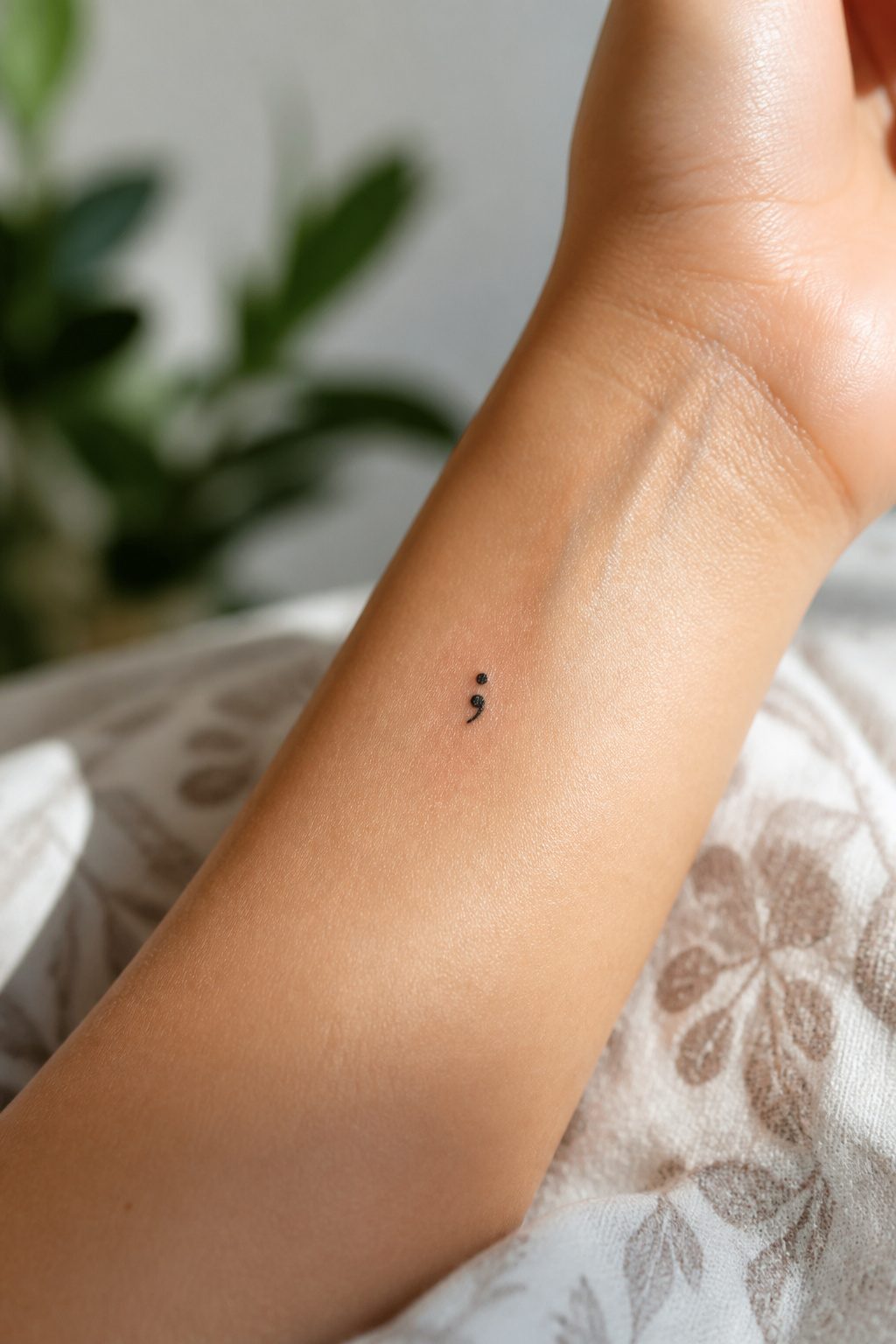
A semicolon indicates a pause in a sentence but does not end it. The semicolon tattoo carries that same grammar into skin: a moment of stopping, then the choice to continue. That meaning has made it the most common meaningful tiny tattoo, backed by six separate tallies of what people actually request.
The design itself is minimal, usually just the punctuation mark at wrist or inner forearm scale. Professional flexibility matters here. A client can hide it under a watch band or let it show; the symbol reads clearly even at a quarter-inch size because every viewer already knows the shape.
Mental health awareness and suicide prevention movements adopted the semicolon early, so the tattoo often signals membership in that community without requiring explanation. What is left unsaid carries as much weight as the ink itself. Some wearers pair it with a date or a word in small type beneath; others keep the mark alone and let the grammar speak.
Placement affects visibility and therefore who gets to ask. The inner wrist invites conversation. Behind the ear, the semicolon becomes almost private, visible mainly to the wearer in a mirror. Either choice keeps the commitment low in surface area while the meaning stays permanent.
2. Butterfly
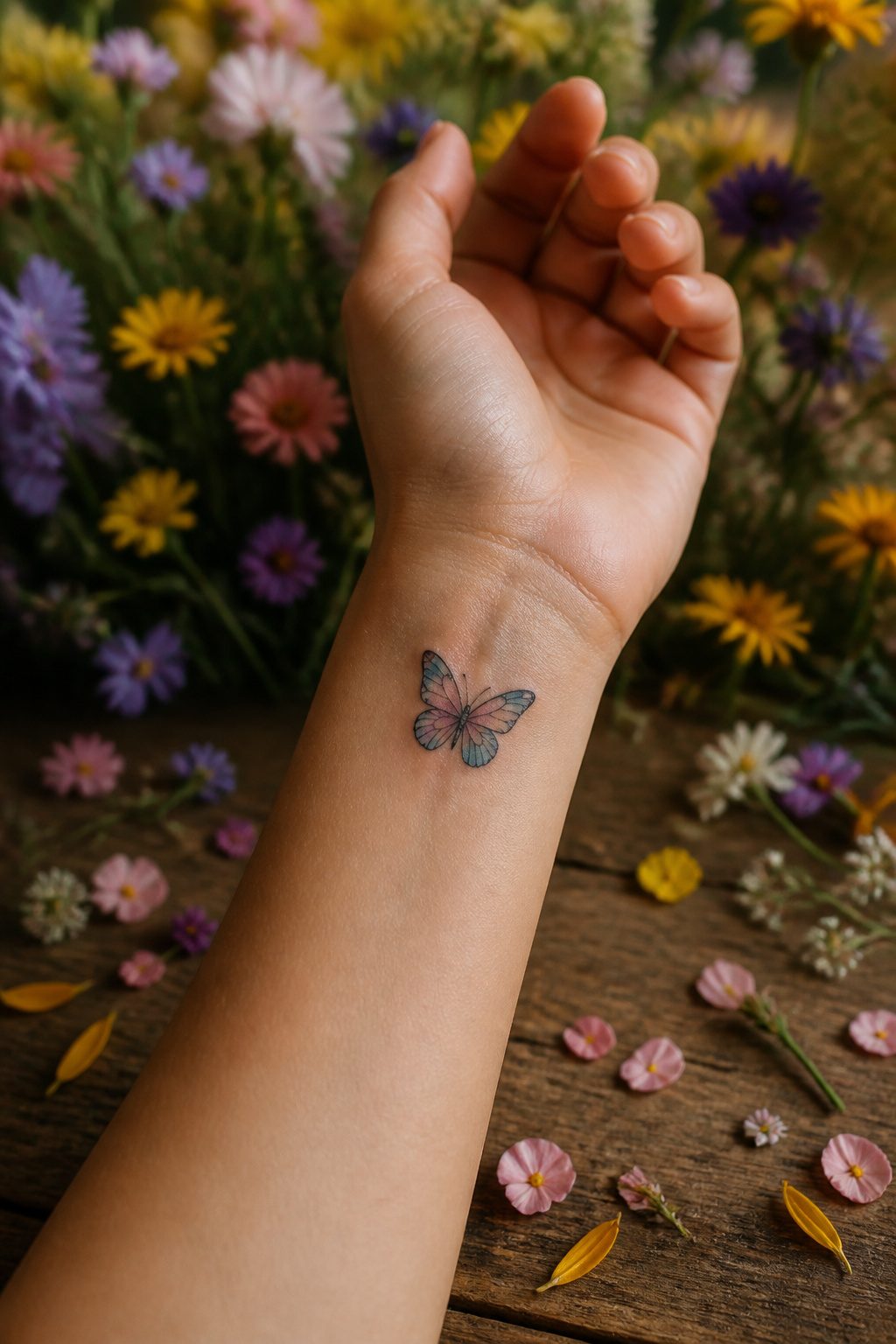
A butterfly lands on the wrist or behind the ear as the classic marker of change you chose yourself. The meaning is straightforward: metamorphosis from one state to another, finished and visible. That makes it a reliable choice for someone who wants the symbol to read clearly even at a small scale.
Some designs pair the butterfly with hearts for wings, turning the transformation into something shared. The luck association is lighter, more optional. What carries weight is the personal growth narrative, and a butterfly tattoo commits to that openly.
Placement matters for the detail. A tiny butterfly needs clean lines to keep the wing shape distinct as it ages. Simple linework holds up better than heavy shading at small sizes, and the silhouette still reads as butterfly even when the ink softens slightly over time.
3. Anchor
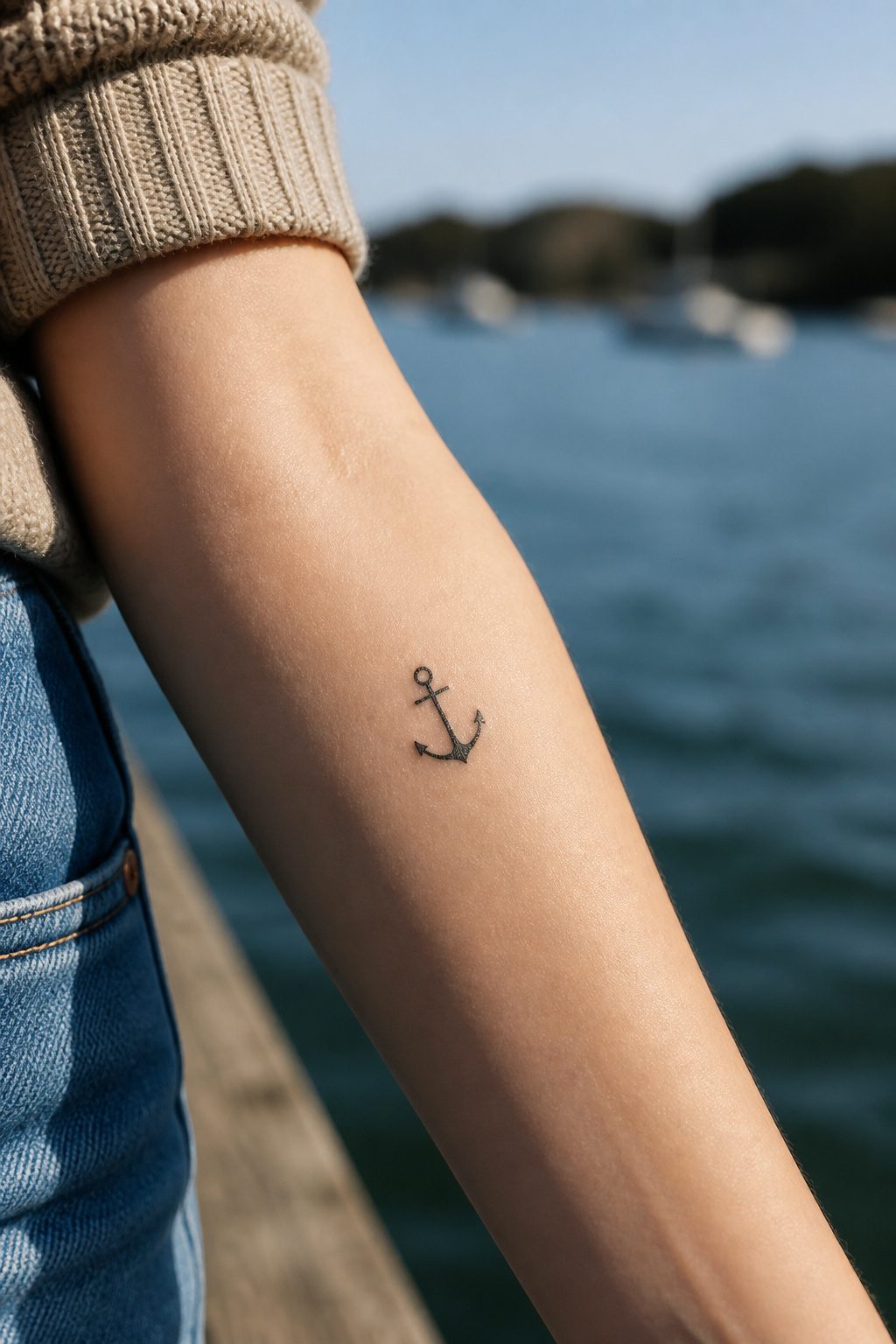
An anchor carries weight that has nothing to do with its size. Maritime tradition gave it that association with holding fast through storms, and the meaning translates cleanly to skin: the anchor marks what keeps you from drifting. Most people who choose it have lived through something that unmoored them, or they wear it as quiet insurance against the next thing that will.
The design works at any scale. A simple fluke and ring, maybe a rope coiled once around the shank, reads instantly even behind the ear or along a finger where space is tight. Some add a name or date inside the ring; others leave it bare so the symbol does the whole job.
Placement shapes the message more than people expect. Wrist or forearm keeps it in your own sightline, a private reminder. Collarbone or ankle puts it where others notice first, which turns the anchor outward into a statement about steadiness rather than just a request for it. Either way, the small format keeps the tone restrained. No one needs a full sleeve to say they have found something solid to hold onto.
4. Heart
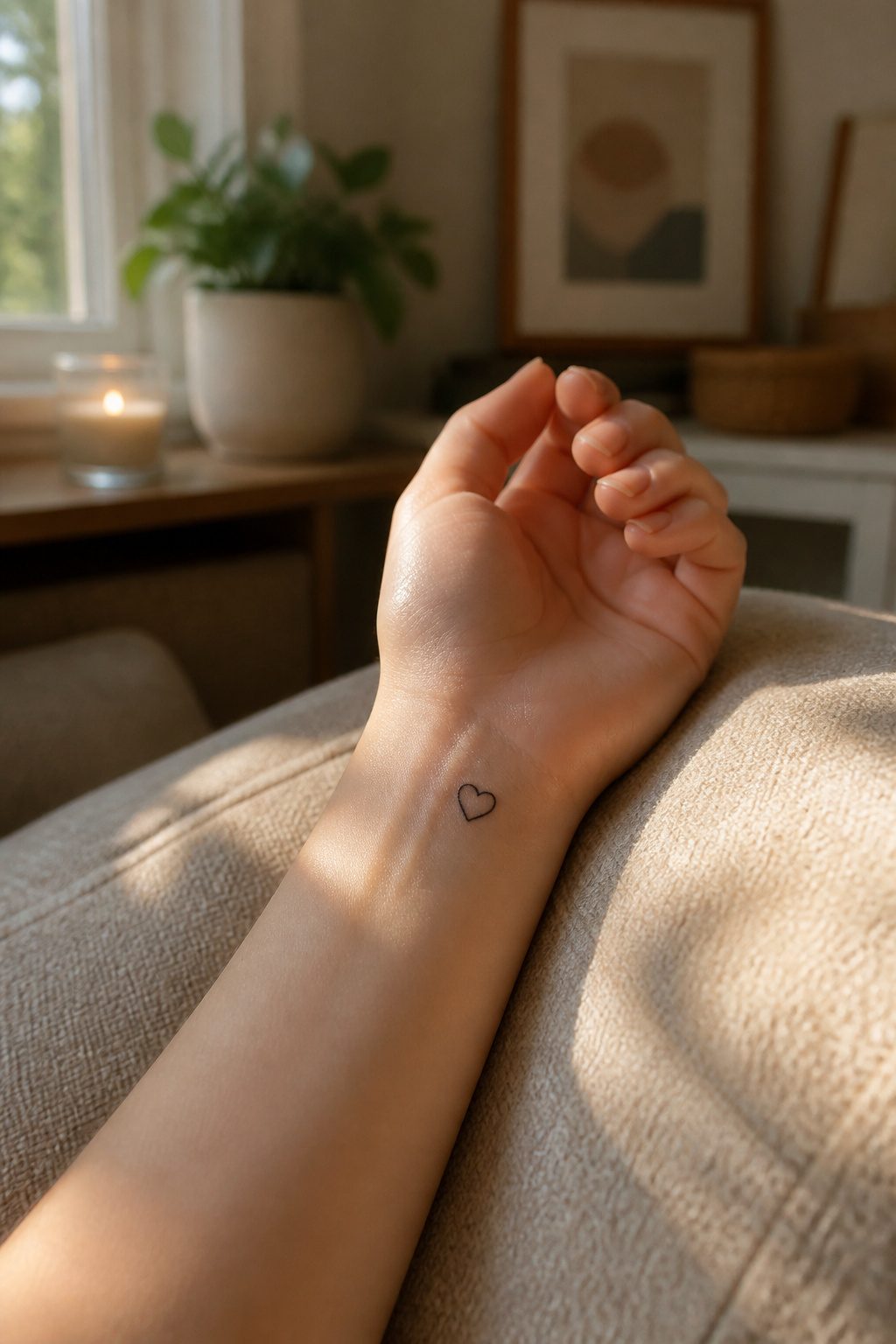
A minimal heart carries more weight than its size suggests. Ancient symbolism and maritime traditions both leaned on the shape, and modern minimal tattoo culture adopted it for exactly that reason: a simple line reads instantly across any culture without needing translation. Love, self-love, or romantic connection, the meaning stays open enough to adapt.
Placement keeps it personal. Fingers, wrist, neck, or behind the ear offer subtle visibility; the design works because it is small enough to hide and simple enough to recognize at a glance. Even a single-line outline, barely larger than a fingertip, can hold the emotional weight of much larger pieces.
What convinced me, reading through the sources, was how little variation the heart needs to feel specific. A tiny outline, a filled silhouette, a heartbeat line trailing off, each reads as the same symbol with a different inflection. The adaptability is the point. Where a more elaborate design might age into something that feels tied to a particular moment, the heart stays legible as a general reminder of connection. That universality is either its strength or its limitation, depending on whether you want the meaning to stay open or lock into something precise.
5. Moon Phases
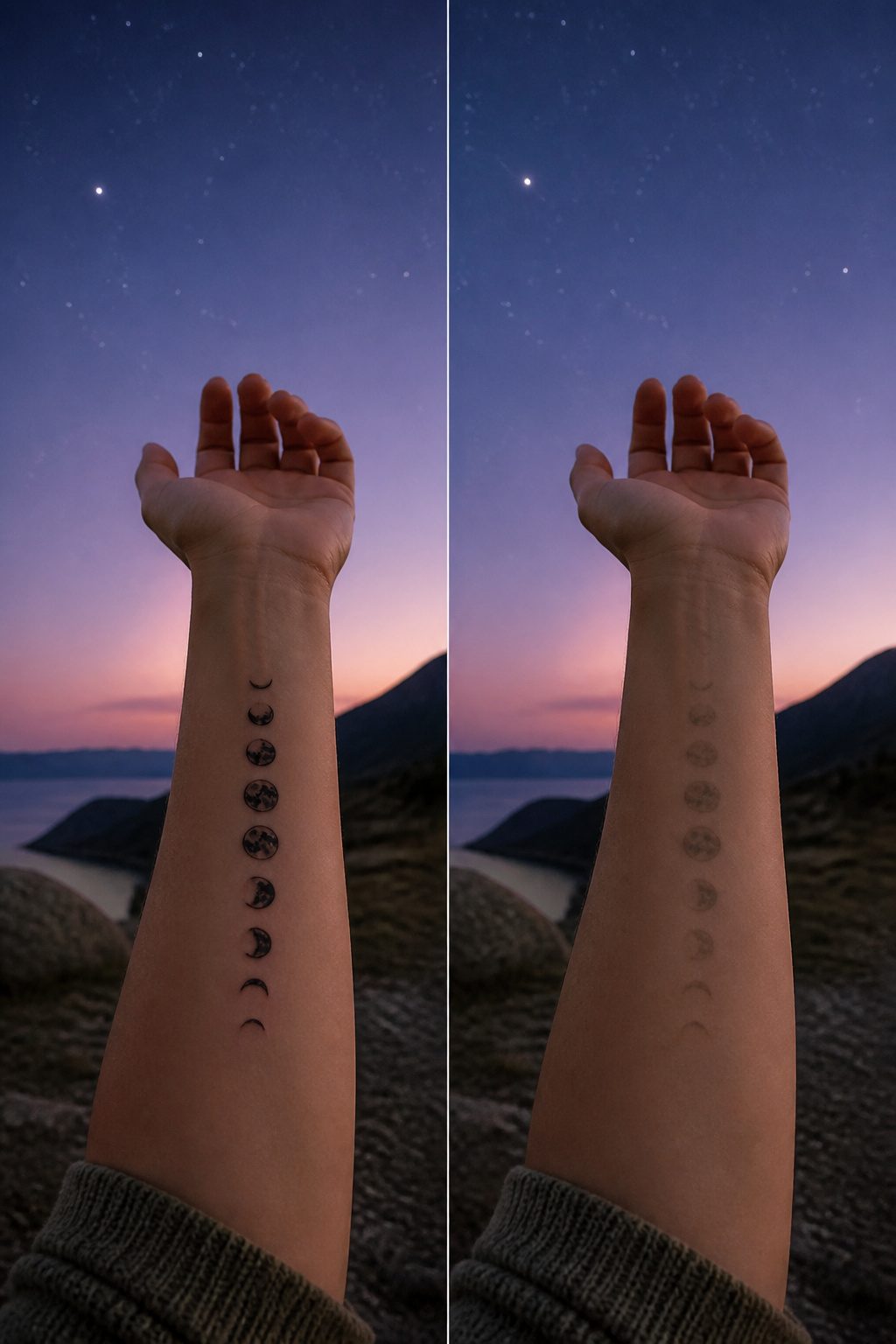
A waxing moon signals new beginnings and motivation, while a full moon settles into wholeness. The phases together trace a complete cycle, and that arc is what gives the design its weight. Someone choosing this motif is usually marking a shift they did not control but had to move through anyway: a job ended, a relationship turned, a body changed.
The line work stays spare by necessity. A crescent or a half-moon reads cleanly at small scale; a full lunar cycle wrapping around a wrist or ankle needs even finer needles and a steady hand. In my own searching, I noticed the best versions leave gaps between phases rather than filling every sliver. The eye completes the motion, and the skin breathes.
Intertwining the moon with a sun adds another layer, a visual argument for balance rather than only change. That pairing works especially well when the tattoo sits somewhere the wearer sees daily, a reminder that no phase locks in forever. The inconsistency is the point. Time circles, and the ink holds proof that you circled with it.
6. Zodiac Signs
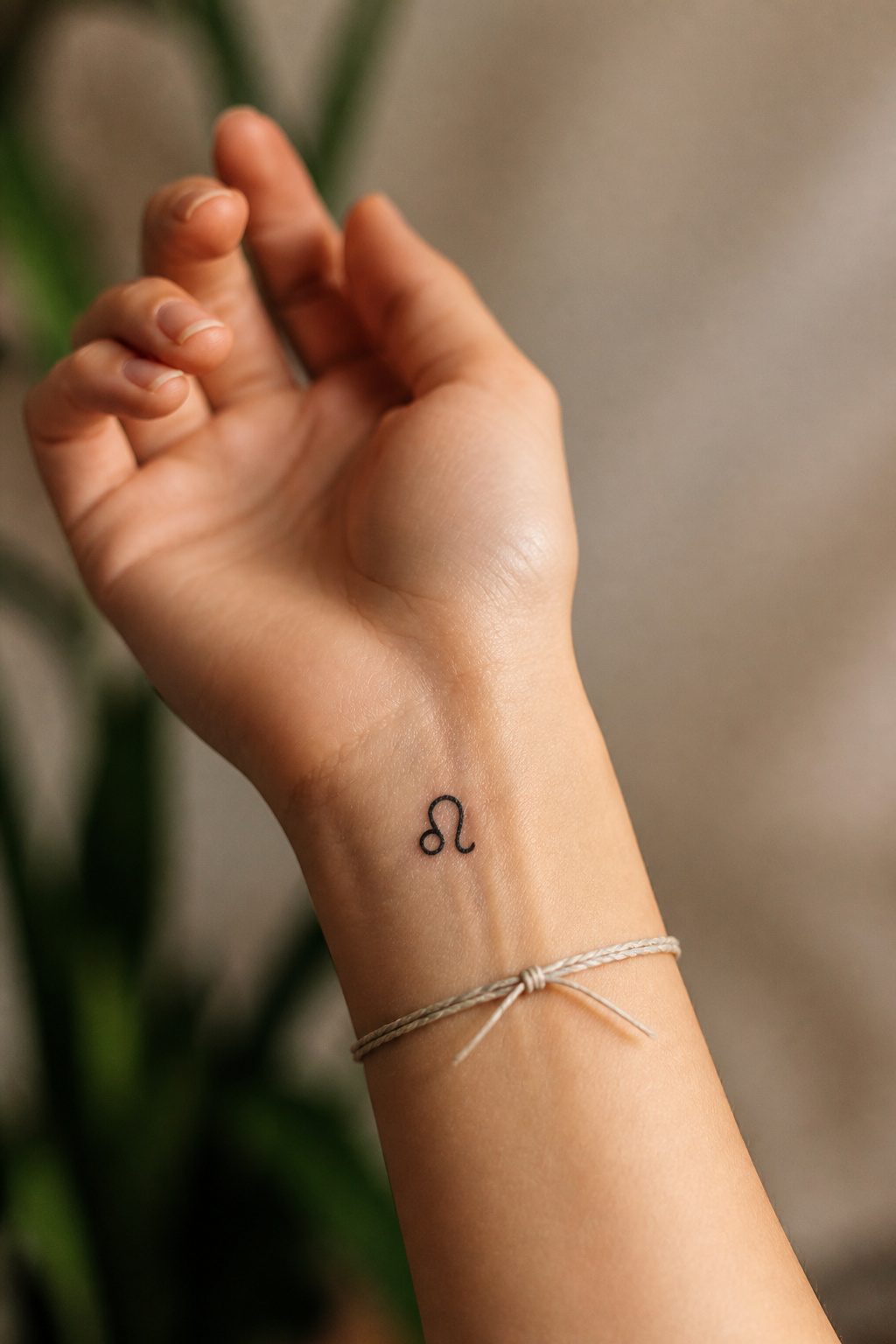
A zodiac glyph no larger than a quarter sits well behind the ear or on the inner wrist, where only you and whoever you choose see it. The symbol itself, whether the archer or the fish or the scales, carries enough weight that the design stays spare. No need to crowd it with birth flowers or constellation lines unless those matter separately.
What draws people to this choice is the mix of fixed meaning and private placement. Your sign does not change, so the tattoo stays tied to a specific set of traits, a date you already mark, a kind of shorthand for how you read yourself. One approach keeps it to the symbol alone, clean lines, maybe an inch tall. Another adds the birth year in matching script underneath, turning the mark into a small timeline of arrival. Both stay legible decades out because the shapes are simple and the skin area sees little sun distortion.
The risk is overloading a small space. A zodiac animal plus glyph plus dates plus stars reads busy at two inches and loses the quiet confidence that makes these tattoos work. Pick one element. Let the rest go unsaid.
7. Flower
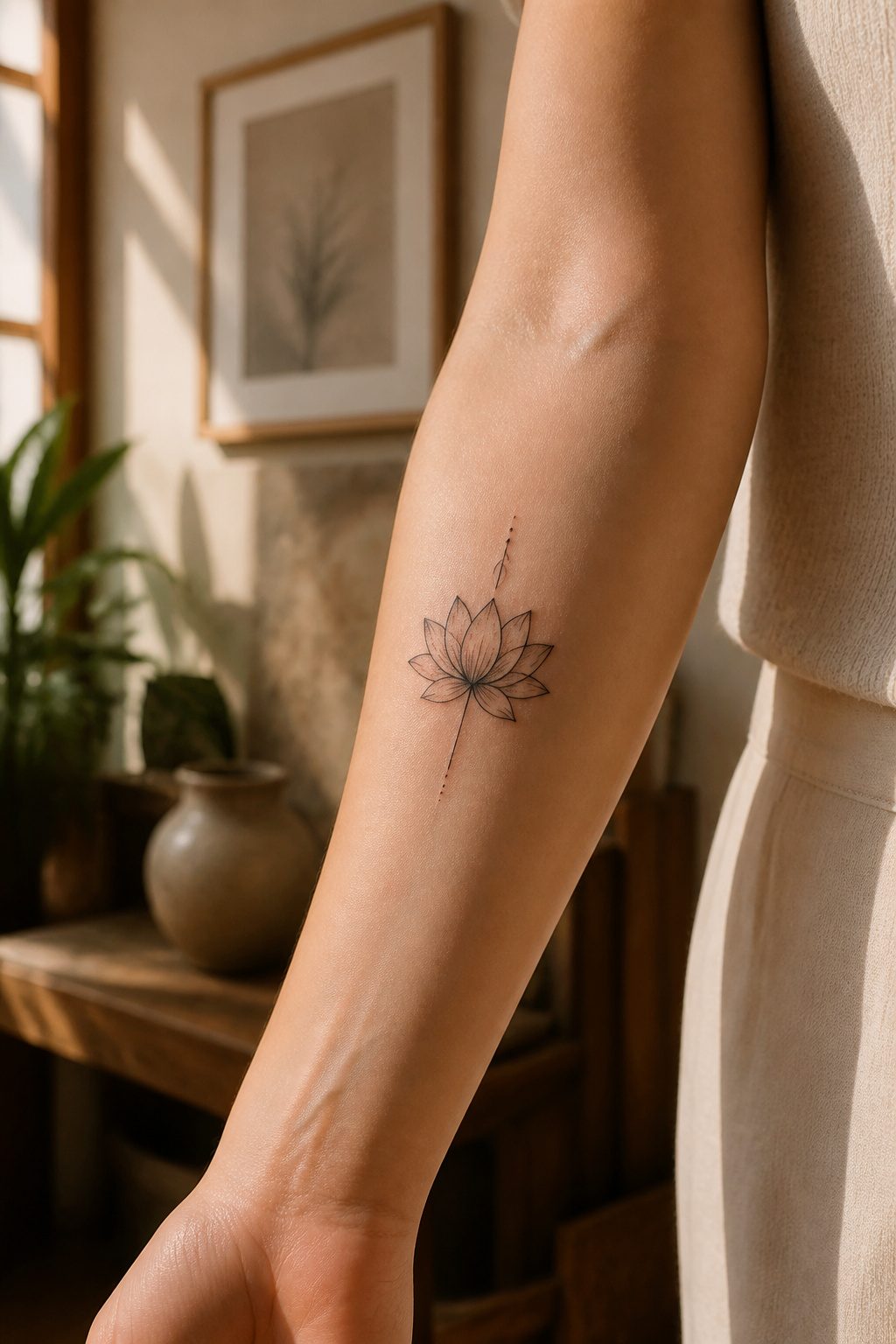
A lotus flower carries the weight of rebirth and purity, blooming even when the conditions around it are not exactly ideal. The image works because the flower rises through muddy water to open above the surface, a literal visual of pushing through difficulty. For a tiny tattoo, the lotus keeps its meaning at any scale; a few clean lines on a wrist or behind an ear still read as lotus, not generic bloom.
Sunflowers read differently. The meaning here is loyalty and steady happiness, less about struggle and more about what stays constant. A small sunflower tattoo tends to land as cheerful without tipping into sentimental, which is harder to pull off in small ink than it sounds.
Cherry blossoms are the choice when the goal is a sharper emotional edge. Their short lifespan makes them a reminder that time passes and life is precious, a meaning that deepens the smaller the tattoo gets. The fragility of the flower matches the fragility of the placement, and that pairing is what gives the tiny version its impact.
8. Word or Quote
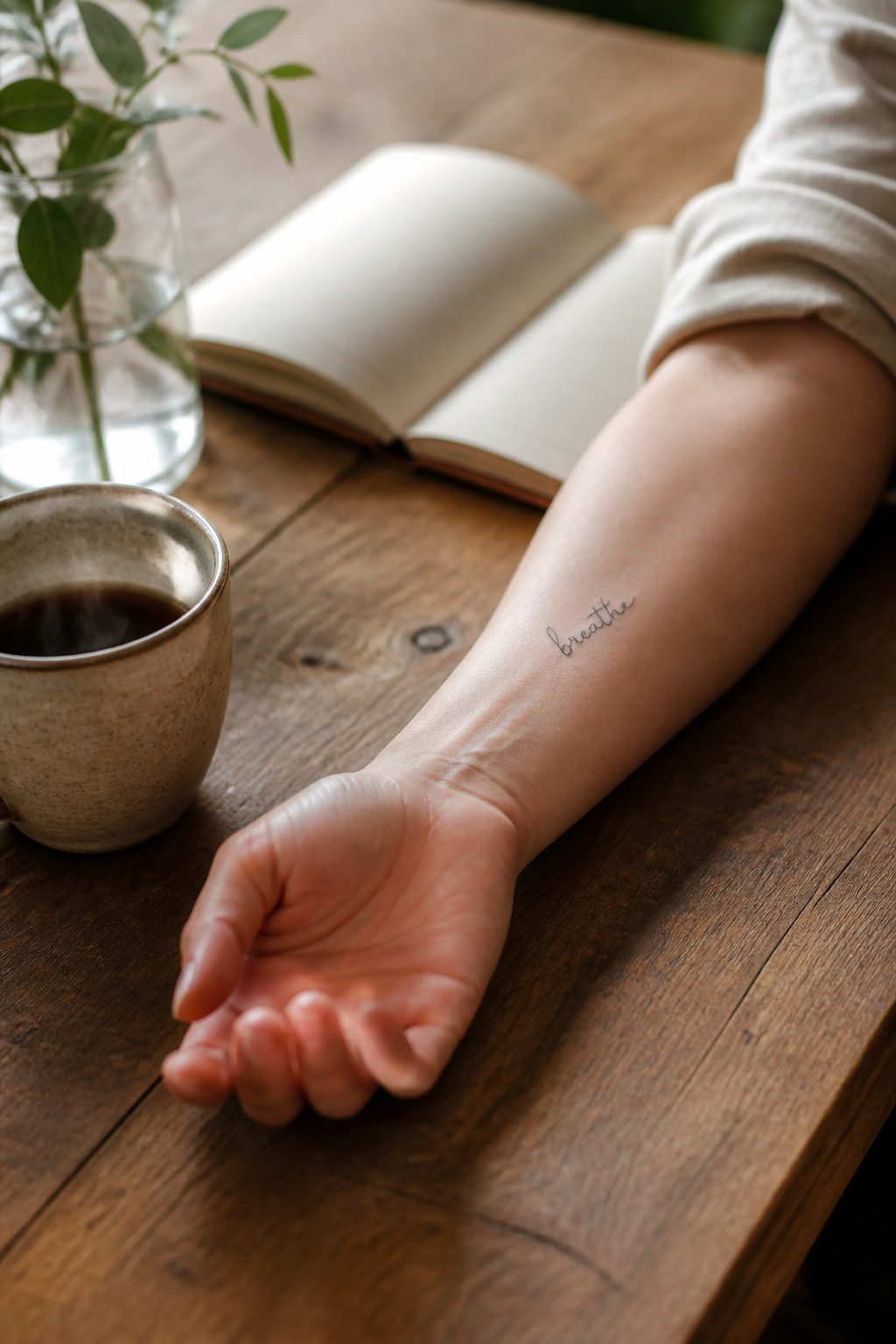
A single word in clean script carries more weight than half a sleeve of borrowed imagery. "Breathe," "hope," "stay" — these micro-mantras function as private commands you ink once and read daily, not decoration for someone else’s glance. Roman numerals layer that privacy further: a birthdate or anniversary rendered in classical strokes becomes legible only to those you tell.
The most potent text pieces I have seen borrow handwriting. A partner, parent, or child writes the word itself, and the tattoo traces their actual pen pressure. The result is fingerprint-level intimacy; the symbol and the hand that made it merge into one object. One woman I read about carried "You are loved" in her mother-in-law’s script, the letters themselves evidence of a bond that outlasted hardship.
Placement matters for longevity. Finger and palm text blurs fastest from friction and sun. Inner forearm, rib cage, or behind the ear protect the line work and keep the phrase close enough to read without a mirror. Fine-line lettering demands this care: the thinner the stroke, the more it depends on skin that sees sunscreen and little abrasion.
Cost scales with complexity, but text this small is rarely about the artist’s time. It is about choosing exactly which few words deserve permanence.
9. Paw Print
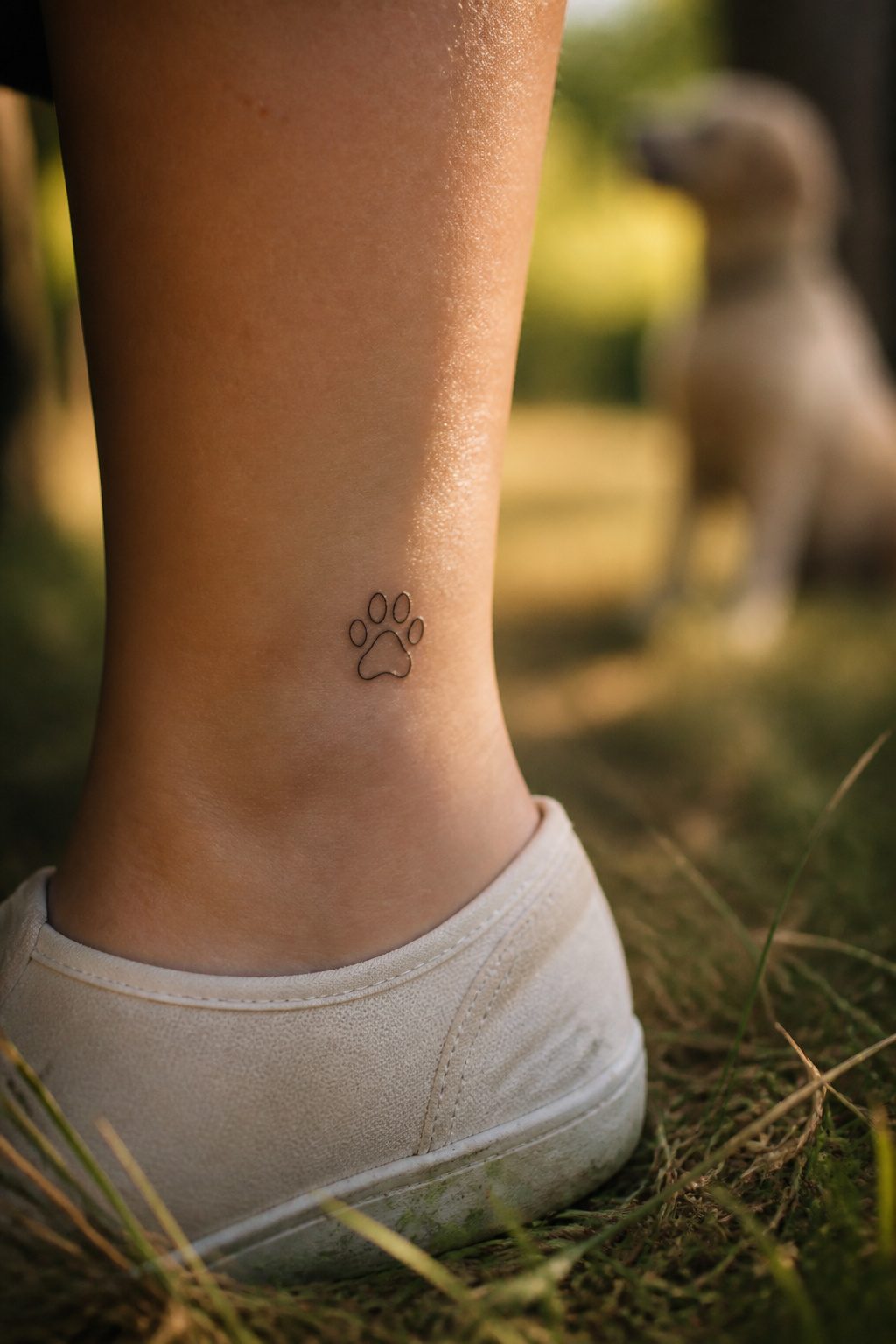
A single paw print no larger than a quarter carries the weight of years. The smallest paw leaves the biggest mark on the heart, and tattoo artists who specialize in fine line work can render every pad and claw mark from a photograph in under thirty minutes of chair time. The placement tends toward the wrist, the ankle, or behind the ear, spots where the owner would have felt a nose nudge or a tail thump.
Memorial pieces dominate this category. The tattoo marks loyalty that outlasted the body, companionship measured in shared mornings and ruined furniture. Some owners add a name beneath the print, others keep it wordless and let the shape speak. Either way, the design works because recognition is instant. Anyone who has lived with an animal sees the reference immediately; anyone who has lost one feels it.
The style rewards restraint. A heavy outline turns the paw into a sticker; single-needle shading keeps it soft, almost pressed into the skin like the real thing left on a clean floor. Watercolor backgrounds or angel wings tend to date faster than the grief itself. The simpler version ages better, and the simpler version was usually what the client wanted all along.
10. Shooting Star
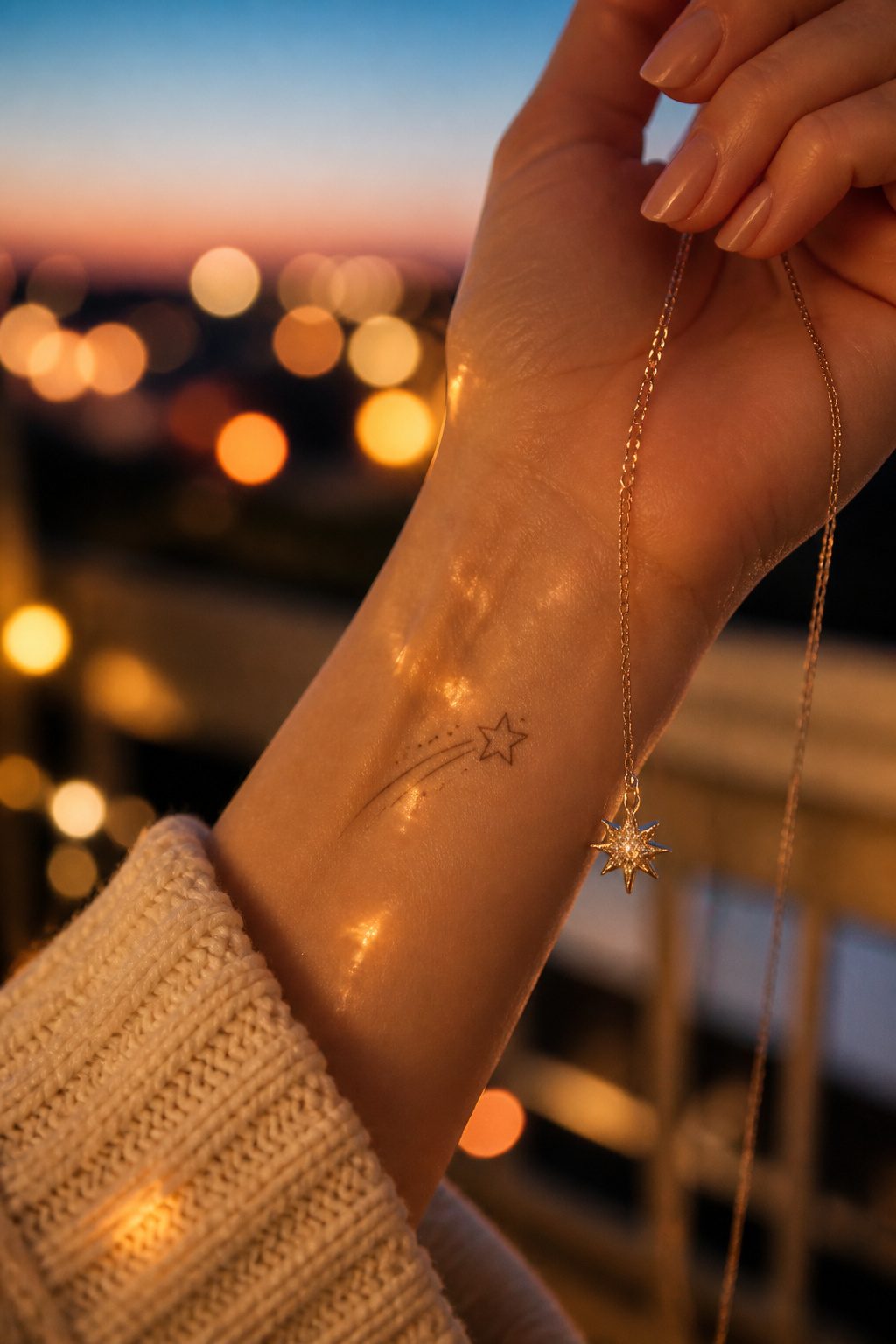
A shooting star tattoo carries the old instinct of making a wish the moment one streaks across the sky. That split-second flash, gone before you finish blinking, becomes permanent ink for luck you carry with you. Some choose it as a reminder that wishing stays free; you do not need a cosmic event to want something better. The design itself stays small by nature, a thin line trailing light, so it fits behind an ear, along a collarbone, or on a wrist without demanding space. Luck and a held breath, frozen.
11. Mountain

A single mountain line, drawn thin and unshaded, reads as a life journey rather than a postcard scene. That restraint is what makes it work at small scale: the eye fills in the ascent, the weather, the view from the top. A tiny mountain gains its weight from what the wearer already climbed, not from detail the artist adds.
The meaning splits two ways in the sources, and the choice matters for placement. One framing leans into resilience and stability, the rock that holds against storms. The other tracks elevation itself, the perspective shift that comes only after effort. A wrist placement suits the first reading, a private reminder of steadiness. Behind the ear or along the collarbone fits the second, where the mountain sits like a memory of looking back down.
Fine line technique, borrowed from single-needle work and editorial illustration, keeps the form legible as it ages. A single continuous ridge, perhaps a second line for snow or a trail, is enough. More than three and the symbol competes with itself for attention.
The moon may speak to cycles and change, but the mountain answers with what change costs and what it yields. For someone who prefers natural imagery with a harder edge than flowers or waves, this is the quiet alternative.
12. Lightning Bolt
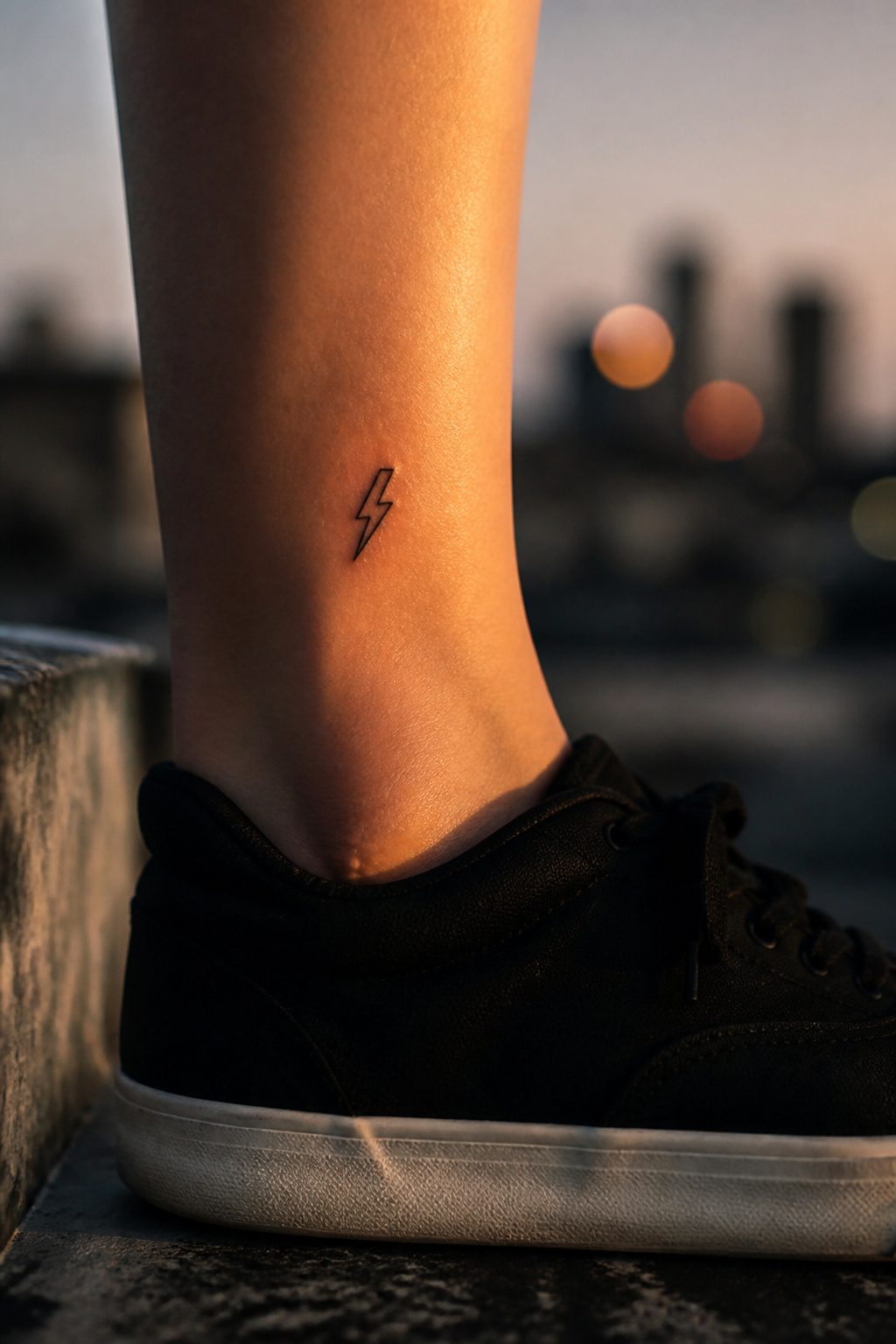
A lightning bolt carries its weight without taking up space. The shape alone reads as energy, a flash of understanding that arrived before you were ready for it. That compact jagged line has stood for power since long before tattooing went mainstream, and it still works because the meaning stays immediate: sudden clarity, force contained in a split second.
Placement shapes how it reads. Behind the ear, the bolt looks like a private signal, something the wearer remembers even when no one else sees it. On the wrist or ankle, it becomes a deliberate statement about personal voltage, a reminder of a decision made in a single illuminating moment rather than a slow drift.
The risk with this symbol is over-dramatizing it. Heavy shading and color turn a quick strike into a cartoon storm cloud. The strongest versions stay spare, letting the geometry do the work. Thin black line, clean edges, no background needed. The body supplies the context; the ink just marks the flash point.
13. Roman Numerals
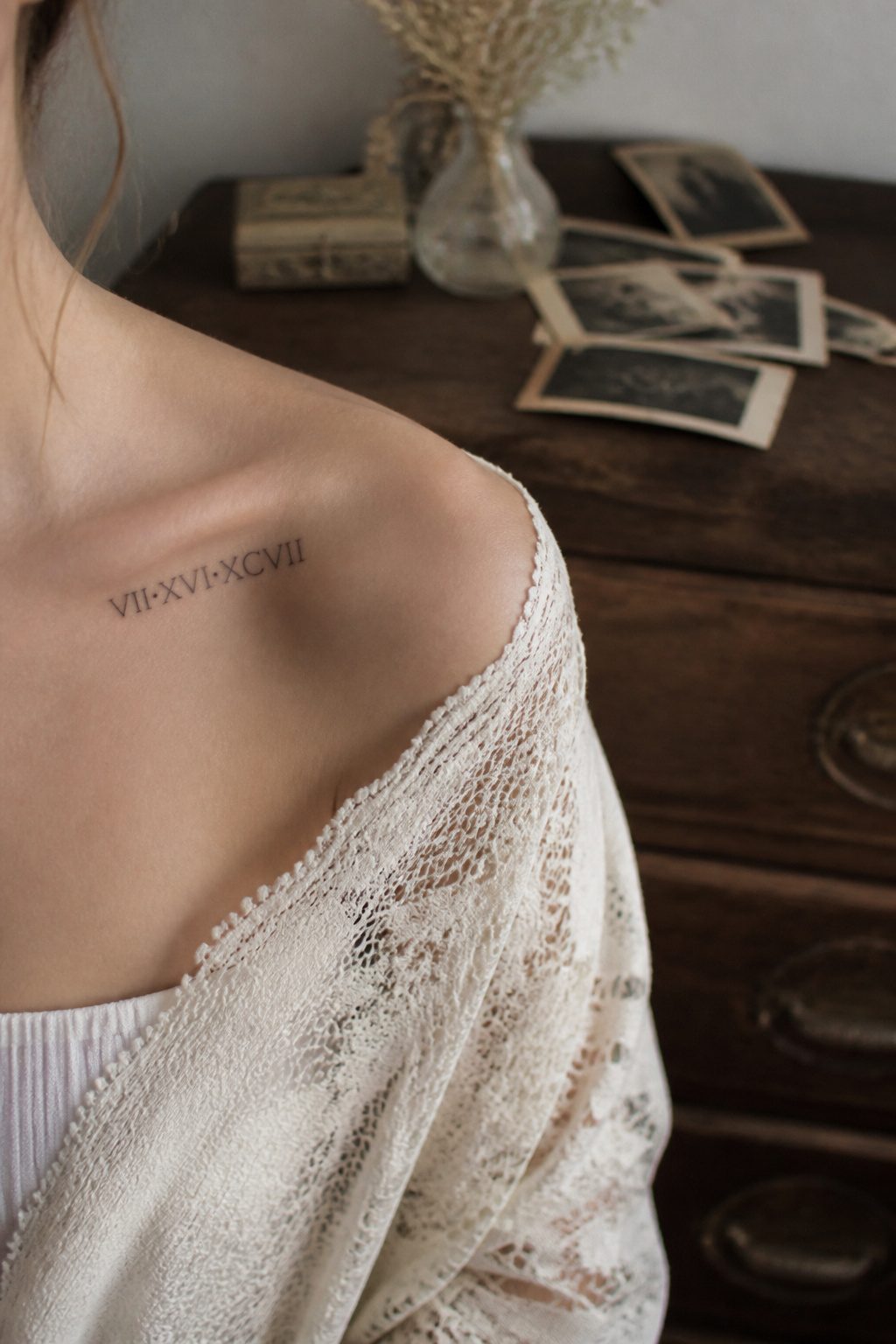
Roman numerals turn a date into something you read differently than the numbers on your phone. A birth, a loss, a day that split life into before and after: those moments gain weight when rendered in classical form. The privacy styling matters more than people expect. Arabic numerals announce themselves to anyone glancing over your shoulder; Roman numerals ask for a pause, a second look, sometimes a translation the wearer does not always offer.
Placement tends toward the wrist or collarbone, where the line stays thin and the scale stays small. What reads as timeless on paper can blur over time if the artist crowds the characters, so spacing between letters deserves the same attention the numerals get. The meaning stays direct and unambiguous, which is why memorial work and personal journaling culture both borrowed this format early. A single date, stripped of decoration, often carries more emotional weight than an image ever could.
14. Dandelion
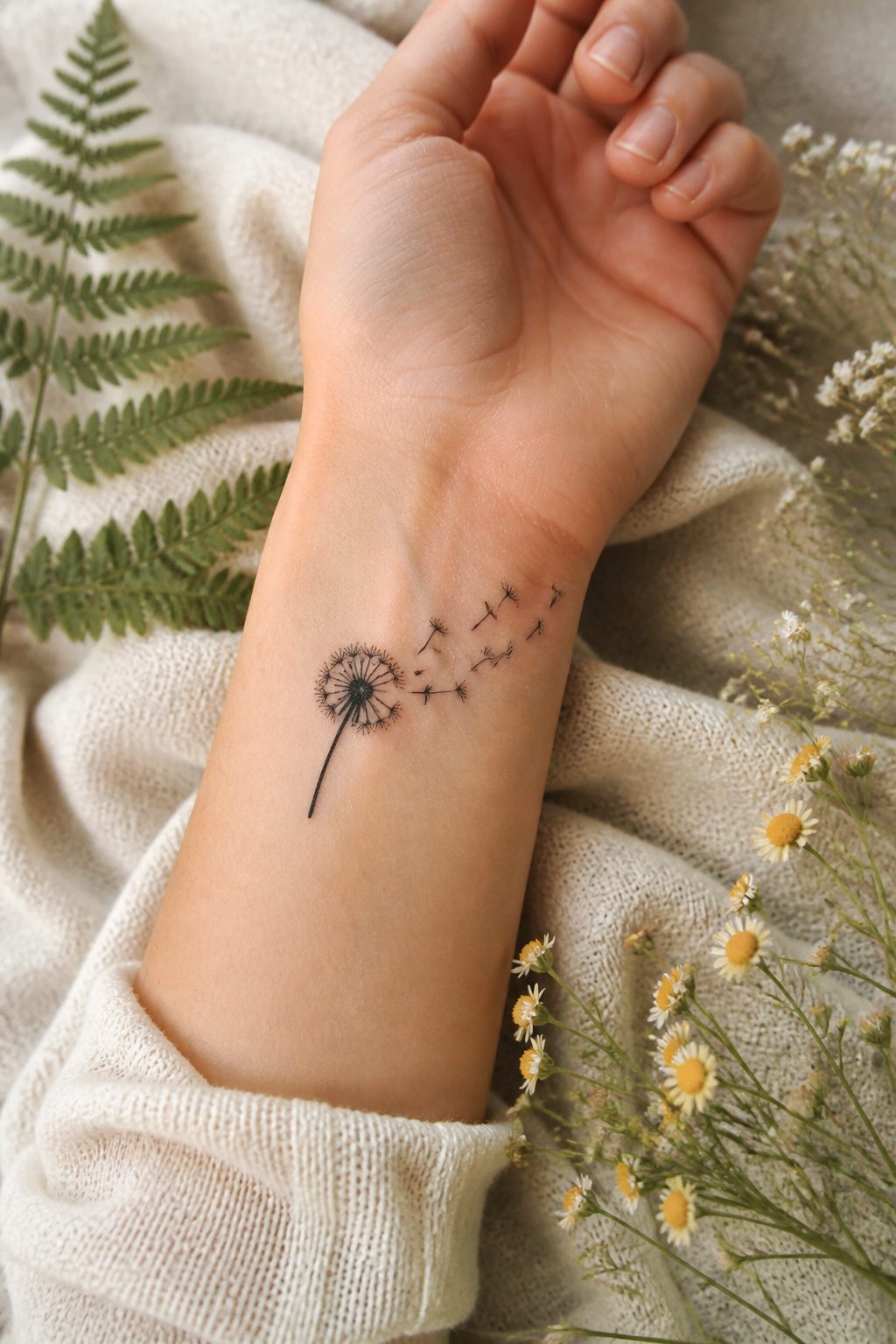
The dandelion carries one of the lightest meanings in the tattoo catalog, which is exactly why it works as small ink. A dandelion seed head, with a few puffs breaking free on the wind, stands for hope and optimism, the idea that a wish travels until it lands somewhere it can grow. The image draws on the childhood ritual of blowing the white sphere and watching the seeds scatter, a memory most people share even if the details differ.
Placement shapes how the symbolism reads. A single seed drifting downward from behind the ear suggests something released rather than something sought. A cluster of seeds rising from the wrist or ankle looks like departure, movement toward the next thing. The stem can be rendered in three or four lines; the seed head needs only stippled dots and the lightest line work to read as dandelion rather than generic fluff.
Color is a choice that changes the tone. Black ink keeps the focus on the form and the motion. A touch of yellow at the base of one or two seeds, or a pale wash of blue behind the floating ones, adds warmth without turning the design into illustration. The size that holds the detail starts around an inch and a half for the full head with detached seeds; smaller than that, the seeds blur together and the meaning thins out.
15. Fish
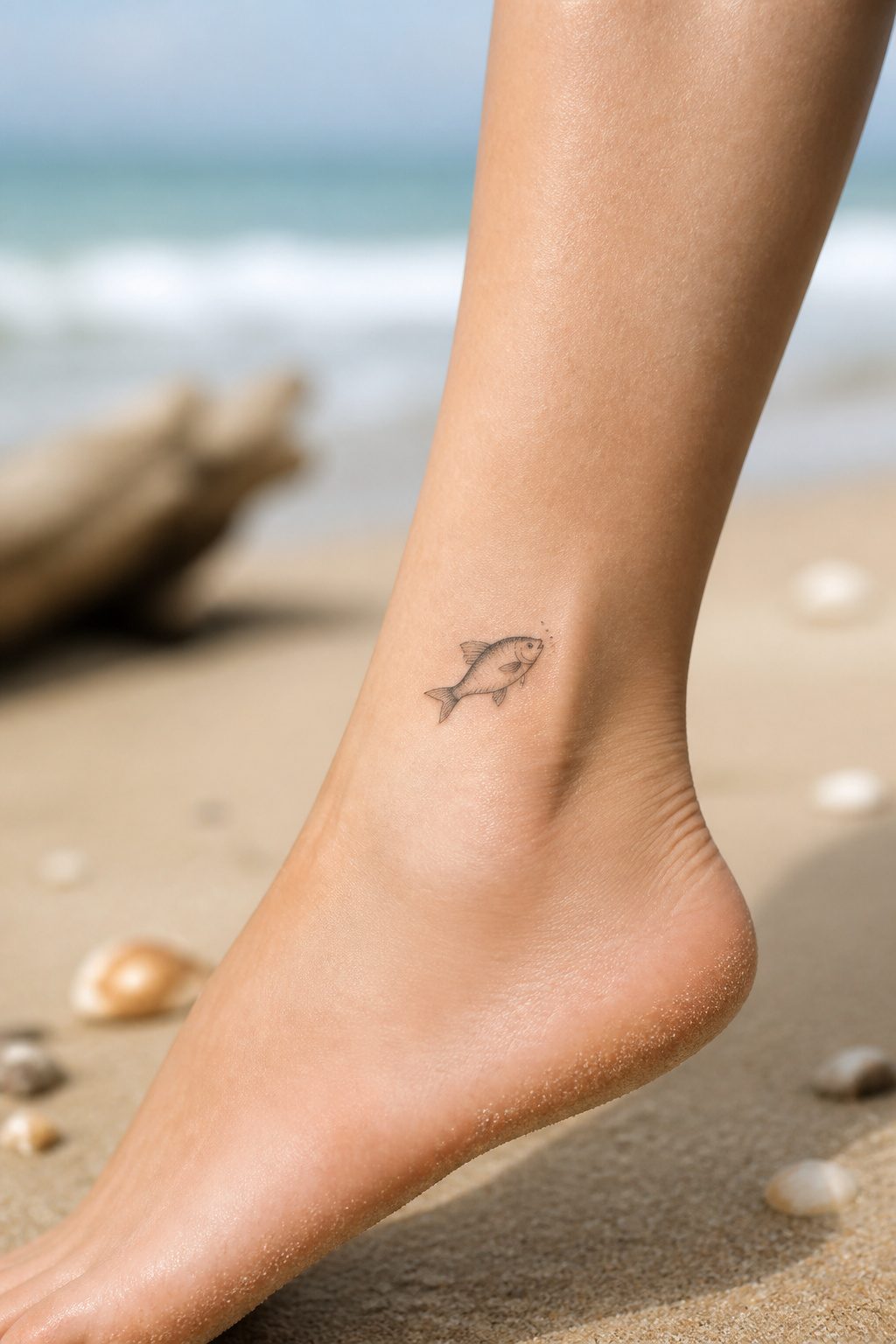
A single fish, drawn in two or three clean lines, carries more weight than its size suggests. The shape itself hints at going with the flow without losing your own direction, a balance that reads as spiritual without announcing itself as religious. Some wearers pair it with a tiny star or current line to push that symbolism further; others leave it bare so the meaning stays private.
The image works best when the body curves rather than stays straight. A curved fish reads as movement, a straight one as static, and the difference matters at this scale where every millimeter speaks. Placement on the inner wrist, the ankle bone, or behind the ear keeps the design visible to the wearer first, which suits a symbol about personal perspective rather than public statement.
16. Tree

A tiny tree carries more weight than most symbols at this scale. Roots and branches fit the wrist or behind the ear without crowding, and the shape still reads as a tree from across the room. What matters is which species you choose, because the meaning shifts hard. A birch signals rebirth and new beginnings, a clean start pressed into skin. An oak starts as an acorn, the same image scaled down, yet it stands for wisdom and endurance once it grows. The tree of life design wraps roots into a circle around the trunk, turning the whole thing into an endless loop of life cycles rather than a single fixed moment.
Placement shapes the effect. Roots anchor near the pulse point, branches reach toward the fingers. The circular tree of life sits flat on the shoulder blade or the ankle bone where the curve of the body echoes the ring. Keep the lines spare: one continuous stroke for the trunk, a fork for branches, a split for roots. Color rarely improves what black line already says here.
17. Music Note
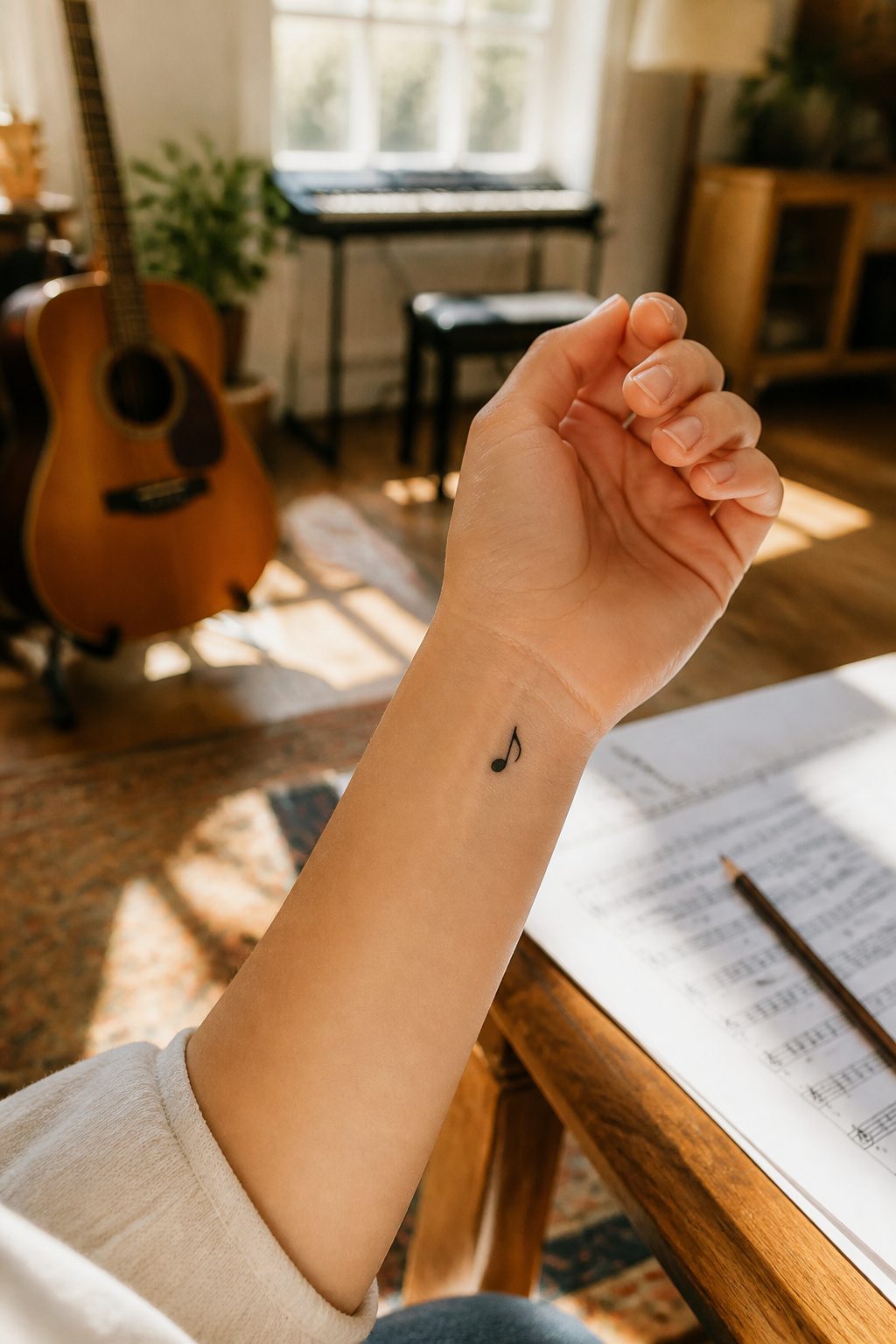
A single treble clef, small enough to hide behind an ear or rest inside a wrist, carries more weight than its size suggests. For someone who plays, the symbol marks hours of practice and the particular song that first made fingers ache. For the rest of us, it can stand for the album that got us through a hard month, or the concert where something shifted. A music note tattoo works best when it ties to one specific memory rather than a general "I like music" claim, because the general version fades into background noise the way a playlist does. The design stays minimal, a few millimeters of ink, yet the sources agree it reads as a constant source of inspiration rather than decoration. Placement matters more with something this small: too crowded by other tattoos and the symbol loses its quiet punch, too isolated and it can look accidental rather than chosen. A friend of mine, a drummer for fifteen years, placed hers at the base of her thumb where sticks rub calluses, so the tattoo meets the work. That is the test for whether this symbol earns its spot: does it sit where the music already lives?
18. Eye
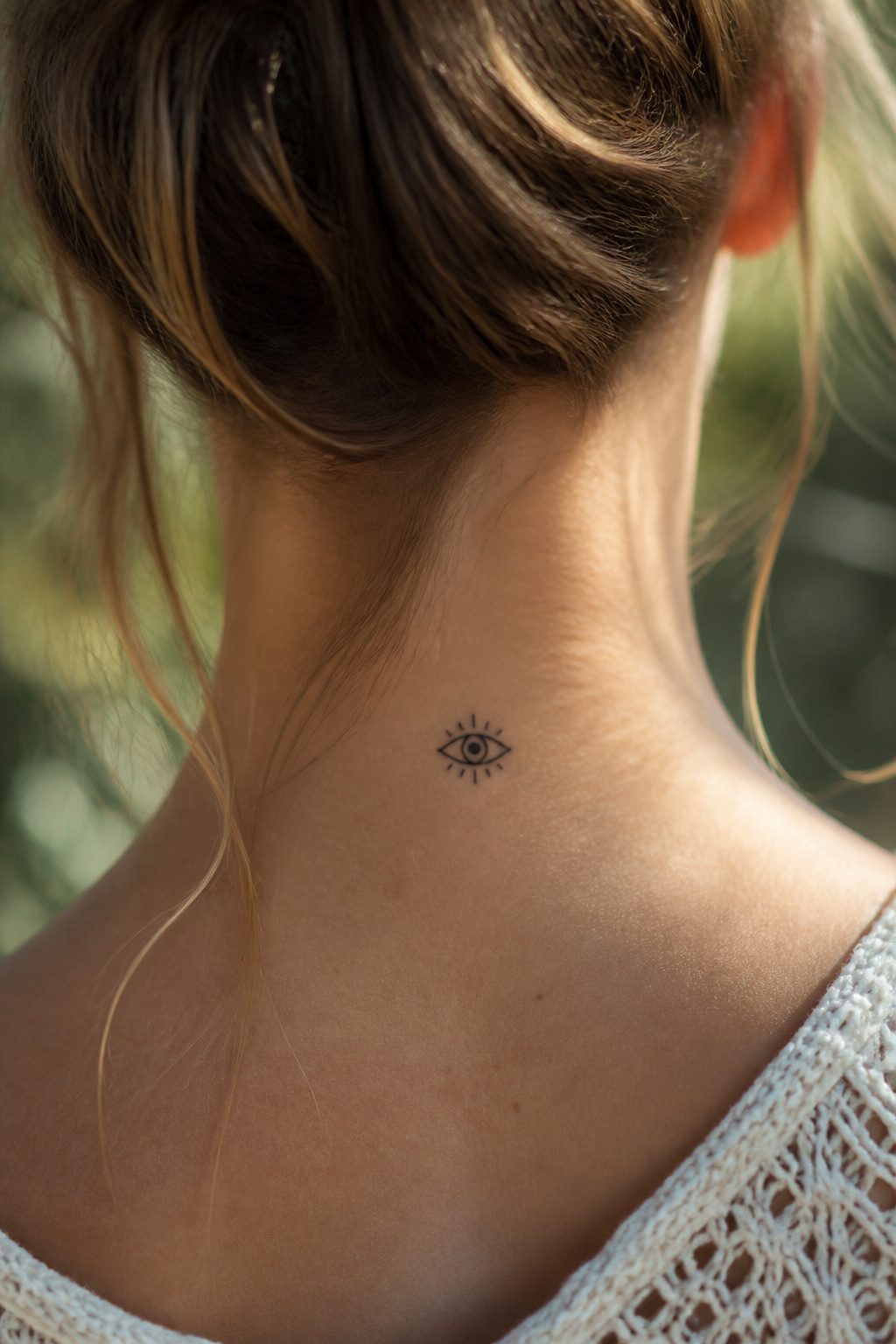
An eye rendered small, just a centimeter or two of lid and iris, carries two distinct symbolic paths. The evil eye talisman turns a feared symbol into armor against negative energy, a tradition rooted in ancient Egyptian folklore where the eye itself was once considered dangerous before it became protective. A simpler open eye, stripped of that specific cultural framing, speaks to personal vigilance instead: watching your own boundaries, staying awake to what surrounds you. The Eye of Ra and the Eye of Horus, often confused online, both orbit this same territory of protection and inner strength, though purists will correct you on which is which. Either way, the image functions as a quiet guardian rather than a declaration. An eye tattoo sits well behind the ear, on the inner wrist, or at the nape where hair can hide or reveal it; the placement itself becomes part of the meaning, a thing seen only when you choose to show it.
19. Dog or Cat
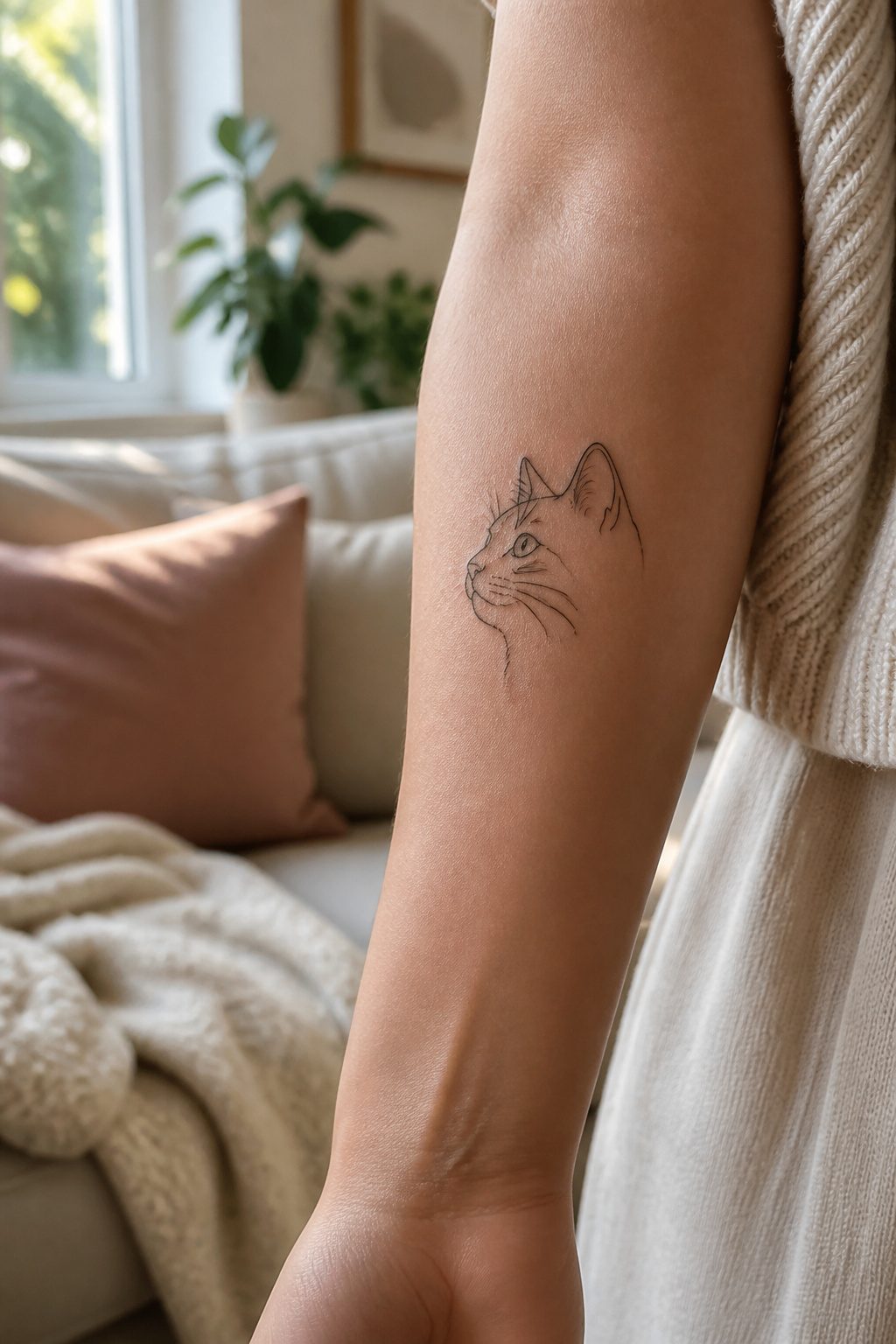
A tiny portrait of a dog or cat carries weight that a generic paw print rarely matches. The shape of a familiar silhouette, the tilt of ears you already know, turns the tattoo into a specific presence rather than a symbol of pet ownership in general. That distinction matters when the goal is meaning rather than decoration.
Linework keeps the design small enough for a wrist or ankle without losing the animal’s recognizable posture. A simple outline of a beagle’s long ears or a tabby’s rounded profile does the recognition work; shading and color add size you may not want. The result reads as loyalty and companionship because it is that loyalty, that companionship, made visible.
Placement shapes how the tattoo functions. A portrait behind the ear stays private, seen mainly in mirrors. The inner forearm turns it into something you notice during daily tasks, a brief reminder of the bond it stands for. Either works; the choice depends on whether you want the memory kept close or brought forward.
The risk is sentiment tipping into sentimentality. A portrait too literal, too posed, can feel like a memorial plaque rather than a living connection. The tattoos that hold up over years tend to keep some abstraction: the curve of a tail, the angle of a sitting pose, enough detail to identify and enough restraint to let the wearer supply the rest.
20. Star
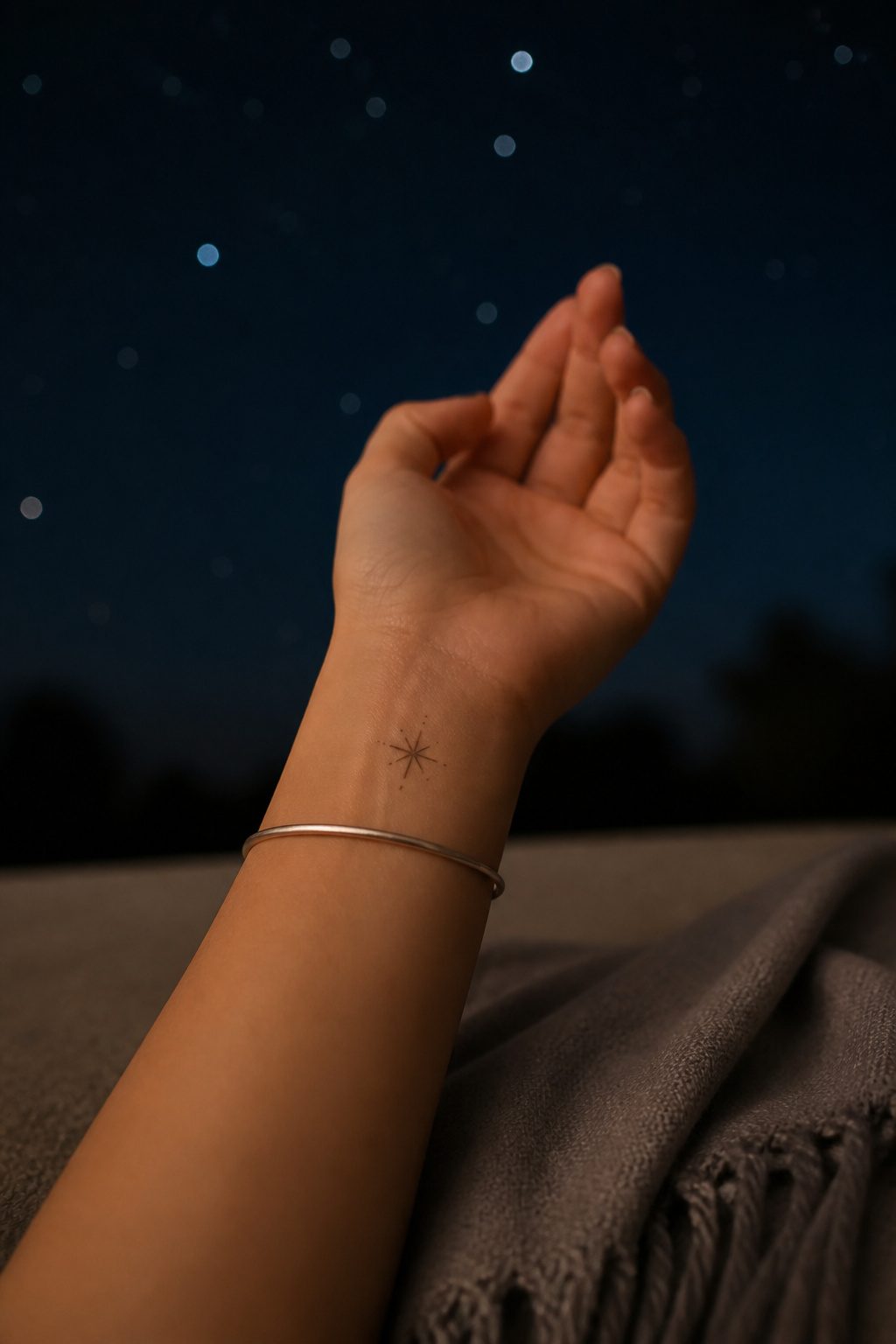
A single star carries the oldest navigation story in tattooing. Sailors once trusted fixed points of light to steer through open darkness, and that same idea still lands on wrists and collarbones today. A star marks guidance you can actually see, not vague optimism but a specific direction held against black water or black mood.
The design stays readable at any scale, which matters when you’re working with an inch or less of skin. Some people line the points up exact; others soften the geometry into hand-poked irregularity. Either way, the meaning holds because the symbol predates the style. Maritime tradition gave it the logic of hope earned through hardship, not hope as decoration.
Placement follows visibility. Fingers, the side of the wrist, behind the ear, or high on the neck keep it subtle but catch light when you move. A star behind the ear almost disappears forward-facing, then shows when you turn your head. That partial concealment suits the theme: guidance visible only when you need to look for it.
Where Small Tattoos Work Best
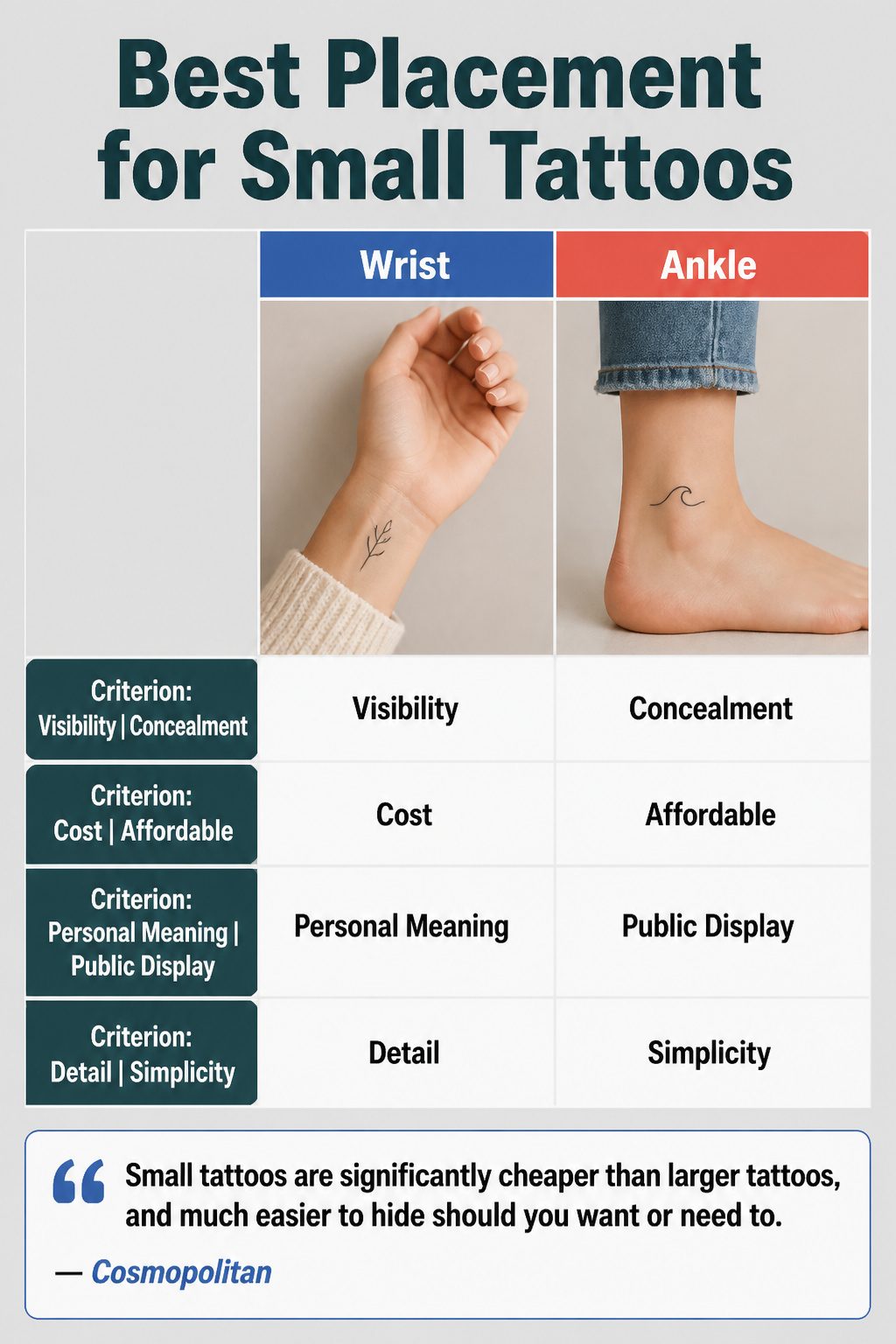
The wrist sits at that natural sightline where you glance dozens of times a day, which makes it a practical choice for something you want to keep present. A fine line design there stays readable without shouting across a room. The ankle works differently; it hides under a sock or pant leg and surfaces only when you choose, so the meaning stays private until you decide otherwise. Behind the ear takes that privacy further. Hair covers it for work, sweeps back for the weekend, and the placement itself becomes part of the message: you know it is there even when no one else does. Fingers are the outlier. They are always visible, always in motion, and the space forces a minimal statement. A symbol there reads as intentional rather than decorative because there is no room for anything else.
Small tattoos are significantly cheaper than larger tattoos, and much easier to hide should you want or need to.
That cost and concealment factor matters most when you are testing whether a symbol still feels right after six months of living with it. The smaller commitment lets you place the meaning before the spectacle.
Fine Line and Minimalist Styles
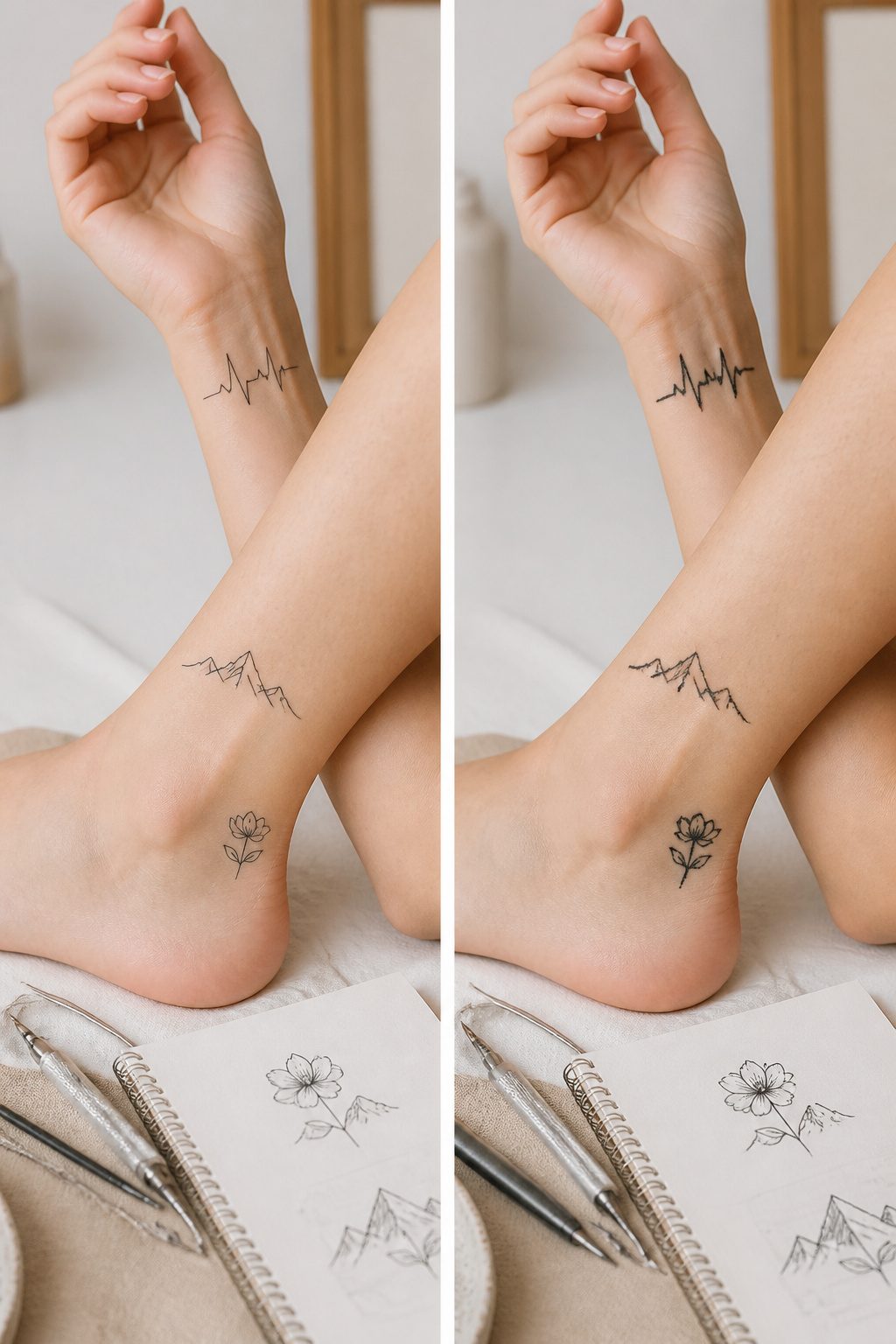
Fine line work borrows from Scandinavian minimalism and single-needle technique, and the result sits quietly on skin. A single mountain line can mark a life journey without shouting it. A heartbeat line preserves survival or continuity in ink so thin it nearly disappears from certain angles. Watercolor accents, where color bleeds deliberately at the edges of a small shape, add emotion without the weight of a full palette. The appeal is placement flexibility: wrist, collarbone, behind the ear, ankle. These spots stay easy to hide in professional settings yet visible when you choose. Healing tends to run faster with less ink involved, and the cost stays lower than larger pieces. What ages well demands a steady hand and real precision; line spread over time turns a quiet symbol into a blur. The best artists in this style treat small as technical, not simple.
What Small Tattoos Actually Mean
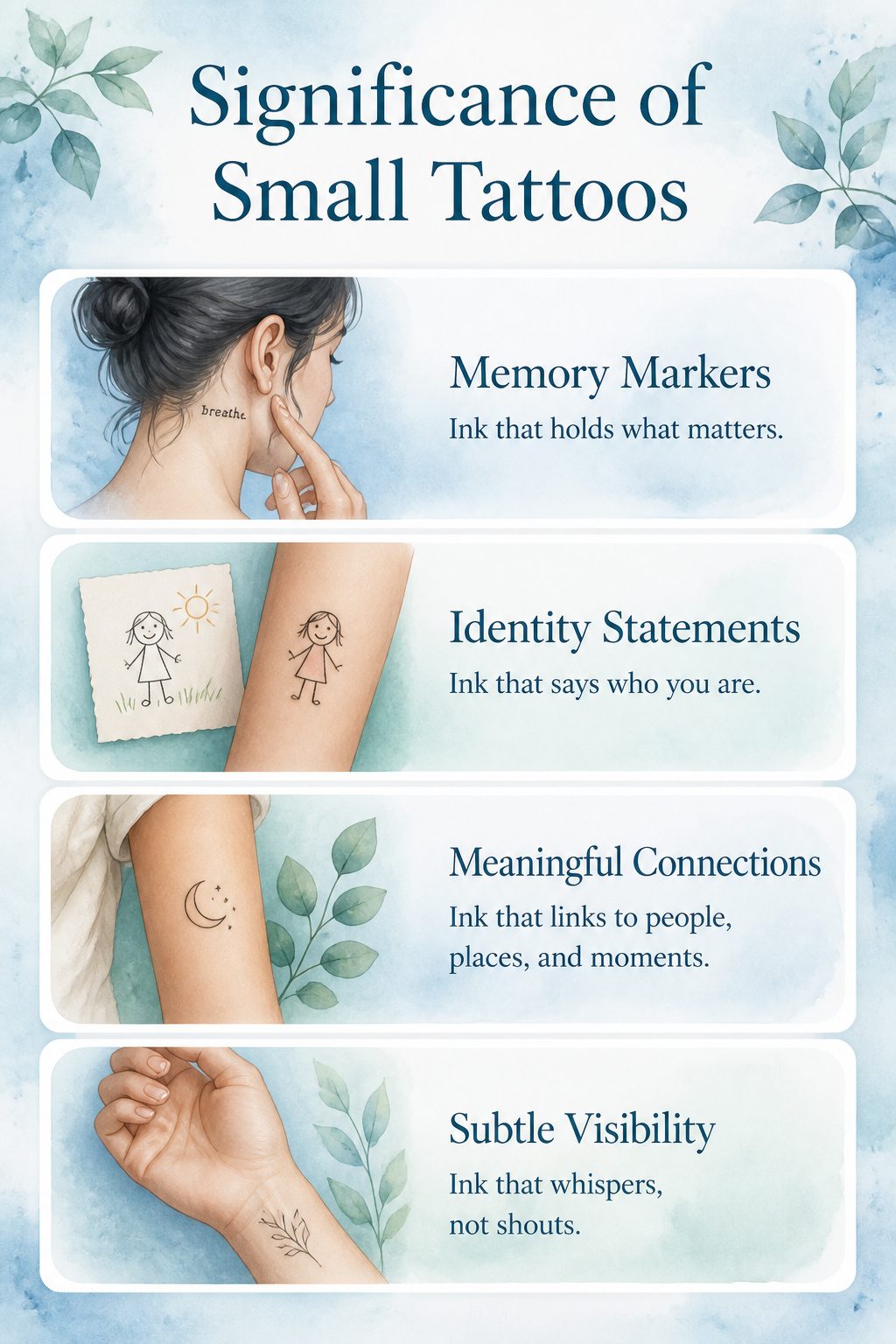
The first meaningful tiny tattoo I ever noticed was a single word inked behind a colleague’s ear: "breathe." She got it after a panic attack in her late twenties, and the placement meant she could feel it with a fingertip without a mirror. That compactness is the point. A small tattoo carries weight not by what it shows the world, but by what it anchors for the person wearing it.
These designs function as memory markers and identity statements, not decoration. A child’s drawing translated into ink becomes a one-of-a-kind keepsake; every imperfect line holds a bond that a polished design would flatten. A simple symbol can mark recovery, a lost parent, a belief you returned to after leaving it. What is left unsaid in the design often matters as much as what appears.
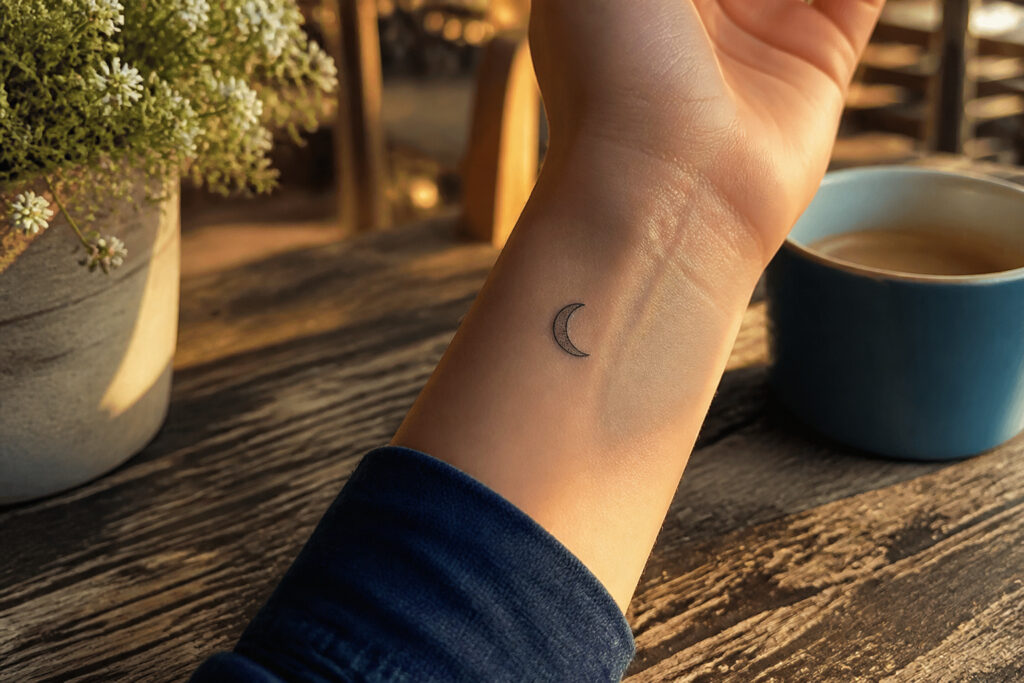
The intimacy shapes the meaning. Large pieces announce; small ones whisper. A fine-line crescent on an inner wrist might record a specific night, a decision, a person who would recognize it and no one else would need to. That selective visibility turns the tattoo into a private language rather than a public statement. The size limits the detail, but the restriction forces clarity: one story, one moment, one reminder.
Frequently Asked Questions
What do small tattoos mean?
Small tattoos carry personal weight through compact symbols rather than size. They mark memories, beliefs, emotional milestones, or identity statements, with their strength coming from simplicity and what remains unsaid. The article covers twenty specific designs, from semicolons signaling continuation after struggle to mountains marking what someone climbed, each reading clearly at a quarter-inch or smaller.
Where should I get a small tattoo?
Wrists, ankles, behind the ear, and fingers are the most common placements, though ribs, inner arms, and collarbones work well for hiding under clothing. The article notes that visibility shapes meaning: inner wrist invites conversation, behind the ear keeps the symbol almost private, and collarbone placement turns an anchor outward into a public statement about steadiness.
What are some popular small tattoo designs?
Anchors, butterflies, flowers, and meaningful words or quotes lead the list, with semicolons ranking as the most requested meaningful tiny tattoo across six separate tallies. The article also covers moon phases, zodiac signs, paw prints, shooting stars, mountains, lightning bolts, Roman numerals, dandelions, fish, trees, music notes, eyes, and pet portraits, each chosen for how cleanly the symbol reads at small scale.
How do I take care of my small tattoo?
Clean daily with mild soap and water, apply fragrance-free lotion or ointment, and avoid sun exposure and swimming for at least two weeks. Do not pick or scratch scabbing areas. The sources emphasize that small size does not mean skipping aftercare, since fine-line detail common in tiny tattoos depends especially on protected healing to stay sharp over time.