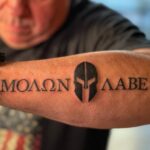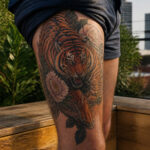

A small tattoo works when the design was built for the size from the start, not shrunk from something larger. The practical ceiling sits around four inches; beyond that, the detail you packed in starts to blur.
What separates the pieces that last from the ones that muddy into gray smudges is how aggressively the artist edits. A wolf’s whole body collapses into a smear, but the eyes alone survive.
The wrist heals predictably and covers with a watch. Behind the ear, the bone sits too close and the space tops out at two inches.
1. Small Cross Tattoo
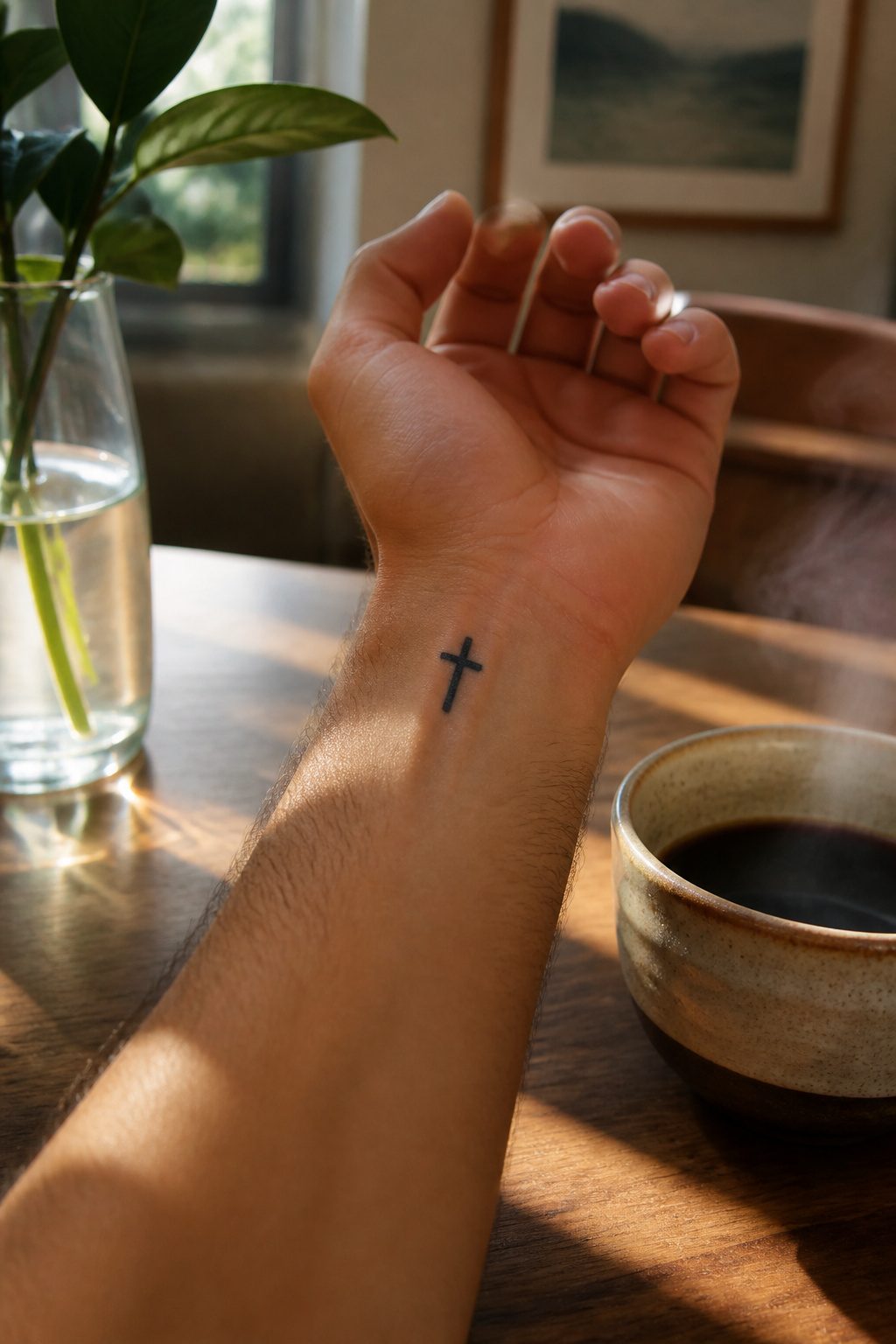
A small cross tattoo works best when the vertical line stays long enough to read as a cross at a glance, not a plus sign.
The wrist or inner forearm gives that vertical room while keeping the design under four inches, which is the practical ceiling for something that still reads "small."
I have seen ornate crosses with filigree and shading age into gray smudges within a couple of years; the thin lines blur together and the detail disappears. Clean black linework holds its shape where complexity collapses.
The wrist sits flat, heals predictably, and covers easily with a watch or sleeve if your workplace demands it.
Behind the ear gets suggested for discretion, but the skin there is thin, the bone close, and the space too tight for anything more than a few characters or a simple symbol.
For a cross you want to see daily, the wrist wins.
2. Small Heart Tattoo
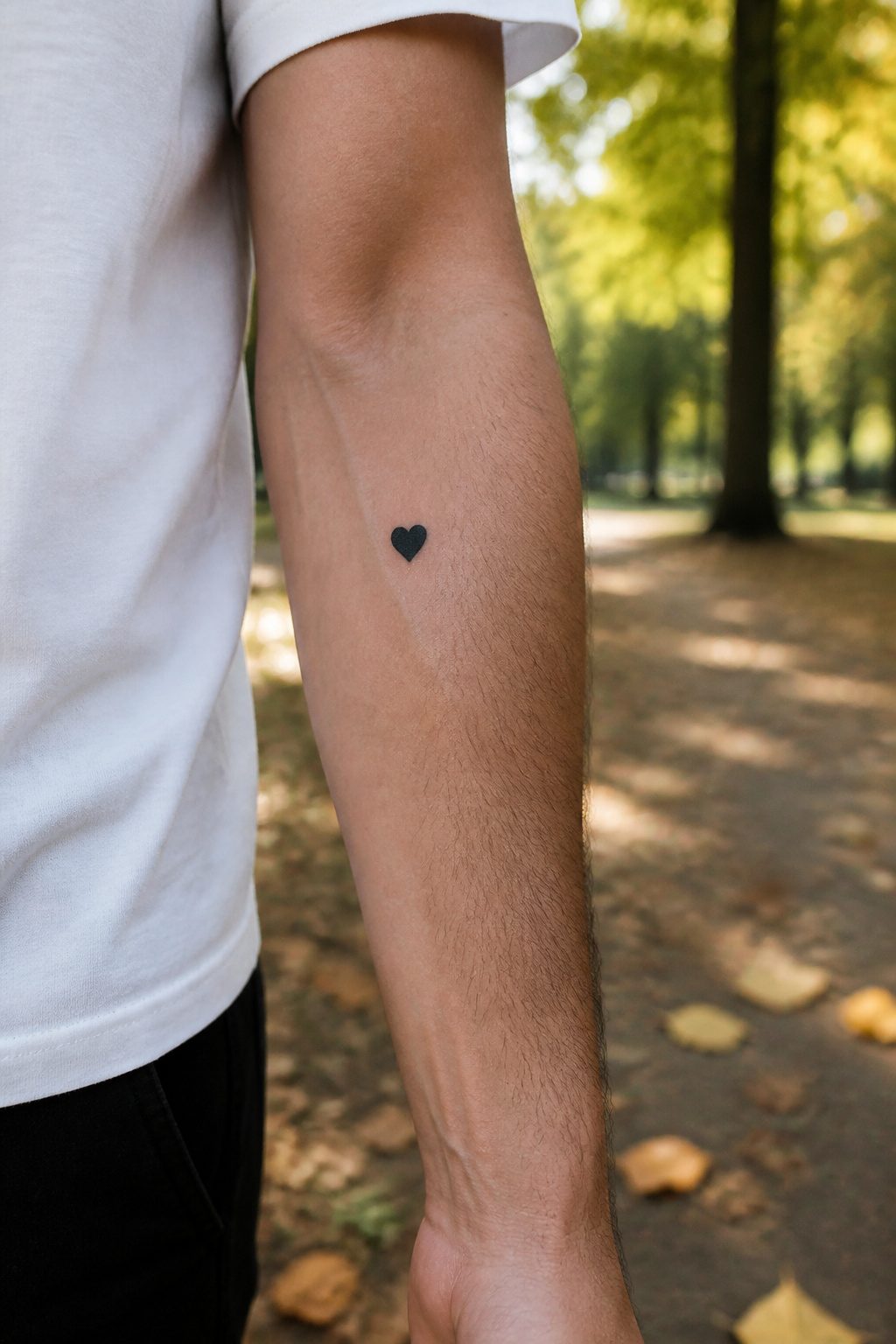
A heart in outline or solid fill gives you a symbol that reads instantly without asking for room. The shape carries its own weight, so the tattoo does not need extra linework or shading to land.
The wrist sits flat, which keeps the edges clean for either style, and a watch or sleeve covers it when you want. Pain stays moderate there, enough to notice but not enough to flinch through.
Behind the ear is the stricter choice: the skin is thin and bone sits right underneath, so the needle registers sharper, and the space limits you to something under two inches.
Longer hair hides it completely, which is the point if you are after discretion.
A filled heart risks spreading slightly over time in such tight quarters; an outline holds its shape longer there.
For a first piece or a personal mark without a story you explain, the heart works because the meaning is assumed and the upkeep is low.
3. Small Snake Tattoo
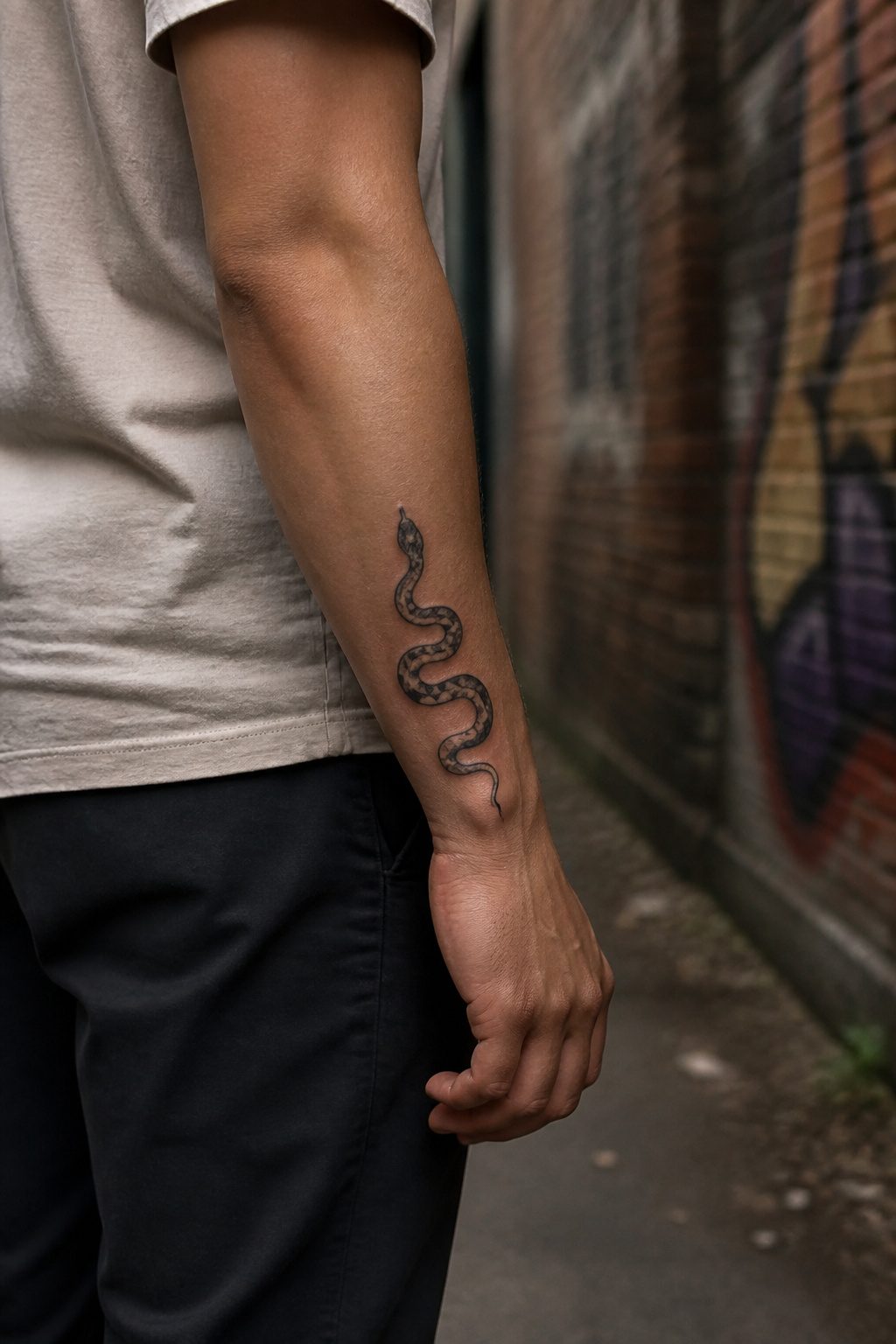
A snake’s curved body does the design work for you, bending naturally into narrow spaces like the forearm or ankle without looking forced.
The coiled form wraps cleanly around an arm or leg, which is why so many small snake tattoos end up in those spots.
What separates the ones that last from the ones that blur is how the head and scales are handled.
Keep the head simple and the scale detail minimal; a tiny diamond pattern or a few clean lines read as "snake" from across a room, while photorealistic scales collapse into gray mush inside two years.
Heavy black fill adds weight and boldness to a small snake, which helps it hold up, but that same density needs breathing room or the whole thing turns into a dark smear.
For a first tattoo, the forearm or upper arm heals more predictably than an ankle or finger, and the slightly flatter surface lets the artist place the curve with control.
4. Small Wolf Tattoo
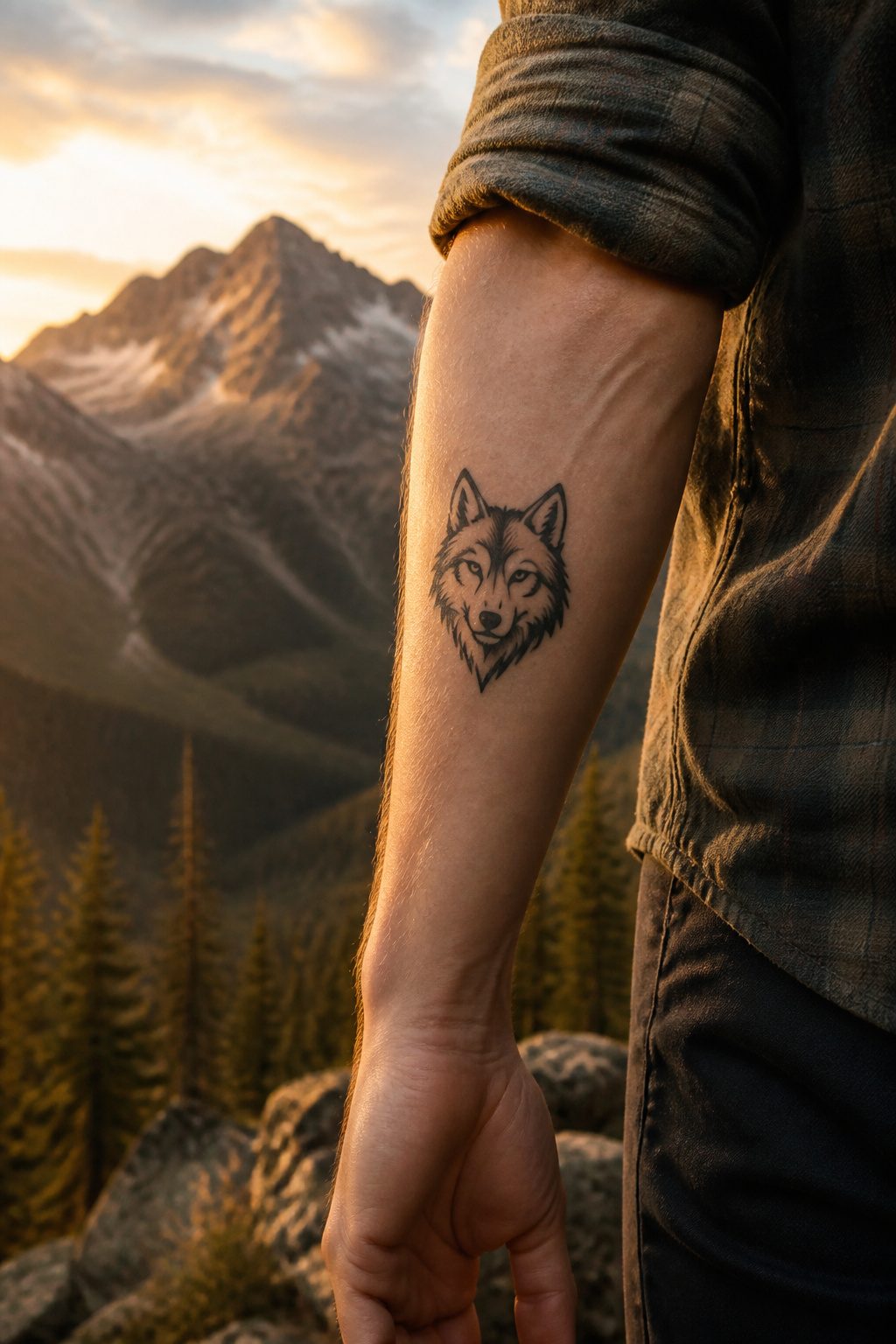
A wolf head at small scale lives or dies by the line weight around the eyes and the muzzle. Too fine, and the ink spreads into a dark smudge within a couple of years.
Too bold, and you lose the animal’s expression entirely. The silhouette version forgives more: a clean profile with the ears pitched forward reads instantly even at two or three inches.
Forearm and upper arm are the placements that save it, both offering flat enough skin that the artist can control those transitions.
Curved spots like the side of the wrist or the shoulder cap force the design to bend, and a wolf’s face warps fast when the canvas curves.
For a first piece, the outer forearm is the safer bet: easy to conceal under a long sleeve, moderate pain, and enough room to scale up slightly if the stencil looks cramped once it’s on the skin.
5. Small Lion Tattoo
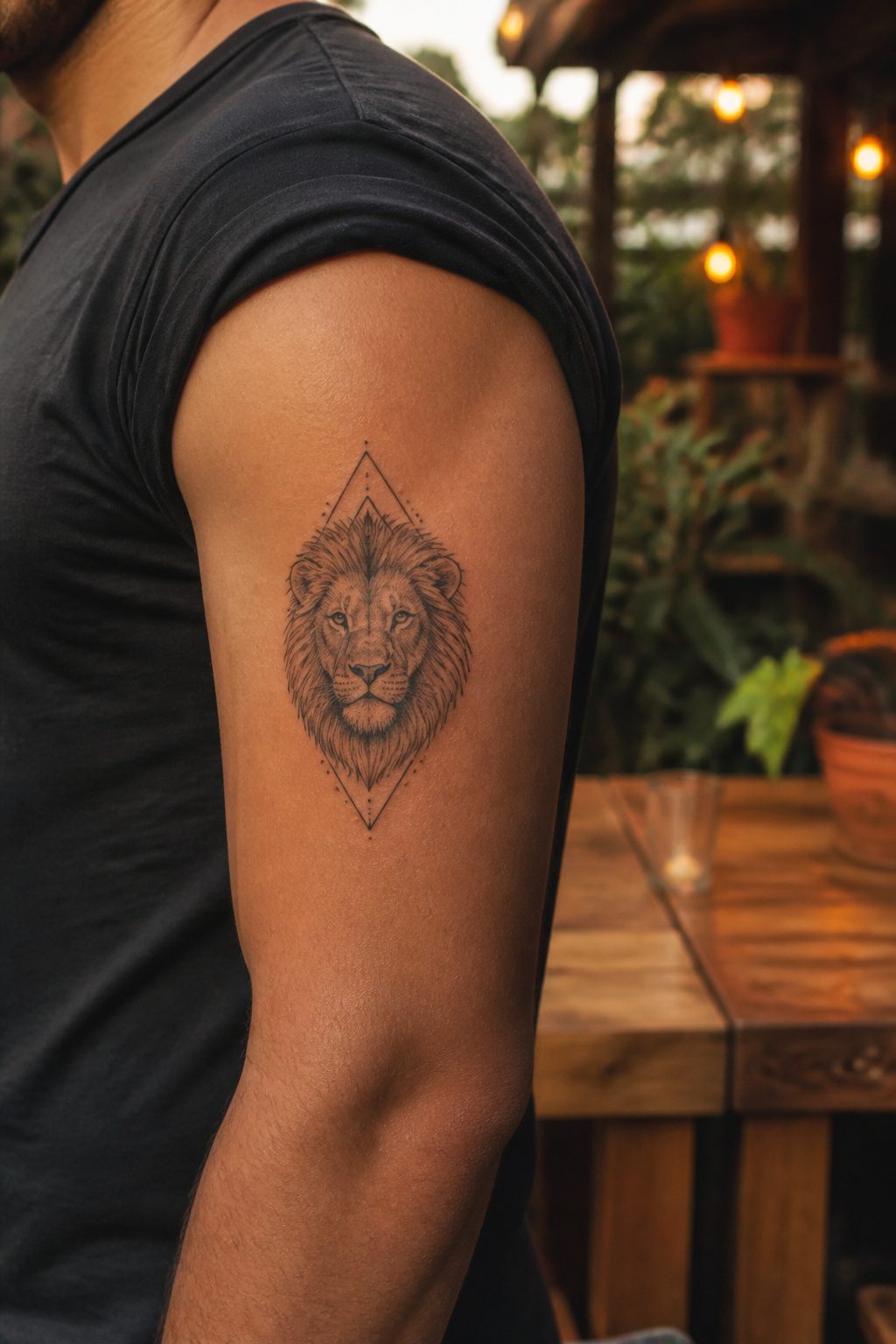
A small lion tattoo works best as a face or a simplified mane, not the full body. The mane’s lines need room to breathe, so the upper arm or chest carries it far better than a finger ever could.
I have seen compact lion designs that tried to squeeze onto a wrist, and within two years the inner detail muddied into a dark blob.
The face alone, framed by a few clean strokes for the mane, keeps the symbol readable at a glance. That matters because a tattoo under two inches still needs to read as a lion, not a cat of uncertain species.
Contrast stays stronger on the upper arm too; the skin there takes ink evenly and sees less daily abrasion than a forearm or hand.
If the chest is your spot, center it or keep it high enough that a shirt collar does not slice the design in half.
The chest gives you the flat plane the mane lines want, and the natural taper of the muscle there flatters the circular shape most lion heads carry.
Either placement leaves you space to build later if you want, but the small version stands on its own when the lines are spaced right.
6. Small Skull Tattoo
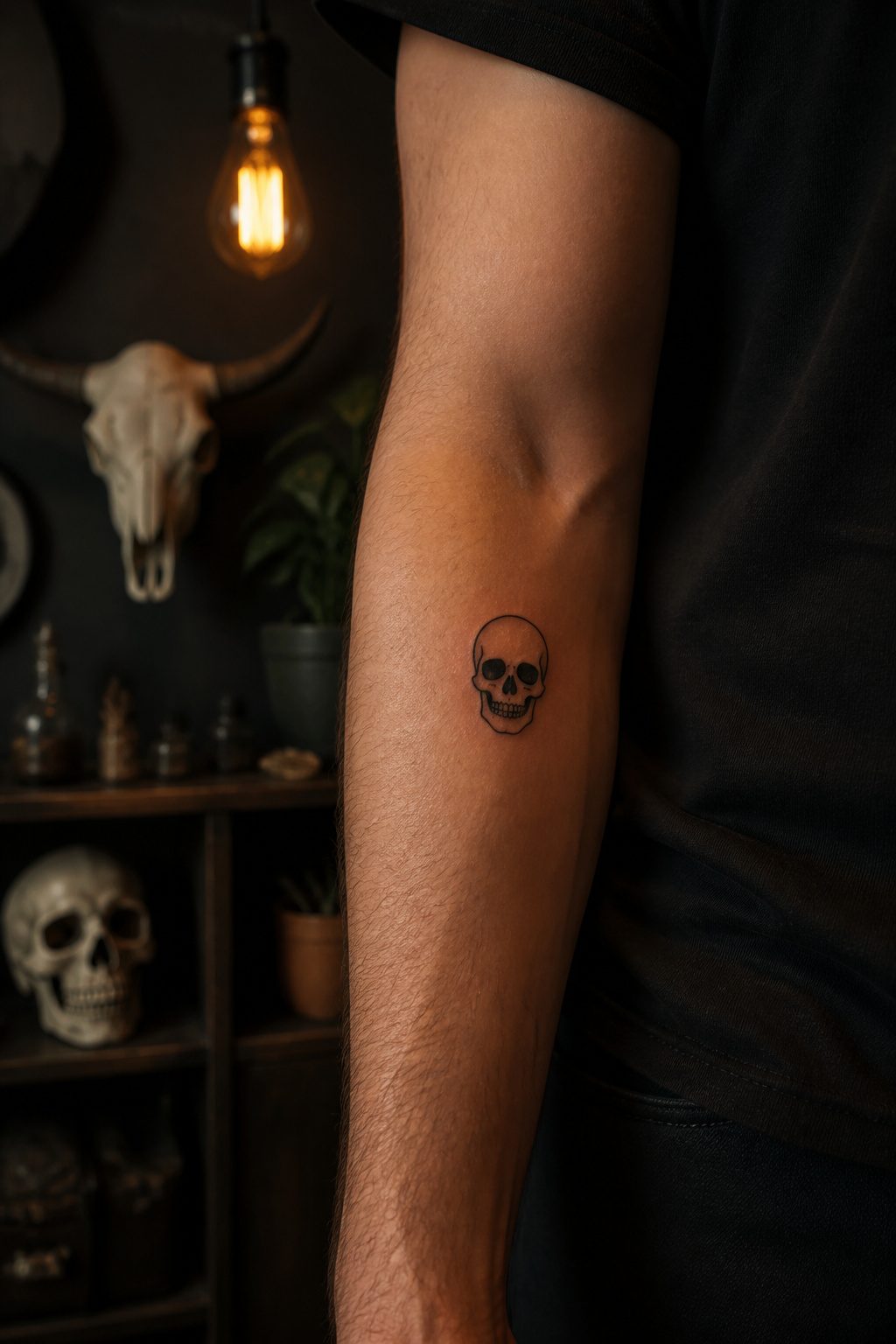
A skull shrinks down better than most imagery because the eye sockets and nose cavity give you built-in contrast even in a one-inch design.
The bone reads as bone without shading, so a single-needle outline still looks like a skull five years later rather than a smudged oval.
Placement matters for longevity: the wrist sees sun and friction, but the outer forearm or calf protects the line work and gives the artist a flat plane to keep the proportions right.
I have watched too many small skulls go wrong when the jaw tapers to a point that bleeds together after healing. A slightly rounded chin, almost cartoonish, holds the shape at small scale.
Black ink only, no gray wash; the negative space inside the sockets does the work.
7. Small Dragon Tattoo
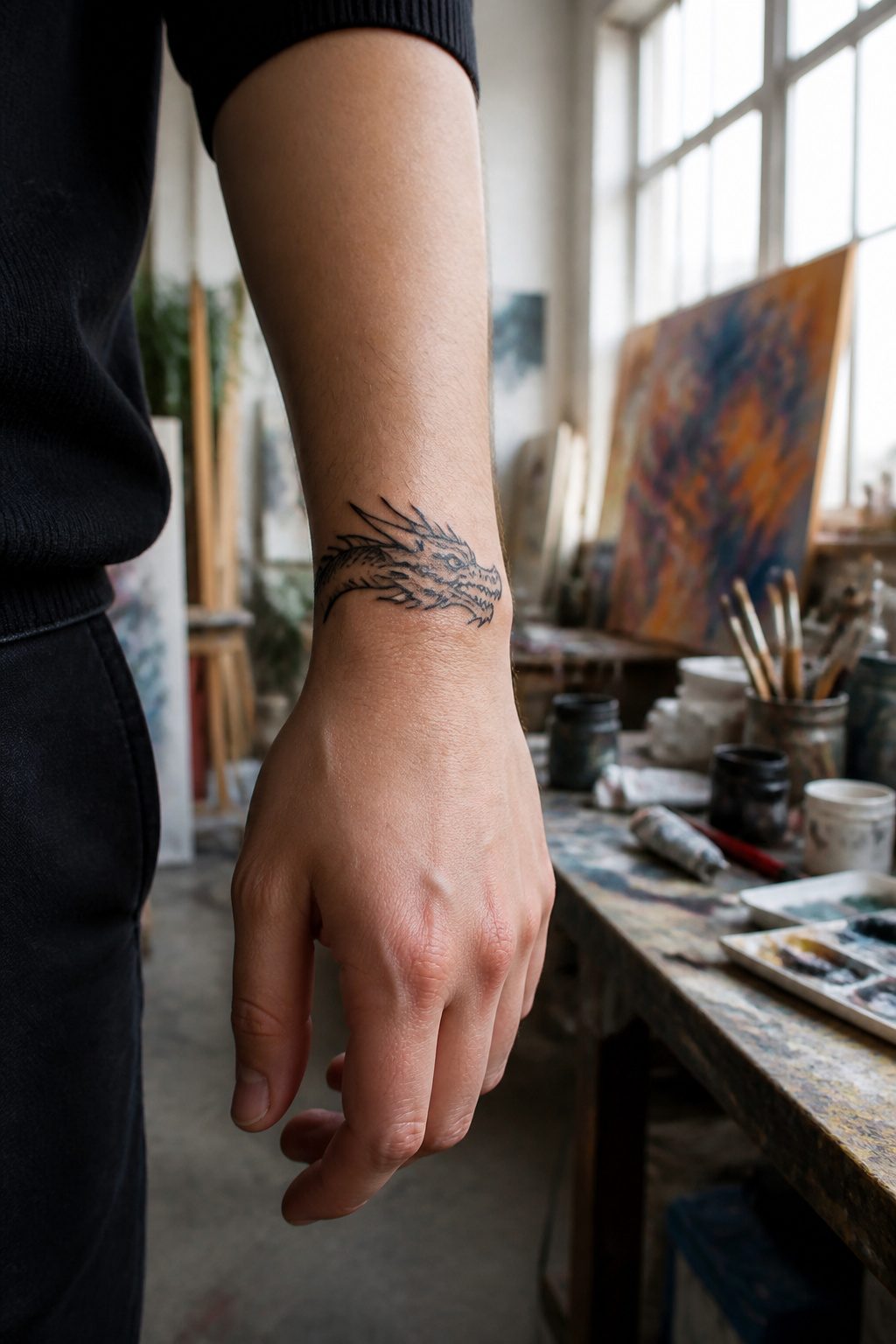
A full dragon stretching across an arm or back demands space for every scale and claw, but the head alone, or a tight coil around the wrist, keeps the creature’s menace without the clutter.
I spent longer than I care to admit scrolling designs before noticing what actually works at palm-size: the body has to go.
A coiled serpentine shape, maybe wrapping a forearm or tucked behind an ear, reads instantly as dragon because the eye fills in the rest. The head-only route gives the artist room for the eyes, which carry the whole personality.
Color complicates things fast. Solid black holds the lines clean as the tattoo ages, while a red or green wash tends to blur inside a two-inch frame.
Placement matters more with dragons than with simpler symbols. A curled tail that follows the wrist bone moves with the arm and looks alive; the same design stamped flat on a shoulder reads like a sticker.
My advice, after watching a friend nurse a gorgeous but illegible full-body dragon through two touch-ups: pick the part that scares you, not the whole beast.
8. Small Anchor Tattoo
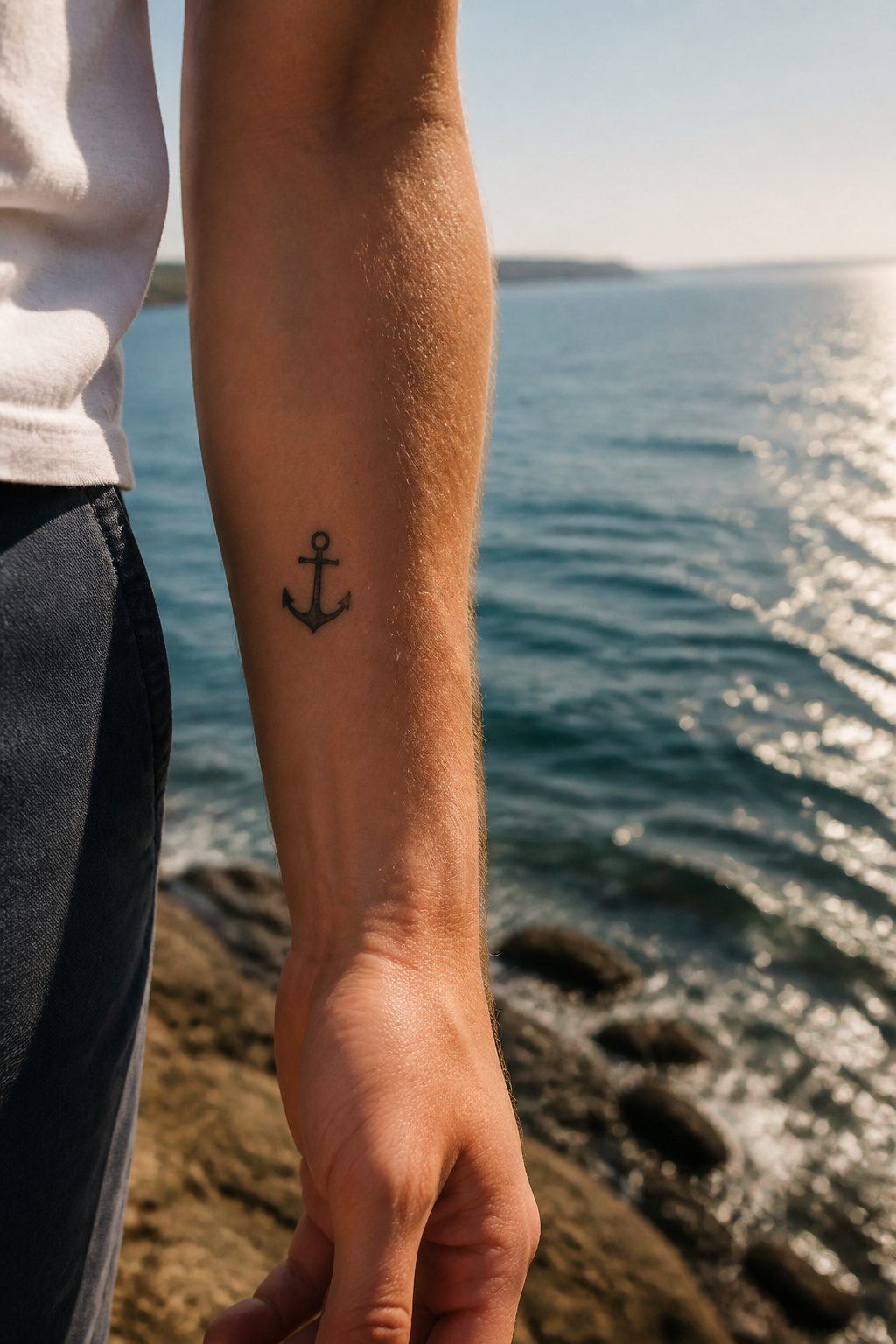
An anchor carries the weight of tradition without demanding much skin to do it. The shape is clean geometry: a straight shank, a ring at top, two curved arms that end in pointed flukes.
That symmetry is why the design holds up at small scale when busier work blurs together over the years.
The rope detail is where artists often overwork it. Twisted cord rendered strand by strand looks impressive on day one, but those fine lines soften fastest.
Simple is better for longevity: a plain anchor silhouette, or rope suggested with three or four bold curves rather than thirty. Blackwork and sharp angles keep the masculine feel the old-school tradition is known for.
Meaning is personal, and the anchor has served many. Perseverance, stability, strength, a person who stayed.
The point is choosing a design that still reads in ten years. If the current sketch feels cluttered, keep iterating until the lines are spare enough to age with you.
9. Small Star Tattoo
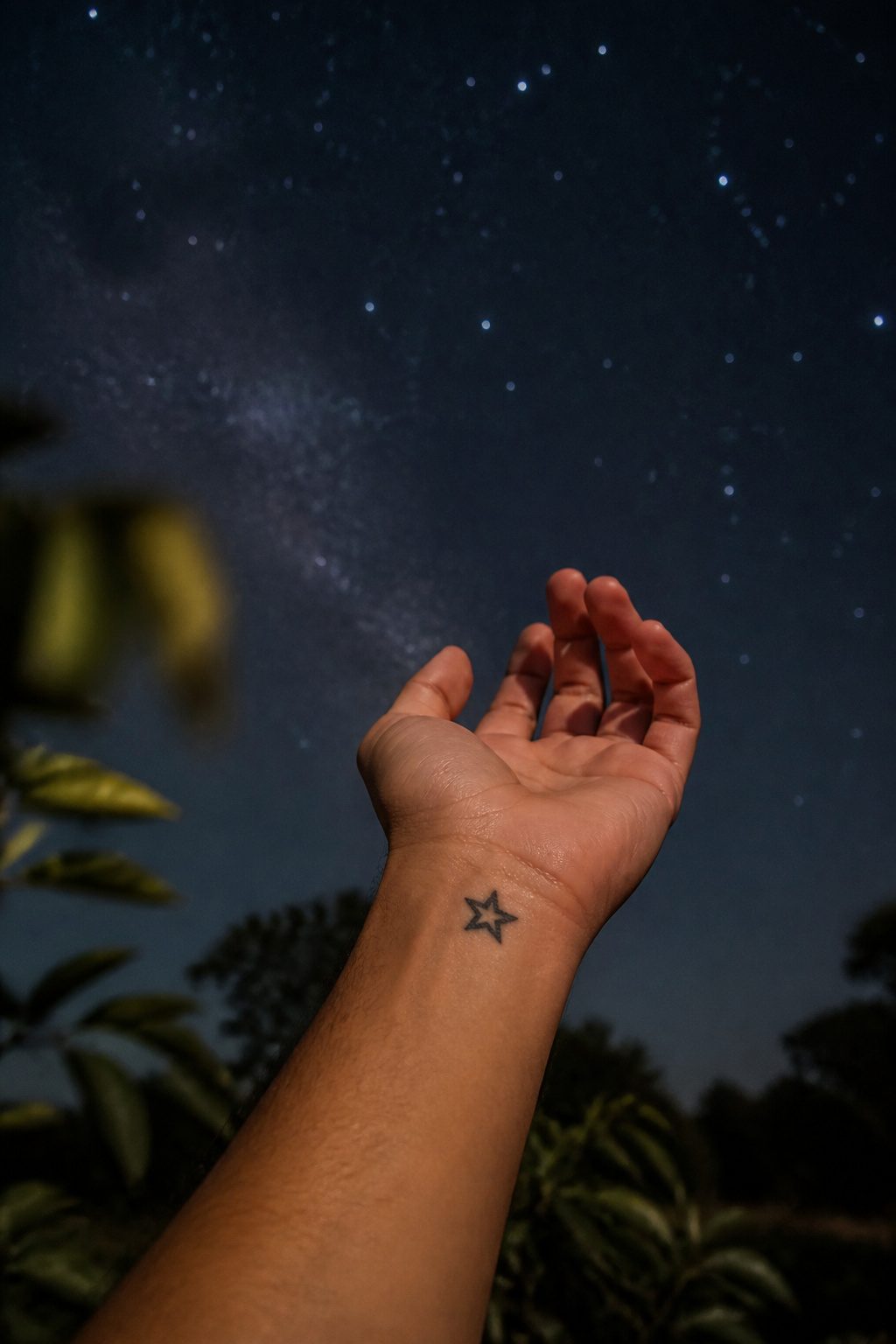
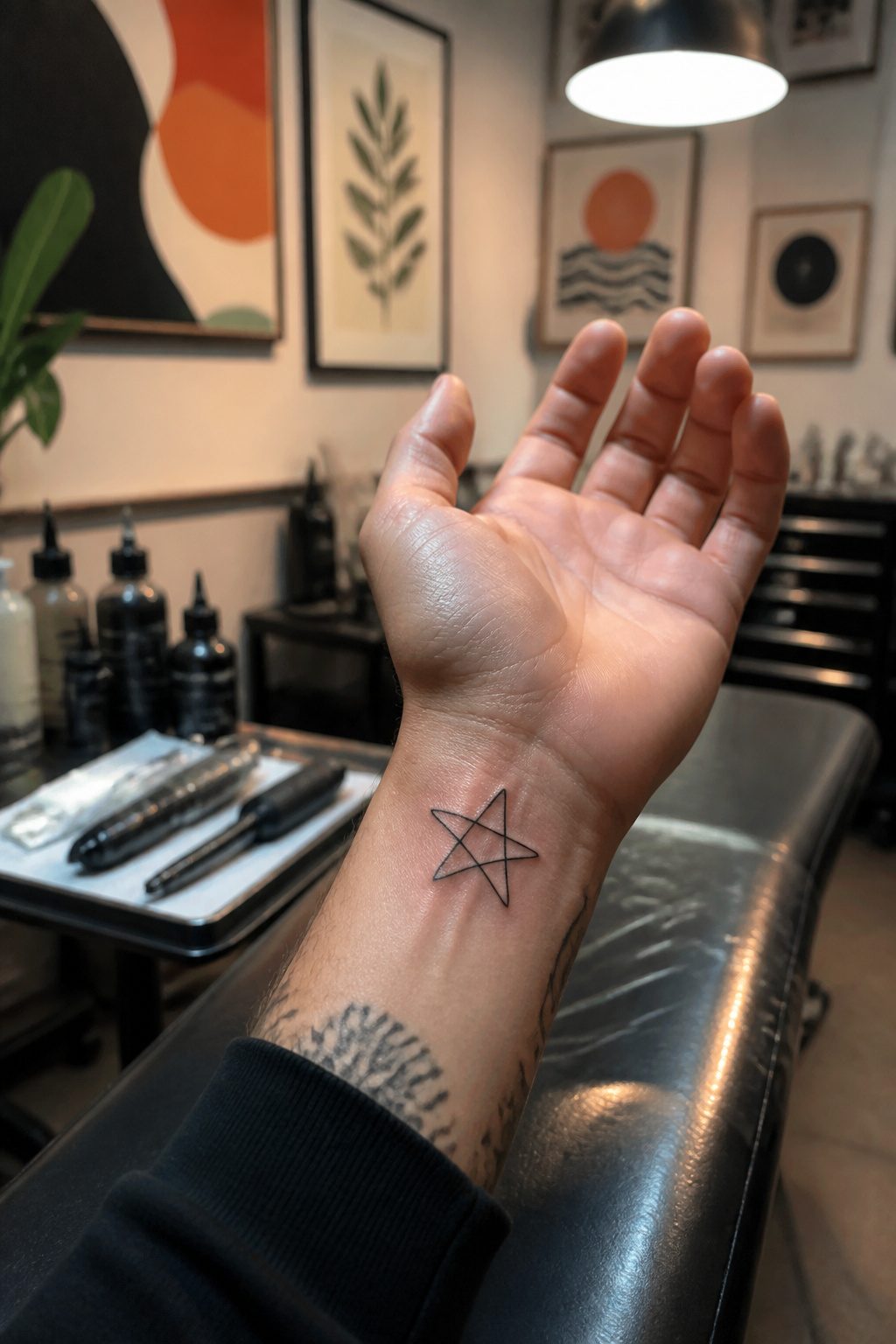
A single star, five points, clean linework, reads from across the room. The nautical version, two shades crossing at the center, carries the old sailor meaning of finding your way home.
Either fits under two inches, which keeps it in the "tiny" category that ages well on skin that moves a lot.
The wrist wins for a star you want to catch yourself, a reminder that sits in sight while you type or hold a coffee.
Flat surface, moderate pain, easy cover with a sleeve or watch when the occasion calls for it.
Behind the ear is the opposite bet: invisible unless you tilt your head or lift your hair, but the bone sits right there so the needle hurts more and the artist gets maybe a centimeter of workable space.
A cluster of three tiny stars can work behind the ear; a single bold one wants the wrist.
Standalone or filler, the star does both jobs. I’ve seen them scattered into sleeves between larger pieces, or sitting alone like a punctuation mark.
The five-point shape holds up at small sizes where busier designs blur. A six- or seven-point version shifts the look slightly more technical, more compass-rose, but the difference is subtle enough that most viewers read it as "star" either way.
If you want it seen daily, go wrist. If you want it hidden, accept the smaller canvas and the sharper sting behind the ear.
10. Minimalist Tattoo
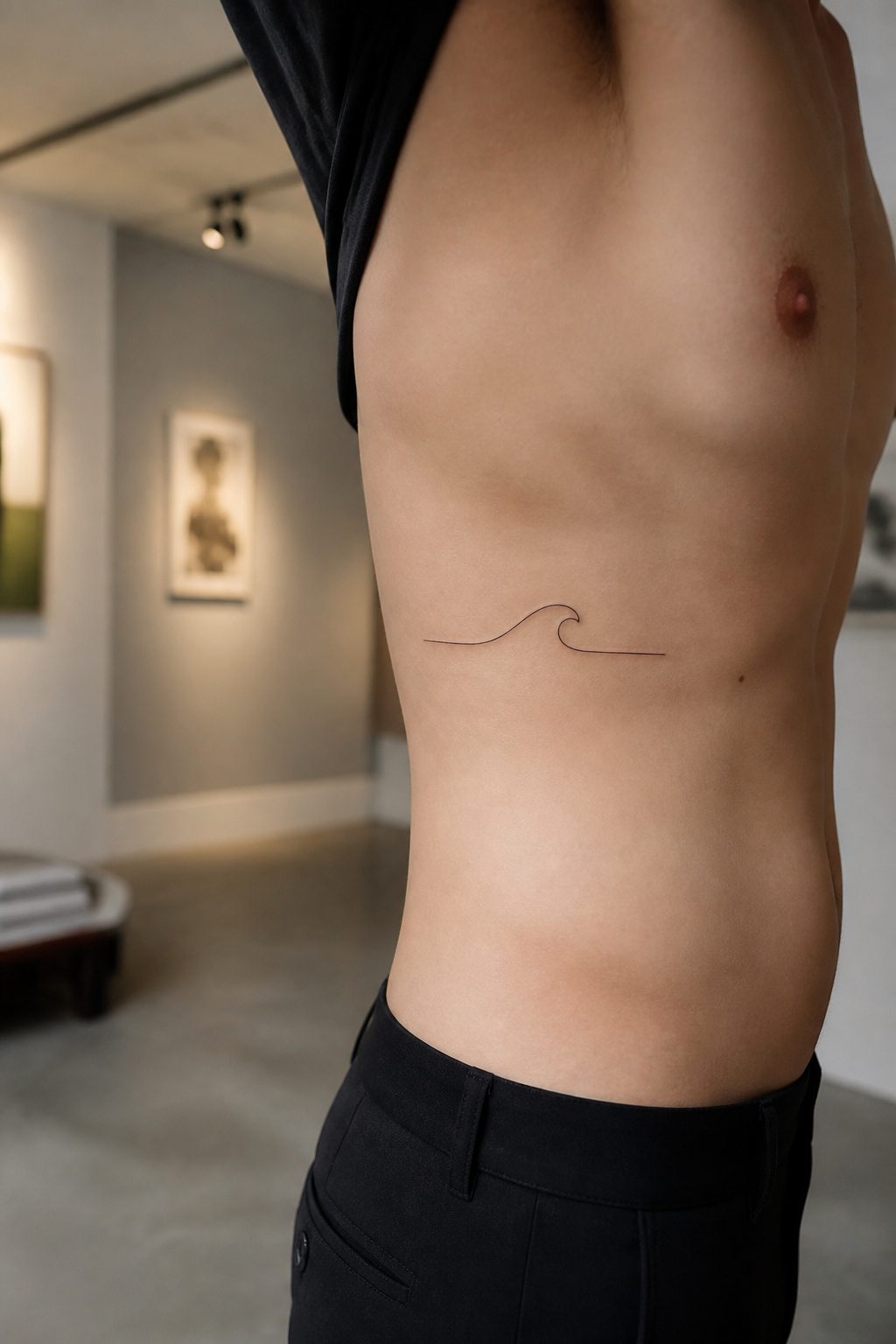
A minimalist tattoo strips the idea down to single lines, dots, or negative space and asks the skin to finish the picture. The style looks effortless, which is exactly why it fails so often.
Clean lines demand a steady hand and precise needle work; there is no shading or color to hide a waver.
Placement matters as much as the design itself. Fine linework holds up best where skin stays relatively still.
A high-friction spot like the inside of a finger or the edge of a shoe line will blur the image faster than a calmer area like the forearm or upper ribs. The simpler the concept, the better it translates.
Geometric shapes work because the clean angles already suggest structure and balance without needing extra detail.
The real risk is choosing an artist who dabbles. Single-needle work and traditional bold lines use different muscles and different patience.
Someone whose portfolio shows clean minimalist pieces day after day will understand how a line sits on skin, not just how it looks on paper. What you pay for stays.
11. Small Flower Tattoo
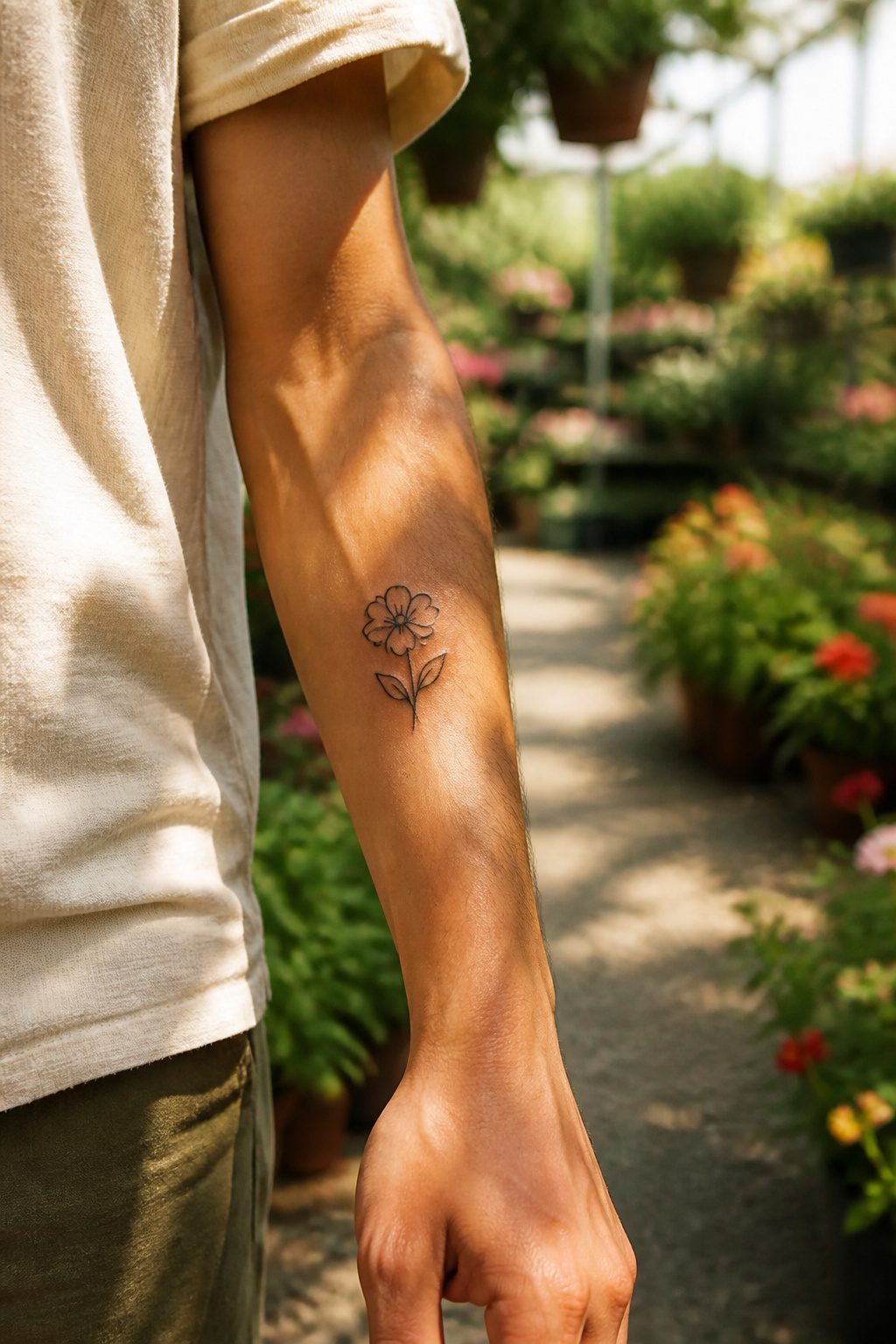
A rose on a forearm or a lotus behind the ear reads as intention, not afterthought. Bold outlines around the petals keep the shape legible as the ink settles and spreads over the years.
Wildflowers work too, though the fine lines that define individual stems tend to blur faster than a single, heavier bloom.
The mistake I see most often is packing too much detail into a space the skin cannot hold. A small design ages well when the spacing is intentional and the concept is built for the size from the start.
Traditional rose artwork has lasted across genres because it was designed with weight behind the linework, not in spite of it.
If you want color, a rose gives you the richest payoff in a compact frame. A lotus in black and grey holds its geometry longer.
Either way, ask the artist whether the petal count can drop by half without losing the idea. The answer usually tells you whether the design will still read clearly a decade out.
12. Small Geometric Tattoo
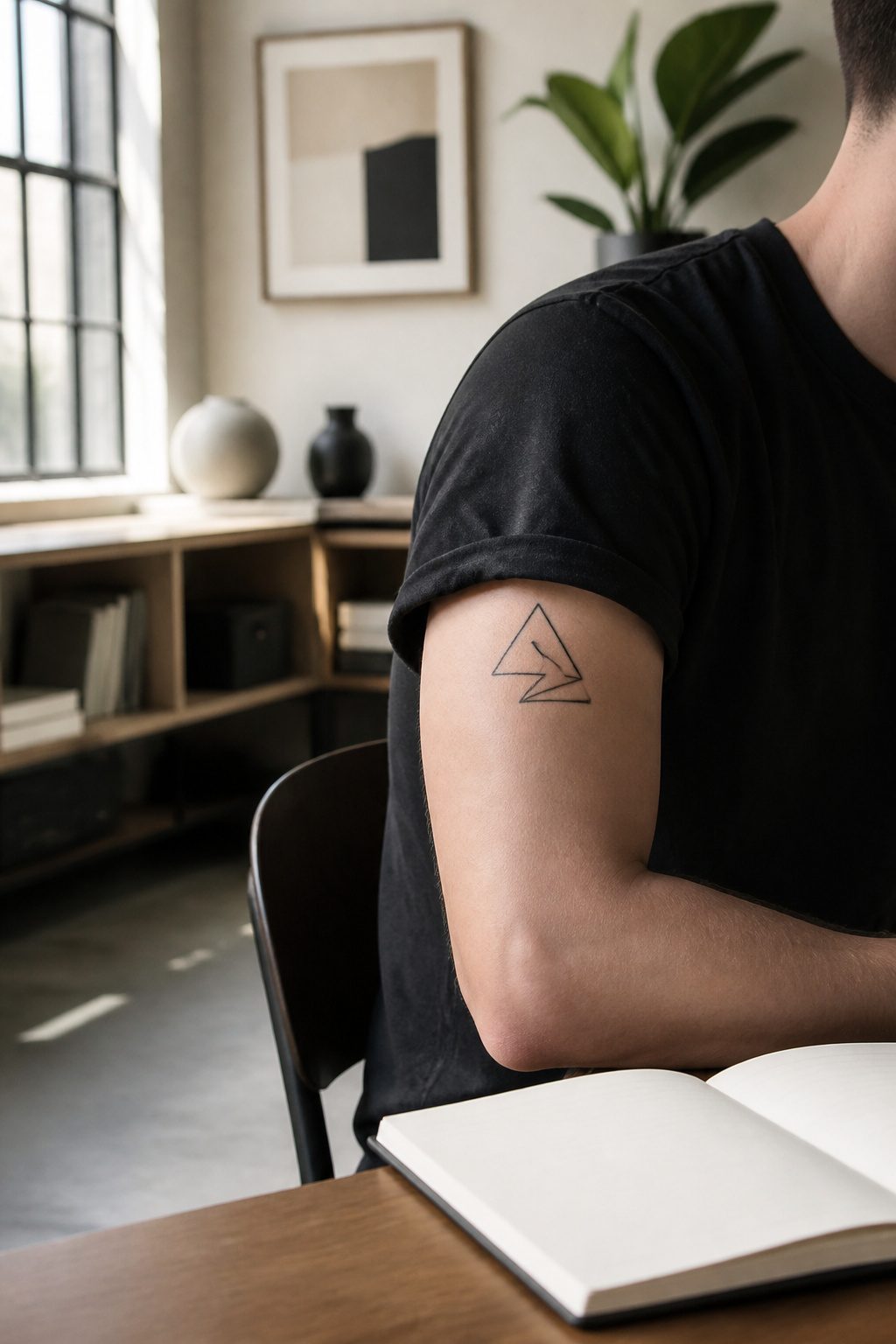
Clean geometric forms hold up at small scale because the eye reads them as complete even when the detail is spare.
A single polygon, a repeating triangle band, or an interlocking hexagon cluster all stay legible where busier work would blur. The catch is the line itself.
Geometric tattoos demand an artist who specializes in clean, consistent linework, not just someone who can draw a straight edge on paper.
Skin moves, stretches, and heals unevenly; a line that wavers by a millimeter turns a crisp cube into a smudged suggestion.
Hand-poked technique appeals to some men for the organic texture it leaves, but modern machine work is usually the safer bet for the precision these patterns need.
If the artist’s portfolio shows geometric pieces that stayed sharp after healing, that is the credential that matters.
13. Small Quote Tattoo
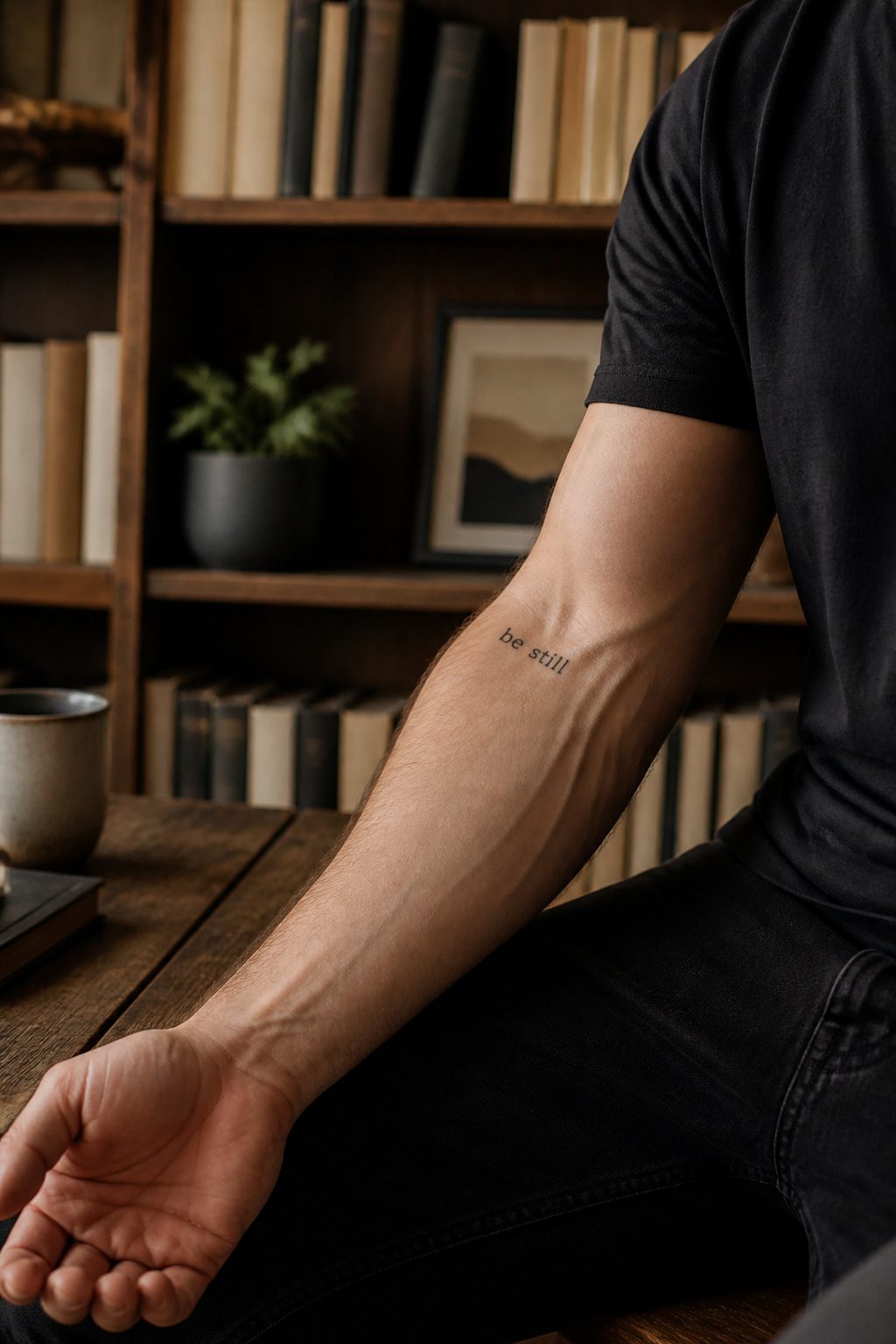
Text-based small tattoos live or die by the font size and stroke weight you choose. Anything under two inches is technically tiny, and between two and four inches reads as small.
Script at miniature sizes needs enough contrast to stay readable once the skin heals and settles.
The inner forearm and ribcage are common spots for a few words, but placement has to match the line length. A short quote that wraps awkwardly or gets compressed into tight spacing will blur faster than blockier designs.
Ornate fonts with thin strokes age poorly at small scale; what looks elegant on paper often turns into indistinct grey after a year or two.
A lover’s name, a dedication, words to live by. These carry weight because the text itself is the whole image, so editing matters.
The best small lettering is usually trimmed to the essential phrase before it ever reaches the skin, not shrunk from something longer that needed more room.
14. Small Portrait Tattoo
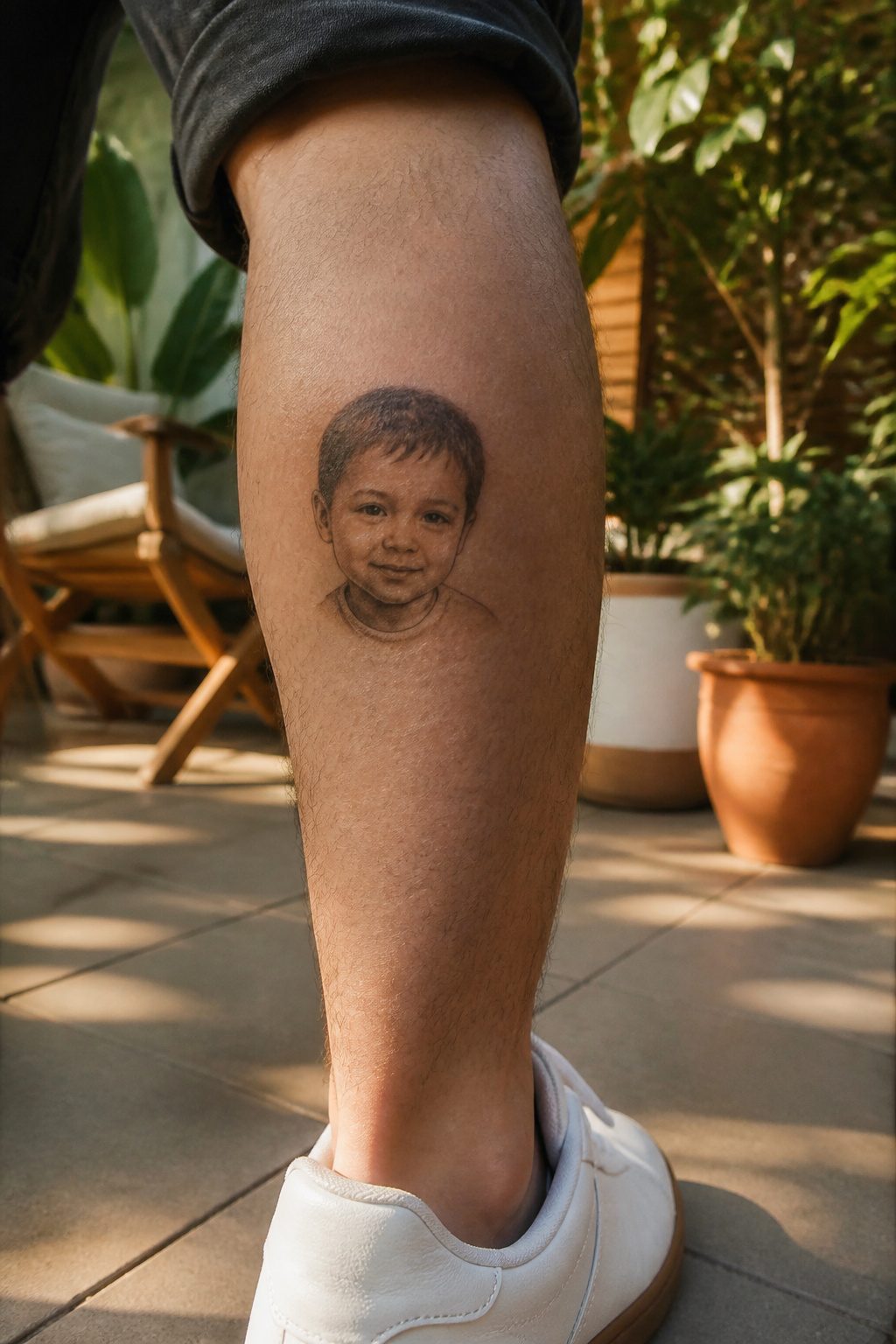
Micro-realism packs cinematic detail into a space no larger than a postage stamp, but pulling off a recognizable face at that scale is not a generalist’s job.
The technique demands a specialist who can render pores, eyelashes, and the subtle gradations of black and grey shading that keep a likeness from collapsing into a smudge.
I have watched enough portfolios to spot the difference: the clean small portraits come from artists who specifically market micro-realism, not from those who simply list "portraits" among twenty other styles.
The healing window leaves almost no margin for error with work this dense.
A slightly blown-out line in a bold traditional piece still reads; in a micro-portrait, the same blur erases the jawline or turns an eye into a grey blob. Placement matters too.
The back of an arm or a calf, where the skin sees less daily abrasion and sun, holds that precision longer than a hand or a foot.
If the person matters enough to carry their face on your skin, the extra travel to find the right specialist and the extra care during healing are the cost of doing it at all.
15. Small Arrow Tattoo
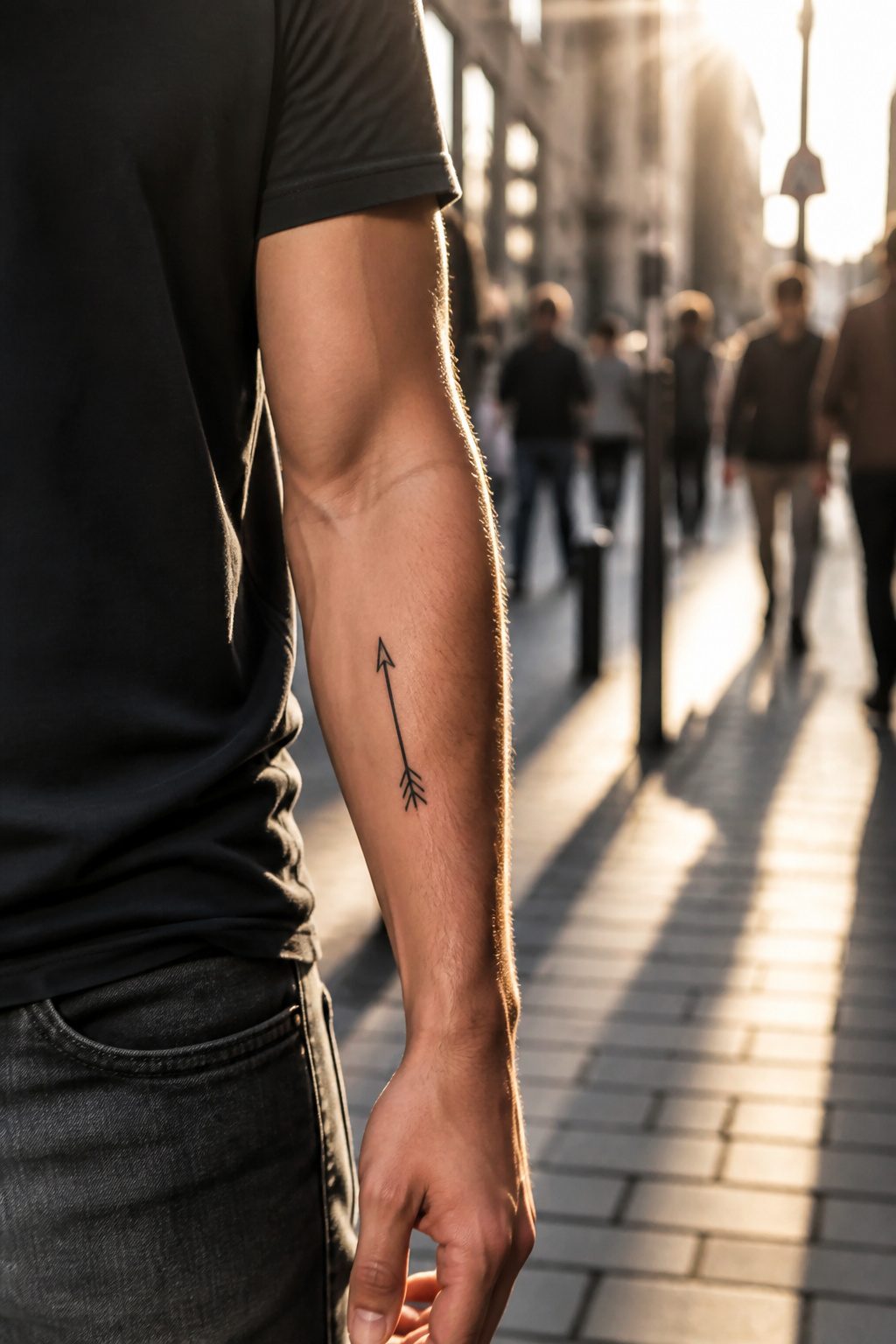
An arrow runs with the forearm’s natural line in a way few other small tattoo ideas for men do.
The shaft follows the bone, the point draws the eye toward the wrist or the elbow, and the whole shape stays readable from across a room.
Single arrows work, and so do small bundles of two or three, but the shaft needs enough thickness to hold its edge over time. A line too fine blurs inside a few years; a line with weight stays a line.
The meaning stays compact too. Direction, strength, resilience: one clear idea per design.
That simplicity is why arrows age well. They encode meaning through abbreviation rather than complex illustration, so they read as clearly in twenty years as they do the day the bandage comes off.
Placement is forgiving, almost anywhere on the body, though the forearm gives the cleanest canvas for the shape to do what it does best.
16. Small Animal Tattoo
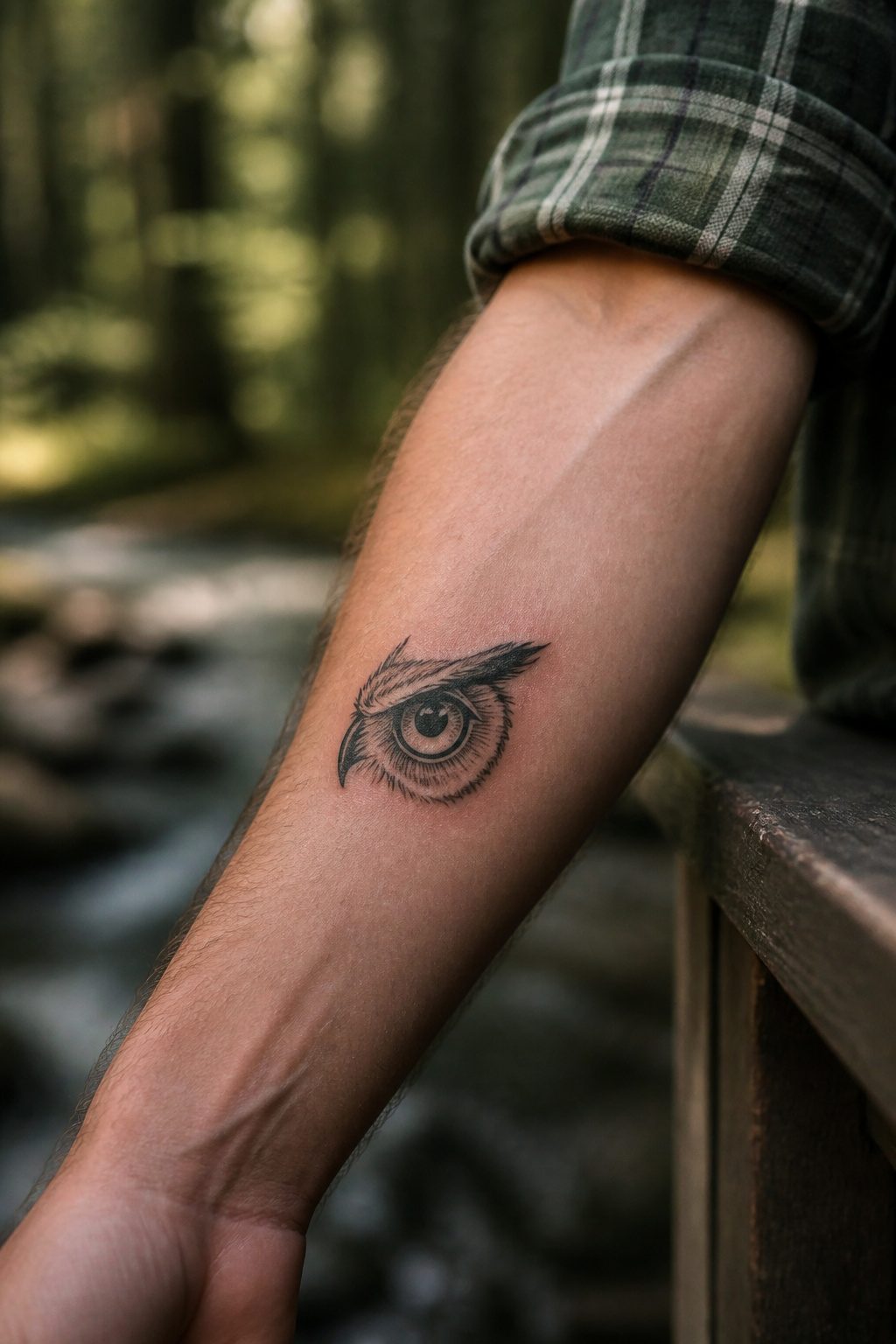
Animals shrink well when you keep only the part that identifies them. An owl’s eyes, drawn large and round, read instantly at an inch or two.
The full body with spread wings and feather texture collapses into a smudge once the needle scales down.
Same with an elephant: the head in profile, that shelf of brow and the trunk’s curve, carries more recognition than four legs and a body ever could.
The eyes or the head profile are what survive small scale, not the outline of the whole creature. A wolf howling needs too much space to show the neck’s angle and the lifted muzzle.
A snake coils into a shape that loops back on itself, which works, but only because the single repeating form stays legible.
Birds of prey do best when you isolate the gaze; the rest is ornament that skin at this size cannot hold.
Placement matters as much as editing. An owl eye behind the ear, an elephant profile on the inner forearm, both give the design enough flat skin to keep the lines clean.
Curved spots, the side of a finger or the point of a shoulder, distort the shape and waste the limited detail budget. The best small animal tattoos are cropped like a photograph, not shrunk like a photocopy.
17. Small Nature Tattoo

A tree silhouette about the size of a quarter stays readable for years because the outline does the work instead of individual leaves.
The same rule holds for a simple sun disk: a solid black circle with thin rays reads instantly at small scale, while a sun drawn with dozens of fine lines will blur together inside five years.
Mountains follow the same logic. Three clean peaks in black ink sit well on a wrist or behind an ear; add shading to every ridge face and the detail collapses as the skin ages.
Complex branch structures are where nature imagery goes wrong in small format. A client once showed me a photo of an oak with every twig mapped out, wanting it two inches tall.
The artist had to talk him down to a single trunk and five main branches, and even that needed thickening to hold. The edited version still looks like a tree.
The original would have looked like a smudge by now.
Placement matters as much as the design. A small mountain range needs the flat plane of a forearm or calf; wrapping it around a curved spot distorts the peaks.
The sun disk is more forgiving, since a circle stays a circle on most surfaces.
18. Small Emoji Tattoo
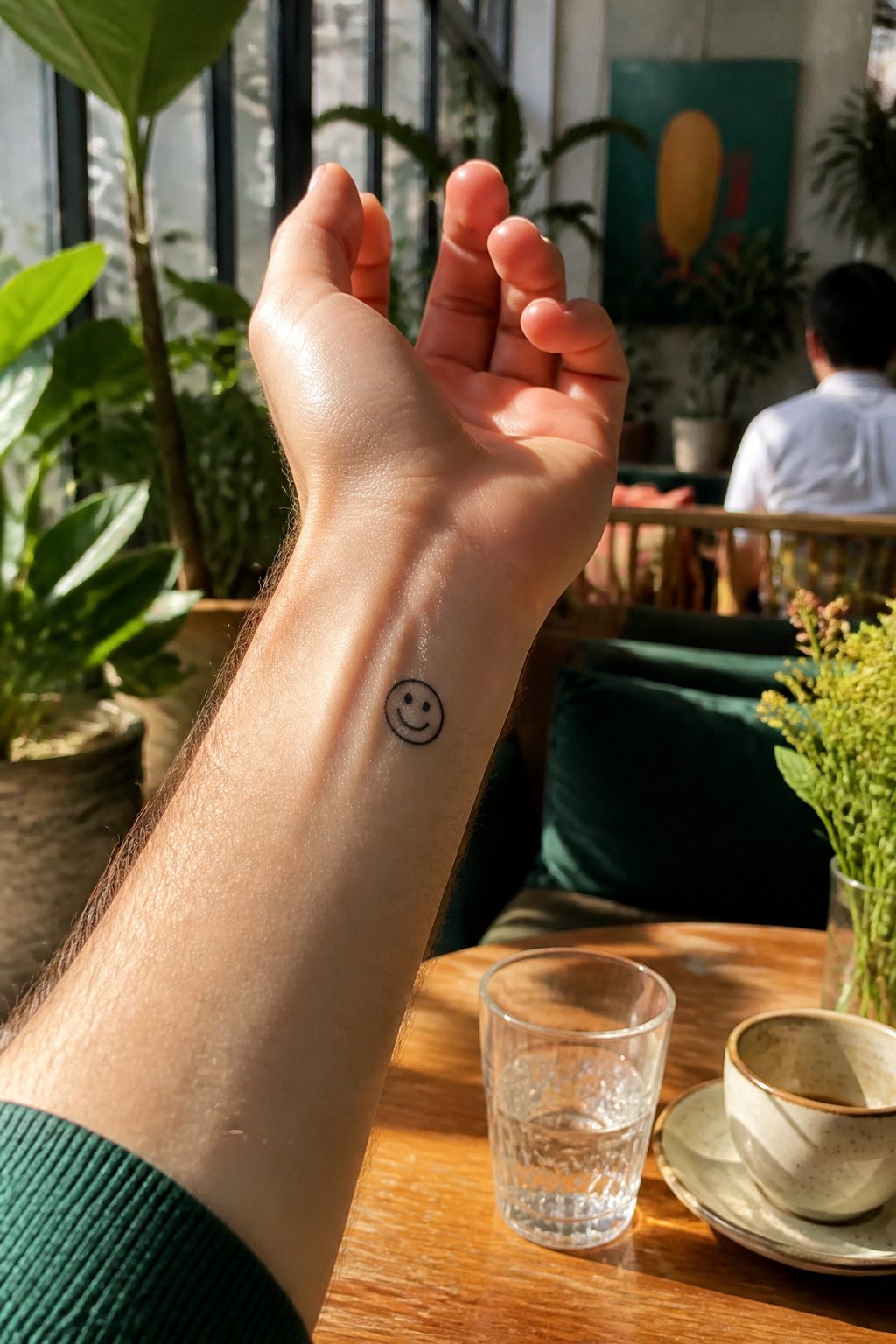
Emoji designs work as small tattoos because the original icons were already built for clarity at tiny sizes.
The thick outlines and flat color blocks translate cleanly to skin, and a skilled artist can render a simple smiley or thumbs-up in under an hour with linework that stays readable. The risk sits in the choice itself.
A flame emoji or the crying-laughing face might feel current now, but these symbols carry a timestamp. The same way a tribal armband signaled the late nineties, a once-viral emoji can become a relic of the year you got it.
If the meaning is personal and fixed, a small heart-eyes or a wave from a specific conversation holds up better than whatever is trending on your feed this week.
The simpler the design, the less it leans on context to make sense. A single-color icon ages more gracefully than a detailed reproduction of a platform-specific graphic with its shading and gloss.
Start with the three-test frame: does it mean something to you, does it suit the placement, and will it still feel like you in five to ten years? If the answer holds, the format works.
If you are chasing a joke or a moment, the small canvas makes the regret smaller too, but the ink is still permanent.
19. Small Abstract Tattoo
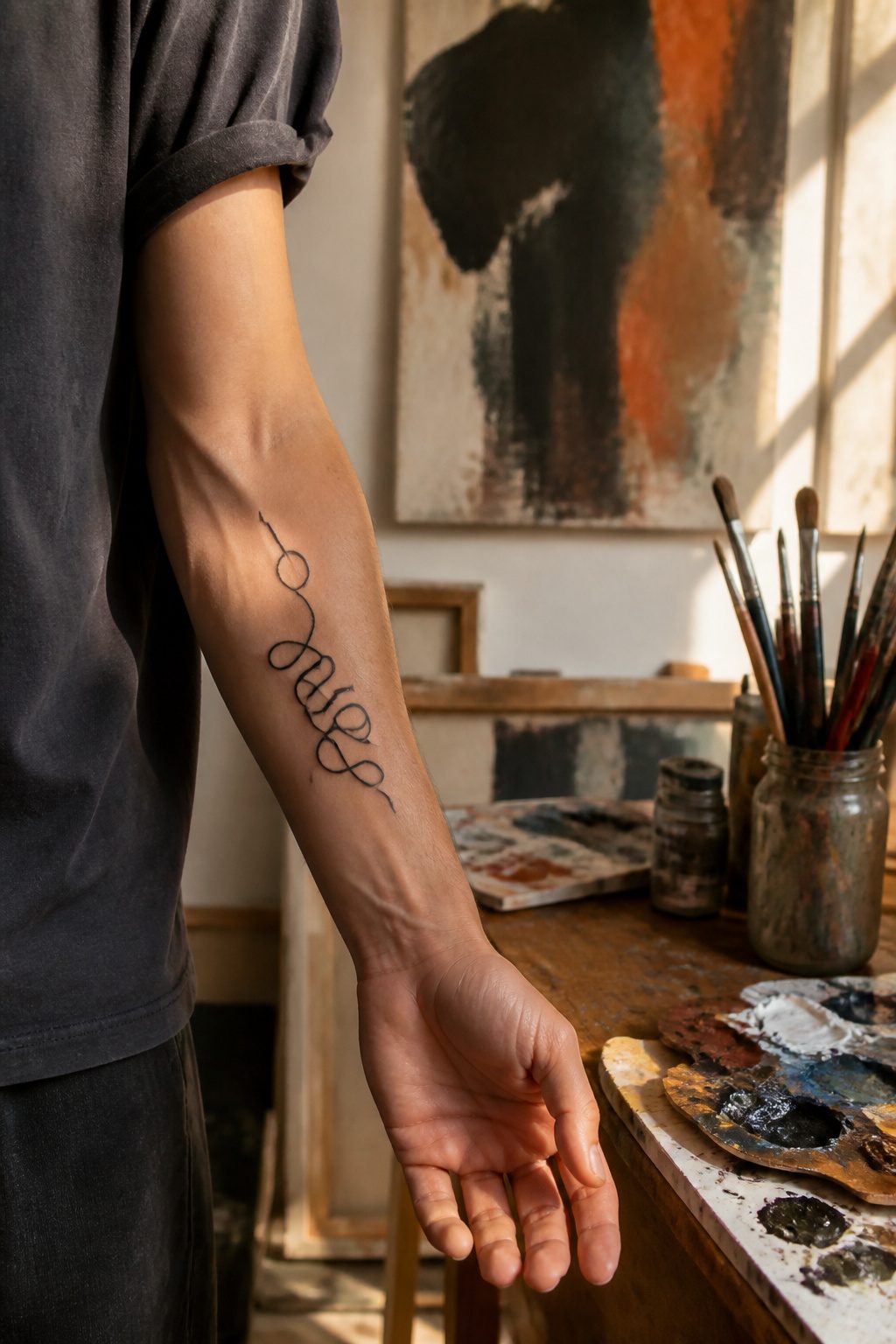
Abstract shapes live or die by how much ink stays put over the years.
A friend of mine went with a thin black line that looped back on itself, no recognizable object, just the motion his hand made when he signed divorce papers.
Five years later the line has softened slightly but still reads as intentional, which is more than I can say for the colored splash another guy tried on his wrist. That one went muddy fast.
Bold black, faded grey, and the occasional desaturated red hold their structure at small scale in ways color rarely does. The non-representational approach also sidesteps the question everyone asks about tattoos: what does it mean?
The meaning stays personal because there is no symbol to decode. A well-designed small piece of this kind can age better than a large but badly planned one, since the design decisions matter more than the size itself.
20. Small Music Tattoo
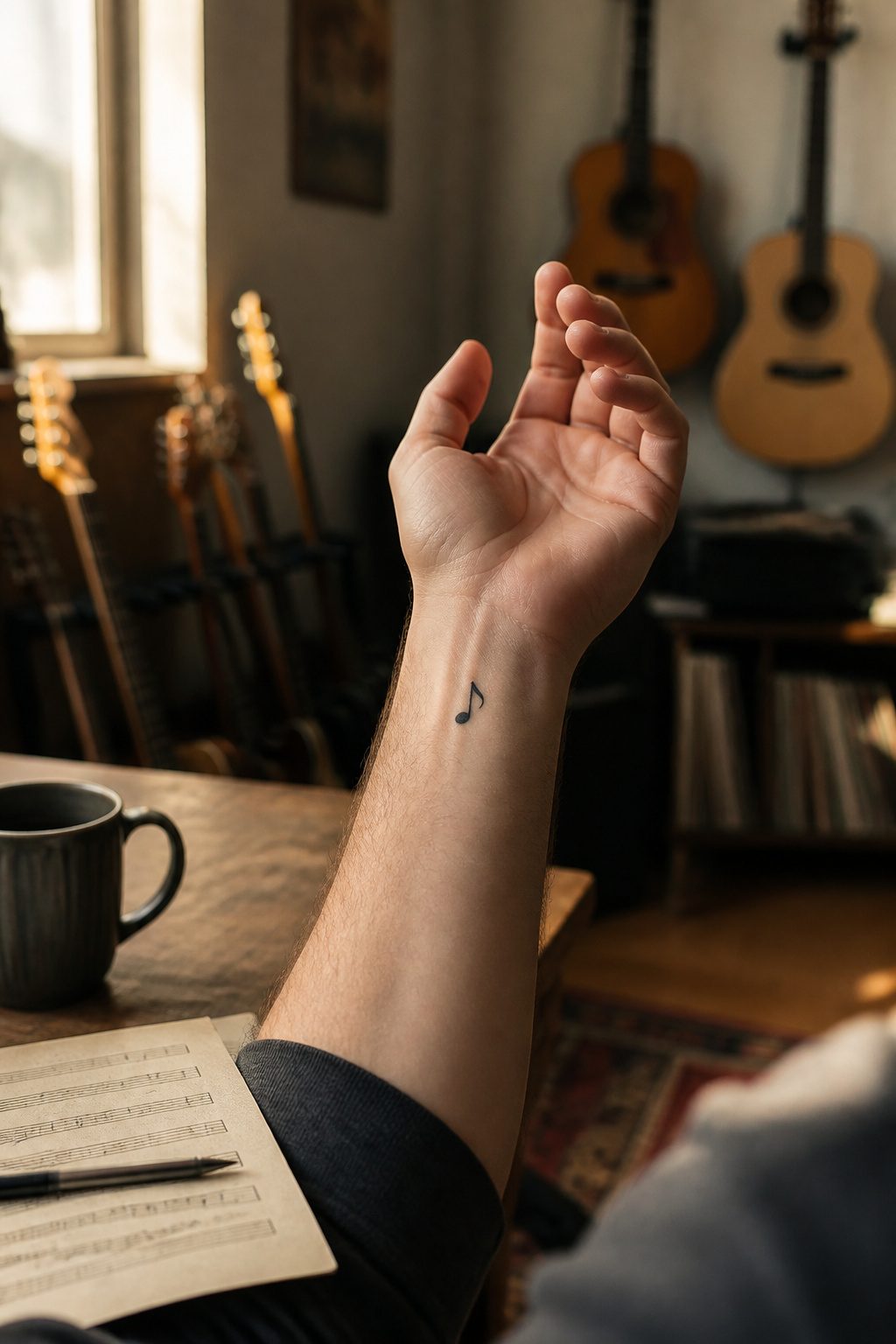
A single eighth note, clean and unadorned, sits well on the inner wrist where the skin stays relatively flat. The curve of the note head and stem gives just enough movement without asking for more space than a finger’s width.
I have seen small guitar outlines work the same way, a Telecaster silhouette or the rounded body of an acoustic reduced to its essential contour, maybe two centimeters across the forearm.
Staff lines with multiple notes crowd faster than most people expect. Five parallel lines, even thin ones, plus two or three note heads and their flags, and the design starts reading as a rectangle of black ink rather than music.
The eye loses the rhythm. If you want several notes, drop the staff entirely and let three or four eighth notes trail across the collarbone or behind the ear like a phrase you are still hearing.
Instruments as symbols rather than outlines solve the scale problem too. A treble clef alone carries the reference.
A pair of crossed drumsticks, a single saxophone key, the f-hole from a violin, each reads instantly at thumbnail size. The detail that fails is usually internal: sound holes, tuning pegs, the bridge of a guitar.
Those lines blur together within a year on a design under two inches.
Where Small Tattoos Sit Best
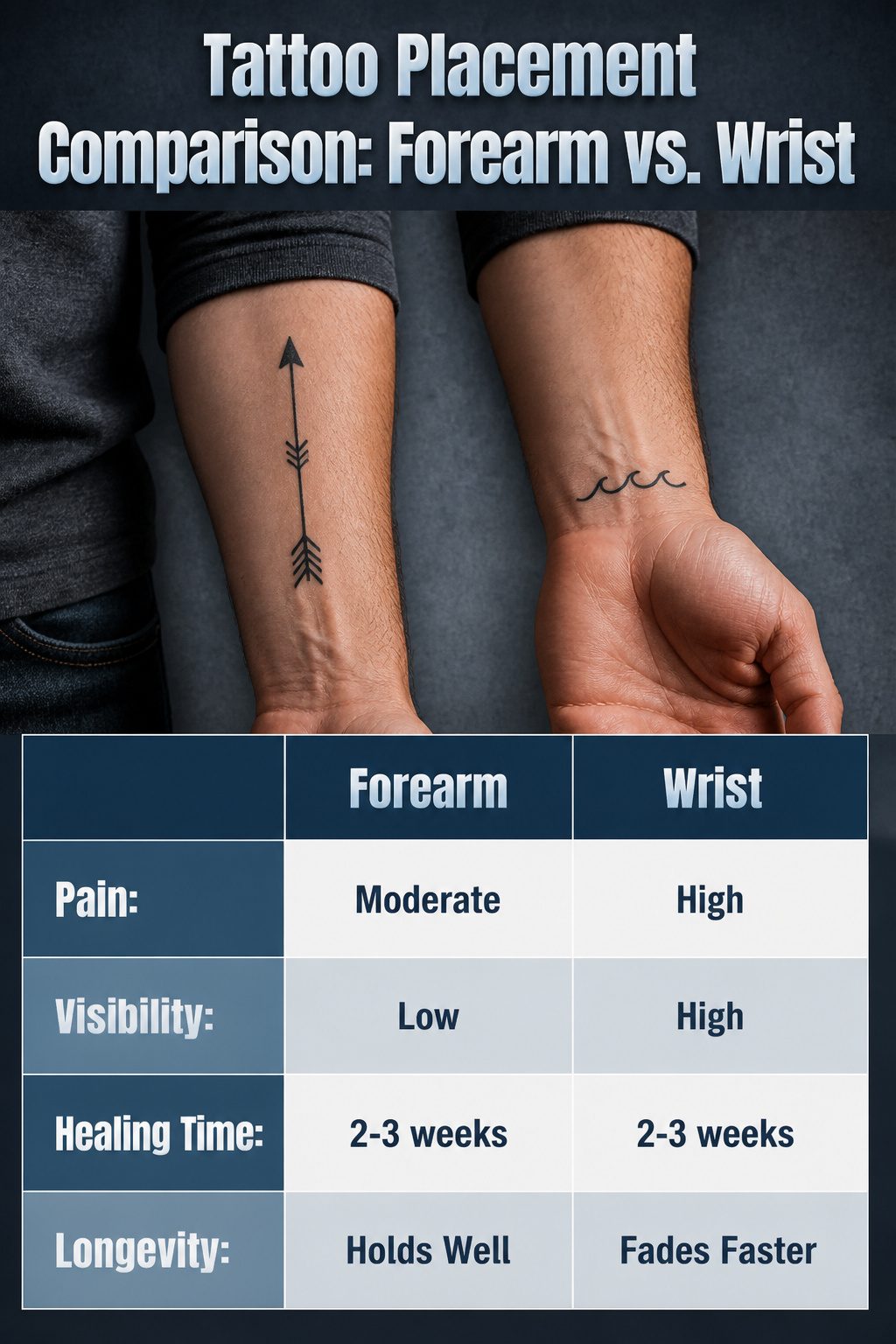
The forearm is where most men start, and for good reason. It gives you a flat, predictable canvas that heals cleanly and hides under a long sleeve when the occasion calls for it.
Pain sits at moderate levels there, enough to know you’re being tattooed but not enough to make you rethink the whole idea.
The wrist trades some of that comfort for daily visibility. You will see the work every morning, which is the point for symbols or short words meant to function as reminders.
A watch or bracelet covers it in seconds when you need to.
Behind the ear goes the opposite direction: nearly invisible unless you want it seen, but the skin is thin and the bone sits right underneath.
The space is tight too, so anything beyond a minimal symbol or a few characters starts to fight the real estate. Pain there runs higher, and detail fades faster.
Ankle placement follows a similar logic of selective disclosure, though it sees more friction from socks and shoes than most first-timers expect.
Sun exposure matters everywhere, but it hits hardest on spots you forget to cover: the back of the neck, the forearm edge, anywhere that catches routine UV without you thinking about it.
A small tattoo that blurs or blows out in three years because of placement choice is a design failure, not an ink failure.
If you are deciding between two spots and one is a joint or a high-friction zone, move it slightly.
Even half an inch off the ankle bone or away from the wrist crease gives the line work a better chance to hold.
Why Simple Lasts Longer
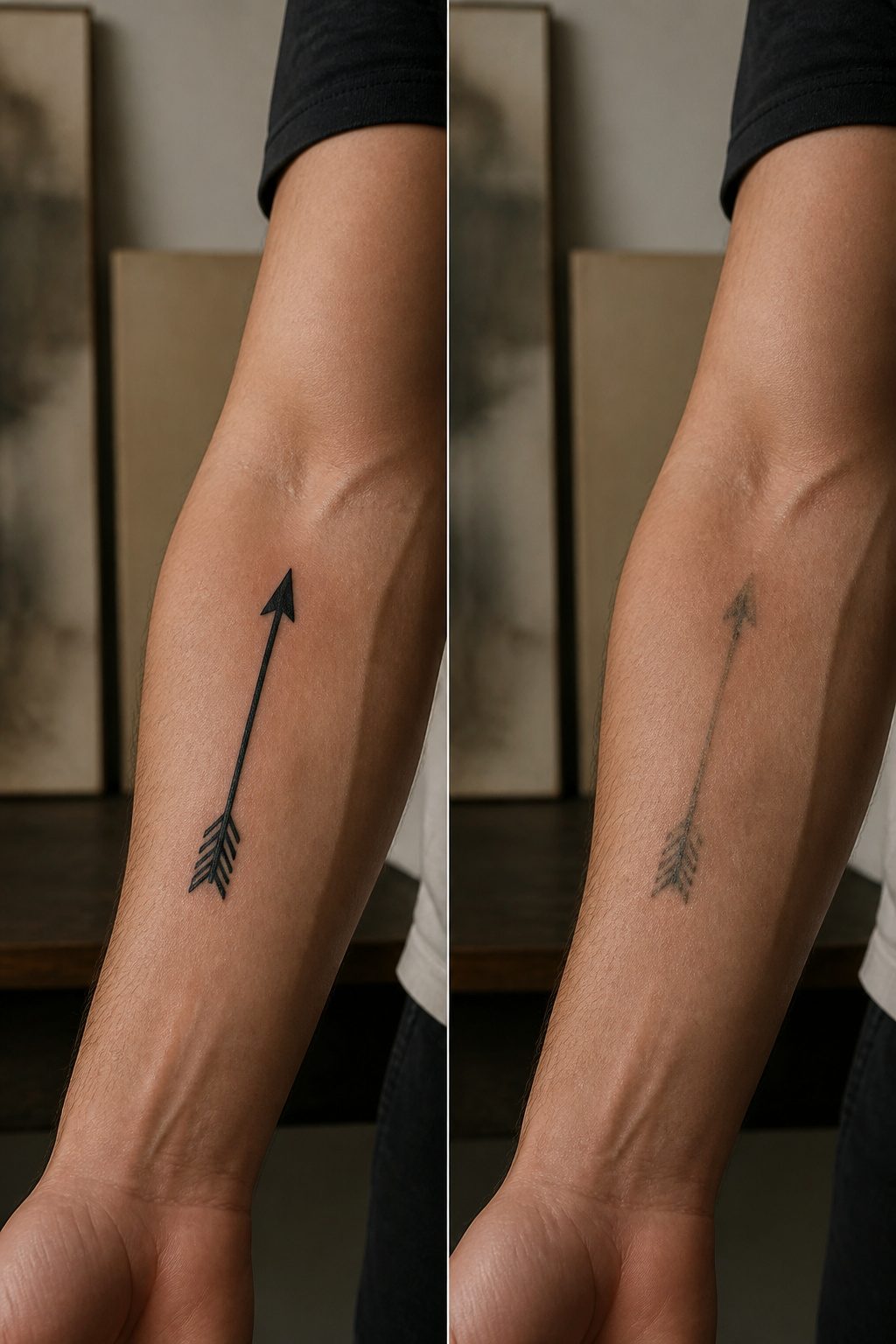
Fine lines spread over time. The ink migrates along the skin’s grain, and what started as a crisp 1-millimeter stroke widens into a soft, gray band.
Dense detail suffers worse: packed shading blurs into mud, tiny lettering becomes illegible, and the tattoo that looked sharp at twenty looks like a bruise at forty.
High contrast holds because it gives the eye something definite to read even when the edges soften.
This is why the designs above lean toward bold outlines and open space. A pyramid needs no interior work to read as a pyramid.
An arrow keeps its meaning with nothing but a shaft and a head. Geometric shapes hold their structure because the eye completes clean angles even if the line wavers slightly.
The versions worth choosing strip the idea to what survives.
Placement matters too. Fingers, hands, and feet rub constantly against pockets, shoes, and desks.
The same simple arrow that stays clean on a forearm heals patchier on a knuckle. The simpler the design, the more forgiving the location becomes.
That is the filter behind every recommendation here: not what photographs best on day one, but what still looks intentional a decade later.
First Tattoo Basics
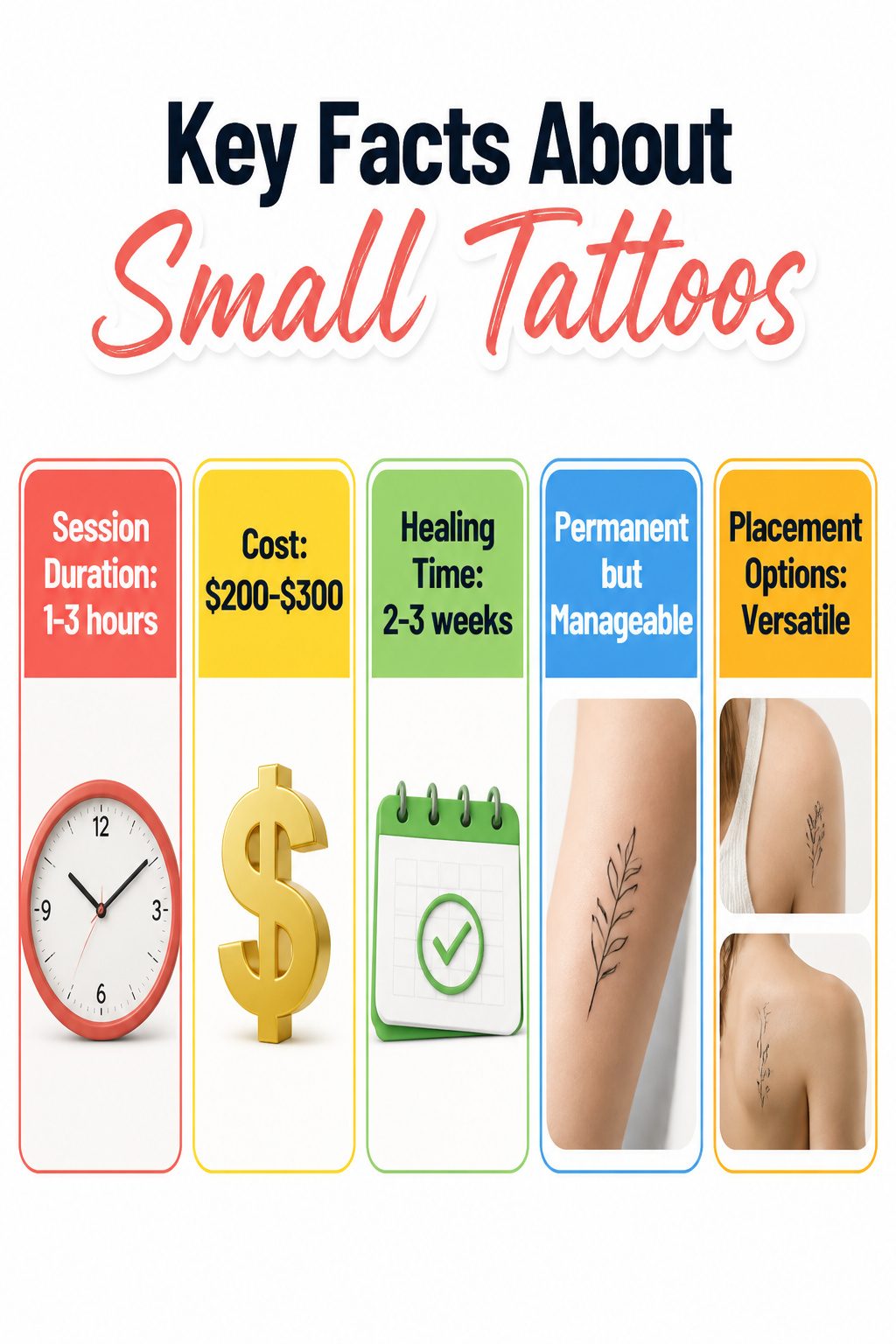
A small tattoo makes sense as a first piece because the commitment stays manageable without pretending the needle won’t hurt. The session runs 1 to 3 hours, the price lands around $200–$300, and the outer layers of skin close up in 2 to 3 weeks.
Deeper layers keep working for months, but the visible healing happens fast enough that you are not explaining a raw patch to coworkers for long.
Small tattoos tend to heal faster, with the outer layers of skin healing in 2-3 weeks, although the deeper layers may take up to six months to heal fully.
That six-month timeline matters if you are the type to panic when a line looks soft at week four. The skin is still settling; give it the full cycle before judging the result.
The real anxiety, though, is not the pain or the money. It is waking up with something permanent that felt right at midnight and wrong by brunch.
A small design limits that risk. Less canvas means less story to regret, and placement on a shoulder blade or inner arm keeps it yours to show or hide.
I would still treat the choice as seriously as a larger piece: the permanence is the same, and a cheap shop that cuts corners on a small tattoo will give you a blurry mark that lasts just as long as a good one.
Finding the Meaning
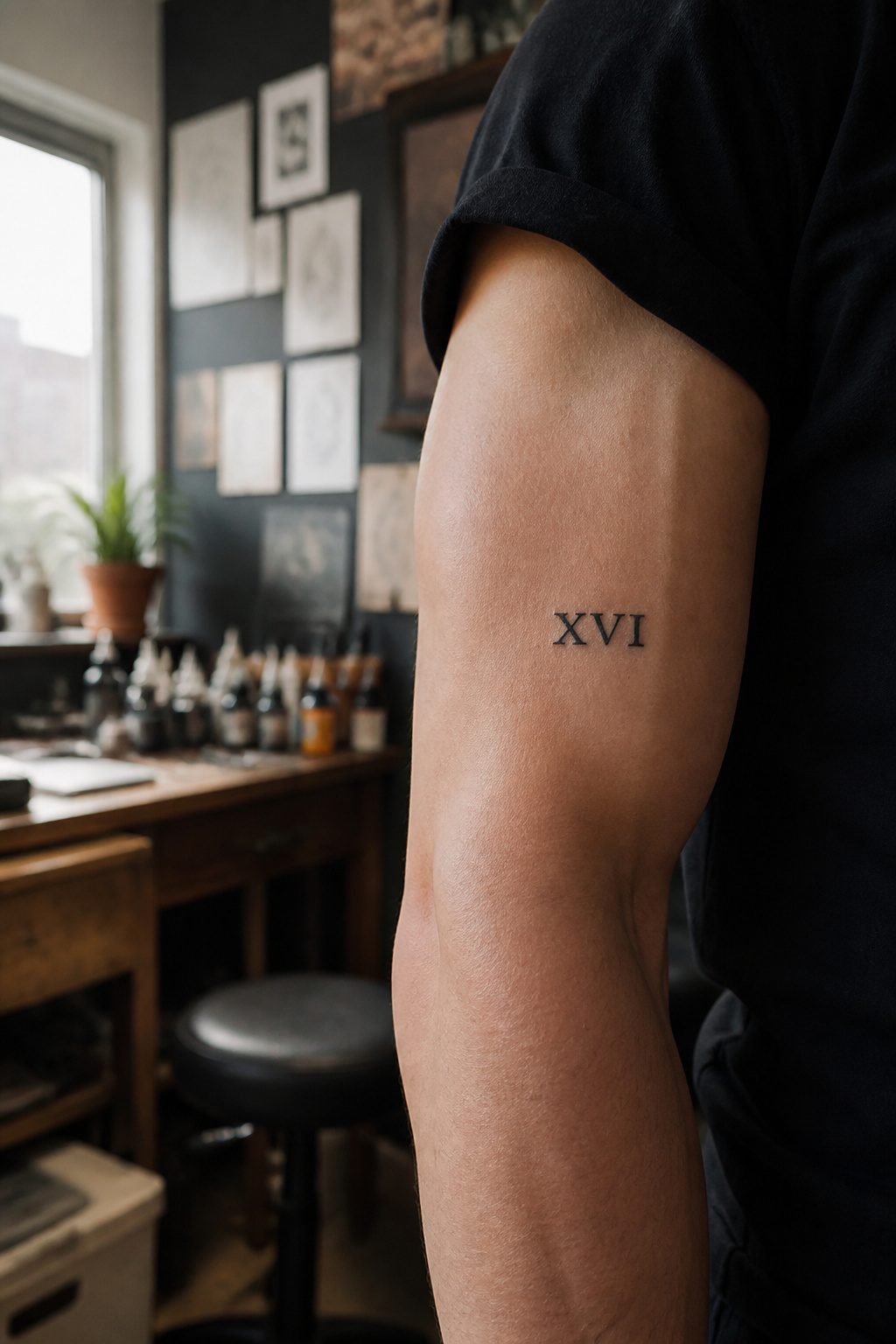
A small tattoo does not need an elaborate backstory to matter. A single Roman numeral date, a letter, a tiny arrow: these age well because they encode meaning through abbreviation rather than complex illustration.
The simpler the design, the less likely it is to blur or fade into something unrecognizable in twenty years.
Meaning can sit in a symbol of strength, a tribute to someone specific, or a design that simply brings a smile when you notice it.
For men with few or no tattoos, this choice often carries more weight; the permanence feels real even at small scale, and the anxiety around picking something "significant" is understandable.
The answer is usually to pick one strong idea rather than many details crowded together.
Quotes, initials, animals with personal resonance, a compass that marks a direction you once took: these work because they connect to an actual memory, not because they explain themselves to strangers.
A small tattoo can be hidden or visible, a conversation starter or a private reminder.
What matters is that the meaning is solid before you walk through the parlor doors, since hesitation at that point tends to show in the result.
What Is Healing Now
Single-line work is what fills my feed right now.
A wristband of one unbroken stroke, an animal silhouette drawn without lifting the needle, a word where the letters flow into each other so completely you almost miss that it reads at all.
The technique has been around, but the past year pushed it mainstream in a way that makes it hard to book an artist who specializes in it.
The shift tracks directly with how designs spread now. A small tattoo gets photographed well, gets shared, and two weeks later three guys in your gym have variations on the same concept.
I watched this happen with abstract stars reimagined as single-line formations, a design that barely existed in shops before it started circulating online. The original piece I saw was someone’s personal symbol.
The fiftieth version I saw was a copy of a copy, the meaning stripped but the shape still catching eyes.
Minimalist work ages differently than traditional small tattoos. Bold lines hold; whisper-thin single-line pieces can soften into a smudge if the artist pushes too fine for the placement.
The sweet spot sits at a weight that photographs delicate but heals with enough presence to last. Social media rarely shows you the three-year check-in, so the designs that trend fastest sometimes fade fastest too.
Frequently Asked Questions
What are some good small tattoo ideas for men?
Strong choices include a clean black cross on the wrist, a simple heart in outline or solid fill, a coiled snake on the forearm, a wolf or lion silhouette on the upper arm, a single skull with rounded chin, a dragon head or tight coil, a plain anchor silhouette, a five-point star, minimalist single lines or geometric shapes, a bold-outlined flower, an arrow following the forearm’s natural line, a cropped animal head or eye, a tree or mountain silhouette, a simple music note or instrument outline, and abstract black shapes.
Each works best when stripped to its essential form rather than shrunk from a larger design.
Where should I get a small tattoo?
The wrist sits flat and heals predictably, making it ideal for symbols you want to see daily. The forearm and upper arm offer more room for slightly larger designs while staying easy to cover with a sleeve.
Behind the ear works for very discreet pieces but limits you to under two inches and hurts more due to thin skin over bone. The calf protects linework well and fits full small designs.
The chest carries a lion mane nicely if placed high enough to avoid shirt collars cutting it in half. Fingers and ankles are possible but blur faster from friction and movement.
How long do small tattoos take to heal?
Small tattoos heal faster than large ones, with the outer layers of skin typically closing up in two to three weeks. The deeper layers beneath can take up to six months to settle fully.
During that first window, the visible surface looks normal even though the ink is still anchoring beneath, so extra care with sun and friction matters longer than the healing appears to require.
What is the best first small tattoo for men?
Pick a design with one clear idea and place it somewhere that heals predictably, like the forearm or upper arm.
Simple symbols, clean blackwork, compact illustrative designs, or short well-spaced lettering are safer first choices than detailed realism or ornate script.
A heart, star, arrow, or single word gives you practice with moderate pain and straightforward aftercare without the risk of intricate work going wrong while you are still learning how your skin takes ink.
Do small tattoos age badly?
They age well when the design stays simple, the spacing is intentional, the placement suits the detail level, and the linework is scaled to what skin can hold.
They age badly when too much detail gets forced into too little space.
A tiny portrait with photorealistic shading or a flower with dozens of fine petals will blur into gray mush within a couple of years, while a clean black outline of the same subject stays readable for a decade.