Fine line work can run from a small initial tucked inside the wrist to a full forearm manta ray mid-swim, and the real question is whether your skin has kept fine ink sharp before.
First-timers tend to heal best with waves, hearts, or simple linework behind the ear; those who have been tattooed before can usually manage the two-session micro-realistic portrait or an hourglass packed with botanical detail.
A single red heart outline floating above three stacked elephants proves that one color accent, set in the right spot, carries the whole feeling without fighting the rest of the piece for space.
1. Botanical & Floral Tattoos
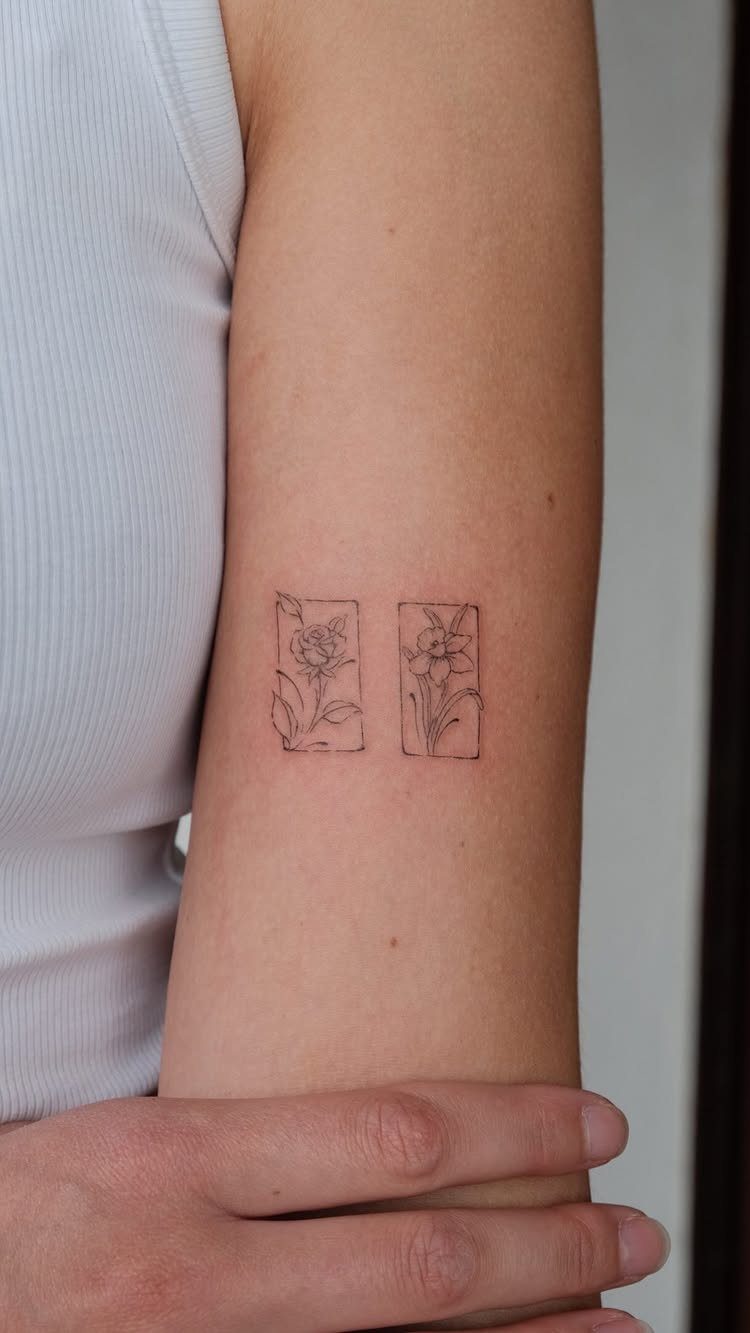
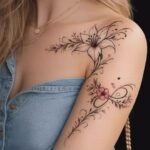
A single stem of lavender or a wildflower cluster can sit almost flat against the collarbone or wrap like a vine around an ankle.
Fine line needles catch the veining in petals and the slight curve of stems in a way thicker outlines never manage.
Placement shapes the design more than the flower choice. A piece that follows the rib curve reads as movement; the same motif squared on a shoulder blade reads as still life.
Ask your artist to map the stencil while you stand naturally, slumped and straight, since botanicals show every postural shift.
Birth flowers work here because the style itself feels personal, not because the flower carries a dictionary meaning. I’d skip roses unless the stem length matters to you; they flatten into generic shapes at small scale.
Trailing species, jasmine or clematis, give the artist more line to work with and age better on forearms where the skin sees sun.
2. Script & Typography
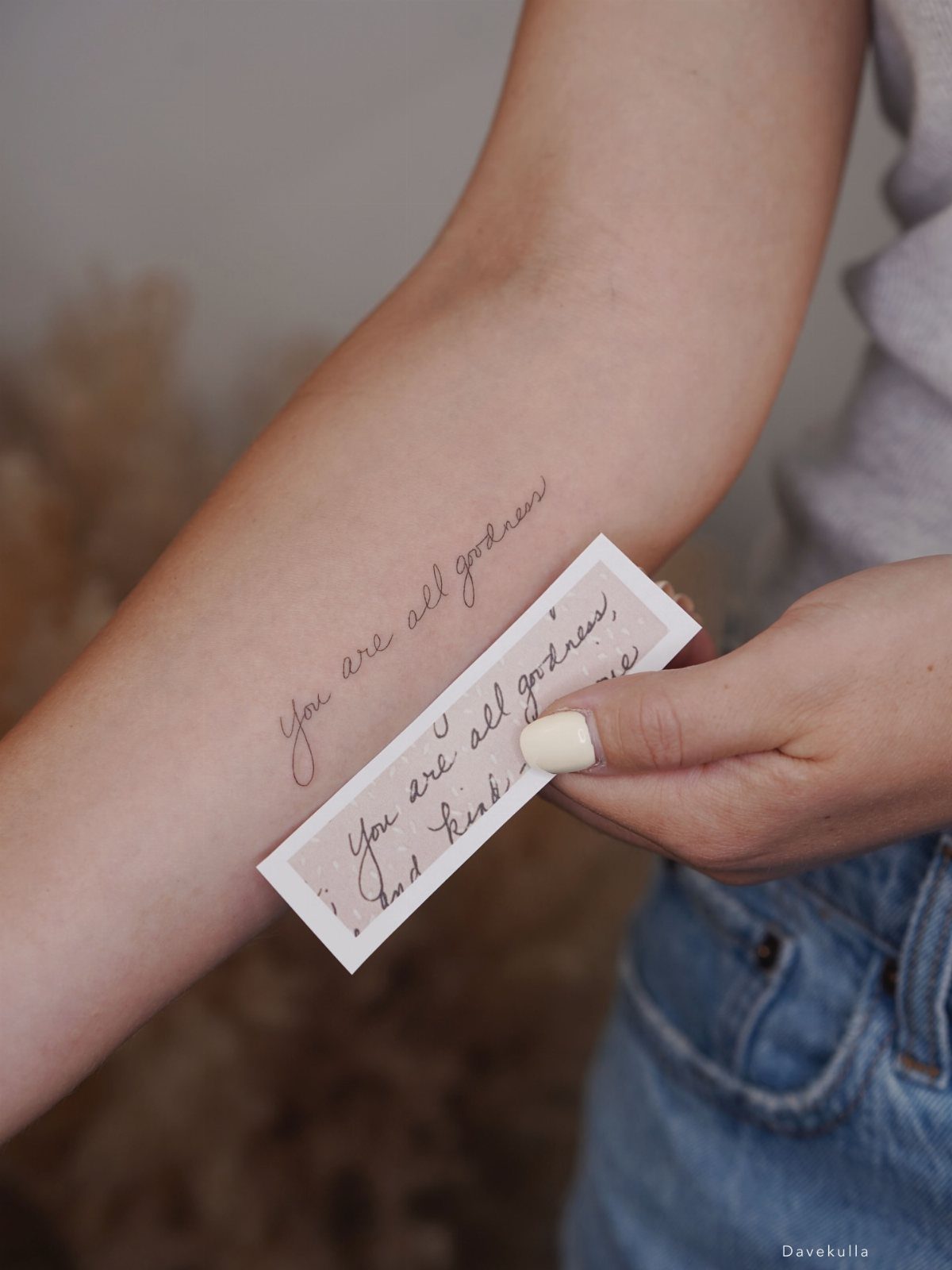
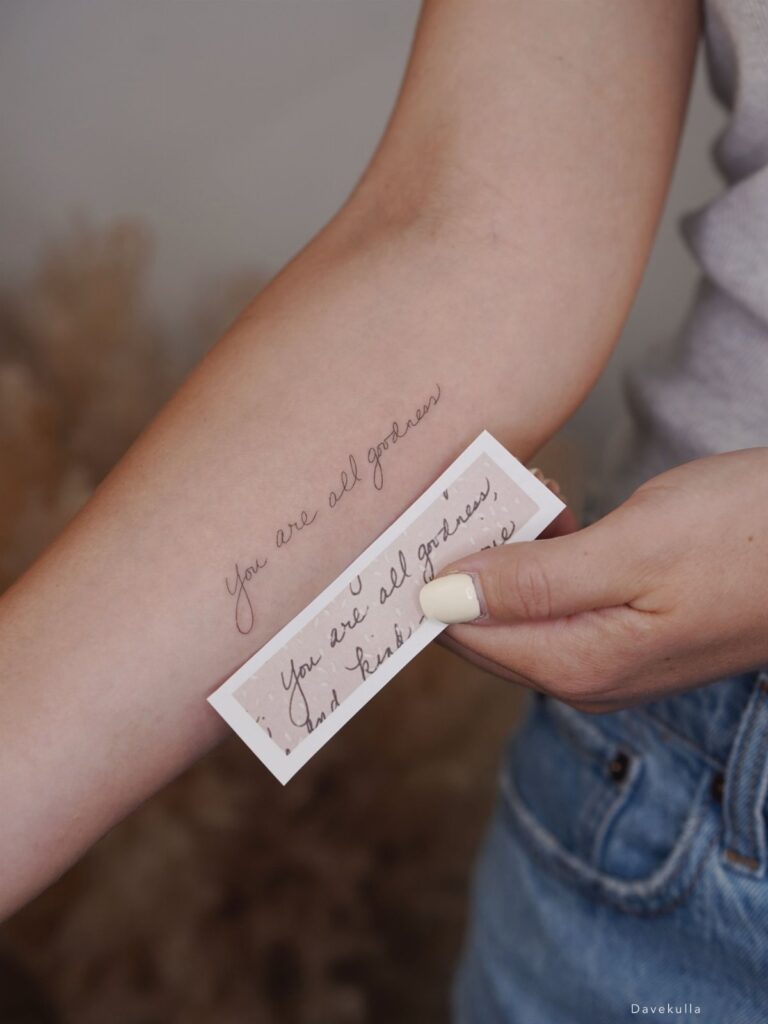
Your grandmother’s handwriting on a prescription bottle, a single word from a letter you still have: the tattoo reproduces the pressure and lift of the original pen. Every letter has to earn its place.
A font pulled from a website looks like a font pulled from a website.
Bring the source material, not a photograph of it. Paper yellows and ink fades in ways a needle can capture or clean up, your choice.
The artist will trace, then simplify, since hairline loops that read on paper blur at needle scale. Cursive runs taller than you expect once skin settles; plan the line break before you plan the placement.
Short phrases heal cleaner than long ones. Three words on an inner forearm stays readable; a sentence wrapping a wrist distorts with every rotation.
I’d put coordinates or a date in this style before I’d put a quote; numbers have fewer ascenders to smudge.
3. Micro-Realistic Details
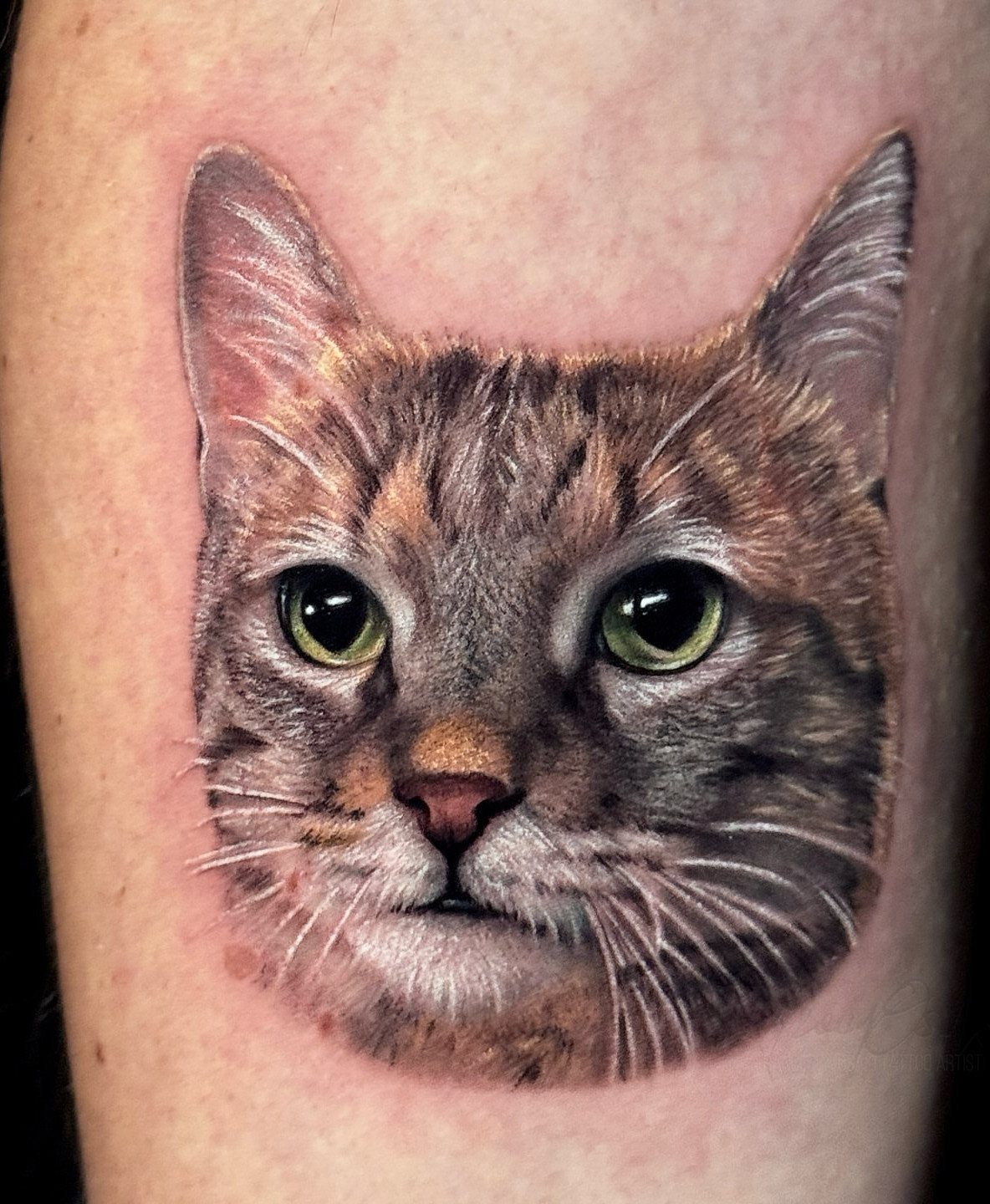
The cat’s whisker that catches light, the chipped enamel on a childhood mug: micro-realism asks the artist to render what you would notice up close, then shrink it smaller still.
This is not a style for first tattoos on fingers or feet. The detail holds only where skin stays relatively still; a cat portrait on a bicep or upper back keeps its precision for years.
On an ankle or wrist, the same density of dotwork spreads within months.
Plan for two sessions. The first lays the structure, the second adds the dark accents that sell the illusion.
Rushing to full saturation in one sitting blows out the finest marks. I’d budget for an artist who shows healed photos, not just fresh work; the style is easy to photograph well on day one and hard to sustain.
4. Custom Designs
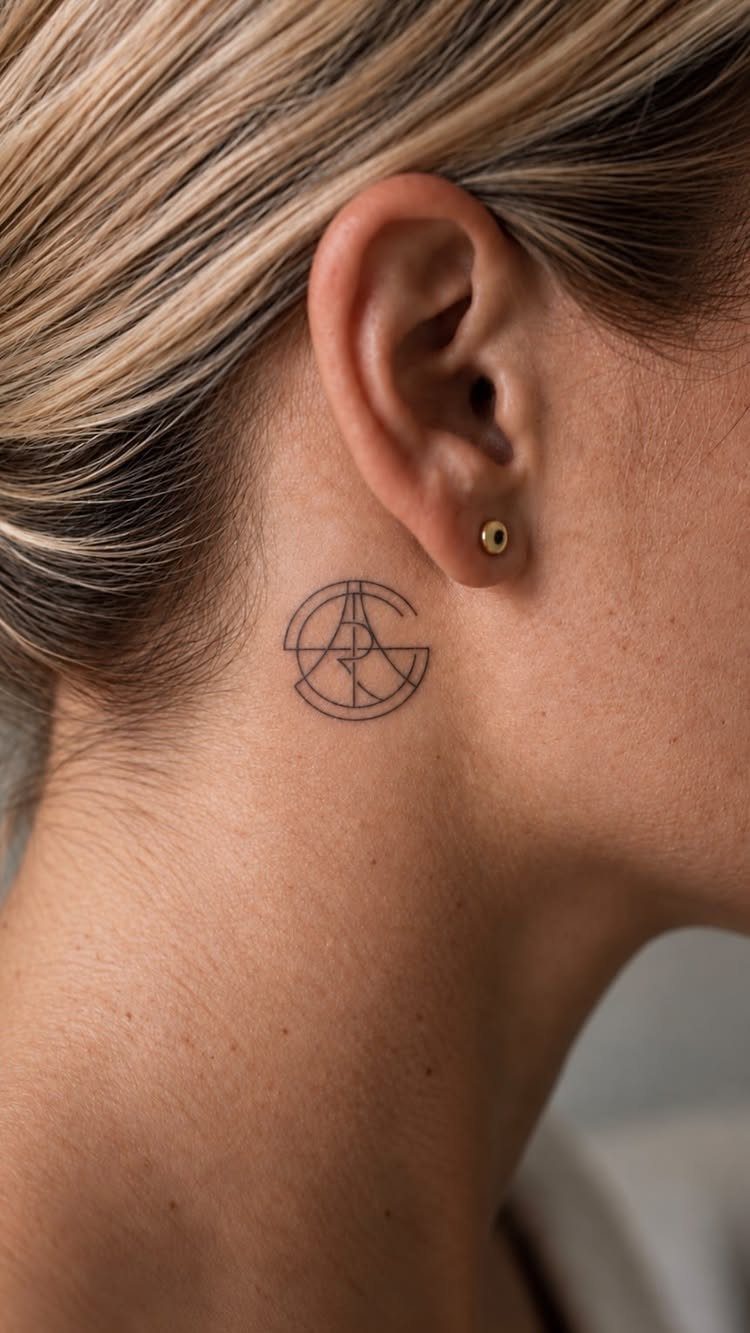
A monogram behind the ear, a constellation mapped to a first date: custom work starts with reference material that matters to you and ends with an artist’s translation. The best collaborations happen when you bring three things, not thirty.
Too many references freeze the design into collage.
Start with a shape constraint. The circle behind an earlobe, a vertical rectangle along the spine: the boundary matters more than the content at first.
Your artist will fit the symbol to the space, not the space to the symbol. Geometric frames help here; they give the eye a resting place when the central motif is abstract.
I’d avoid combining more than two concept categories. Flower plus letter works; flower plus letter plus birthstone plus skyline fights for space and for meaning.
The small scale of fine line rewards restraint. Ask for a stencil test before the needle touches skin; live with the outline for an hour, moving normally, before you commit.
5. Animal & Insect Tattoos
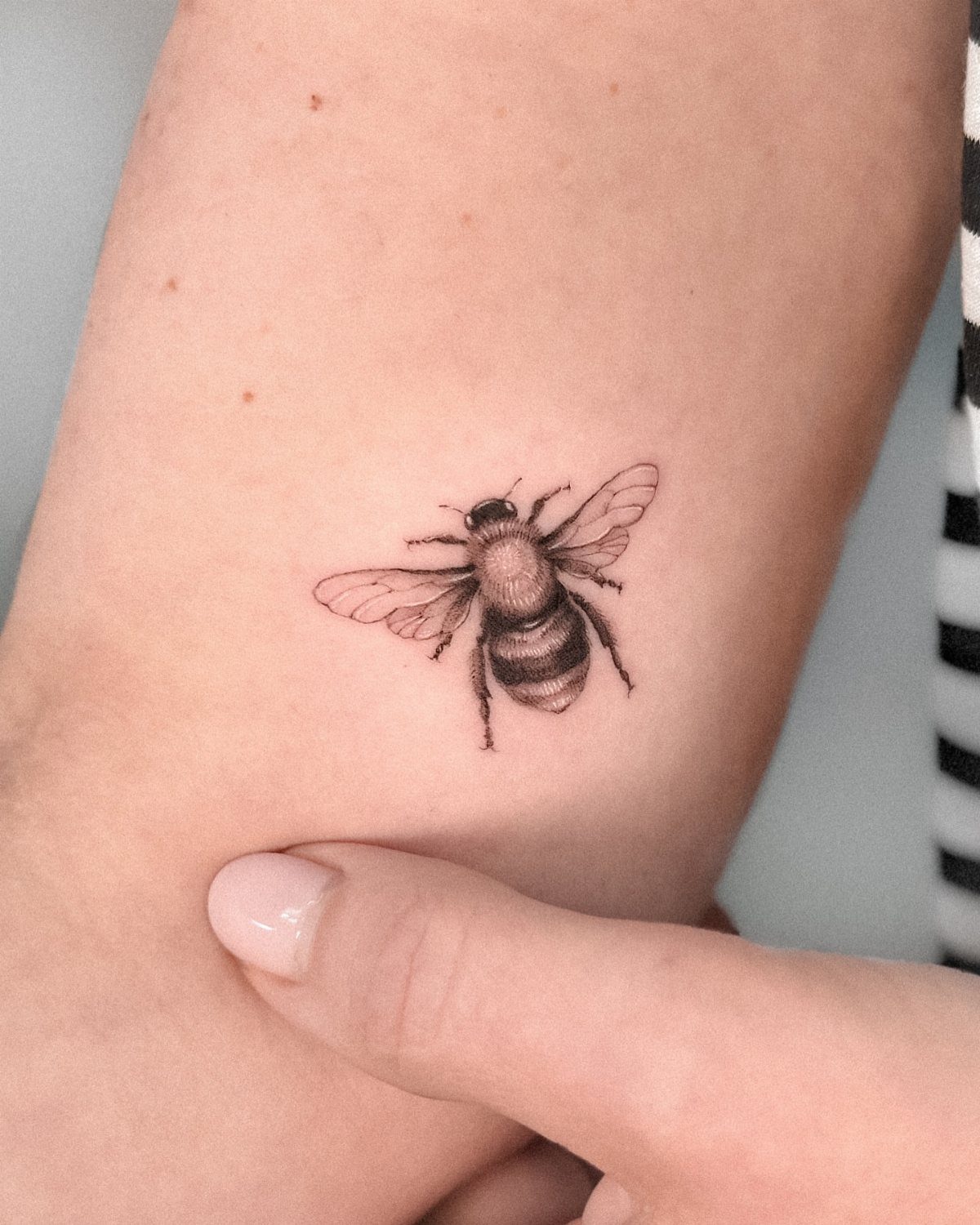
Bees read as industrious, manta rays as silent, both because of body shape rather than folklore. The insect or animal you choose should move the way you want the tattoo to read on your body.
A bee mid-flight across a shoulder blade carries direction; a bee at rest on a sternum reads as emblem.
Wing structures challenge fine line technique. Veins in insect wings need single-needle consistency; a wobble turns tracery into blur.
Bird wings allow more error because feather barbs overlap and hide mistakes. I’d pick a beetle or a moth over a butterfly for this reason; the wing pattern is more forgiving and less common.
Color limits the lifespan. Black and grey on pale skin holds longer than you’d think; yellow on a forearm ghosts to beige sooner.
If the species matters for its color, place it where sun rarely reaches. A bee on a hip or ribcage keeps its amber where a bee on a hand goes to grey.
6. Geometric Patterns
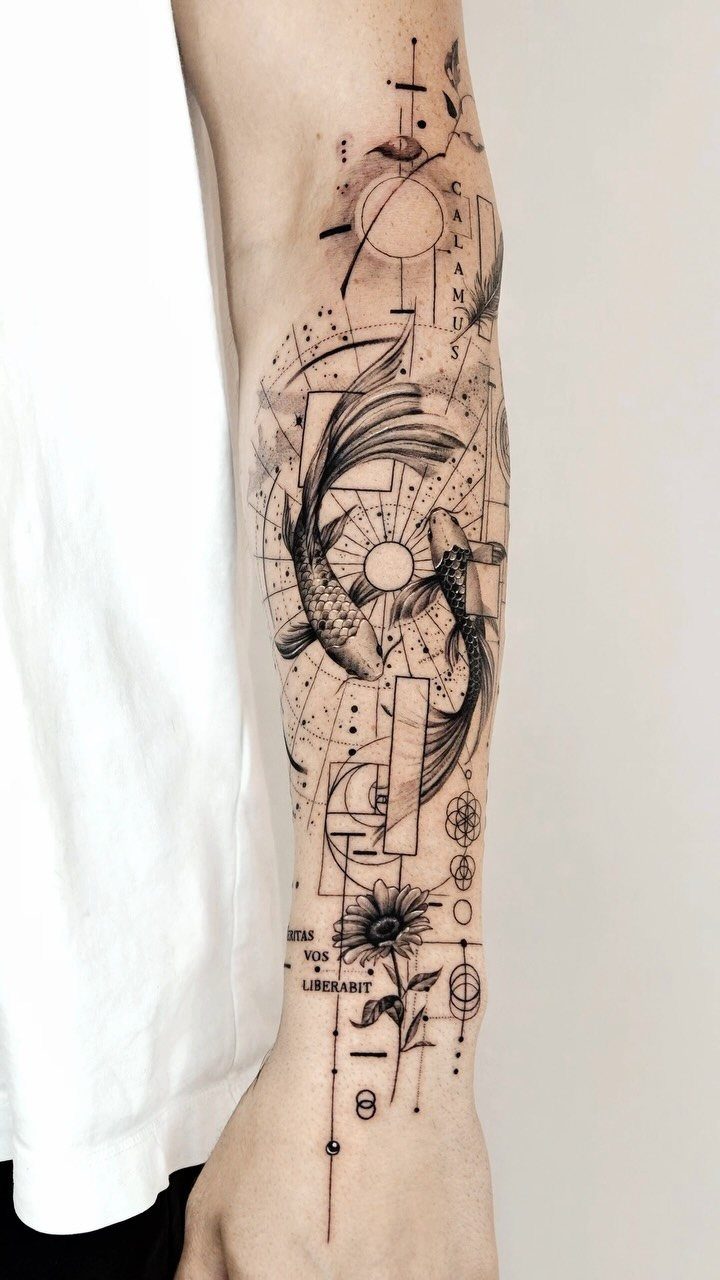
Mandalas reward the centering. A geometric pattern placed off-balance looks like a mistake; the same pattern centered on a sternum or the flat of a forearm reads as intentional architecture.
The body site chooses the symmetry, not the other way around.
Koi and geometric frames mix because the fish curve breaks the grid without shattering it. Pure geometry, circles and lines without organic interruption, suits smaller skin areas: a wrist band, a finger wrap.
Add a natural form and the design needs room to breathe, with clear skin around it.
I’d ask for the linework at one weight throughout. Variation in line thickness, thick borders with thin interior marks, is a traditional tattoo move; fine line geometry wins through consistency.
The single needle can hold a mark across an entire session, and that uniformity is what reads as modern.
Check that your artist’s healed photos show lines that stayed even; fresh geometric work always looks crisper than it will once settled.
7. Sun and Moon Tattoos
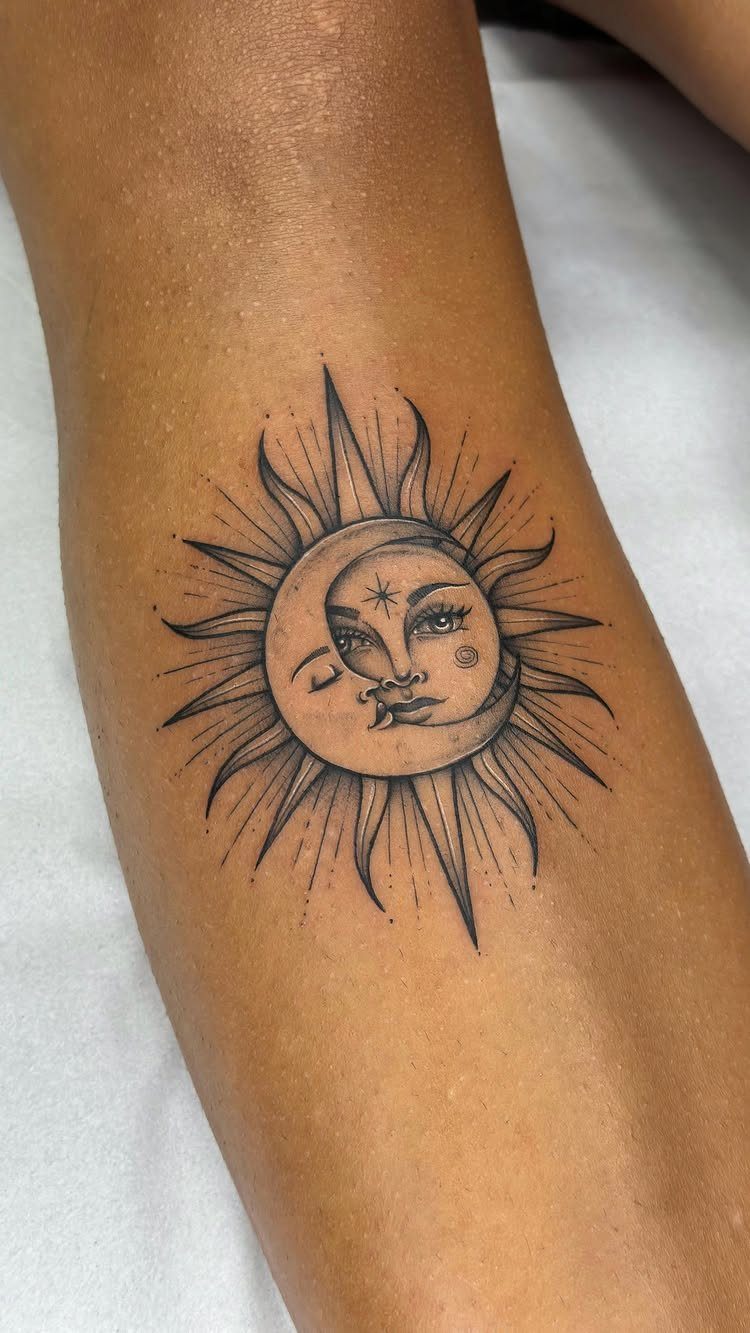
An intertwined sun and crescent moon with carved human faces turns a celestial pairing into something you can read like a cameo brooch. The faces give the design weight; without them, the same layout reads as astrology merch.
I would ask the artist how the expressions will age, since fine line faces soften faster than geometric shapes.
Balance symbolism works best when you actually live between two forces: day job and night creative work, two homes, two names. If your life feels lopsided right now, the tattoo becomes a reminder you did not ask for.
Hand-poked application heals faster than machine work for designs this contained. Find someone who specializes in stick-and-poke; the technique suits the quietness of the subject.
8. Fine Line Heart Tattoos
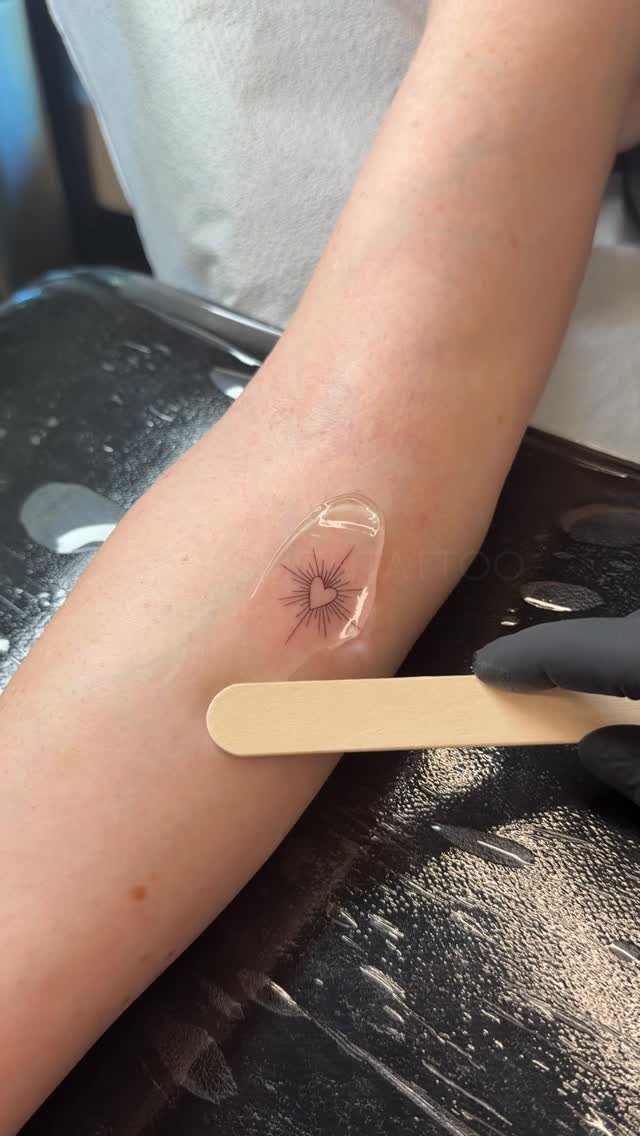
A heart with radiating lines sits somewhere between sacred icon and Valentine stamp. A sun-ray heart reads open and light; a bleeding anatomical heart in red ink without shading lands in a completely different emotional register.
Pick the mood before you pick the artist.
Size and placement change the tone more than the design itself. Something the width of a quarter hides under a watch strap or sits visible at the wrist bone.
The inner forearm, where this one lives, gets sun and friction both; expect more touch-up than a shoulder or rib placement.
Red ink pops without the pain of shaded fills. Ask to see healed photos of any color the artist has used in fine line; some reds turn pink, some hold true.
9. Fine Line Butterfly Tattoos
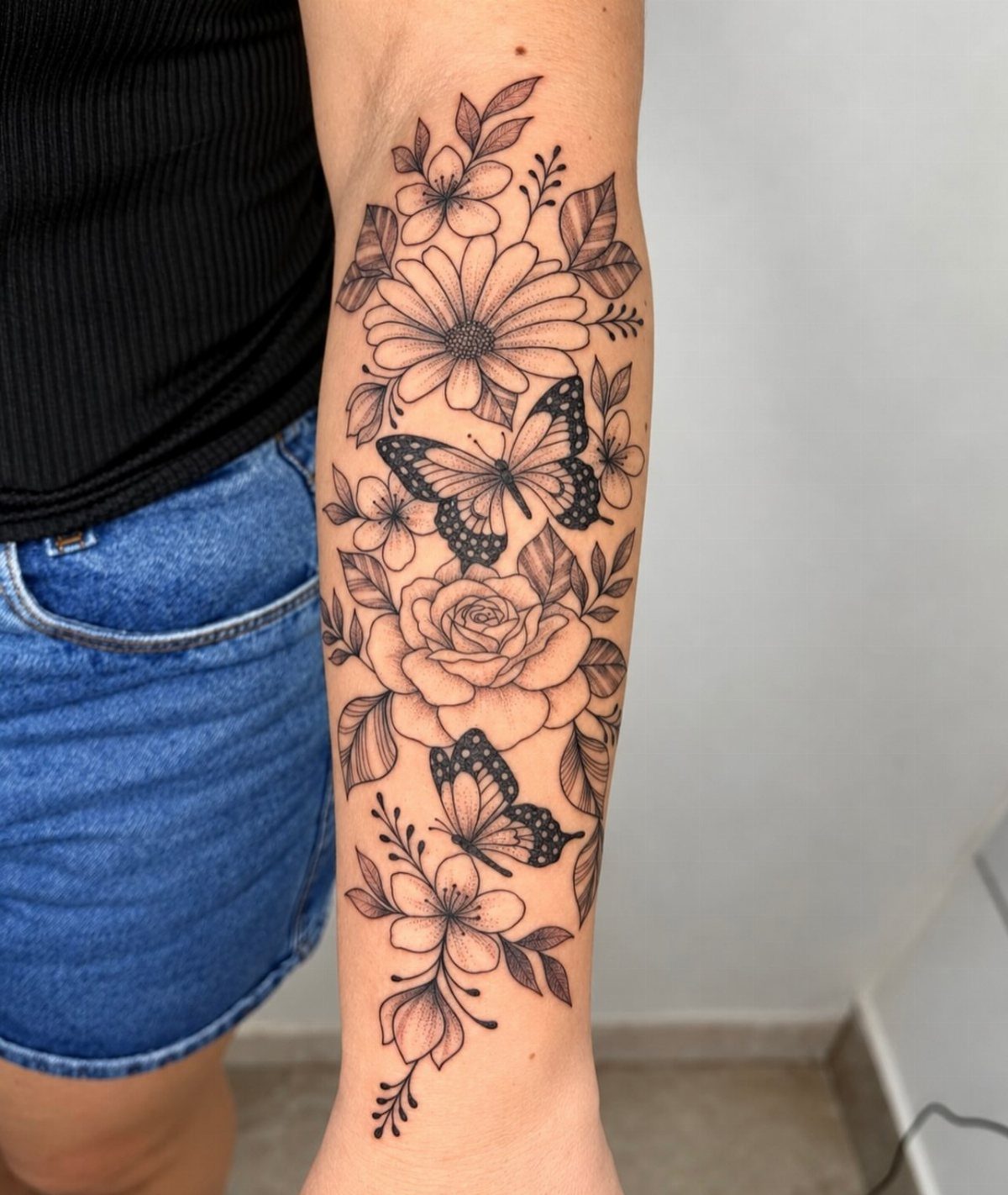
Two butterflies threaded through roses and daisies let you wear the garden rather than pin a single specimen. The pairing matters: flowers ground the butterflies, keep them from floating off into pure symbol.
Without the botanical frame, the same insects read as Y2K nostalgia.
Customization runs from wing detail to color density. Pared-back linework keeps the design legible at small sizes; full color on every petal needs more skin real estate to breathe.
I would decide based on how much other ink you already have. A first tattoo often wants to whisper; the fifth can afford to speak up.
The transformation meaning lands harder when the change is recent or ongoing. A butterfly picked during stability can feel like a costume.
10. Fine Line Script Tattoos
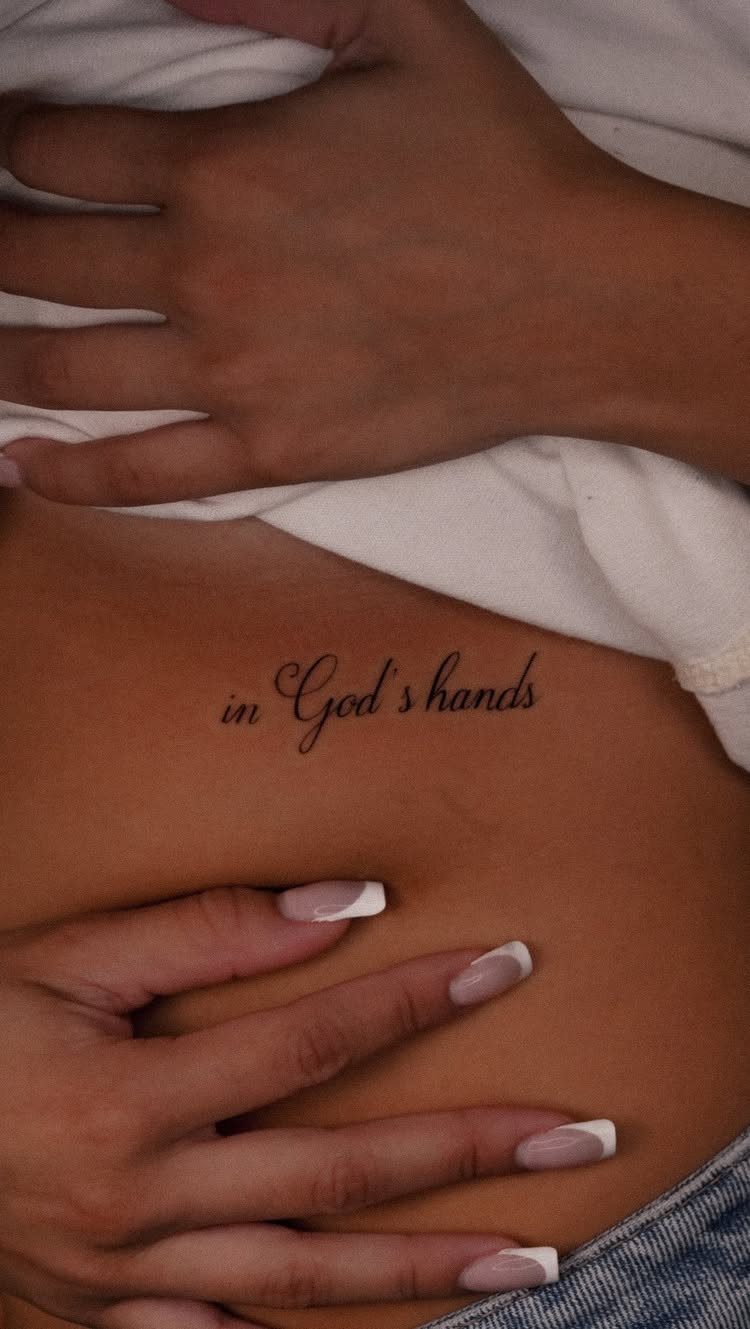
Cursive fine line turns a phrase into handwriting you chose on purpose. Even a devotional phrase turns personal when the lettering is unmistakably one artist’s own.
The French-tip nails framing it suggest the wearer treats the tattoo as jewelry, not confession.
Script lives or dies by spacing. Letters too tight blur together in a year; too loose, and the phrase reads as separate words instead of one breath.
Ask the artist to stencil the exact string, then live with it for a day before committing.
Personal quotes work best at a length you can speak in one exhale. Coordinates, names, or single words carry the same weight with less risk of a typo you cannot undo.
11. This Elephant Tattoo
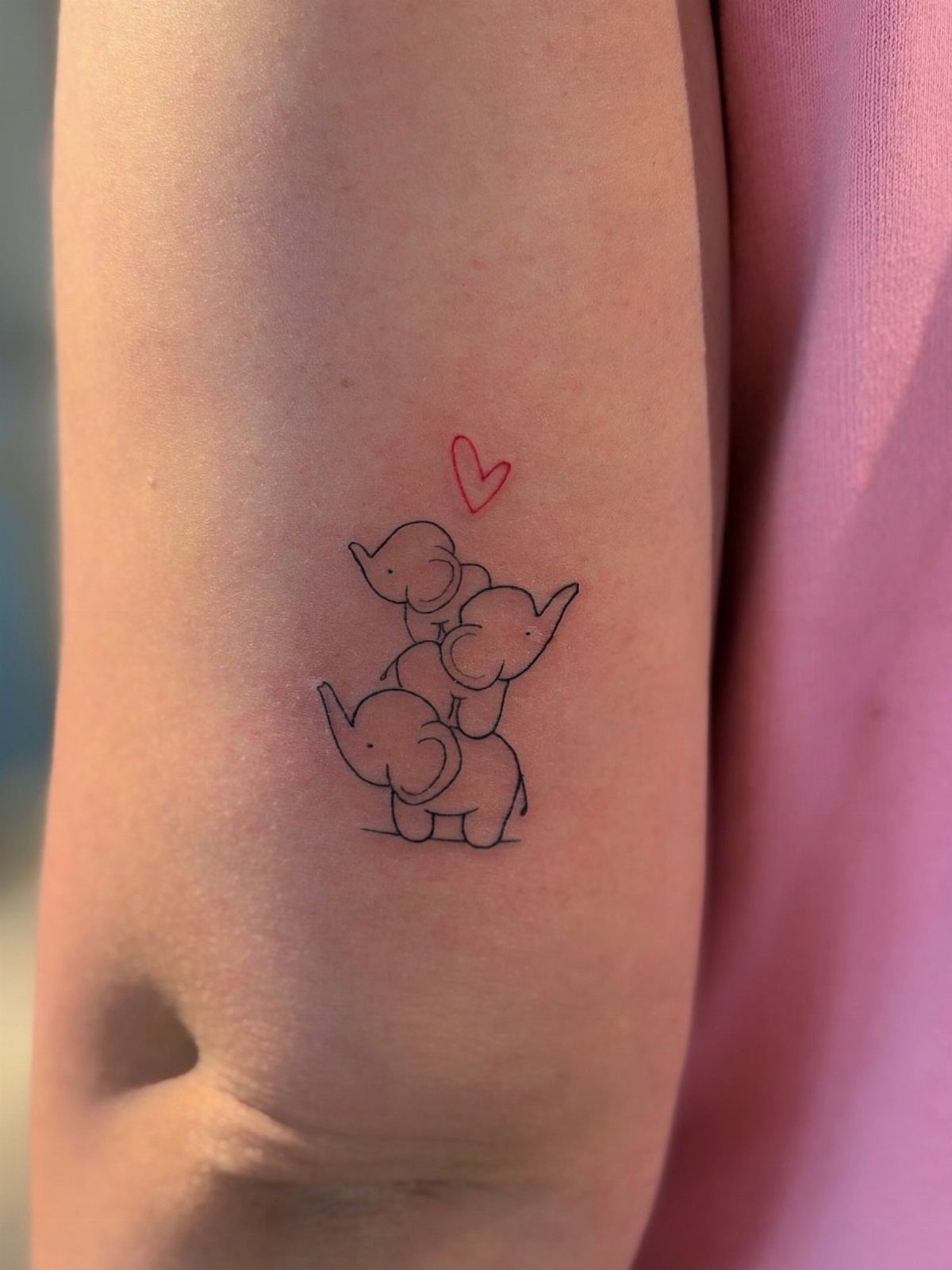
Three stacked elephants beneath a floating red heart outline looks like nursery art until you notice the composition: the smallest elephant carries the weight, the heart hovers unattached. The style is curvy linear, embellished without crowding, minimal without going blank.
Elephants carry wisdom and strength in most symbol systems; the stack suggests family order or accumulated memory. The red heart, separate and smaller, reads as the thing being protected or the reason for the bearing.
I would not add more color; the single red note does all the work.
Above-the-elbow placement shows when short sleeves lift, hides when they fall. Consider whether you want the question or the answer visible.
12. Minimal Linework
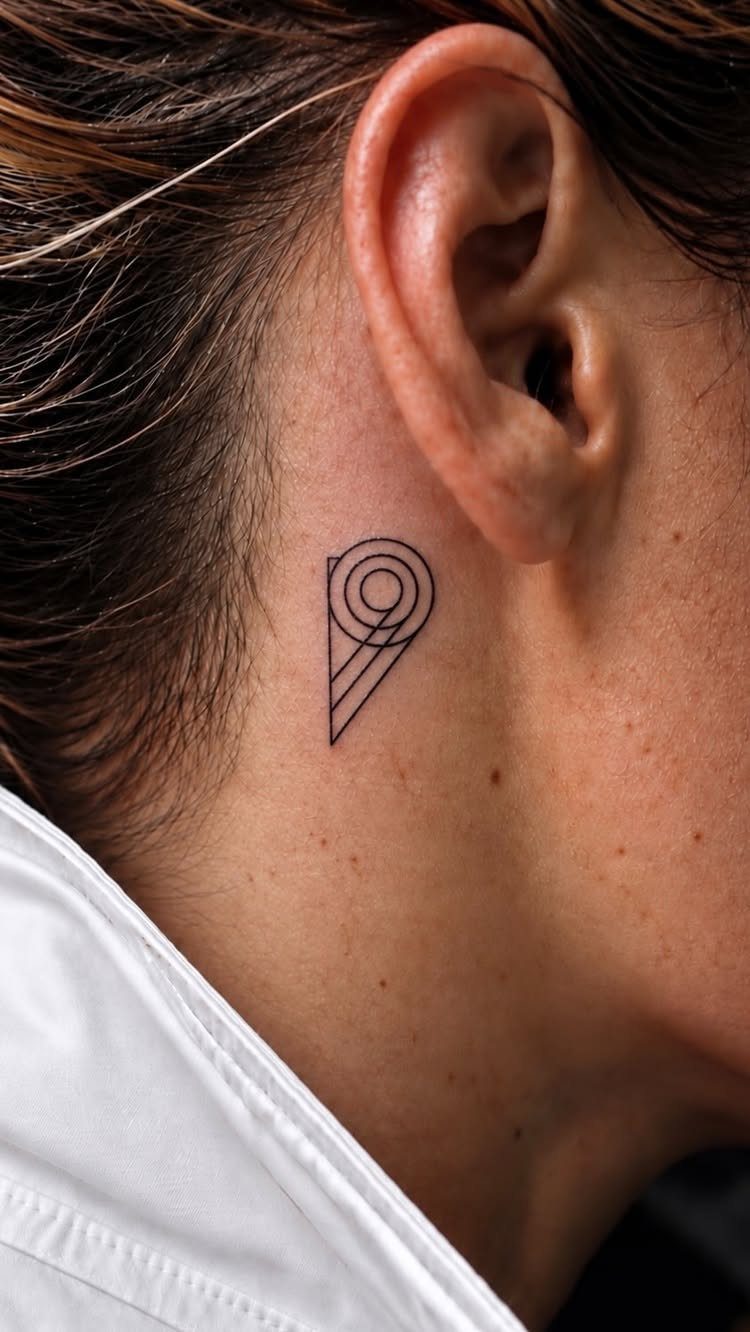
Concentric circles crossed by diagonal lines behind the ear read as signal or code: modern, abstract, deliberately not a thing you name. The placement catches light when hair moves, disappears when it stills.
Abstract linework suits someone who wants the tattoo for themselves more than for display. The wrist or ankle options work the same way; visible when you choose, ignorable when you do not.
Continuous-line designs, where one unbroken thread makes the whole shape, ask more of the artist’s planning and heal with fewer weak points.
Single-needle or minimalist work fades faster on areas that see sun and wash. Behind the ear avoids sun but collects shampoo residue; plan on gentler care than a shoulder piece demands.
13. Fine Line Wave Tattoos
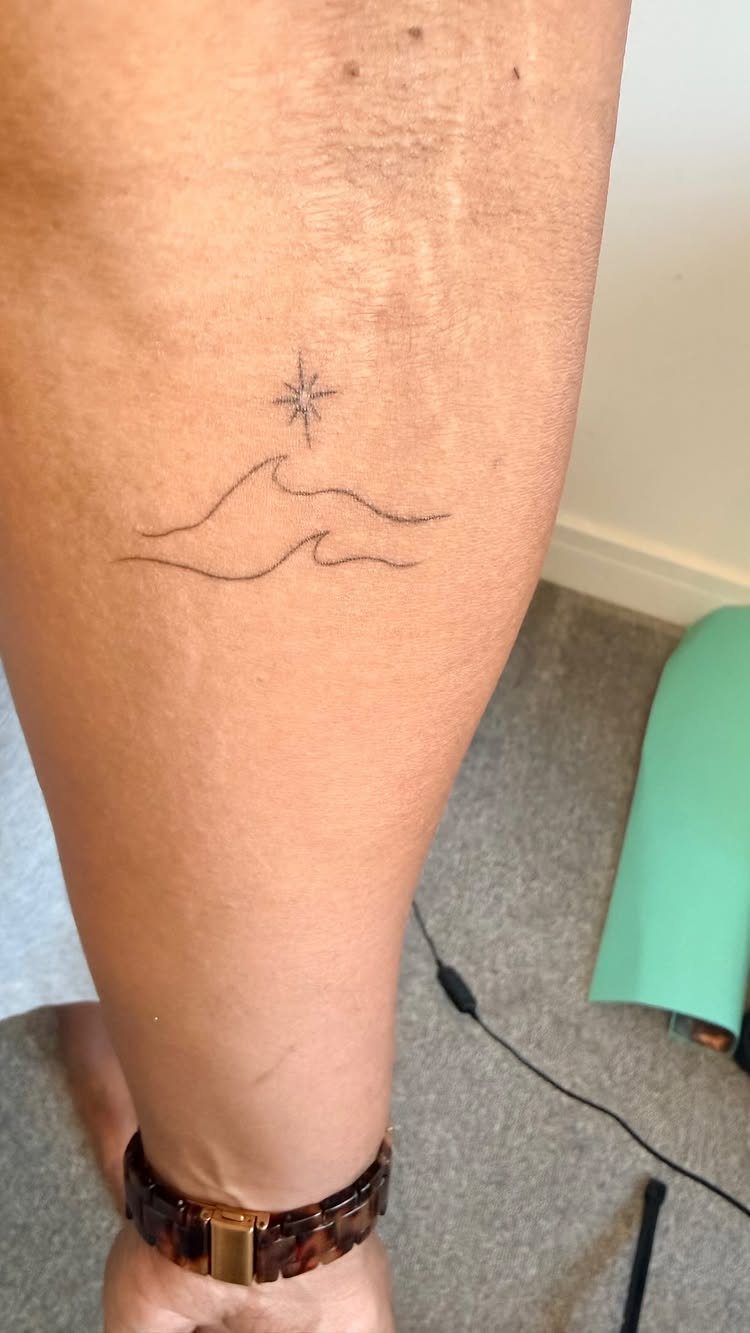
A single wave in fine line ink carries the same weight as a full sleeve when it sits at the ankle or the collarbone.
The design asks for almost no space, which makes it ideal for a first tattoo or a hidden piece that only shows when you choose.
Placement changes the reading. A wave at the wrist reads as motion, something ongoing.
The same curve at the back of the neck reads as memory, something already passed. A small star set beside the wave gives the eye a place to rest; the wave alone keeps the whole design quieter.
Single-needle work here demands a steady hand. Lines this thin on a curved surface blur faster than on flat skin, so the ankle and the rib cage need touch-ups sooner than the forearm.
Budget for that. Finer lines soften faster than heavier ones, so the choice only makes sense if delicacy matters more than longevity.
14. Fine Line Initial Tattoos
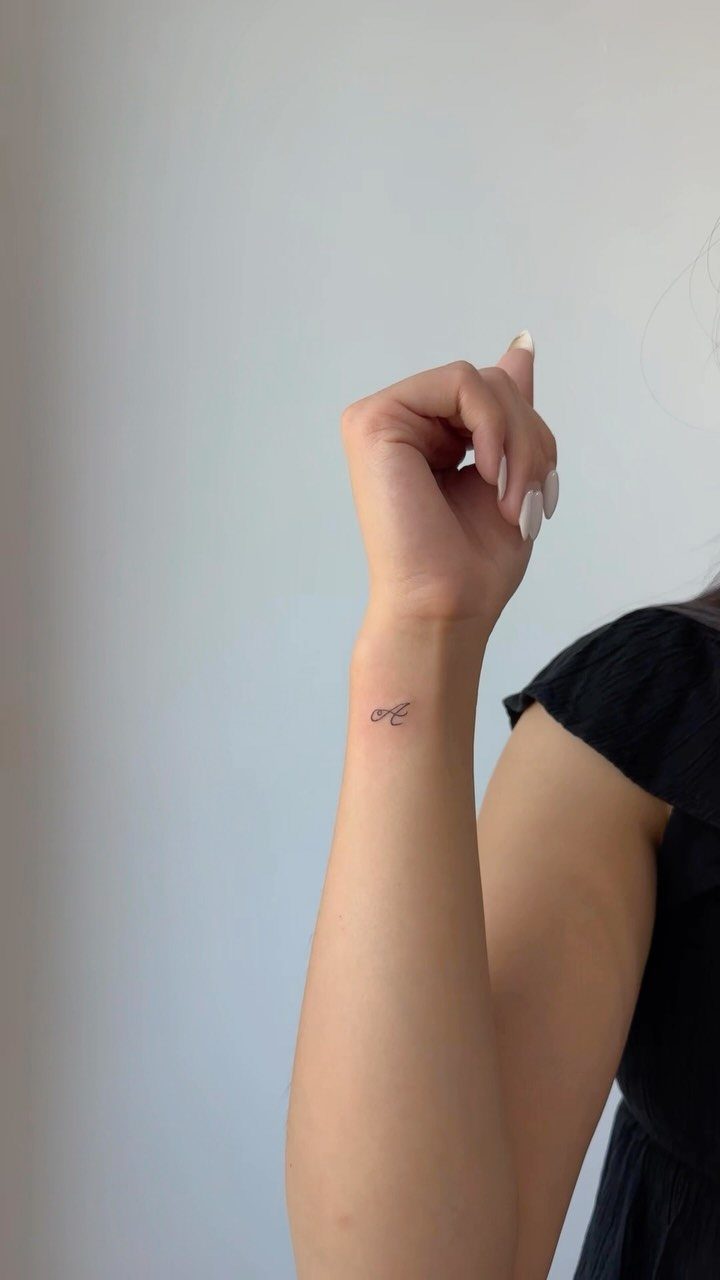
Initials work because they refuse to explain themselves. A cursive "A" or "E" at the inner wrist reads as a signature, not a statement, and that suits anyone who wants meaning without conversation.
A butterfly paired with an initial adds ornament, and it also adds size. A winged initial stops being subtle and becomes a composition, which changes the commitment.
I’d keep the letter alone for anyone who checks ingredient lists and judges by visible results, the same instinct that applies here. One letter, clean, no flourish.
Ink longevity calculators for single-needle work suggest the inner wrist fades faster than the outer forearm. The difference is real.
If the initial marks a person you need to remember, place it where daily sunscreen reaches without thought.
15. Fine Line Manta Ray Tattoos
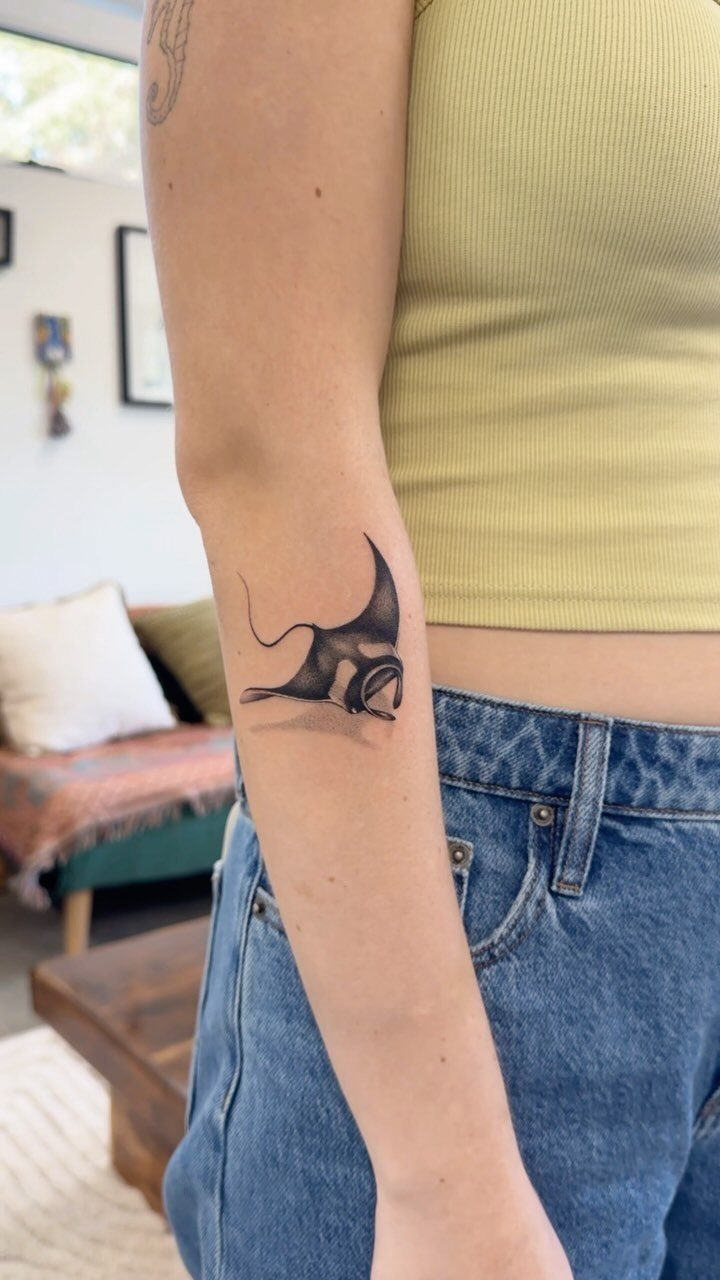
The manta ray’s body is built from two triangular fins and a trailing tail, a shape that translates naturally to fine line work without losing recognition.
A full forearm span lets the manta ray read as mid-pass, the body angled like it is swimming through.
Rays carry less tattoo baggage than koi or sharks, which means fewer assumptions from strangers. The wearer I picture values that blankness, the space to assign her own meaning.
Power and freedom are the usual readings; the shape itself suggests glide and patience more than force.
A simple version reduces the ray to outline and three gill slits. That smaller scale fits the wrist or behind the ear.
The full piece with shading, as visible here, needs a flat area and a session long enough that the arm rests steady throughout. Not a lunch-break choice.
16. Fine Line Hourglass Tattoos
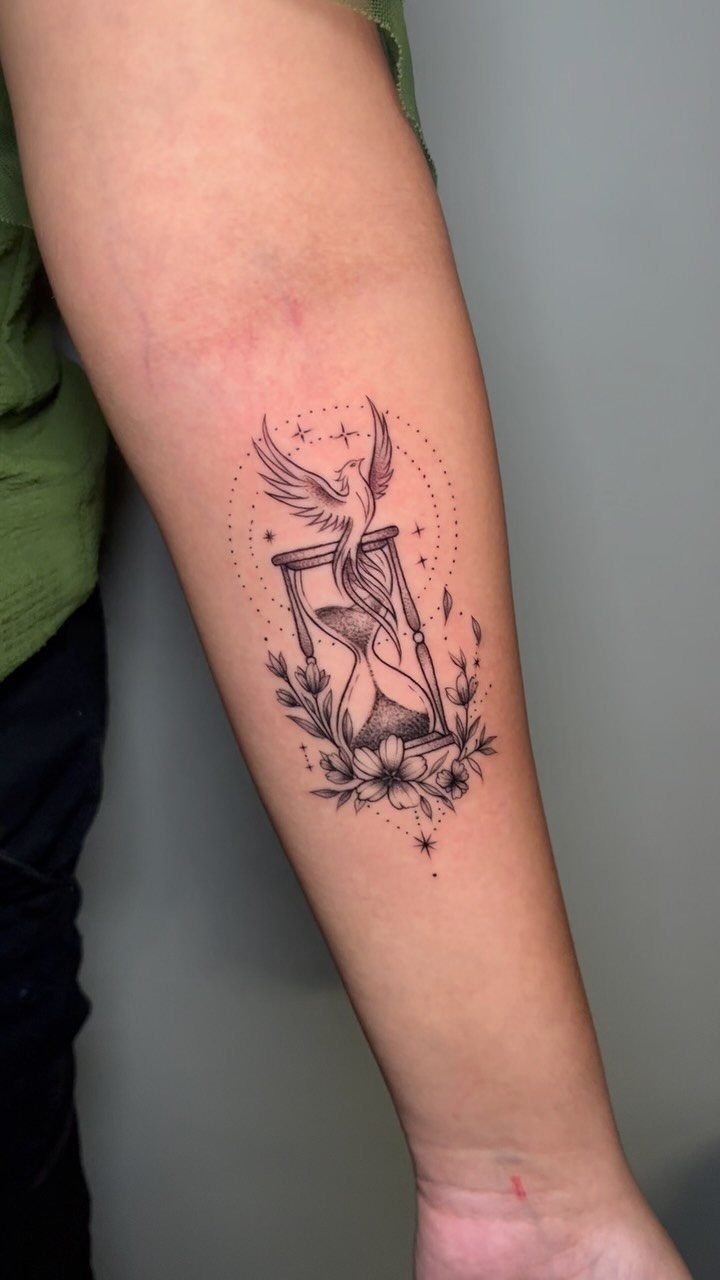
An hourglass in fine line ink carries more weight than its size suggests. A phoenix, flowers, and stars packed into one forearm piece turns the hourglass into a story, not just a symbol.
That density is an option, not the requirement.
The plain hourglass, two bulbs and a narrow waist, works at an inch or two and hides almost anywhere. The ribs, the hip, the back of the arm above the elbow.
A reminder about time and mortality sits differently when you choose who sees it.
The bird and botanicals visible here turn symbol into story. I’d suggest that version only for someone who already has ink and knows how their skin takes fine lines.
Single-needle detail around the glass sections blurs if the artist rushes or the skin swells. The simpler form forgives more.
Longevity of Fine Line Tattoos
Fine line tattoos fade faster than dense traditional work because the pigment sits shallow and sparse. UV exposure breaks down that pigment chemically, and thin lines have less reserve to lose before they blur.
Sunlight destroys tattoo pigment in skin, and delicate lines go first; that’s why dermatologists flag UV exposure as the main enemy of fine line work.
Placement buys you time. Ribs and inner arm age better than hands or feet, where friction and sun hit together.
A design that follows a rib curve keeps its veining longer than the same motif on an ankle that sees sandals most of the year.
Thicker lines within the fine line range, or slightly more interior detail, can extend clarity without killing the delicate look. The difference between day one and year three is the only metric that matters.
Choosing a Tattoo Artist
An artist’s healed portfolio matters more than their Instagram. Fresh fine line photographs well; settled skin tells you whether the single-needle consistency held.
Ask to see both.
Hourly rates are standard for this work. The precision takes time, and small size does not mean small effort.
A single heart outline runs shorter than an intricate piece, but the needle control required stays the same.
Fine line wins through uniformity, and that uniformity demands a hand that can hold one weight across an entire session.
Unlike traditional tattoos, which are created by a group of three or more needles for a thicker design, fine-line tattoos are created by just a single tattoo needle to leave you with super-fine lines and minimalist designs.
Aftercare for Fine Line Tattoos
Clean and moisturized through healing, then sunscreen after. Fine lines have no margin for pigment loss; every drop of ink matters, and sun removes it directly.
SPF 30 or higher on the tattoo once healed. The line between maintained work and faded work is often just daily protection, especially on forearms and collarbones that see summer without thought.
High-friction areas usually need touch-ups sooner rather than later. Hands and feet blur faster, and planning a refresh before the design dissolves beats trying to rescue it later.
Ask your artist’s retouch policy before the first session; some include it, some price it separately.
Shampoo residue behind the ear, watch straps at the wrist, waistbands at the hip: each site has its own wear pattern. Match your care to the placement, not to generic advice.
Cost Considerations
Size, color, and time set the price, same as any tattoo. A single unshaded heart outline costs less than a detailed piece, but the hourly rate for fine line work often runs higher than traditional because of the precision required.
Consultations matter for cost more than with bold-line work. Line density and detail level change how long the artist works, and they need to see both your skin and your design to estimate accurately.
Budget for the artist who shows healed work, even if the hourly rate stings. The alternative is paying twice: once for the tattoo, once for the cover-up when the cheap version blurs.
Frequently Asked Questions
Do fine line tattoos last long?
A single needle lays down less pigment than the broader needles used for thick outlines and solid fills, so the line softens sooner. The lines soften as skin regenerates and UV exposure adds up.
Daily broad-spectrum sunscreen and placement on skin that stays relatively still, like the upper back or bicep, preserves the crispness longer than wrist or ankle spots that see sun and motion.
Are fine line tattoos cheaper?
Cost depends on size, color, and time, not on the needle size itself. A simple single-needle outline of one small shape usually runs less than a large intricate piece with shading or full color.
The consultation is where you nail down the actual price based on your specific design and the artist’s hourly rate.
What are some creative fine line tattoo ideas?
Botanicals, animals and insects, geometric patterns, and script all translate well to thin linework.
Single stems or wildflower clusters suit collarbone and ankle placement; bees and manta rays carry direction and movement; mandalas and abstract shapes read as modern architecture; handwritten phrases or coordinates keep the personal weight without crowding.
The best choices match the shape to the body site and limit the concept to one or two categories rather than piling symbols together.