Elephant tattoos range from a single-needle wrist outline to a full back piece in grass and sky, and the right choice depends almost entirely on how much skin you are willing to give it.
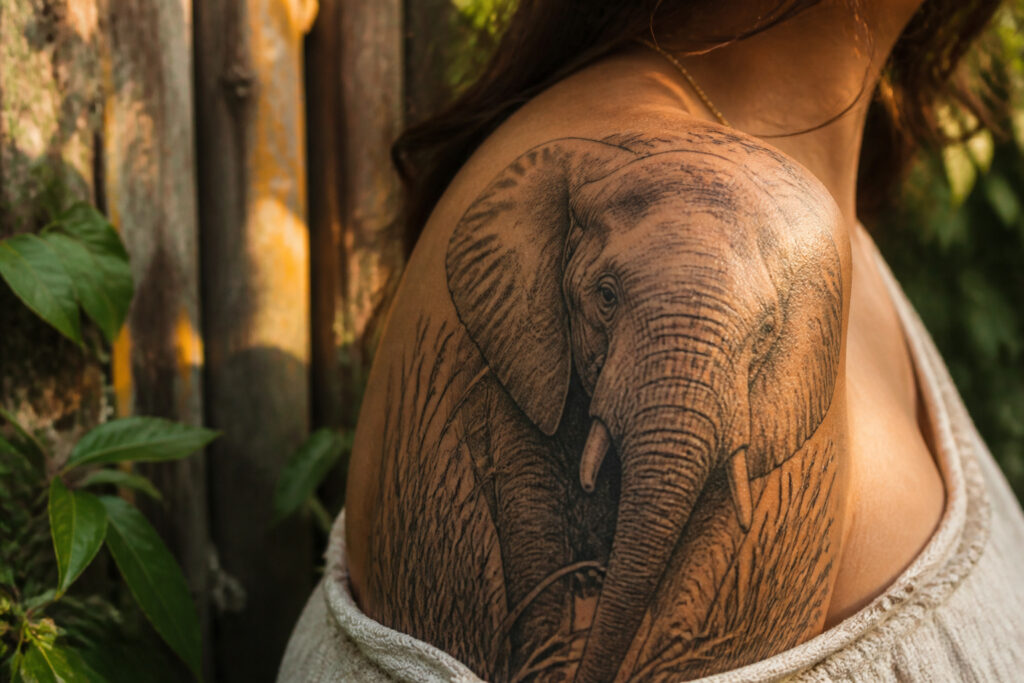
The condition most people miss is that this subject needs space to read as anything other than generic; at six inches or more on a thigh or shoulder blade, the wrinkles around the eye and the frayed edge of an ear finally become skin texture instead of blur.
A baby elephant on a wrist paired with daisies can mark innocence, but compress four family figures onto the same spot and the trunk curve that makes each one readable collapses into noise.
1. Simple Elephant Tattoos
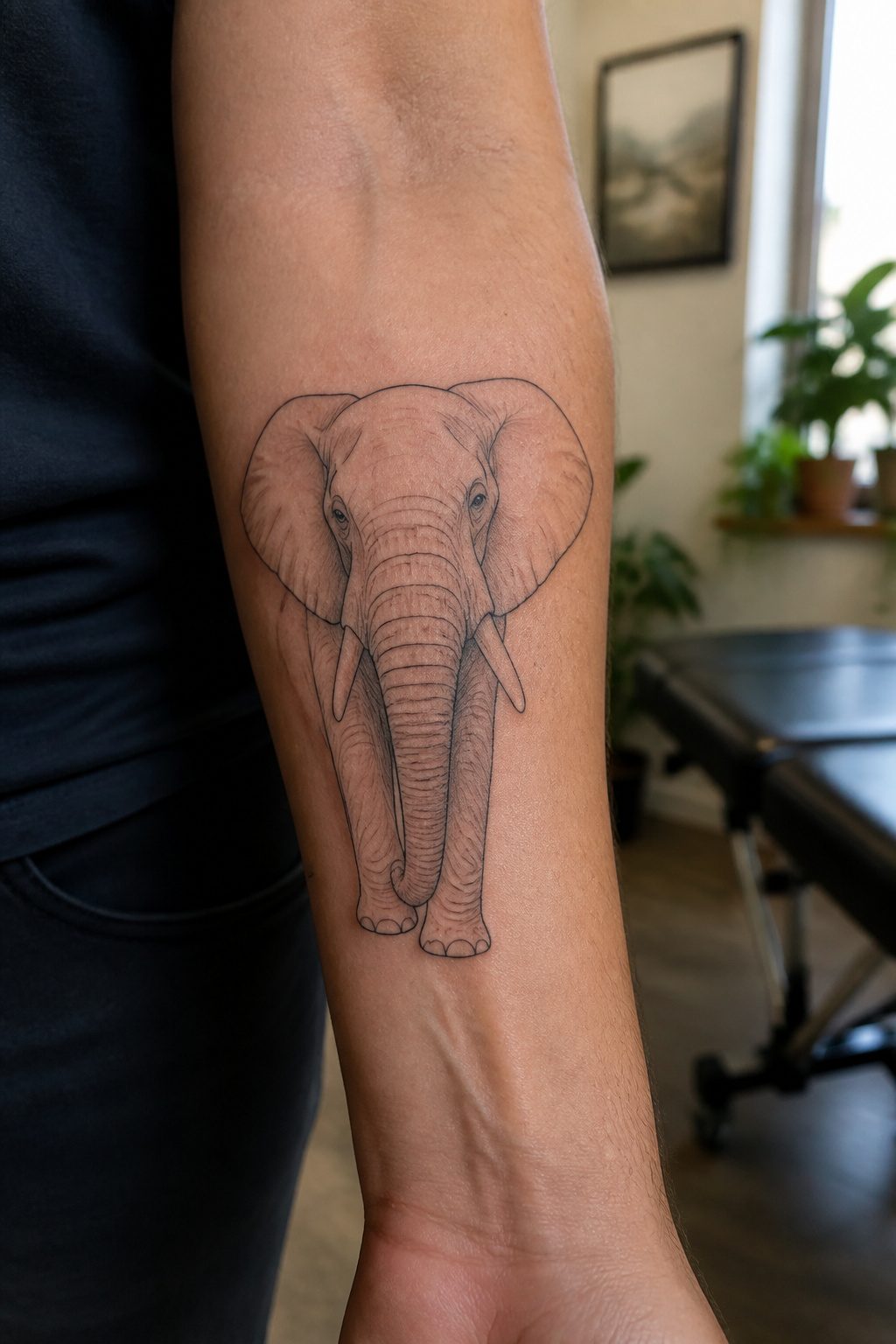
A clean outline or black-and-grey elephant design ages better than you’d expect from something so understated.
The trick is in the linework itself: minimal lines hold their edges over years of sun and skin changes, while heavy shading tends to blur and muddy faster, especially on a subject with this much natural texture.
I’ve seen the difference in healed pieces where a single-needle outline stayed crisp while a densely shaded trunk softened into something unrecognizable by year five.
Minimal linework lasts longer than heavy shading for elephants specifically because the form reads instantly even when simplified. You don’t need crosshatching to suggest wrinkle or weight; the silhouette carries the whole animal.
For longevity, a spare design with consistent line weight and open skin keeps the image legible decades out, which matters more than initial impact when you’re choosing something permanent.
2. Family-Themed Elephant Tattoos
Elephants live in tightly-bonded herds where adults protect one another and raise each other’s young as their own.
That social structure makes them a natural symbol for family ink. Most family-themed elephant tattoos show two or more elephants walking together, with each figure standing in for a specific member of your own circle.
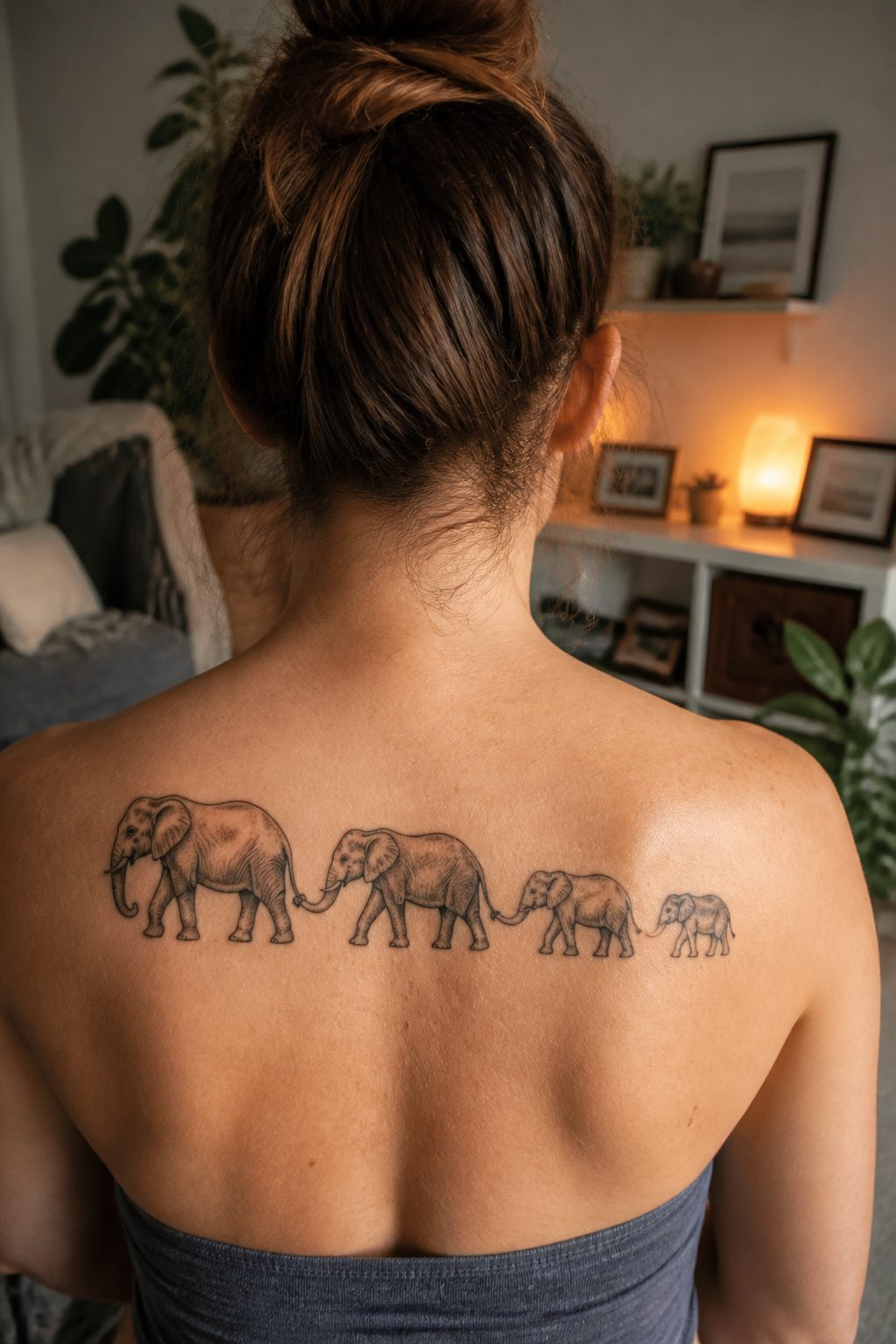
A family of four elephant tattoo has become a recognizable way to represent love for your immediate family. The four figures typically move in the same direction, trunks or tails linked, suggesting the group is traveling together rather than posed.
Some designs keep all four the same size to signal equality; others scale the elephants to reflect ages or roles.
Placement tends to follow the head count. Four elephants need more horizontal room than a single figure, so the ribs, outer forearm, or across the upper back work better than a wrist or ankle.
A smaller family grouping can fit behind the ear or along a collarbone, but the detail that makes the tattoo readable, the ear shape and trunk curve, gets lost if you compress it too far.
3. Bold and Impressive Elephant Tattoos
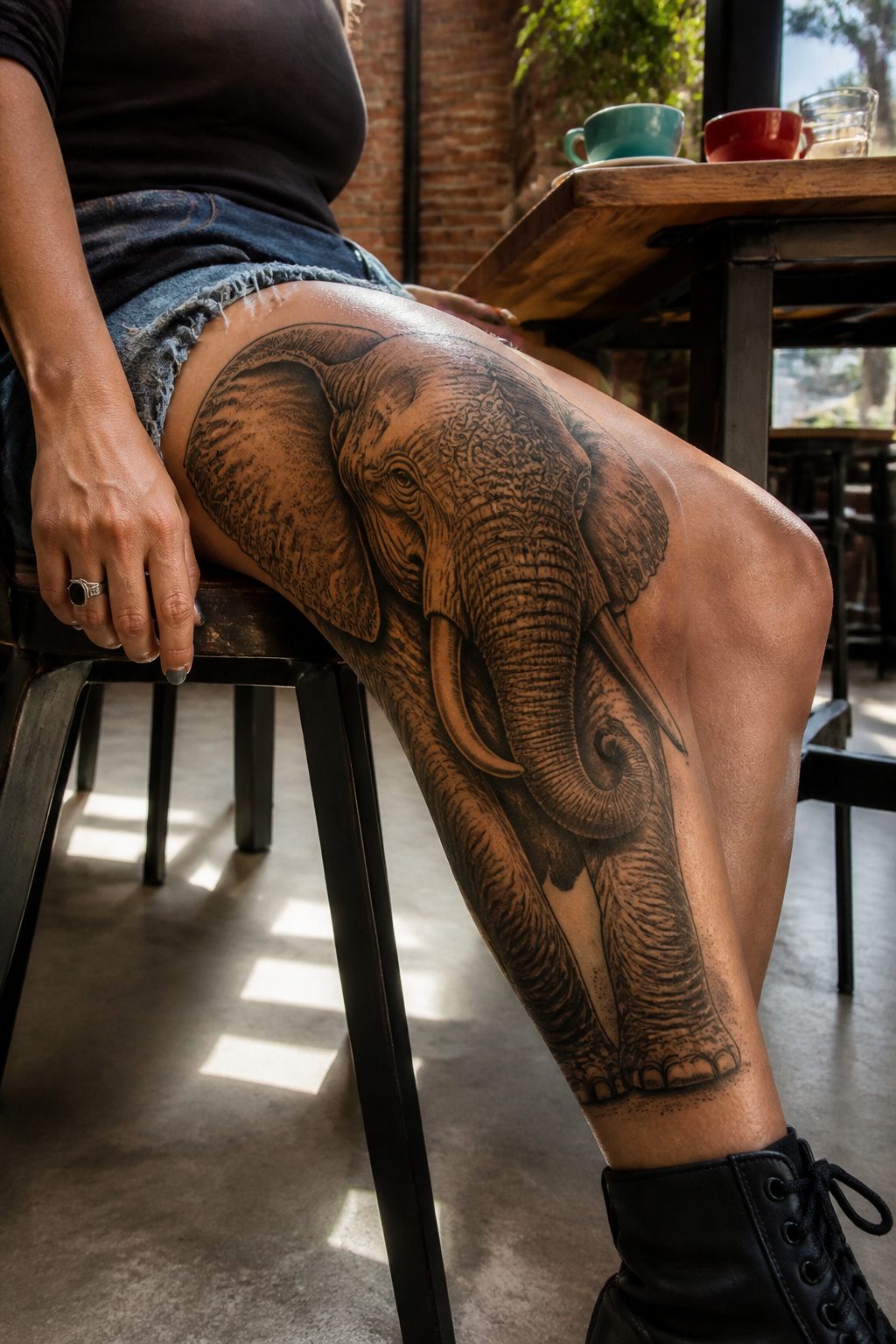
A thigh gives an elephant room to breathe. The muscle’s flat plane and width let an artist build in the wrinkles around the eye, the frayed edge of an ear, the weight of a trunk curling back toward the body.
That scale matters for this subject more than most.
An elephant’s presence comes from mass, and a small design flattens that into something generic. At six inches or more, the skin texture alone becomes readable, and the animal starts to look like it could step off the limb.
The back carries the same logic across a larger field. A full back piece can set the elephant in grass, add calves at heel, work the sky behind the ears.
What reads as clutter on a forearm opens up there. The trade is commitment: a thigh hides under work clothes, but a back piece shapes what you wear for years.
Sleeves split the difference.
The arm’s length lets the trunk travel, coil around the wrist, or reach toward the shoulder. Detail stays sharp because each section sits on a smaller canvas than a back piece, though the overall image still commands space.
The forearm’s visibility means the choice is public in a way a thigh is not, which suits some people and unnerves others.
4. Cute Baby Elephant Tattoos
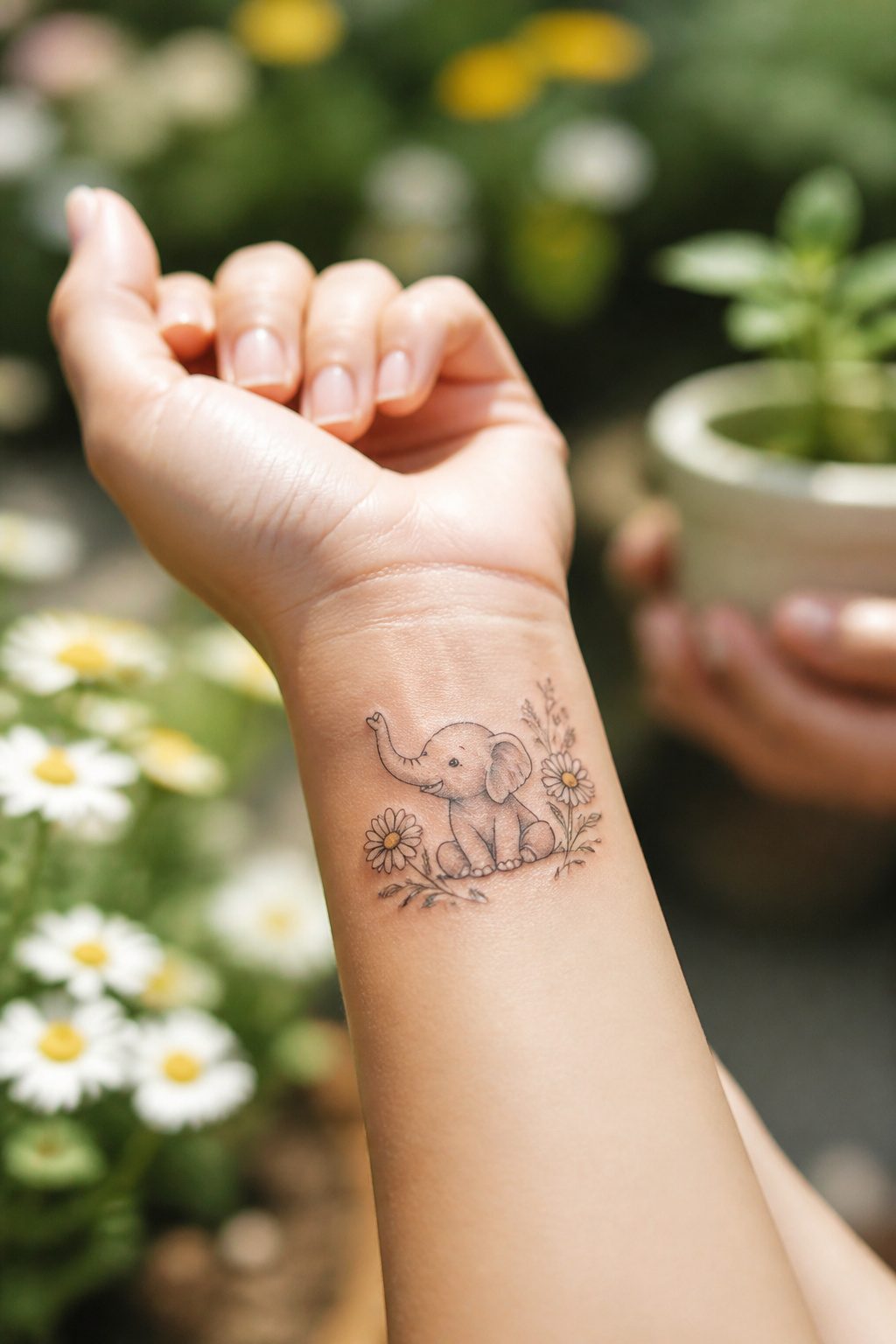
Baby elephants carry a different weight than their full-grown counterparts. Where adult elephants read as power and endurance, the small ones land on purity and innocence, a meaning that shifts the whole mood of the piece.
That softness makes them a natural fit for smaller placements where the scale itself becomes part of the statement.
The wrist works especially well.
A baby elephant there stays delicate without fighting the space, and pairing it with daisies sharpens the message: the flowers mark youth and a pure soul, so the combination becomes a quiet nod to the wearer’s own inner child.
The ankle follows the same logic, a spot that keeps the design intimate and lets the rounded lines of a young elephant sit comfortably.
Design choices matter more at this size. Simpler linework preserves the innocence; too much detail and the piece loses the gentleness that drew you to a baby elephant in the first place.
5. Unique and Creative Elephant Tattoos
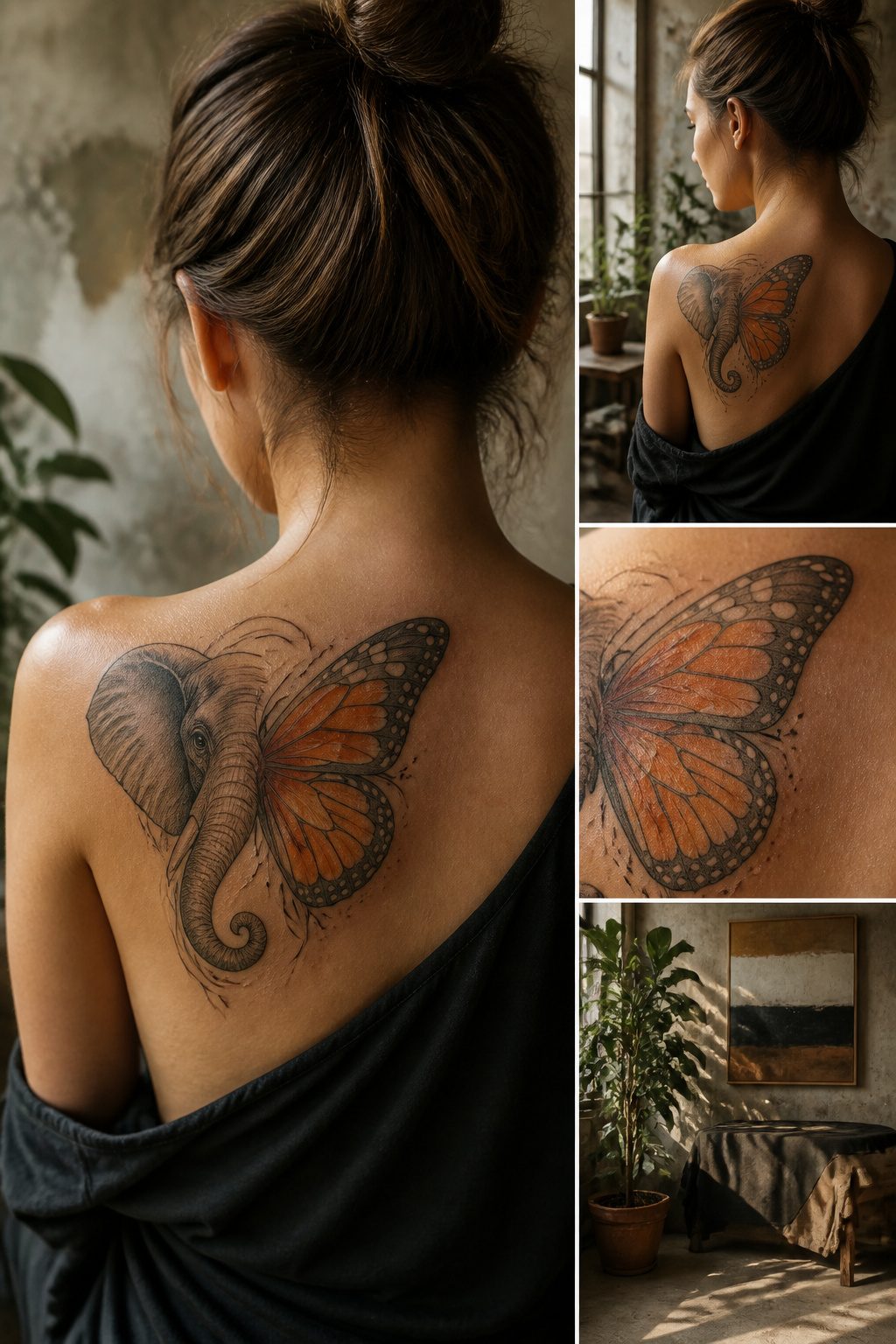
Some of the most striking elephant-and-butterfly hybrids take the animal’s familiar silhouette and give it wings, trading the trunk’s curve for antennae or letting the ears flare into patterned wings.
The result reads as playful without tipping into cartoon territory, especially when the linework stays fine and the shading stays restrained.
Merged imagery works best when the two forms share a visual logic. An elephant’s already fan-shaped ears lend themselves to becoming petals, leaves, or even a moth’s wings.
The tattooist I kept returning to in my search paired a profile head with a monarch’s wing pattern, the orange bleeding into gray wash so gradually you notice the species shift only after you’ve been looking awhile.
Unexpected placement pushes these designs further.
A butterfly-elephant hybrid lands naturally on a shoulder blade, the wing span following the bone’s angle. Smaller versions tuck behind an ear or along a collarbone, where the hybrid form catches someone mid-glance and holds it.
The risk with any merged style is overloading the image. Two recognizable animals compete for attention unless one element dominates.
The butterfly-elephant pieces that held up in my scrolling kept the elephant’s head and trunk intact, letting the wings replace only the ears. That restraint leaves the symbol readable from across a room while rewarding closer inspection.
What Elephants Symbolize in Ink
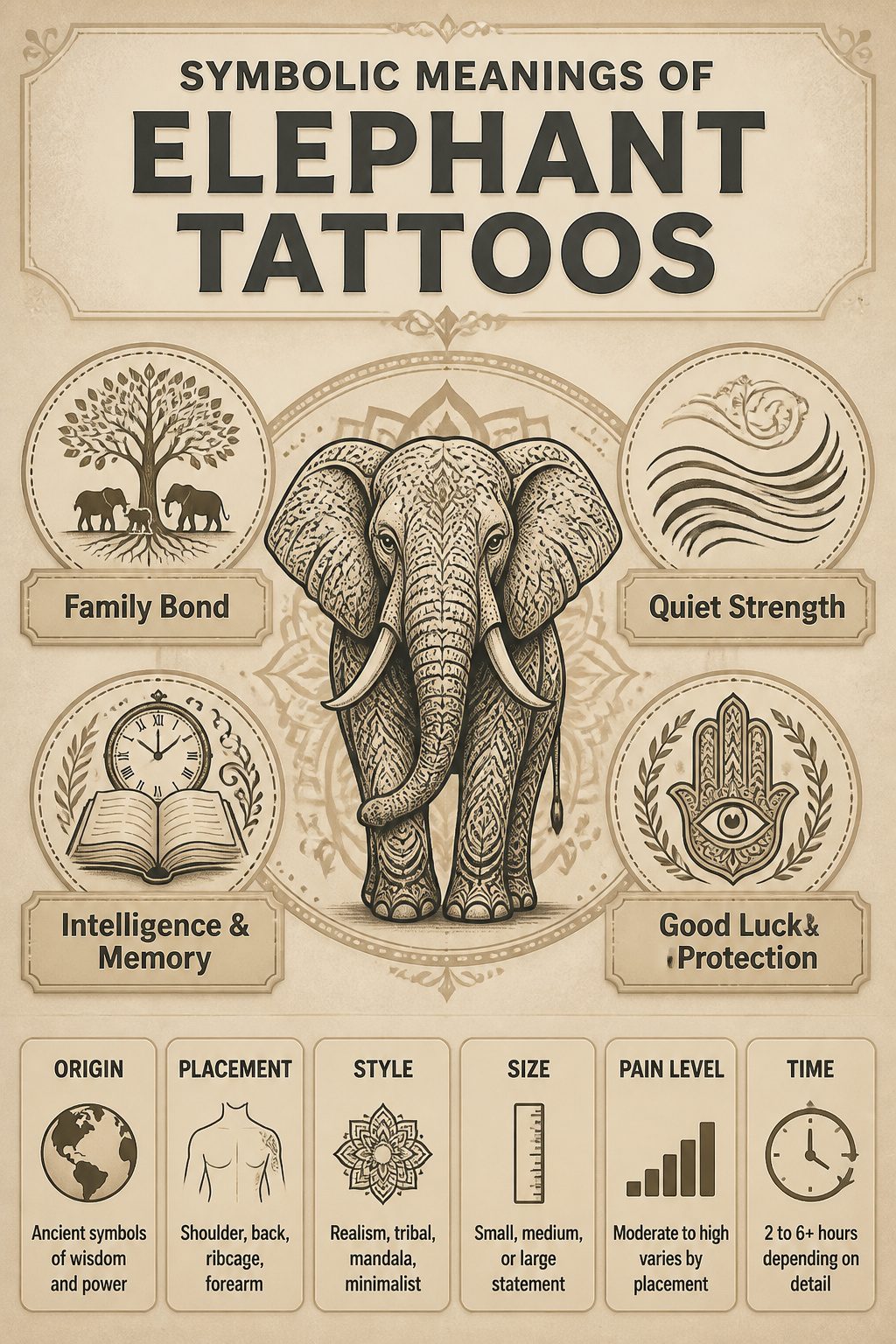
Elephants carry weight in ink because the traits people want on their skin are the ones the animal actually lives.
Family runs first: matriarchs lead herds across decades, and calves stay close for years, so the design lands hard with parents or anyone marking a bond they do not want to fade.
Strength follows, but it is the quiet kind, the sort that moves obstacles without posturing, which is why the image works on a shoulder or a ribcage without reading as aggression.
Intelligence matters too, memory being the elephant’s famous gift, and that draws people who have survived something worth remembering.
Good luck and protection round out the set, old beliefs from trunk-up statues and doorway guardians that still feel true enough to commit to.
The meanings layer together, so a single tattoo can stand for several at once, family plus resilience, or memory plus blessing, depending on what the wearer needs the image to hold.
Where to Place an Elephant Tattoo
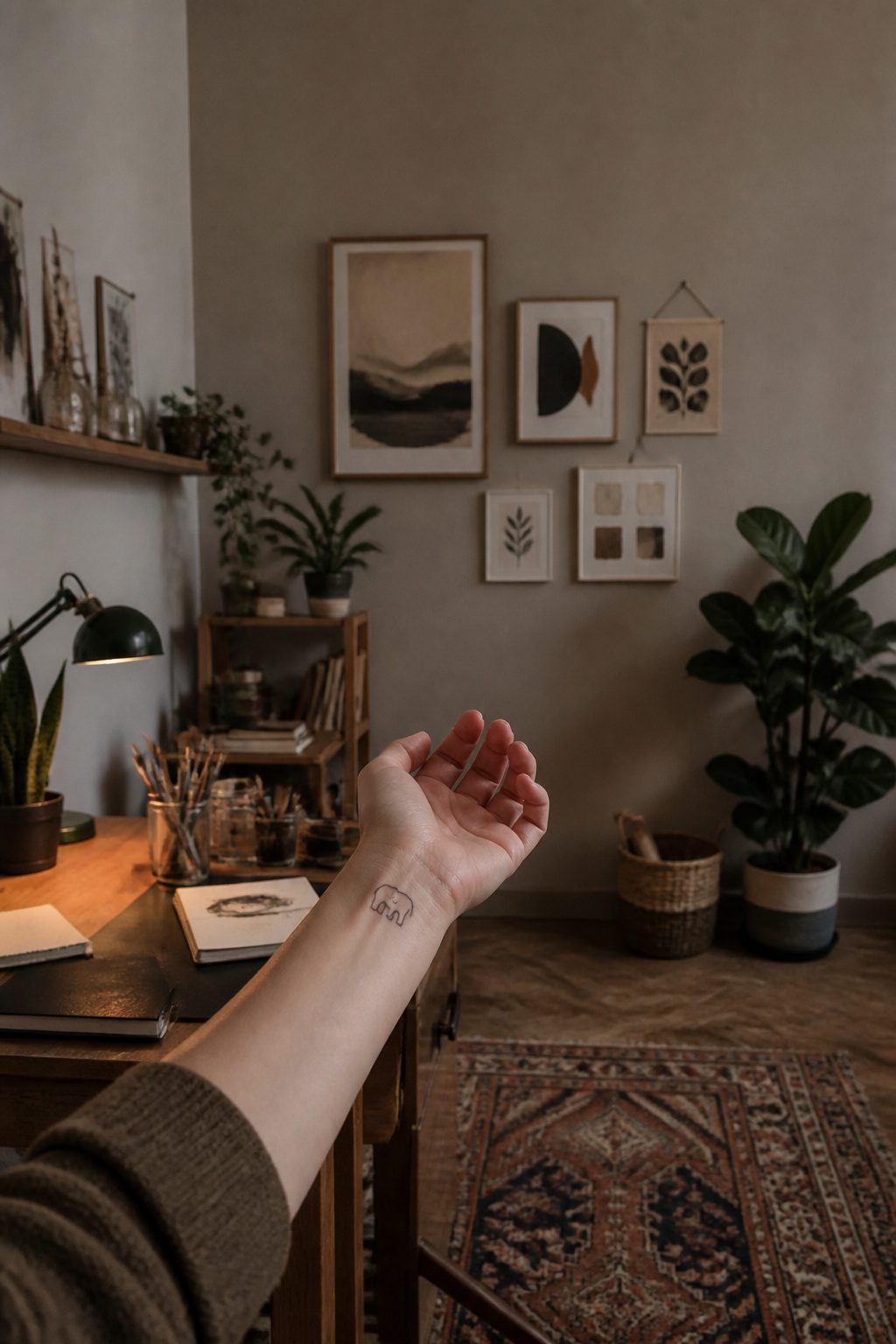
Wrist placement keeps an elephant tattoo visible without dominating a room. The compact space suits a simplified outline or a small herd in profile, and the flat plane lets the artist keep lines crisp.
A wrist design still reads as personal art when it stands alone, which matters if you are matching with a partner or a friend; the source idea holds that each piece should carry meaning even without its pair beside it.
Thigh skin offers more canvas, so the trunk can curve, the ears can fan, and the artist can build in texture. The area hides easily under work clothes and shows when you choose, a flexibility the ribcage does not give.
Rib placement demands a different discipline. The body moves with every breath, so fine detail shifts and settles; bolder shapes hold up better here.
The pain runs sharper along bone, and the healing means sleeping carefully for days. What you gain is intimacy: this tattoo is yours first, and anyone else sees it only when you decide.
Styles That Change the Look
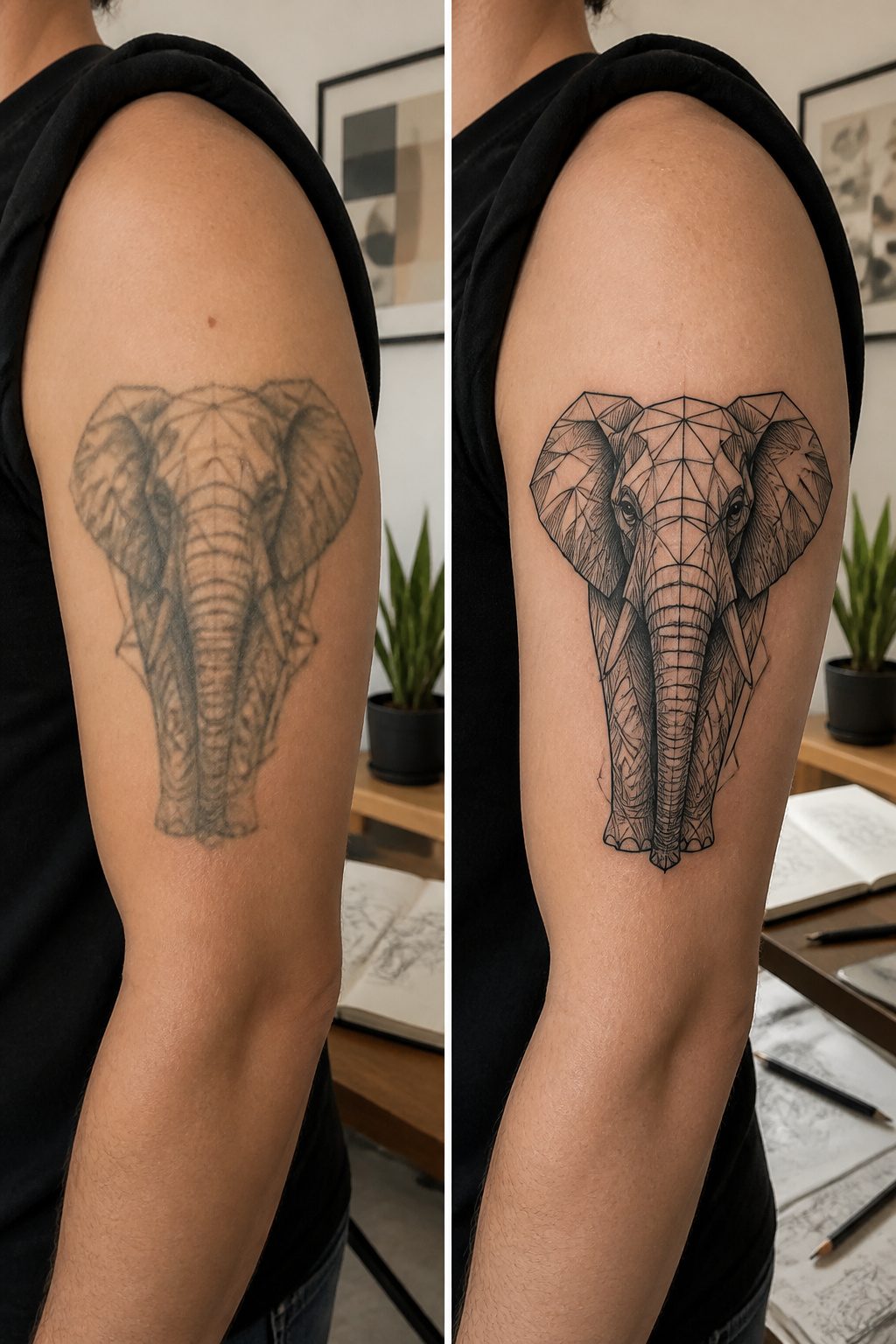
Geometric elephant tattoos build the animal from lines and simple shapes that keep the form readable while stripping away everything else.
That precision reads as abstract up close and resolves into an elephant at distance, which is why the style stays current year after year.
Watercolor work does the opposite, letting color bleed past the outline so the elephant seems to emerge from a wash rather than sit inside a border.
The softness can undercut the animal’s weight unless the silhouette is strong enough to anchor it.
Realism demands the most skin commitment, working in grayscale to catch the hide’s texture and the fold at the knee.
Traditional American style, with its bold black outlines and limited palette, simplifies the form to something readable even at fist size or smaller.
Each choice rewrites what the elephant means on the body: geometry signals intellect and order, watercolor leans emotional, realism insists on presence, traditional reads as heritage.
Matching Tattoos for Two
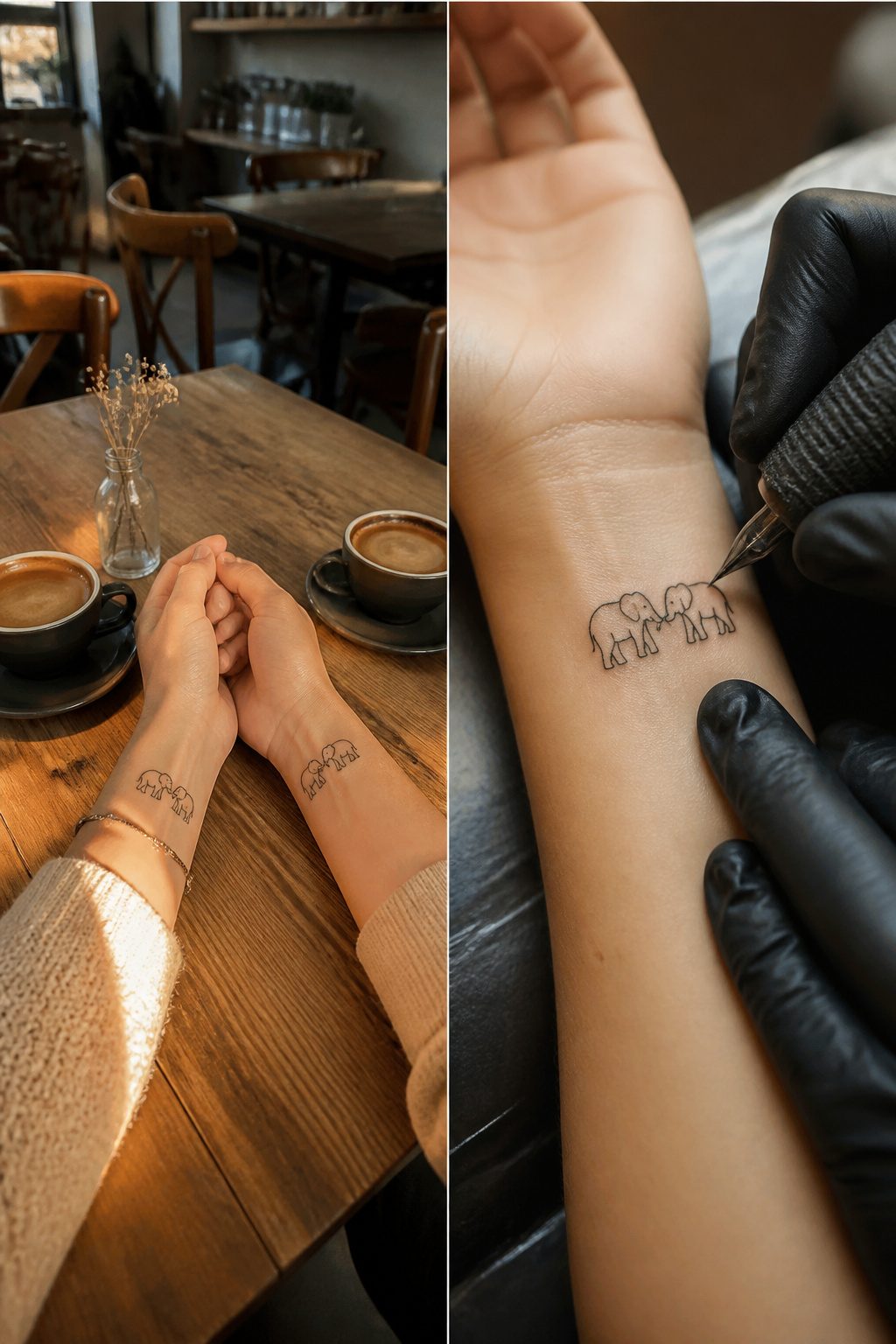
Matching elephant tattoos work best when each piece holds its own meaning even apart.
Two friends might each carry a small elephant on the inner wrist, simple linework in black, so the design reads as personal ink first and a pair second.
The wrist placement keeps it visible for the bond it marks, yet easy to cover when work or circumstance asks.
The elephant itself carries the weight of loyalty and memory, which makes the match feel earned rather than decorative.
Some pairs choose baby elephants on the shoulder, a placement that frames the curve of muscle and lets the two designs mirror across a distance.
The image translates a promise that geography does not undo connection. Whether wrist or shoulder, the restraint matters more than the size.
One detailed elephant and one vague copy cheapens the gesture. Matching means equal care in the line weight, the angle of trunk, the decision of whether the eye stays open or closes.
Abstract and Mixed Designs
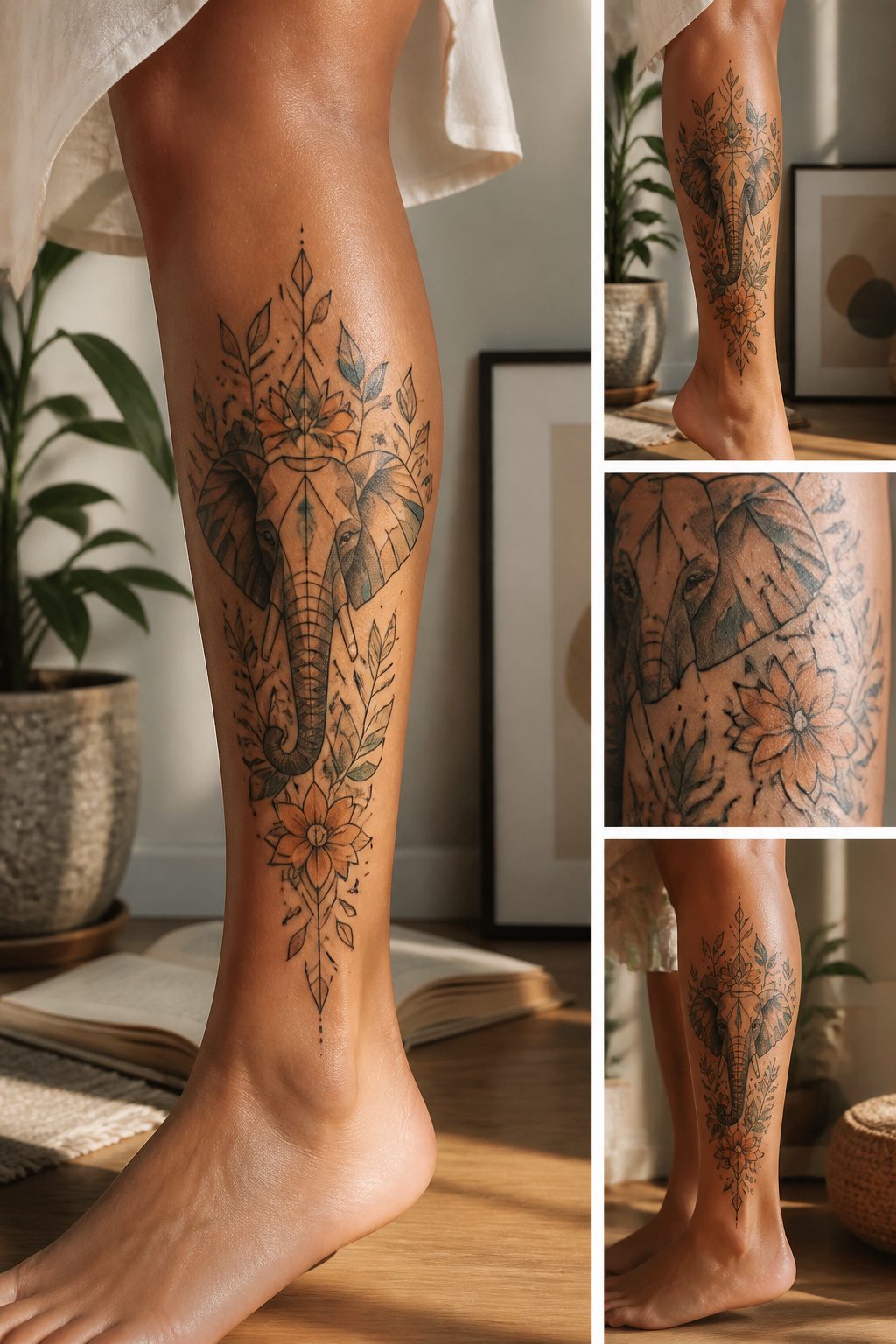
Abstract elephant tattoos let the artist break the silhouette apart and rebuild it.
Geometric lines can form the trunk and legs while negative space carries the ear or the curve of the back. The result reads as elephant to anyone who knows the shape, but it stays interesting to someone who does not.
Flowers threaded through the design soften the weight without losing it.
Lotus petals rising from the forehead or along the spine carry a different meaning than roses wrapped around the tusks, and the choice between them changes what the tattoo says about memory or resilience.
Placement on the outer arm or calf gives the geometry room to breathe; too small and the lines collapse into noise.
Mixed media approaches, watercolor splashes behind a linework elephant or dotwork shading inside a bold outline, need a steady hand and a portfolio that proves it. The watercolor especially: done well, it looks like pigment settling into skin.
Done poorly, it heals into a bruise-colored blur with no elephant left in it. Ask to see healed photos, not just fresh work, before committing to that combination.
Frequently Asked Questions
What do elephant tattoos symbolize?
Elephant tattoos carry family, quiet strength, intelligence, memory, good luck, and protection.
The meanings layer together, so one design can hold several at once, like family plus resilience or memory plus blessing, depending on what you need the image to carry.
What are some unique elephant tattoo ideas?
Striking options include elephant-and-butterfly hybrids where ears flare into patterned wings, or geometric builds that read as abstract up close and resolve into an elephant at a distance.
Flowers threaded through the design, like lotus petals rising from the forehead, soften the weight without losing it.
What styles can elephant tattoos be done in?
Geometric styles build the animal from lines and simple shapes, watercolor lets color bleed past the outline, realism works in grayscale to catch hide texture, and traditional American uses bold black outlines with a limited palette.
Each choice rewrites what the elephant means on the body: geometry signals intellect, watercolor leans emotional, realism insists on presence, traditional reads as heritage.