A cherry blossom tattoo can run from a single pink petal behind the ear to a dragon coiled through a full sleeve, and the deciding factor is how much skin you are willing to commit, not how feminine or delicate you want the result to read.
The tebori hand-poke method still exists for traditional Japanese work, though finding an artist who practices it takes longer and costs more than machine work.
1. Small Cherry Blossom Tattoo
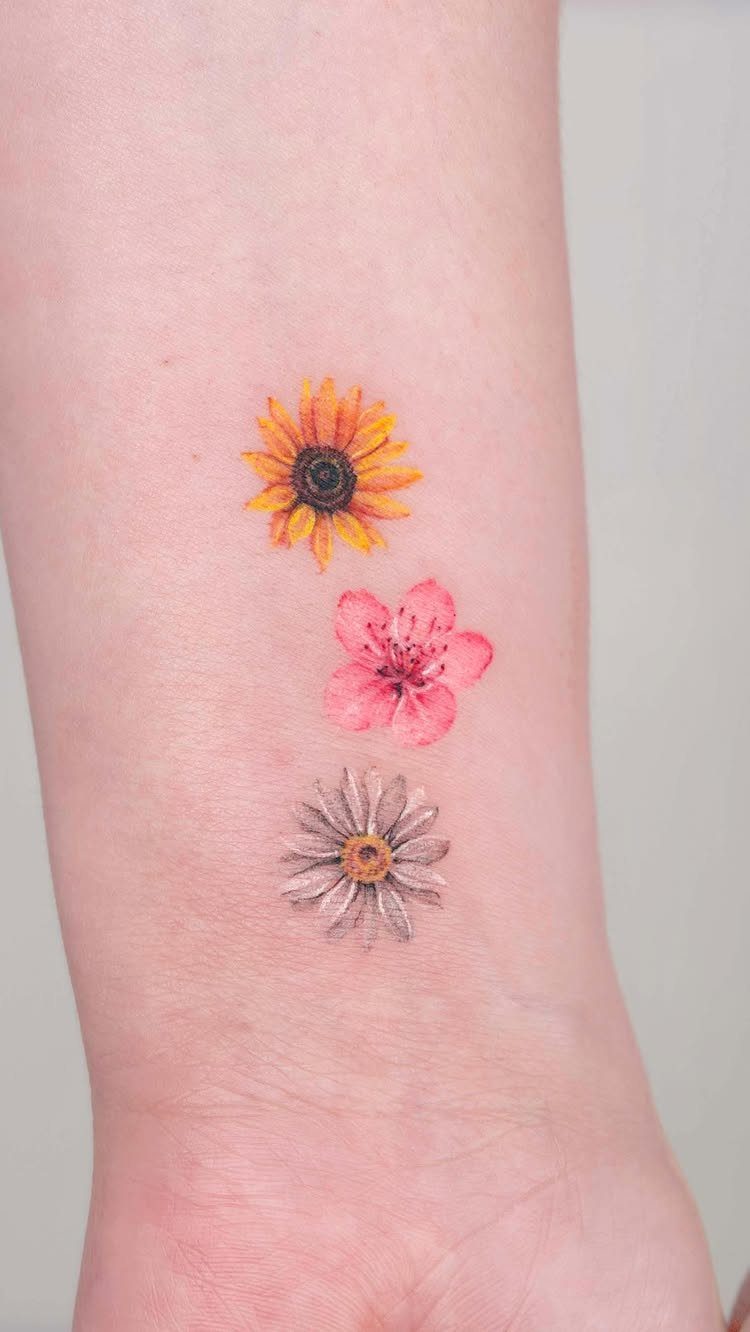
A single cherry blossom tucked behind the ear or along the collarbone reads as jewelry rather than ink, which is exactly the point for anyone whose workplace still glances twice at tattoos.
The wrist and ankle work too, though both spots take more fading from sun and socks than most people expect; lotion with SPF buys you a few extra years of crisp petals.
Three flowers in a line borrows from Victorian floriography: each bloom carried a message, and cherry blossoms in that language spoke of the beauty in a short life.
Pair yours with a daisy for innocence or a sunflower for adoration if you want the full sentence.
I’d put this on the inner wrist facing you, not the world. You see it when you need the reminder; everyone else just catches pink at the edge of their vision.
2. Traditional Japanese Cherry Blossom Tattoo
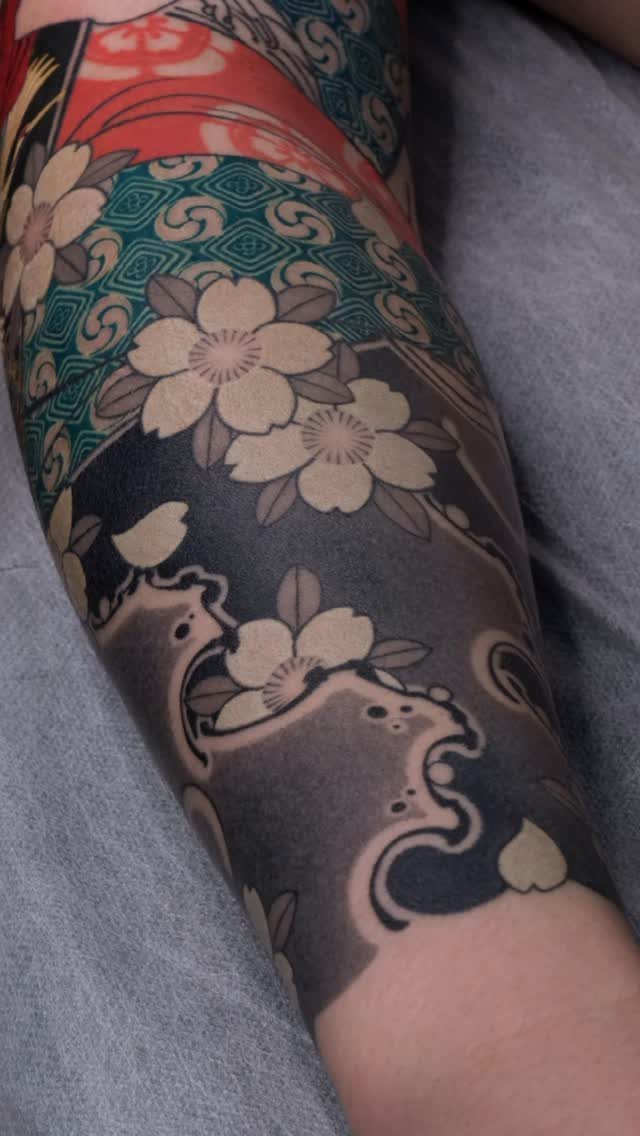
Japanese tattooing built its reputation on exactly this kind of saturation: dark waves, wind bars, and blossoms locked together by geometry that holds the whole limb.
The cherry blossom here is not the gentle thing Americans made of it; it is one element in a larger story about impermanence, drawn from the concept of mono no aware, the sadness of things passing.
The outlines carry the weight. Where watercolor styles let color bleed, this work depends on black lines thick enough to last decades without blurring into soup.
That density limits placement to back, chest, or full limbs; a shoulder cap alone looks like a fragment torn from a larger piece.
Men still commission this most often, though the divide matters less than the commitment. A half-leg panel takes serious time, and the tebori hand-poke method, if you can find an artist who still practices it, takes even longer.
Budget accordingly, or scale down to a single branch in the same palette and let the outline do the traditional work.
3. Cherry Blossom Sleeve Tattoo
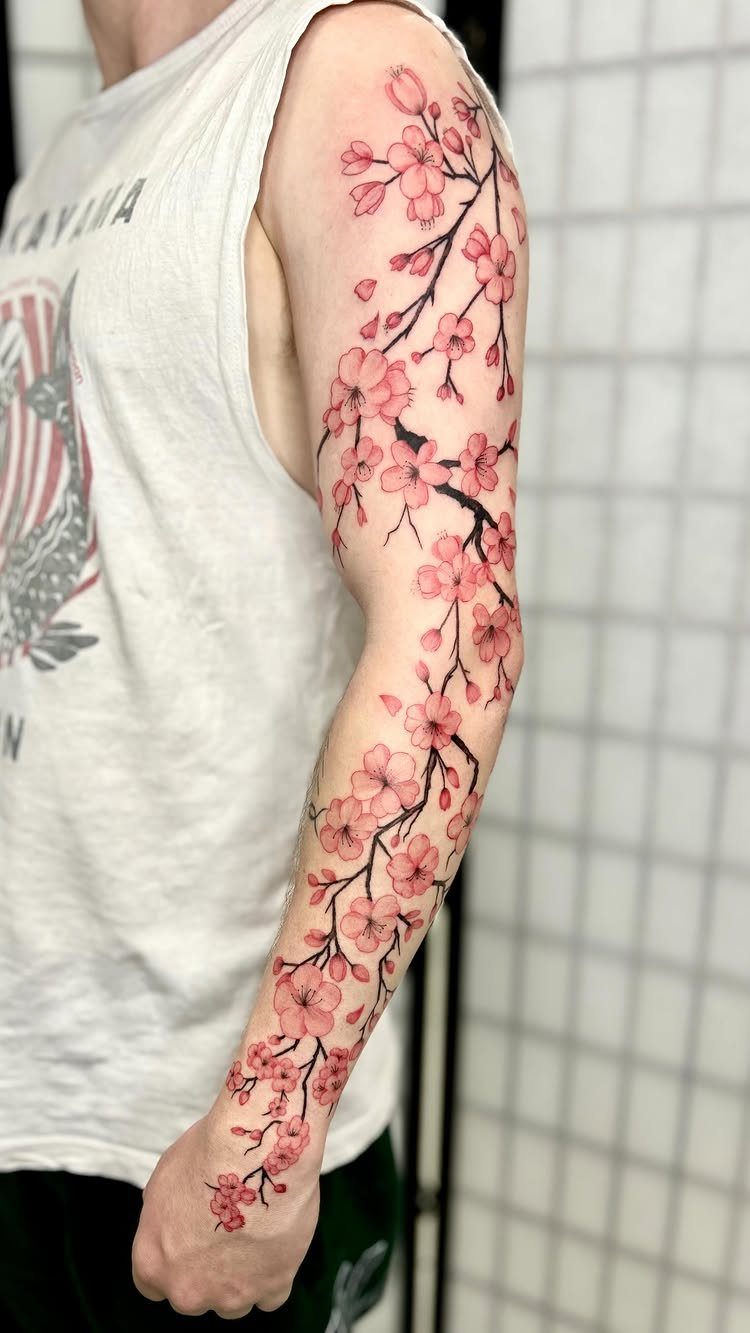
Sleeves solve the problem of cherry blossoms looking too pretty by simply refusing to stop.
From shoulder to wrist, the eye reads scale and commitment before it registers flower type, and that reframe matters for anyone who flinches at the word "delicate."
The branch structure lets you build in stages. Start at the forearm with blossoms against skin, add waves or wind bars at the elbow in a second session, close the shoulder gap last.
Each phase stands alone until the next arrives, which spreads cost across years if needed.
Women and men both wear this well now; the old gender split on floral work has thinned considerably. What still divides is the density of background ink.
Near-solid black between branches gives weight; a lighter approach leaves more skin visible and reads softer. Choose based on what your other tattoos, if you have them, already established.
4. Cherry Blossom Branch Tattoo
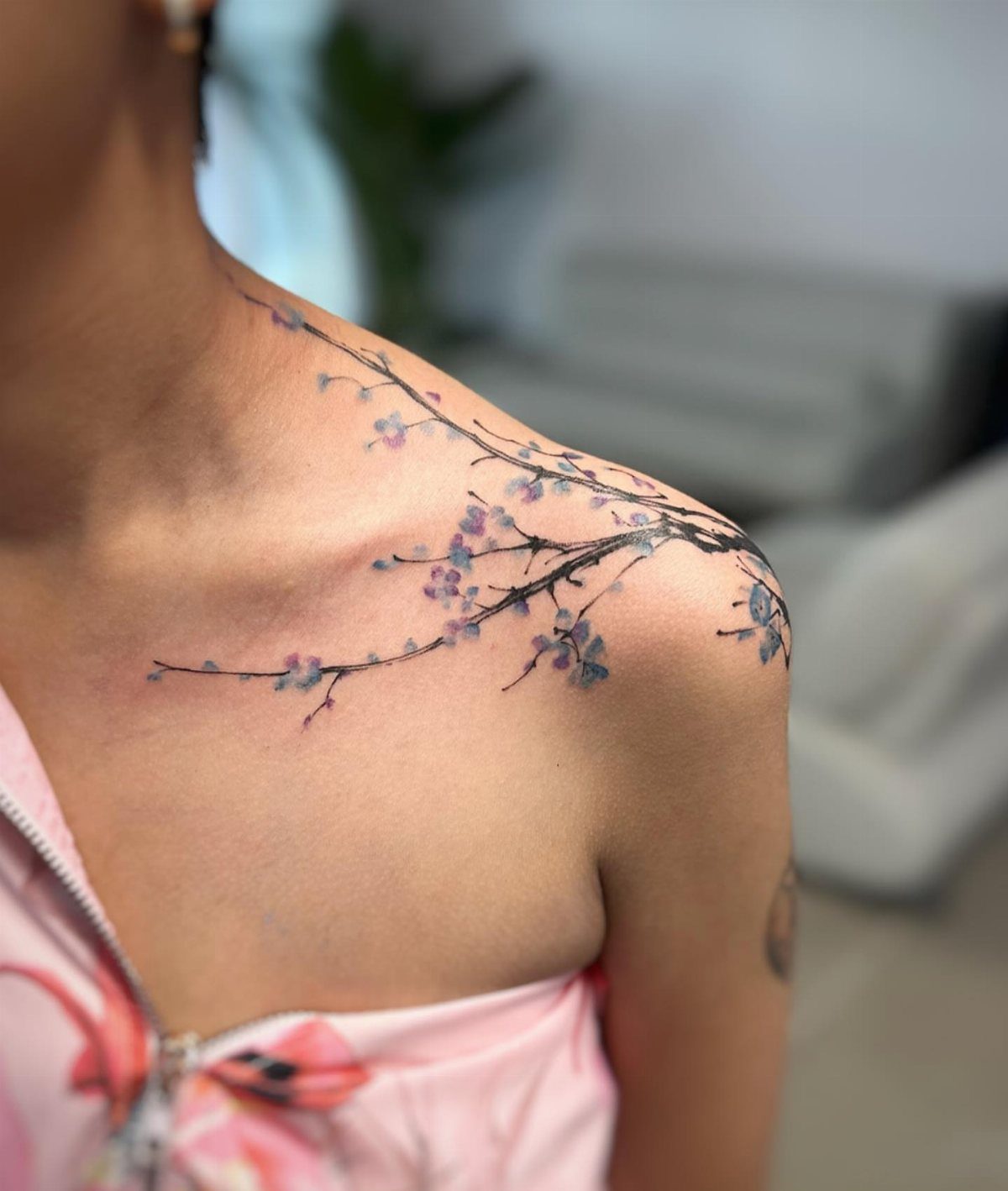
The branch outlasts the blossom, and that distinction makes this design land differently than a scattered handful of flowers.
A collarbone piece follows the bone’s natural line; the tattoo moves when you move, which animates the static image in a way a flat back piece cannot.
Arms and legs work too, though the curvature changes the drawing. A branch wrapping a bicef needs foreshortening that a straight collarbone branch does not, and not every artist handles that geometry with equal comfort.
Ask to see healed photos of curved branch work before you commit.
Pink and purple together steps outside strict botanical accuracy for something more like dusk light on petals.
I’d keep that mood rather than fighting back toward literal cherry color; the metaphor of return and resilience reads clearer when the palette dreams a little.
5. Faded Watercolor Cherry Blossom Tattoo
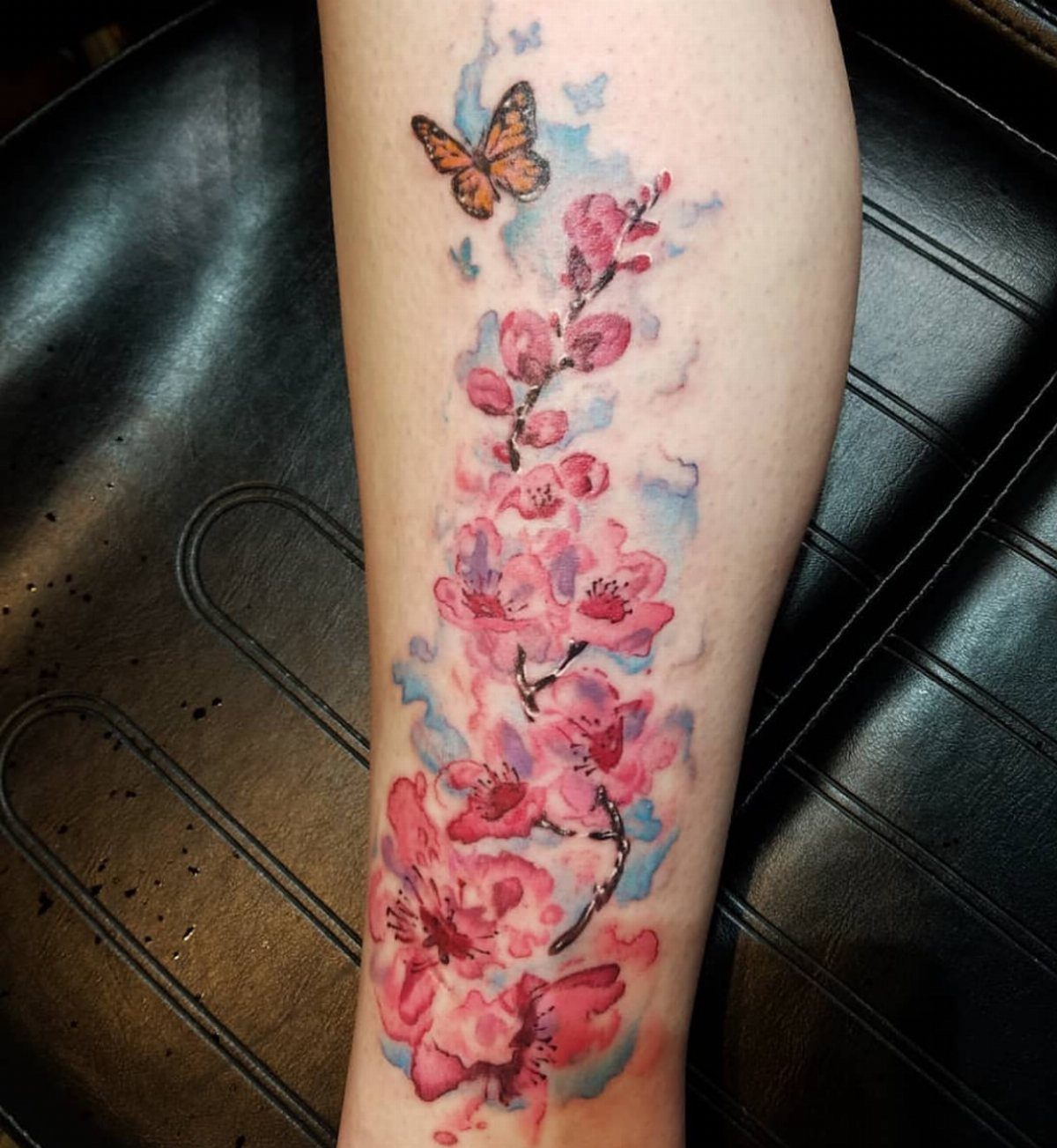
Watercolor tattooing lives or dies at the blur. Edges that dissolve into skin, like blue washes, mimic how pigment actually behaves on wet paper; the hard part is making that accidental quality look intentional once healing is done.
The technique suits cherry blossoms particularly because the flower’s whole cultural weight is impermanence. A sharp line claims permanence; a bleeding edge admits the opposite.
The orange butterfly reinforces this: short-lived thing landing on short-lived thing, both fixed now in something that outlasts them.
Subtlety is the harder path here. Large, detailed watercolor pieces tend to age into muddy pools as the blur spreads; smaller work with negative space between elements holds longer.
I’d limit the palette to two colors plus black, as the photo does, rather than chasing the rainbow some artists push. Less color means less chance of the whole piece settling into gray-brown confusion by year five.
6. Cherry Blossom Forearm Tattoo
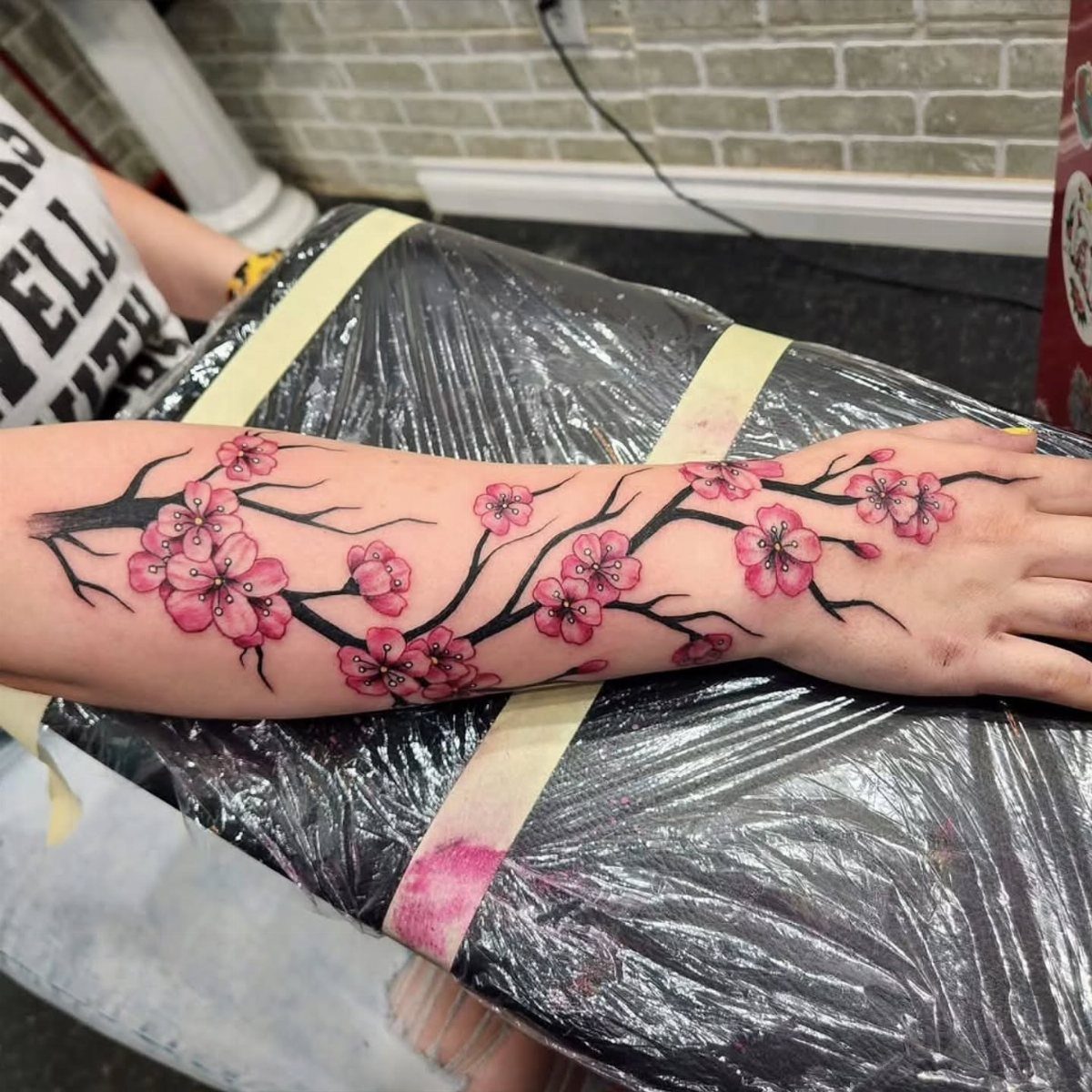
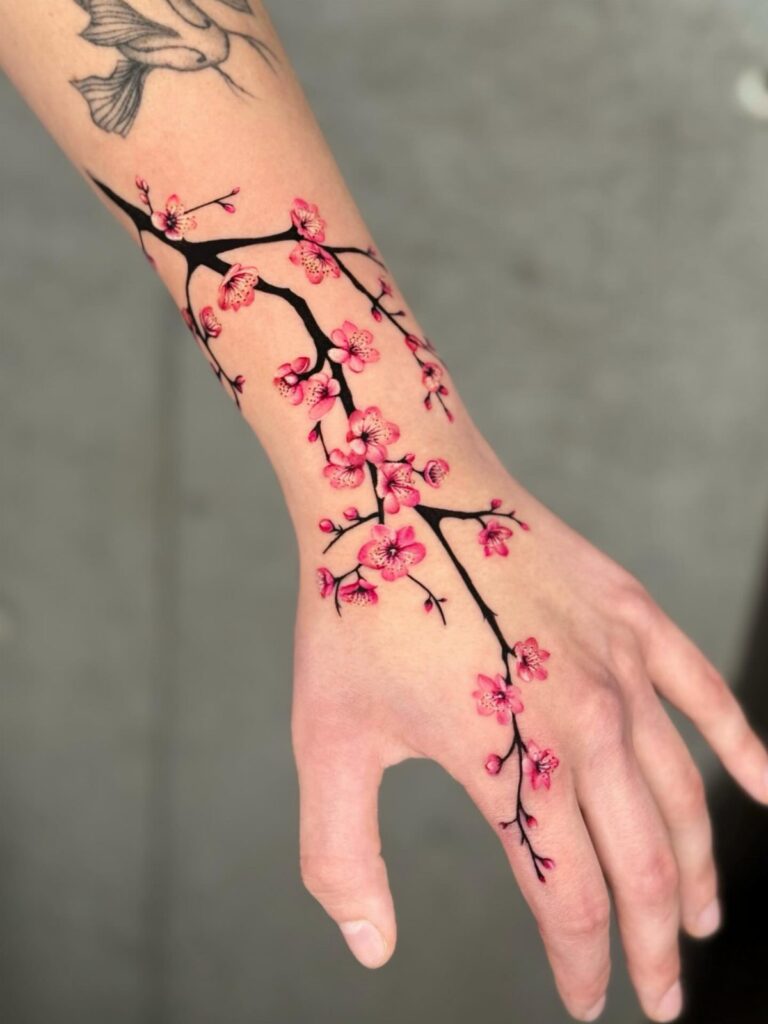
Forearm placement turns the tattoo into something you present rather than discover: reaching for a glass, typing, gesturing while talking.
A branch following the arm’s length, elbow toward wrist, uses the natural taper; small flowers scattered without that structure tend to float and look stuck on.
A hand extension works when the branch continues the line; without that logic, hand tattoos read as separate decisions made on different days.
Fresh color will settle. The pink brightens at first, then drops to something closer to actual petal tone.
Plan for that; the healed version is the real tattoo, not the Instagram photo from the chair. If the branch alone feels sparse, a few buds falling off the main line, not yet open, add narrative without crowding.
7. Cherry Blossom Belly Tattoo
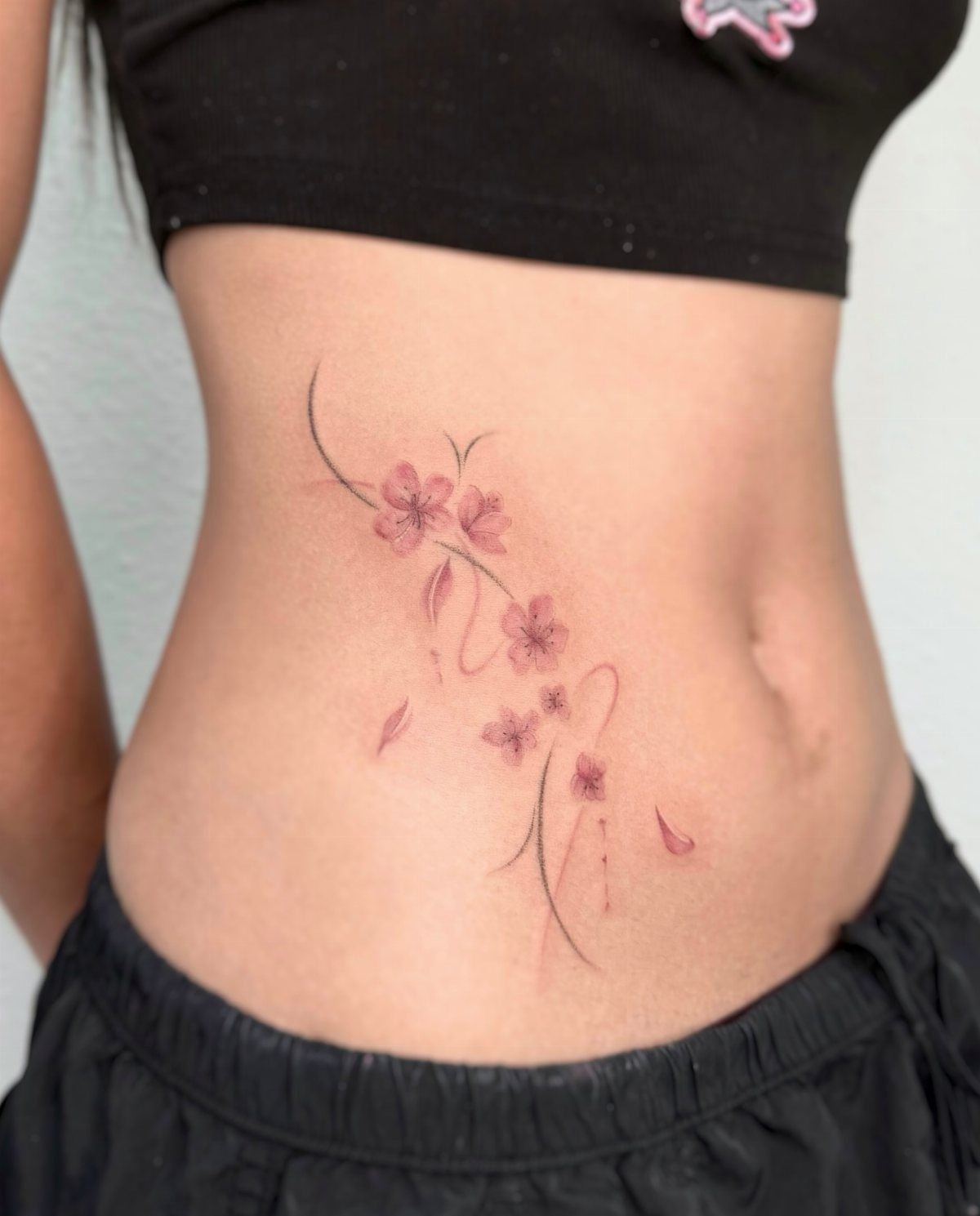
A side stomach placement turns the cherry blossom into something you choose to reveal. The branch follows the natural line of the torso, petals falling toward the hip bone.
Pain runs higher on stomach skin, especially closer to the ribs or navel. I’d suggest eating beforehand and planning for a shorter session if this is your first piece.
Crop tops and high-waisted swimsuits frame it perfectly; the rest of the time it stays yours alone.
8. Cherry Blossom Calf Tattoo
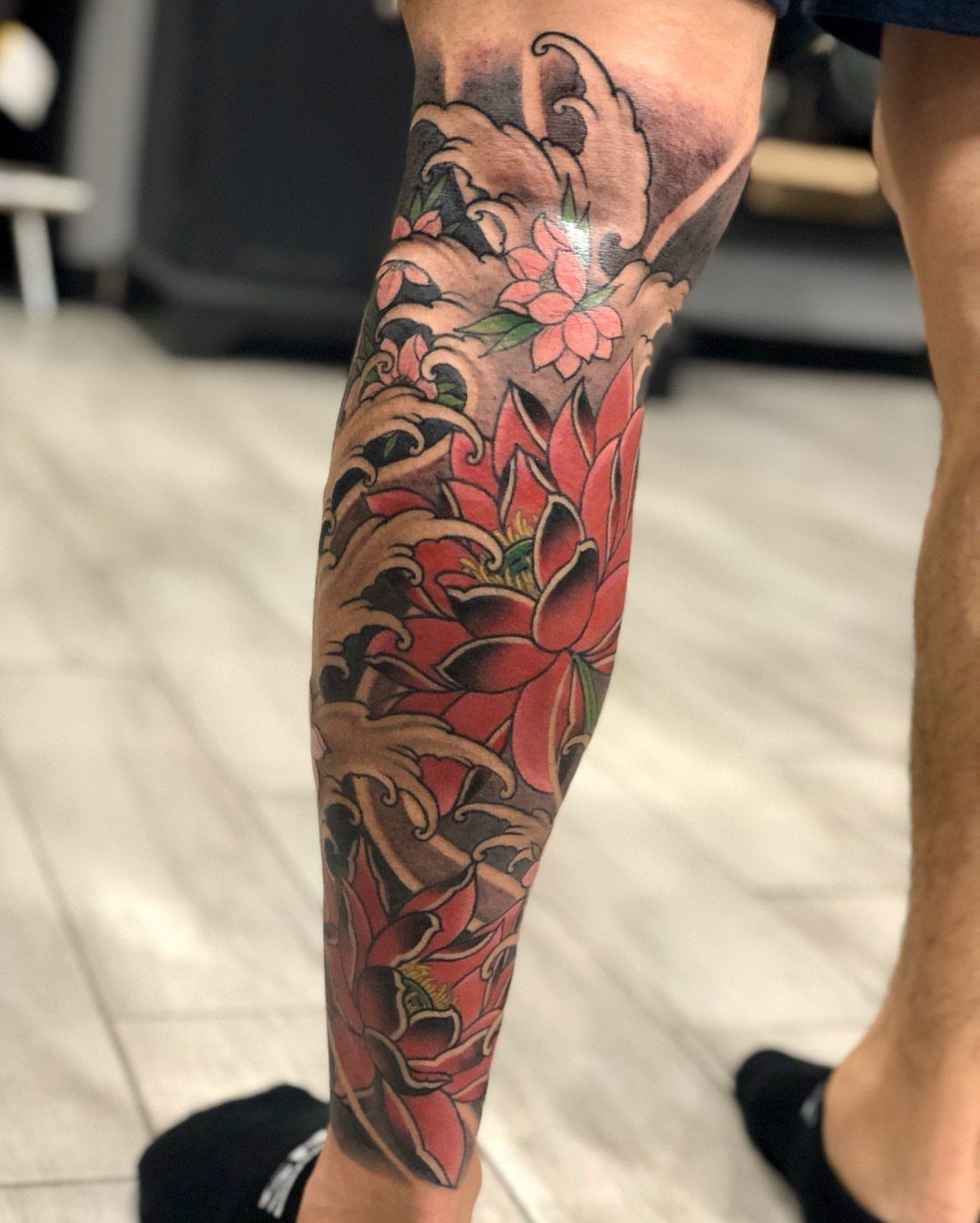
The calf carries large work without the commitment of a full sleeve. A single branch wrapping the muscle reads differently from scattered blossoms floating above the ankle bone, and the choice between them changes how the tattoo ages.
Dense color on the outer calf holds up; the inner calf blurs faster from friction and sun.
Traditional Japanese elements pair naturally here: waves, lotus, wind bars. The shape of the lower leg gives the artist a vertical canvas that flatters tall compositions.
One warning: the area over the shin bone hurts more than most expect, and swelling can last several days above the sock line.
9. Cherry Blossom Black and White Tattoo
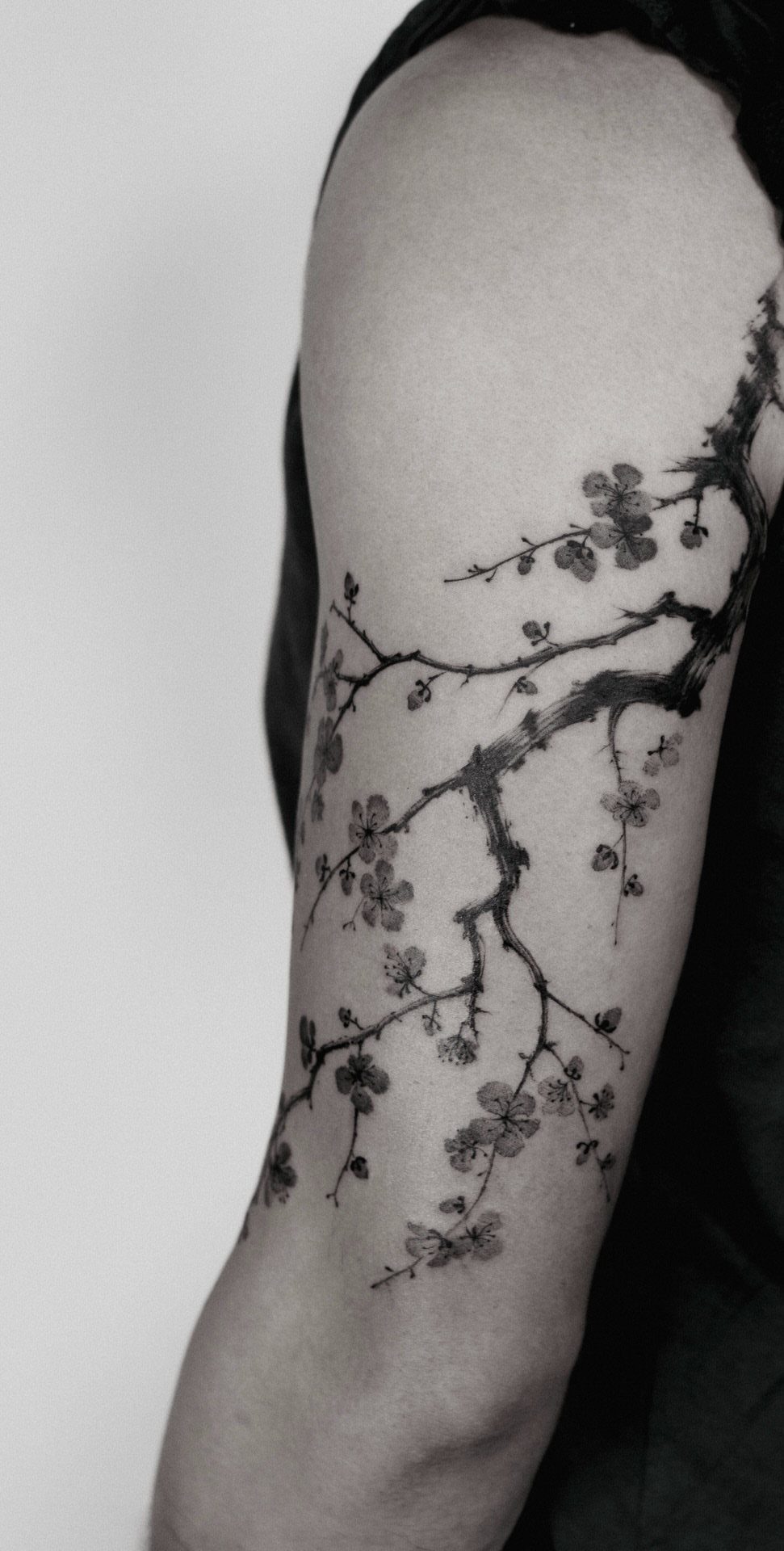
Black and grey ink washes away the sweetness that puts some people off cherry blossoms. What remains is the structure: the twist of branch, the negative space where petals fall, the weight of bloom against empty skin.
Subtle white shading lifts the edges without reading as color.
This approach suits someone who wants the symbolism, not the decoration. It also ages better on skin that tans, since pink and purple fade to muddy tones while black simply softens.
Ask specifically for an artist experienced in Japanese sumi-e technique; the brushstroke quality makes or breaks the piece.
10. Cherry Blossom with Animals Tattoo
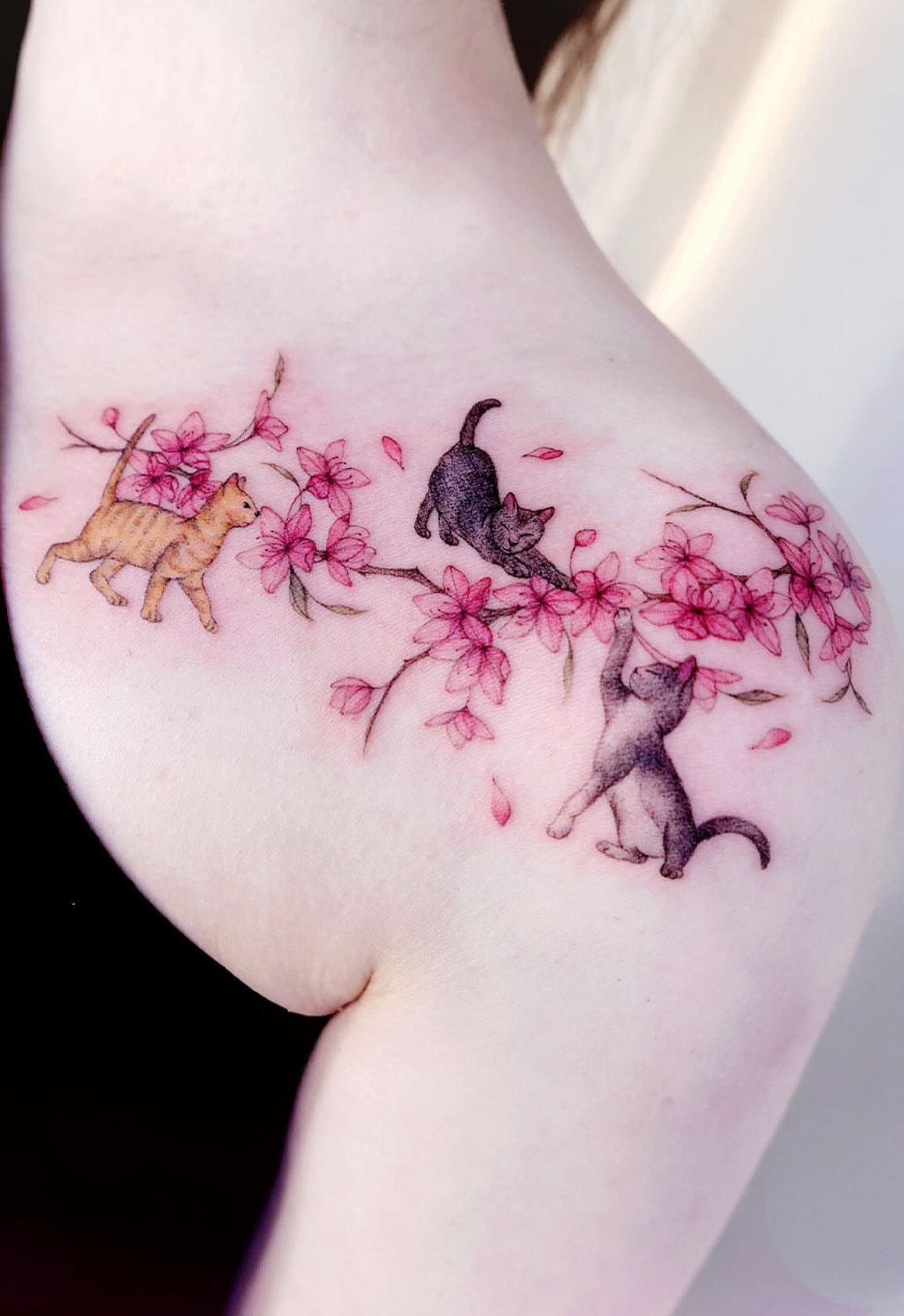
The animal changes the meaning more than the flower does. A lion paired with falling petals sets strength against impermanence, which lands differently from cats mid-play among steady branches.
The first reads as philosophy; the second, as memory.
Small animals work best when they interact with the blossoms rather than sit beside them. A panda climbing, a fox pausing under a branch, koi circling fallen petals.
The composition needs movement, or it becomes two tattoos forced together. I’d avoid anything too realistic; the style should carry across both elements.
11. Cherry Blossom with Bird Tattoo
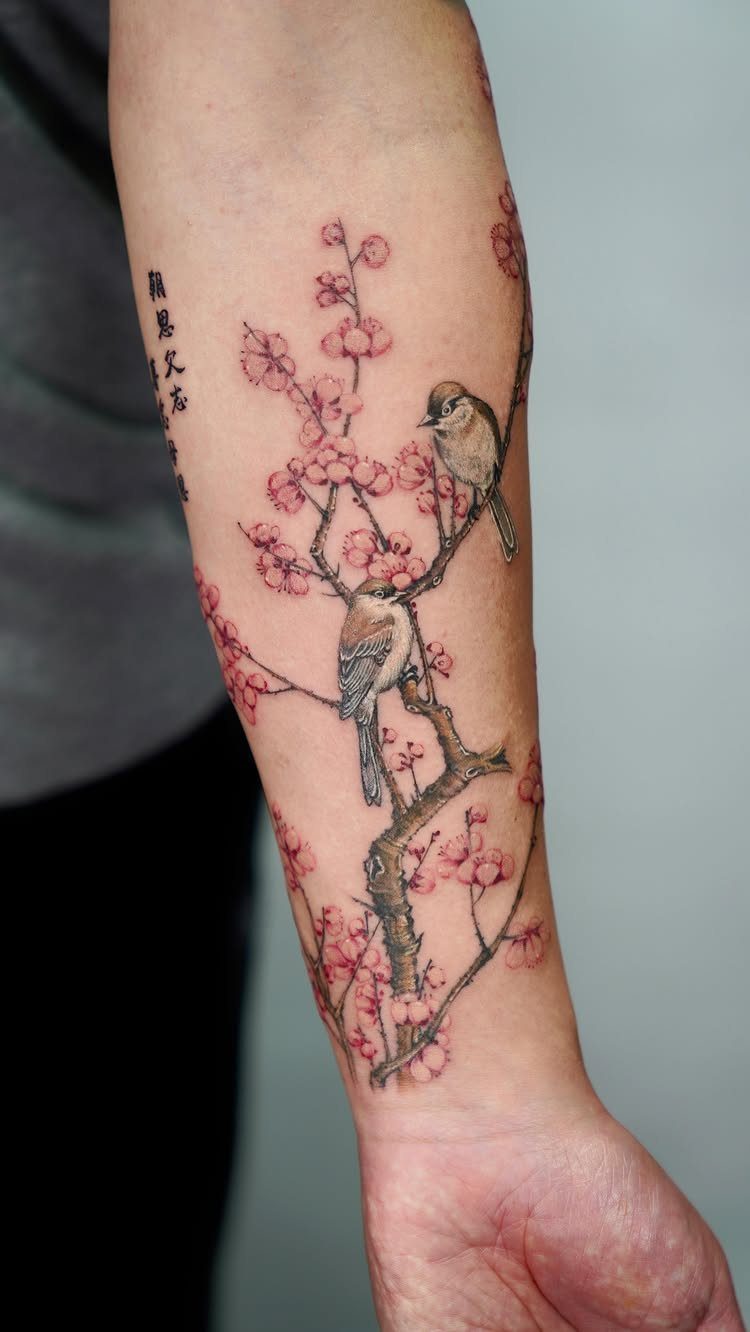
Two birds on a branch create a different rhythm than one in flight. The vertical script in the visible piece anchors the design, but English text or no text at all changes the mood entirely.
Soft color here is harder than it looks. The pink must stay muted or it overwhelms the fine linework of the birds.
Purple blossoms shift the season later, toward the deeper tones of double-flowering varieties. Either works; mixing them does not.
12. Cherry Blossom Pagoda Tattoo
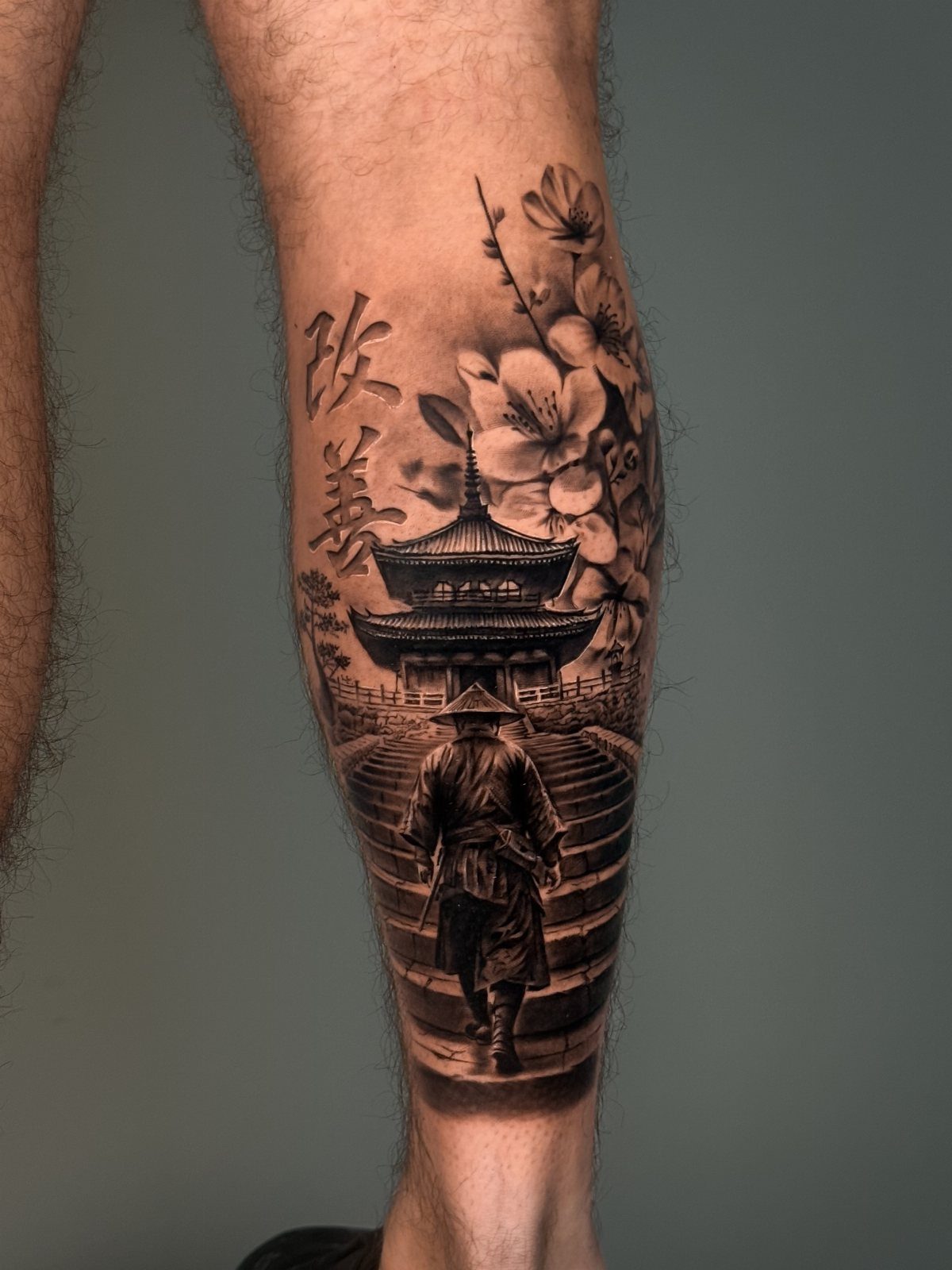
Pagoda tattoos demand space. The architecture needs height for its tiers, and the cherry blossoms must frame rather than crowd.
The lower leg works because the calf gives enough flat area for the building to read as structure, not symbol.
A figure on the stairs adds narrative scale: the temple becomes distant, the journey becomes the subject. Without the figure, the pagoda itself dominates and the blossoms read as mere ornament.
Japanese characters can name the place or carry a personal meaning, but verify the translation with a native reader, not just the artist.
13. Cherry Blossom Dragon Tattoo
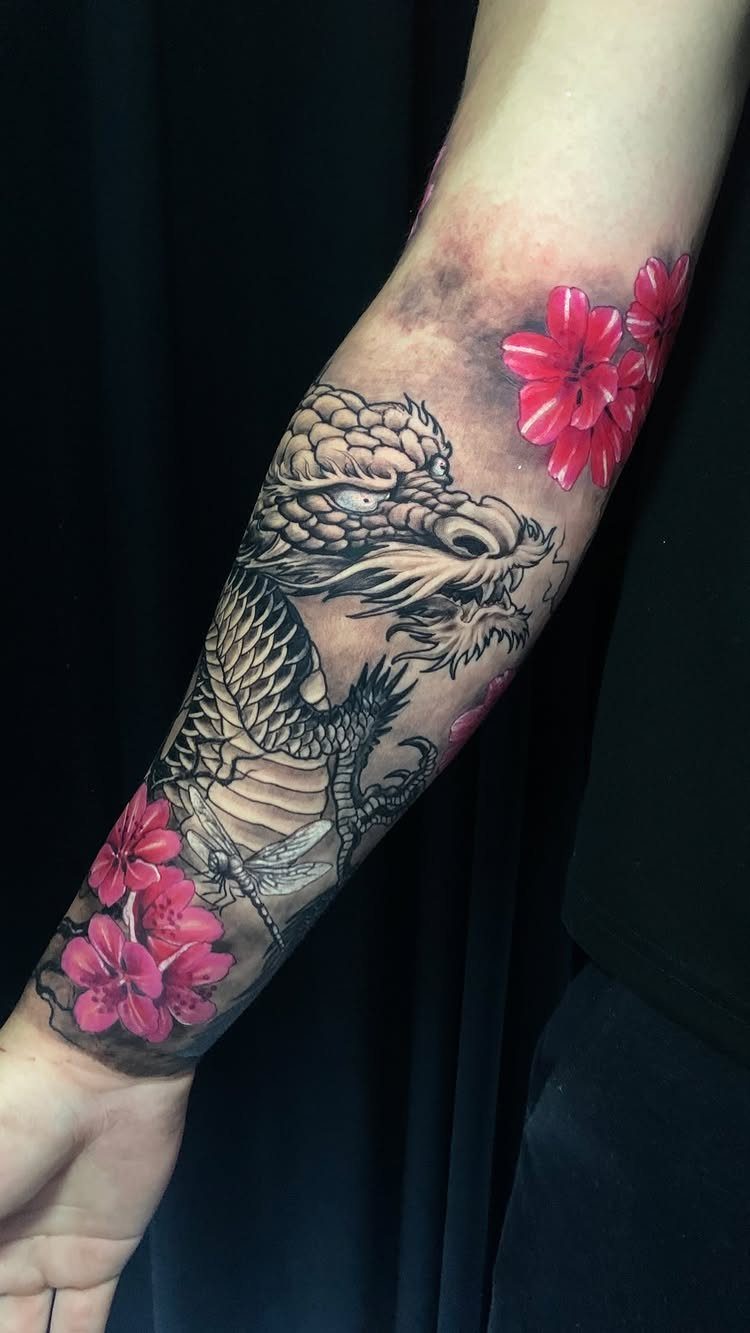
A dragon coiled through cherry blossom branches carries two stories on one arm. The pairing works because the two images share real history in Japanese tattoo art, not because a Pinterest board mashed them together.
The dragon brings scale and movement; the blossoms soften its weight and give the eye places to rest. Pink against greyscale keeps the flowers from vanishing into the background.
Full color on both elements fights for attention and usually loses.
This needs space. A forearm minimum, a half sleeve ideally, or the dragon turns into a snake and the blossoms into dots.
The background shading matters more than most clients budget for; without that depth, the dragon floats instead of circling.
I’d steer someone toward this only if they want the symbolism, not just the look. The dragon means something specific in Japanese tradition, and wearing it without that connection reads differently than a flower branch alone.
14. Cherry Blossom Upper Back Tattoo
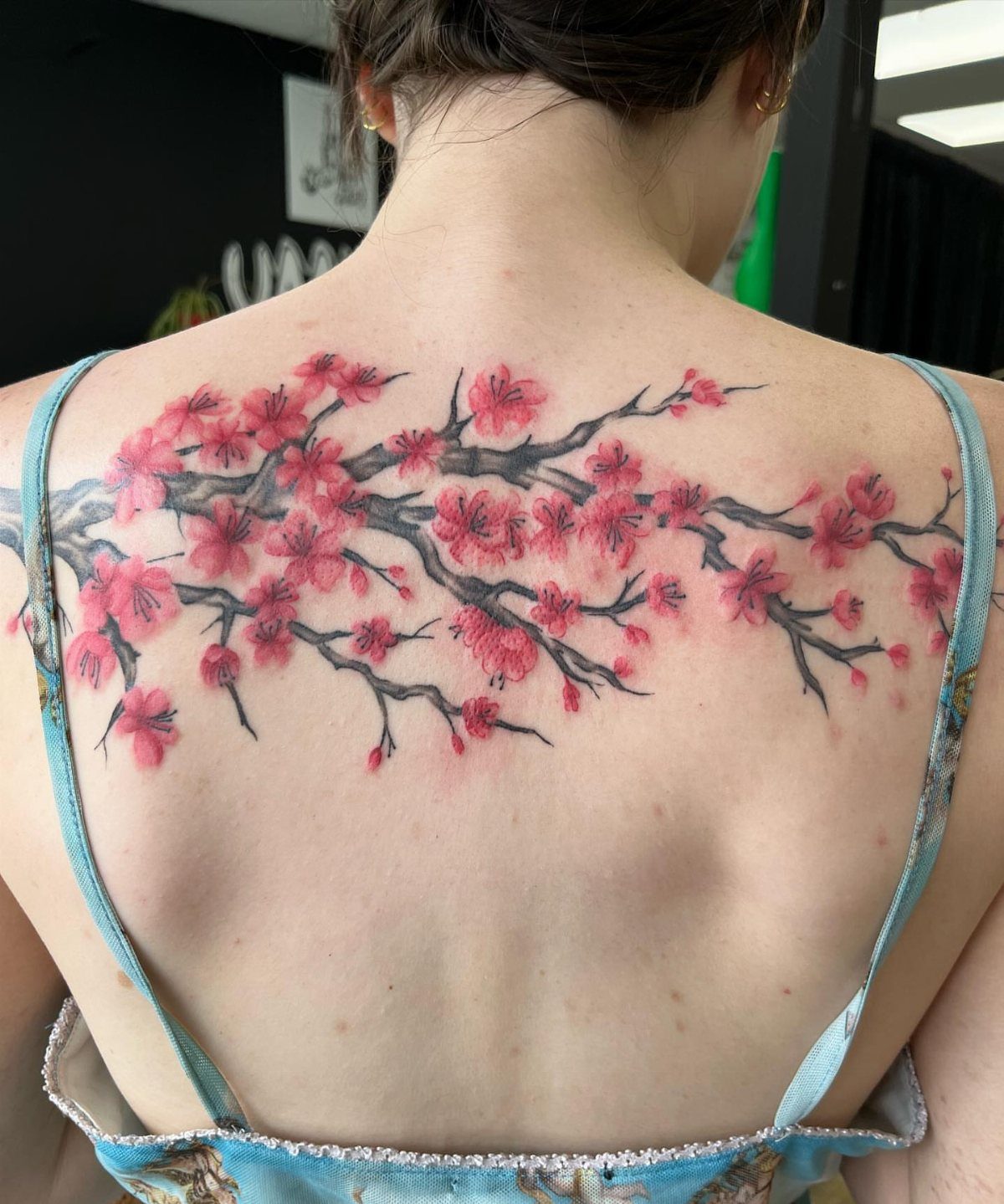
A cherry blossom branch across the upper back gives the design room to spread without fighting the body’s curves.
The flat plane between the shoulder blades keeps the branch from distorting when you move, and the curve of the shoulders frames the flowers the way a canvas frame holds a painting.
Color holds up well here; the skin sees less sun than the forearms or hands, so pinks stay brighter longer.
Visibility takes a hit: you need a mirror or a friend to see it, and open-back dresses or shirts are the only way to show it off.
This placement suits someone who wants the tattoo more for themselves than for display.
A branch that starts at one shoulder and crosses to the other reads as one continuous piece; two smaller branches, one per side, read as matched accents instead.
15. Cherry Blossom Chest Tattoo
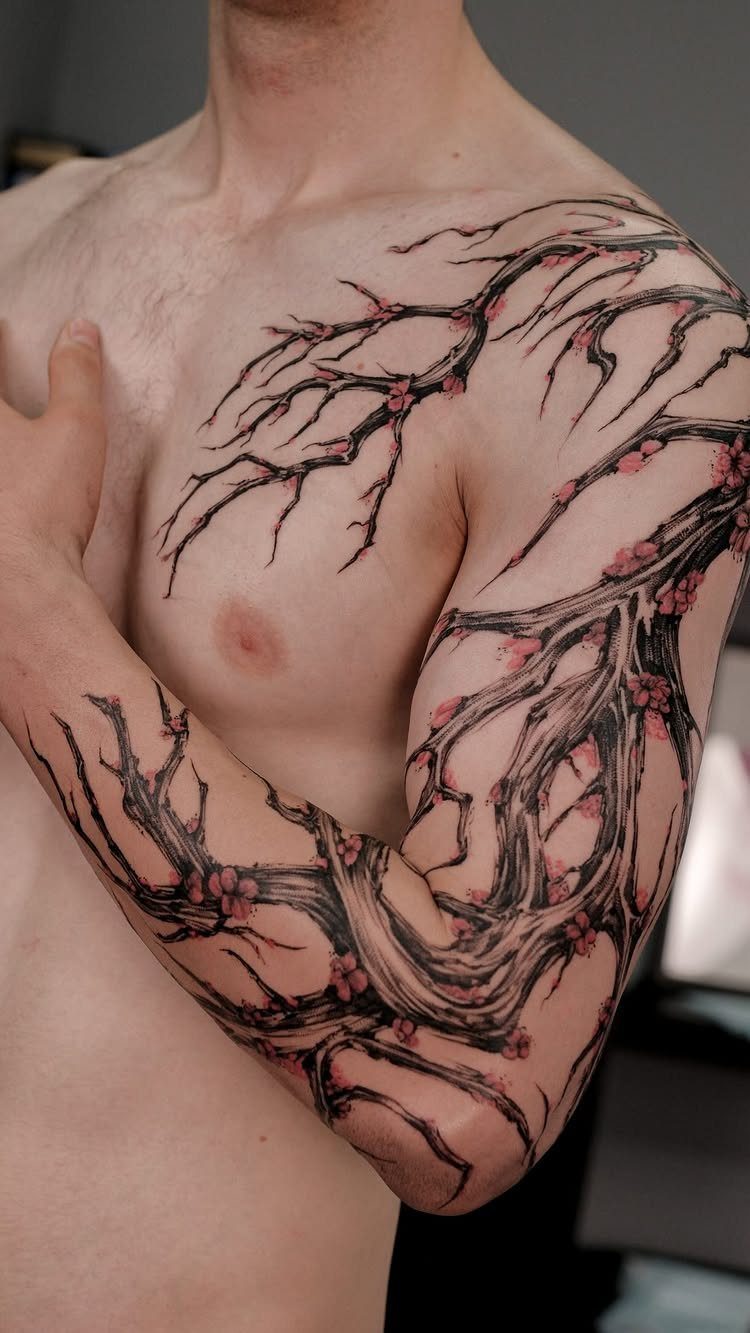
Chest placement turns the cherry blossom branch into something architectural, following the line from shoulder to sternum like a sash.
A design that crosses onto the arm ties the chest piece to a larger story; stopping at the collarbone keeps it self-contained and easier to expand later.
Two branches meeting at the center works for a symmetrical chest, though the sternum itself is tender and the bone makes the needle bounce.
Color sits well here on most skin tones, and the pinks show up clearly against the darker ink of the branches.
Thick branches and sparse blossoms read masculine, but the same layout softens with thinner branches and smaller blossoms. Either way, expect multiple sessions for a piece this large, and plan around healing time before swimming or heavy chest workouts.
16. Cherry Blossom Ankle Tattoo
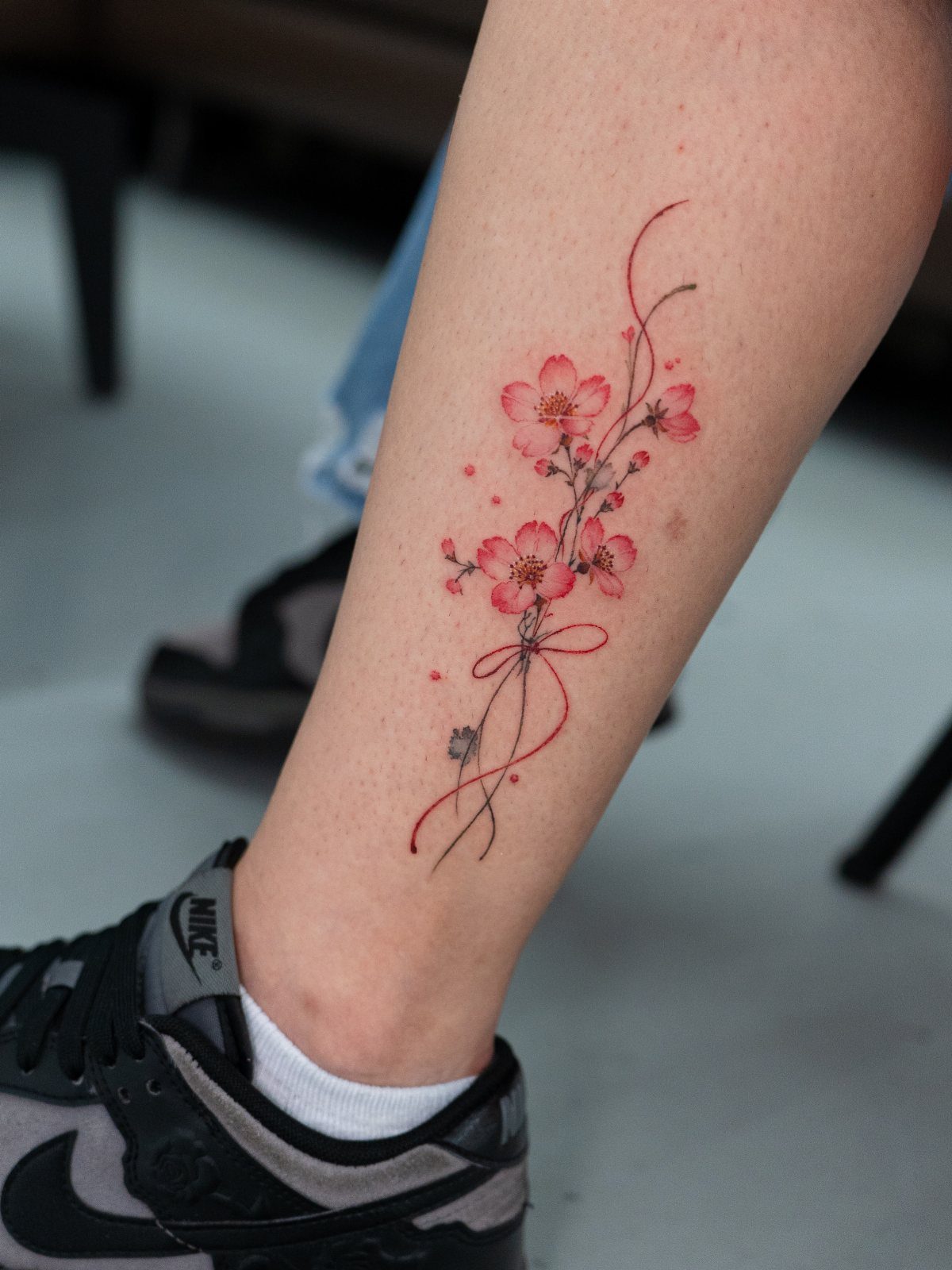
An ankle tattoo stays hidden in boots or trousers and appears only when you choose, which suits a design this personal.
A branch that wraps the bone rather than sitting flat on one side moves with the leg instead of looking pasted on.
The red string bow is a separate element that turns the blossoms into a tied bouquet; without it, the branch reads as growing, and with it, the whole thing reads as a gift or a memory held close.
Either approach works, but decide before the session since the bow changes the composition’s center.
Ankle skin is thin and moves constantly with walking, so healing takes patience and touch-ups are common. A smaller piece heals faster and shifts less over time.
This suits someone who wants the tattoo as a private marker, not a conversation starter.
17. Cherry Blossom Shoulder Tattoo
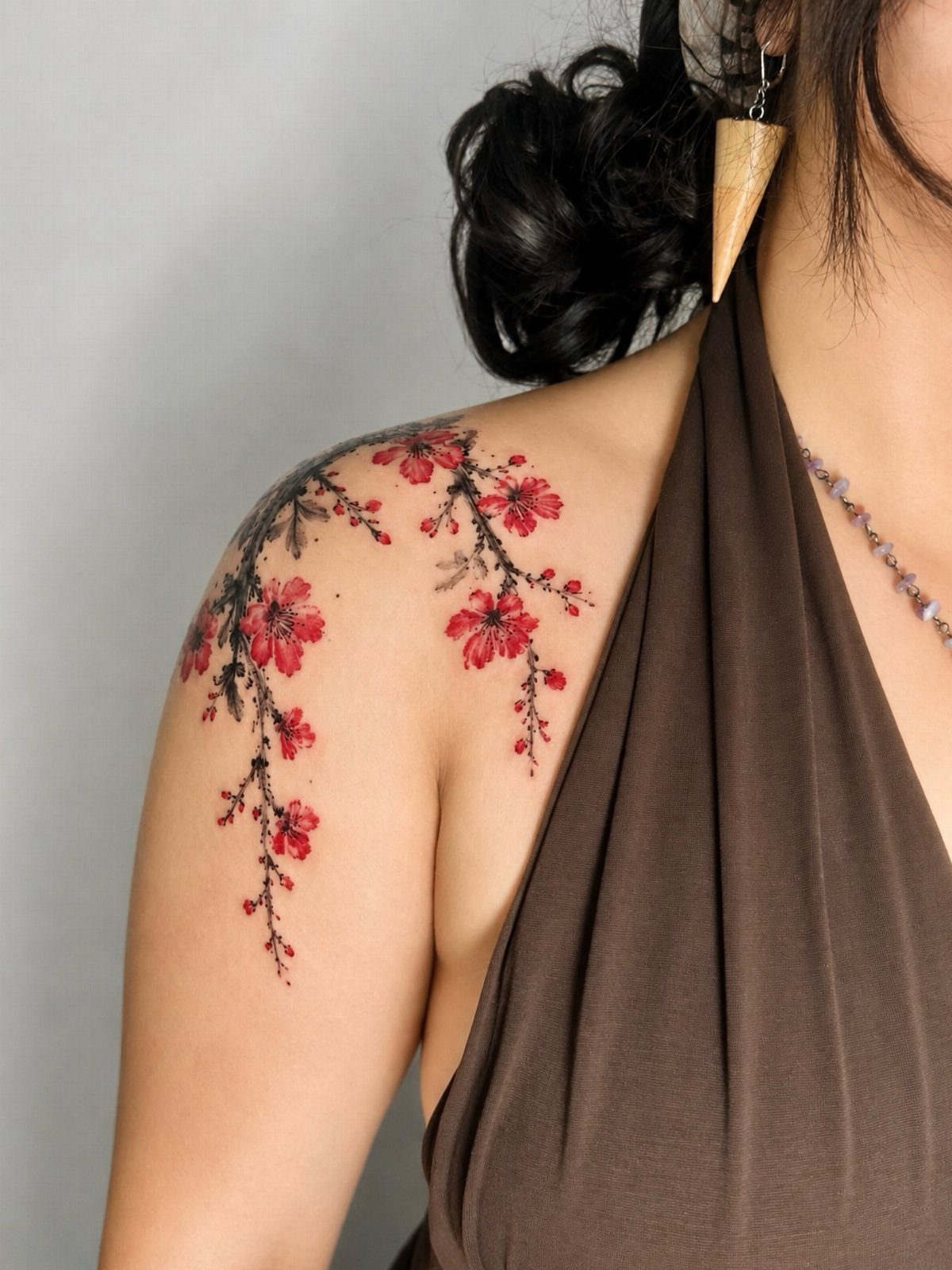
Red cherry blossoms on the shoulder draw the eye upward and balance the body’s natural width at that point, which works for building out from a sleeve or standing alone.
The color choice matters: red reads as passion or luck in most Japanese-influenced work, where pink reads as gentler and more fleeting.
The shoulder’s curve means the branch has to be drawn to fit a moving surface; what looks straight when the arm hangs down curves when raised. A good artist maps this with you moving through your range before inking.
This placement shows in sleeveless or off-shoulder cuts and hides easily otherwise. It suits someone who wants flexibility: visible for an event, covered for work, and always present without being loud.
The upper arm below can carry the branch further if you ever want to extend.
Ideal Placement for Tattoos
Arms and back give the most room for cherry blossom work that needs to read from across a room.
The branch shape favors vertical placement; a forearm or calf carries that line naturally, while a back piece lets the branch spread wide.
For something quieter, the wrist, ankle, or shoulder keeps the design personal.
Men still tend toward upper arms, chest, and full back pieces, especially for the dense ink saturation that traditional Japanese work demands.
Women more often choose belly, sternum, rib cage, lower back, or ankle placements, where the tattoo stays hidden until you decide otherwise.
The orientation of your specific design matters more than following any of these patterns. A vertical branch on a horizontal surface fights the body; an artist can adjust the drawing, but starting with the right canvas saves compromise.
Cultural Significance
The thousand-year practice of hanami, gathering to view the blossoms, turns that sadness into shared ritual rather than private grief.
Buddhist meaning ties the bloom to the soul’s path toward enlightenment, a reading that sits alongside the others rather than replacing them.
That makes the tattoo workable for marking personal change, though the wearer decides how literally to take the reference.
Chinese association runs differently, toward love and the feminine specifically, including the power to bring life into the world. The same flower, two continents apart, and the meaning shifts enough that I’d think about which tradition speaks to your situation.
The World War II use on kamikaze aircraft belongs to history, not to current meaning. The hope and renewal reading from that period survives in some designs, but wearing it now requires knowing that context exists.
Tattoo Styles
Minimalist and fine-line styles hold up with thinner ink and less room, though they ask more of the artist’s hand and fade faster on high-traffic skin.
The same placement logic applies: small work needs enough detail to hold, and too fine a line can disappear into skin texture over time.
Frequently Asked Questions
What does a cherry blossom tattoo signify?
Mono no aware, that Japanese sense that beauty holds meaning because it disappears, finds its sharpest symbol in the cherry blossom. Buddhist readings add the soul’s movement toward enlightenment, while Chinese tradition ties the flower to love and the feminine.
Most people who choose it now mean something personal by the same thread: a life held precious because it is not permanent.
What is the prettiest flower to get tattooed?
Cherry blossoms dominate the request list for a reason. The branching structure gives an artist natural flow across skin, and the pink range flatters most complexions without fighting them.
Cherry blossoms are often considered one of the most beautiful flowers for tattoos.