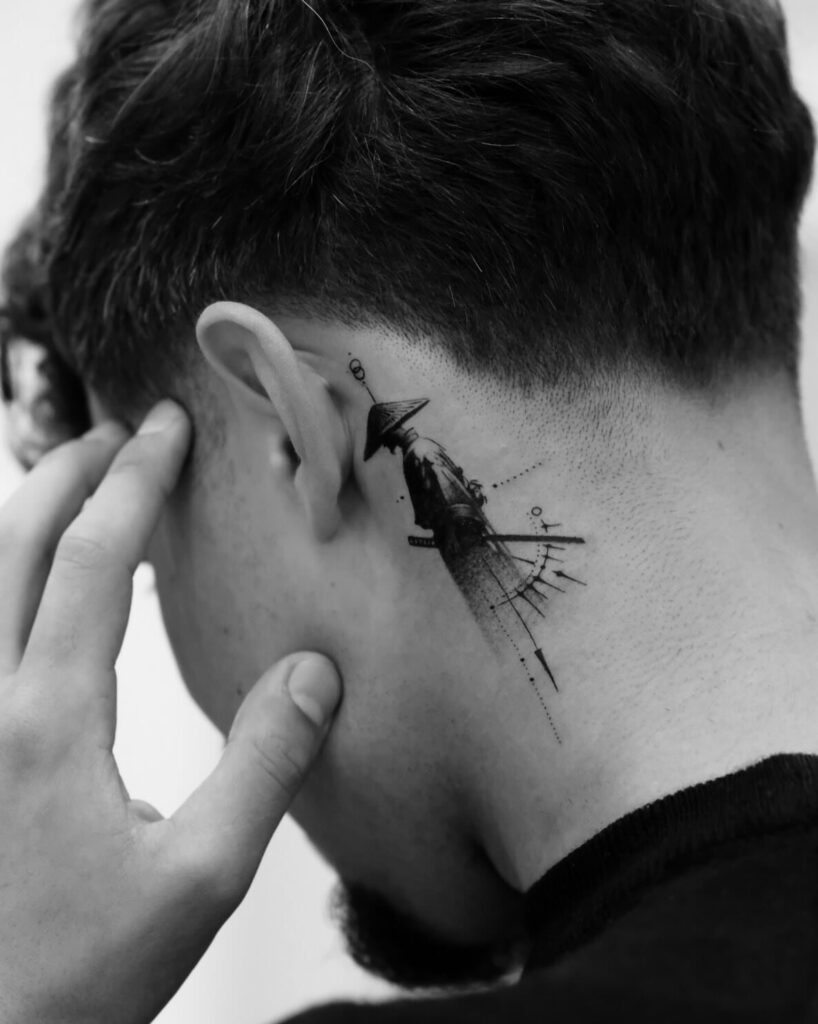
Behind-the-ear tattoos for men run from a simple initial to a half mandala, with line weight and how much you want to hide it doing the real sorting.
How short you cut your hair, what you already have inked nearby, and whether you want the meaning out in the open or kept to yourself are what narrow the field.
A 1.5–2mm block font on Roman numerals holds up through hair friction and pillow contact, while a fine-line arrow points toward future sleeve work instead of closing the door on it.
1. Arrow
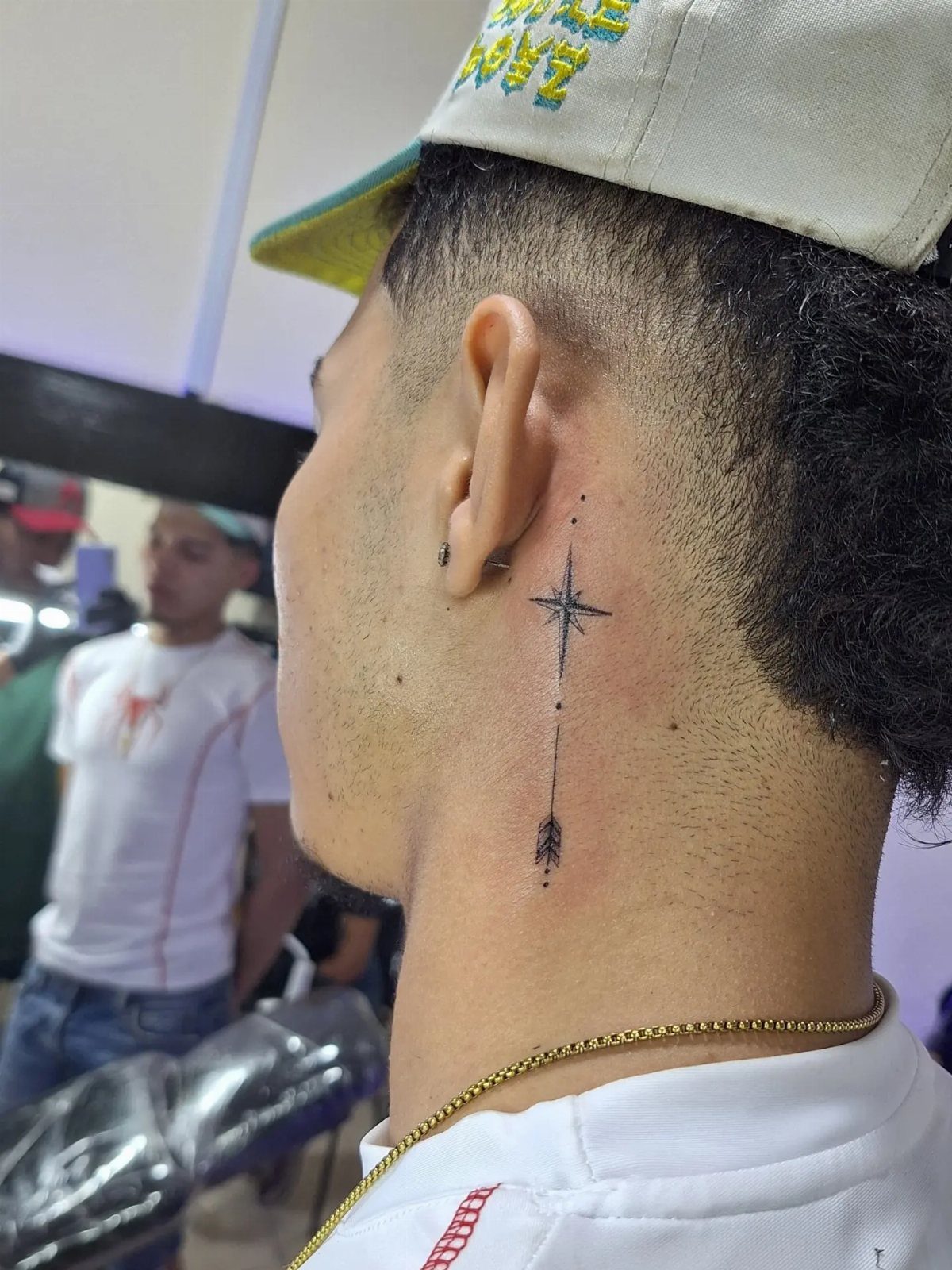
An arrow behind the ear works because the space is long and narrow, and a vertical line follows that shape instead of fighting it.
Point it up or down; either reads as forward motion, though up draws the eye toward the face and down toward the neck. The choice depends on what you already have going on in that area.
A fine-line weight keeps it from looking like a scratch at conversation distance, which matters since this spot sits at eye level for anyone standing beside you.
I’d put this one at the top of the list for a first tattoo: the meaning is clear, the execution is quick, and if you ever want to build a sleeve down the road, the arrow points toward it.
2. Anchor
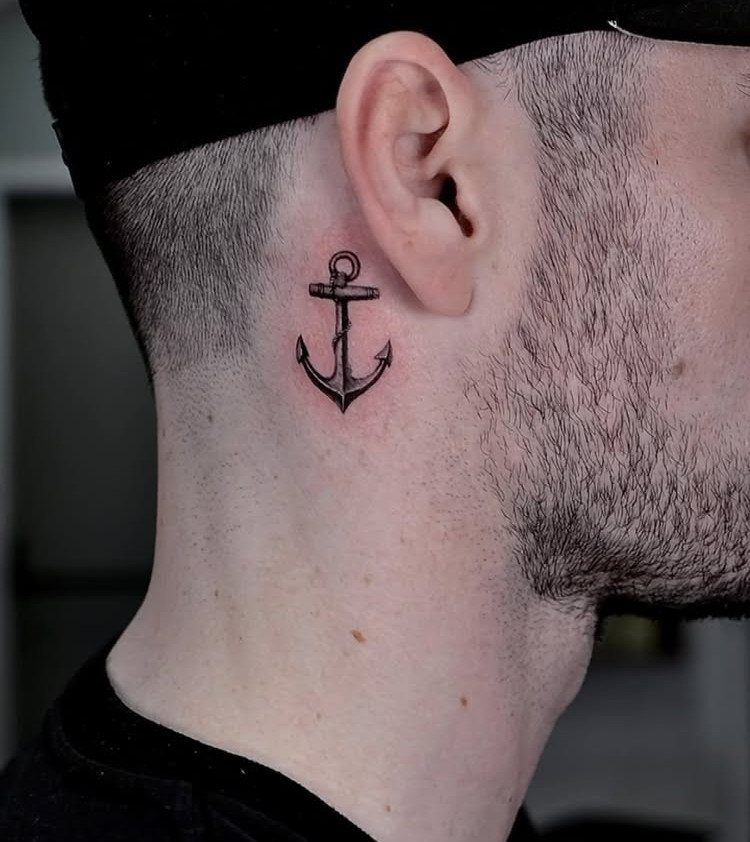
Stability reads differently on a neck than on a forearm or a chest piece.
Behind the ear, the anchor stays private; someone has to stand close and at the right angle to catch it, which suits men who want the meaning without the broadcast. A small, simple design fits best here.
Too much rope or too heavy a chain, and the detail blurs as the skin ages and moves.
Black-and-grey holds up longer in this spot than color, since the ear casts shadow and colored ink can look muddy in low light. This one suits someone who has already found his footing and does not need to prove it.
3. Compass
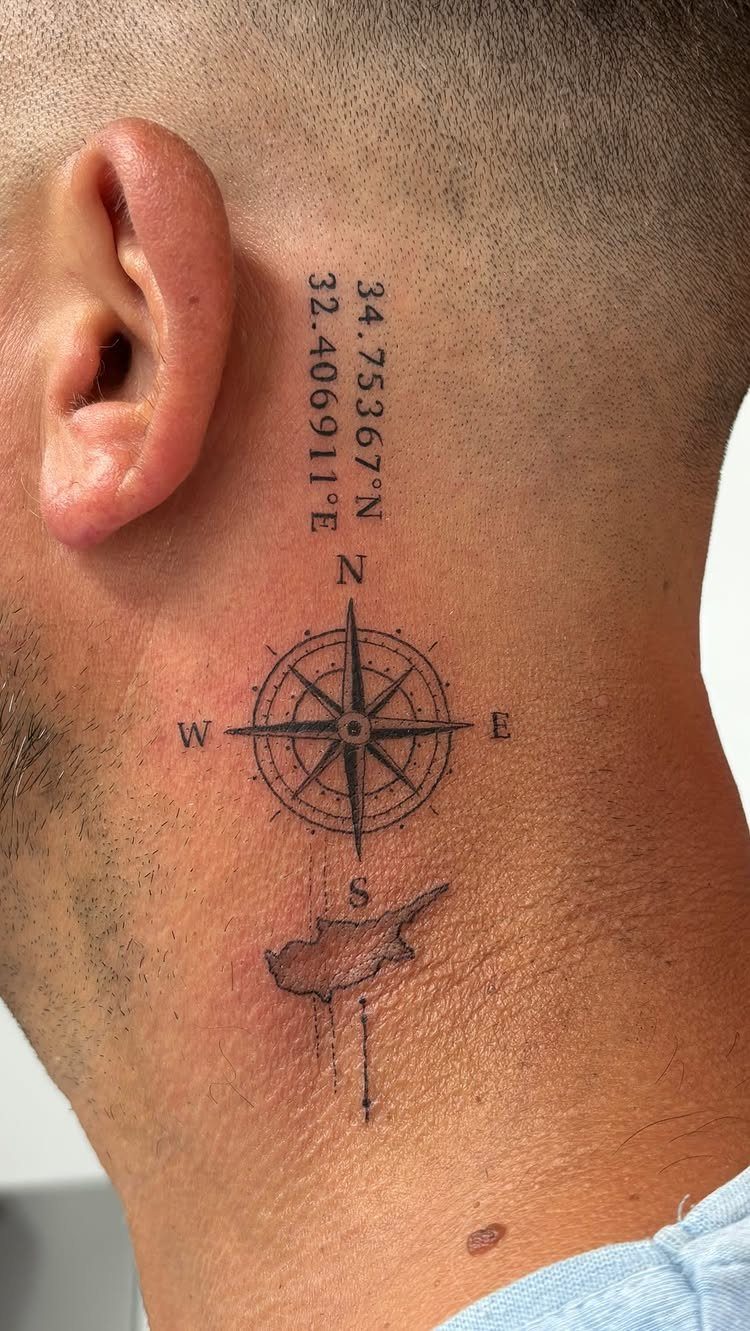
A compass rose behind the ear can stay spare, just the directions and a needle, or it can carry coordinates and a map outline for anyone who wants more detail.
The simpler version reads faster at a glance; the detailed one rewards someone who leans in. Linework alone keeps the needle sharp over time, while shading softens the edges and asks for touch-ups sooner.
Think about how much you travel, whether the coordinates mean one place or many, and whether you want to explain the numbers each time someone asks.
This design suits a man who actually uses a compass, or at least remembers the last time he needed one.
4. Rose with Thorns
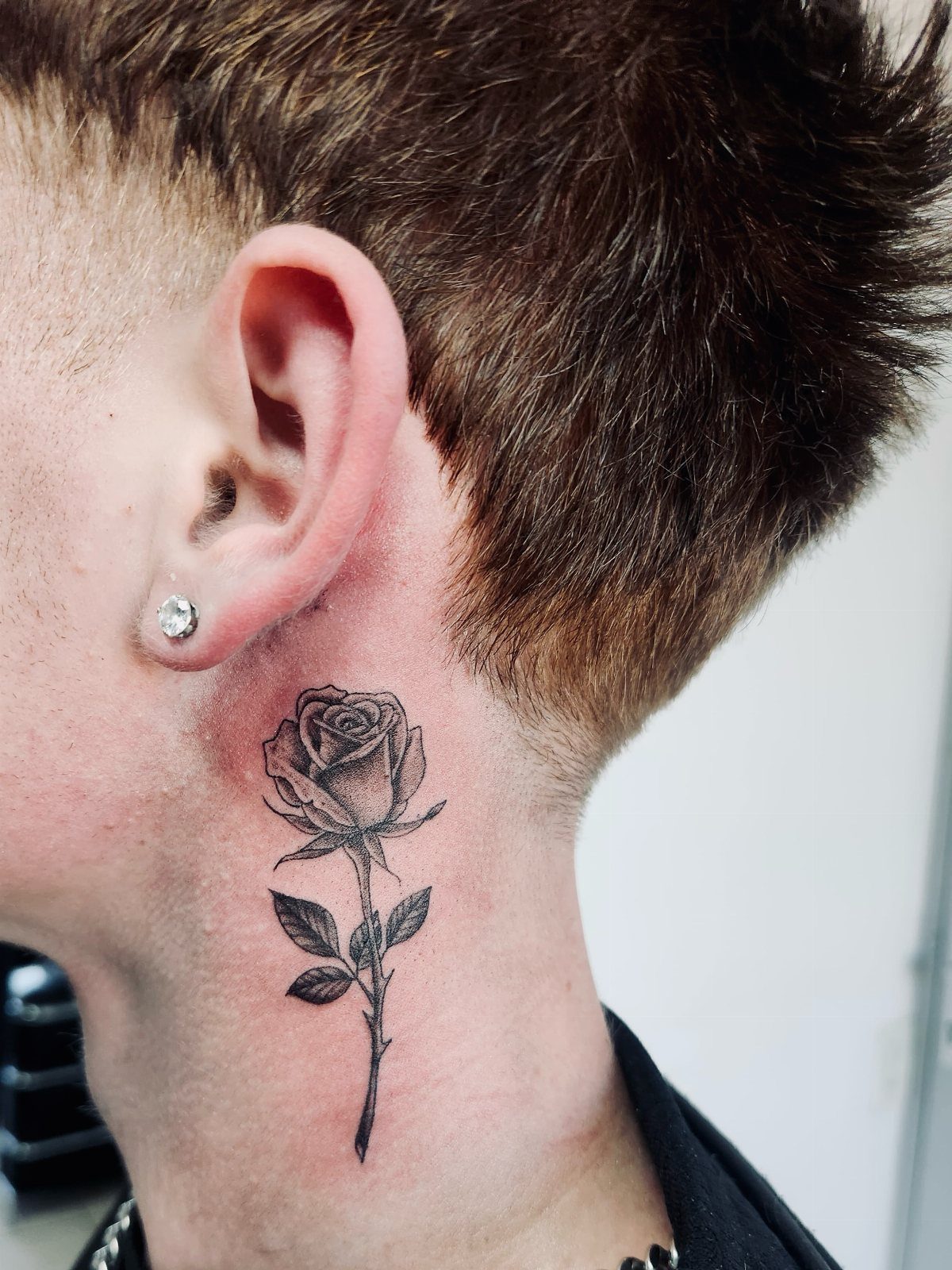
A rose without thorns is decoration; a rose with them is an argument. The thorns turn the flower into something earned, which matters for a placement this close to the face.
Behind the ear, the stem can run down toward the jaw or curl slightly to follow the bone. Black-and-grey lets the thorns read as texture rather than color, and that texture carries at the small scale this spot demands.
The duality is the point: beauty and pain, not beauty or pain. I’d steer someone toward this if he has lived through something specific and does not mind the question it invites.
5. Music Notes
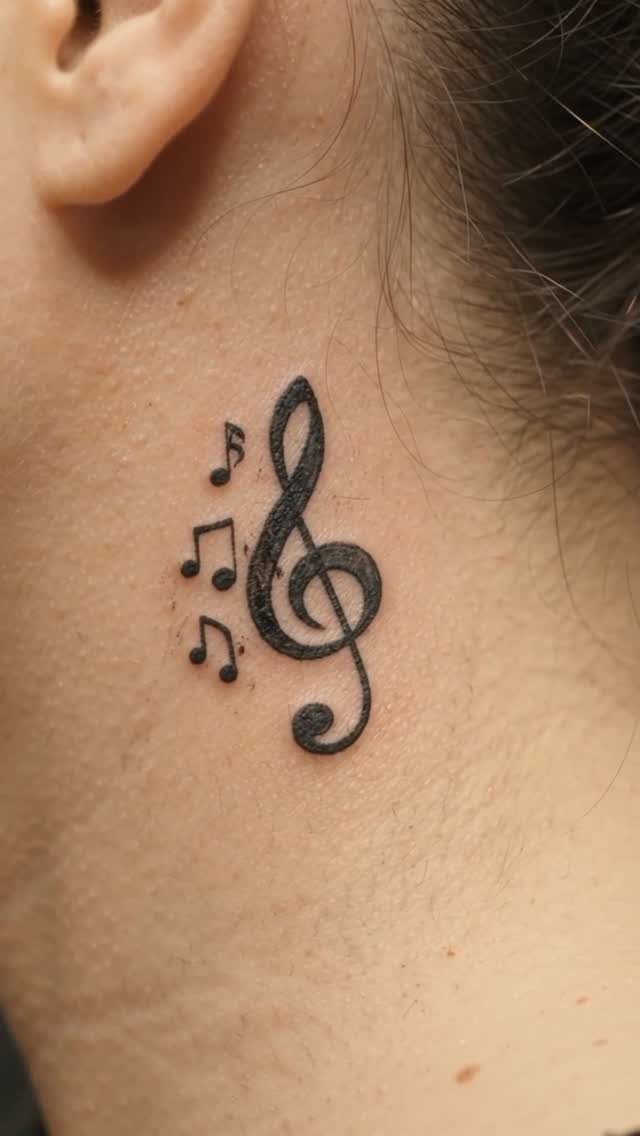
A single treble clef reads as music in general; three notes turn it into a phrase someone might almost hum.
Behind the ear, even a short sequence of notes fits without crowding, though a longer staff starts to look like a smudge from the front.
The notes can reference an actual melody or stay abstract; the choice is whether you want to explain the tune or let it stay yours. Black ink holds the clearest rhythm here, since the ear’s curve already complicates the reading.
This one is for the man who listens on headphones in public and still moves his head to the beat.
6. Feather
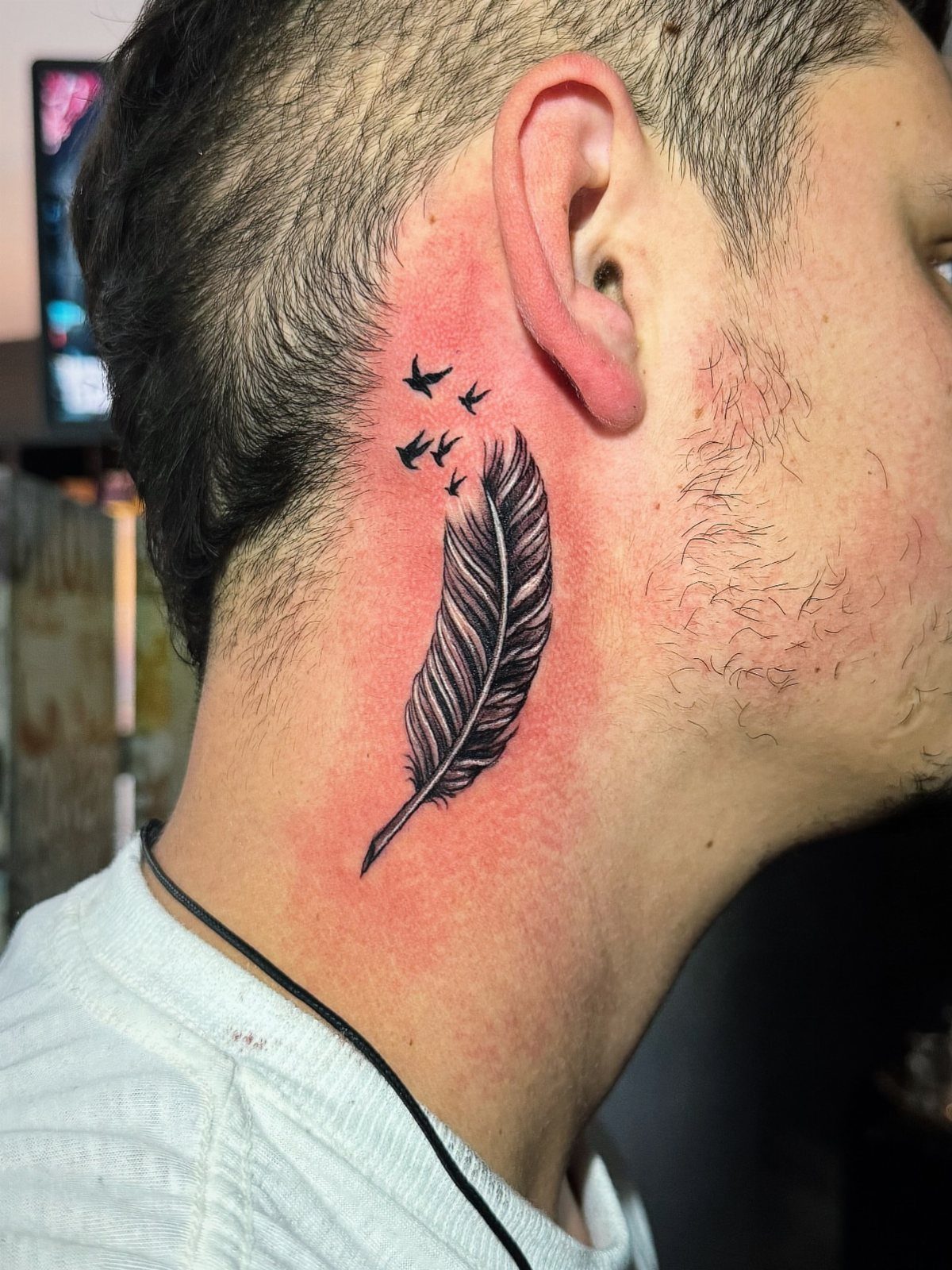
A feather behind the ear gains something from gravity: point the quill up, and the natural line of the neck completes the gesture of ascent.
A fine quill needs a steady hand; too thin and it disappears into the skin, too bold and it looks like a leaf.
I’d pick this for a man who left something behind and wants the reminder visible only when he turns his head.
7. Dagger
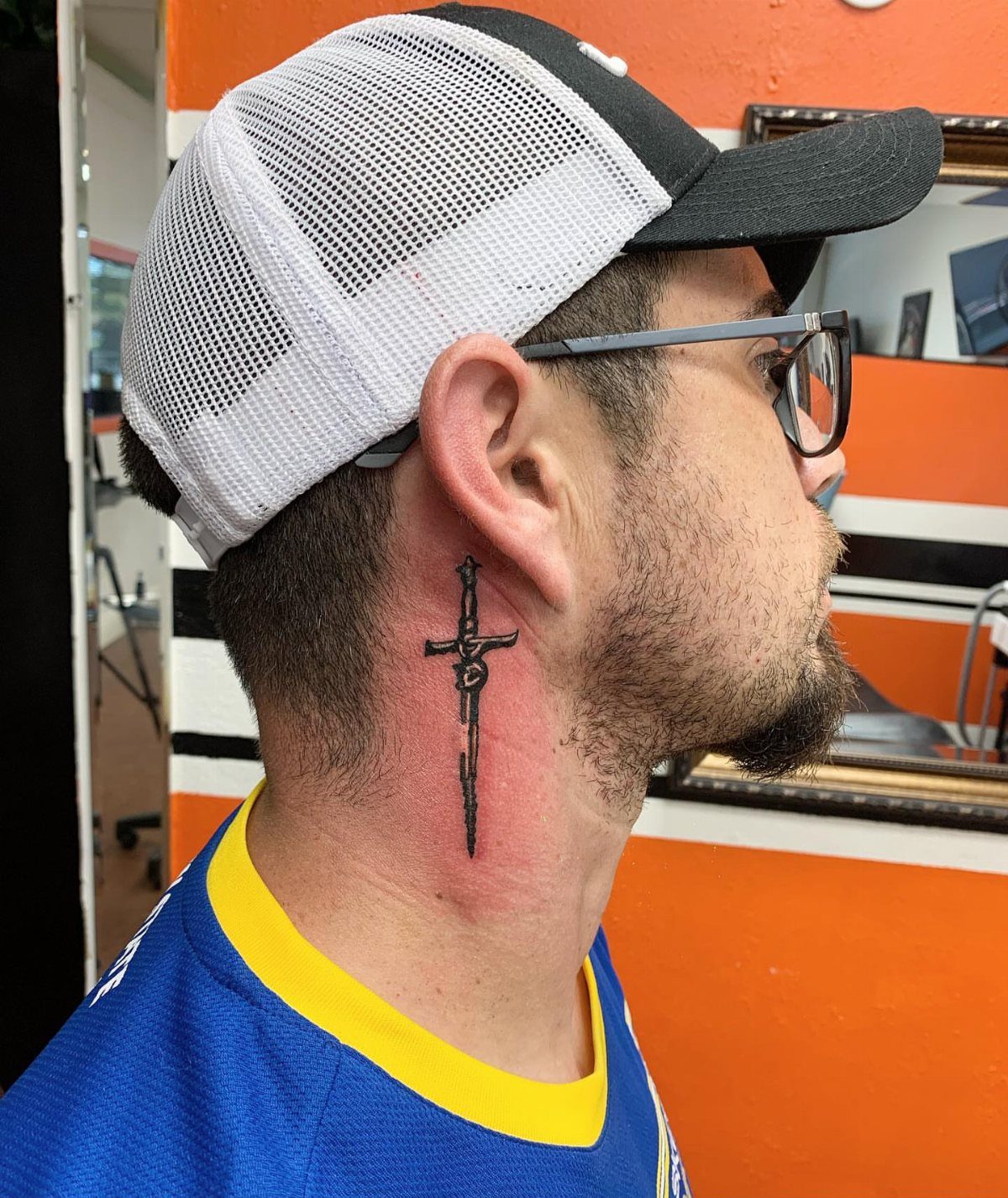
A dagger behind the ear reads as quiet armor rather than threat. The vertical alignment follows the neck’s natural line and keeps the blade from looking cramped in a tight space.
Black ink holds the detail best: a straight spine, a simple crossguard, and a handle you can shape to taste.
A wrapped leather grip looks different from a bare metal one, and the point where blade meets guard changes the whole silhouette. I would keep the pommel small so nothing pokes above the hairline.
This suits someone who wants meaning without softness. It trades away the easy conversation starter; people rarely notice it unless the hair is short or tied.
8. Crown
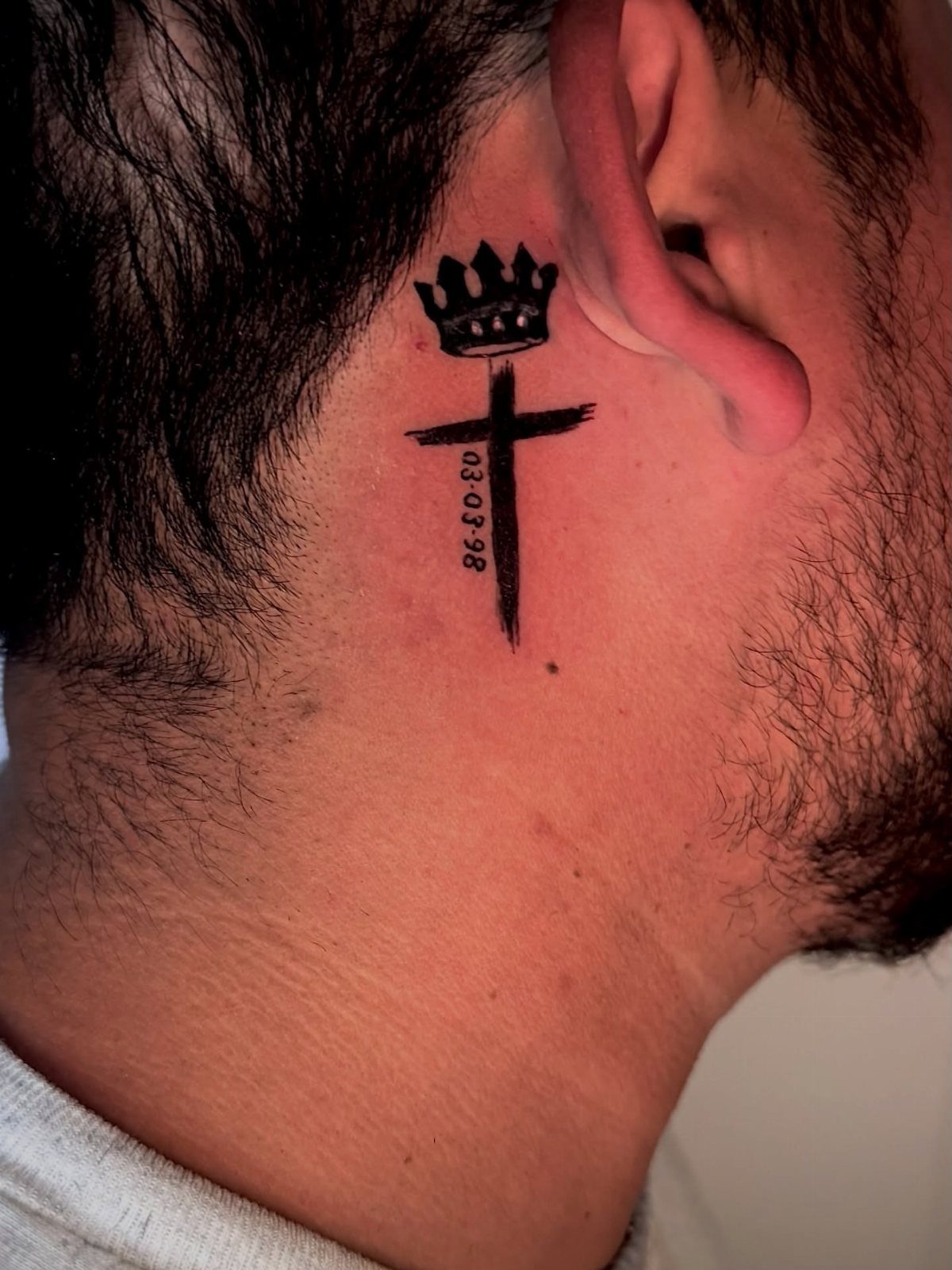
Power behind the ear stays private until you choose to show it. A crown above a cross and a date turns a generic symbol into a specific claim: mastery over one life, measured from 03-03-98.
You can go ornate with filigree and jewels or keep it a clean black outline. The simpler version ages better at this scale; fine lines blur faster behind the ear where sunscreen rarely reaches.
A date underneath, like the one visible, anchors the symbol to something real rather than aspirational.
I’d pick this for someone marking a turning point. The risk is pretension, so the design needs to feel earned rather than assumed.
9. Tree Silhouette
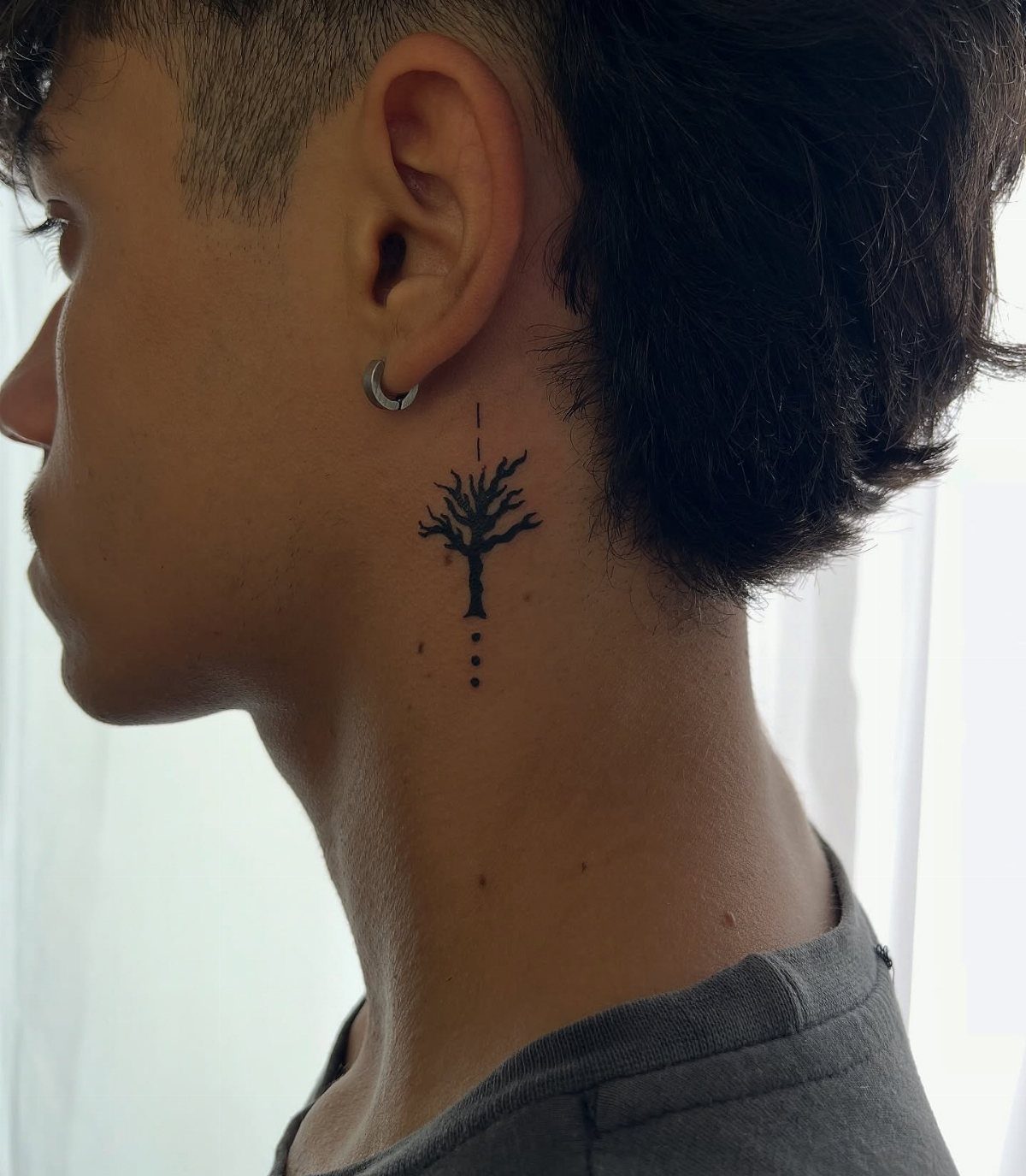
A bare tree in black ink catches the eye because it shouldn’t work: branches too thin, roots too tentative.
The silhouette reads instantly, and the geometry around it, those fine lines and dots, keeps it from looking like a clip art fallback.
Pick a species you actually favor. Oak reads sturdy, birch reads northern, pine reads stubborn.
The roots should reach down onto the neck, not stop at the hairline; that extension turns a sticker into something rooted. The placement sits low, just below the earlobe, where the skin moves less and the lines stay cleaner longer.
This one suits the patient. Growth and stability are slow promises, and the tattoo should look like it knows that.
10. Angel Wings
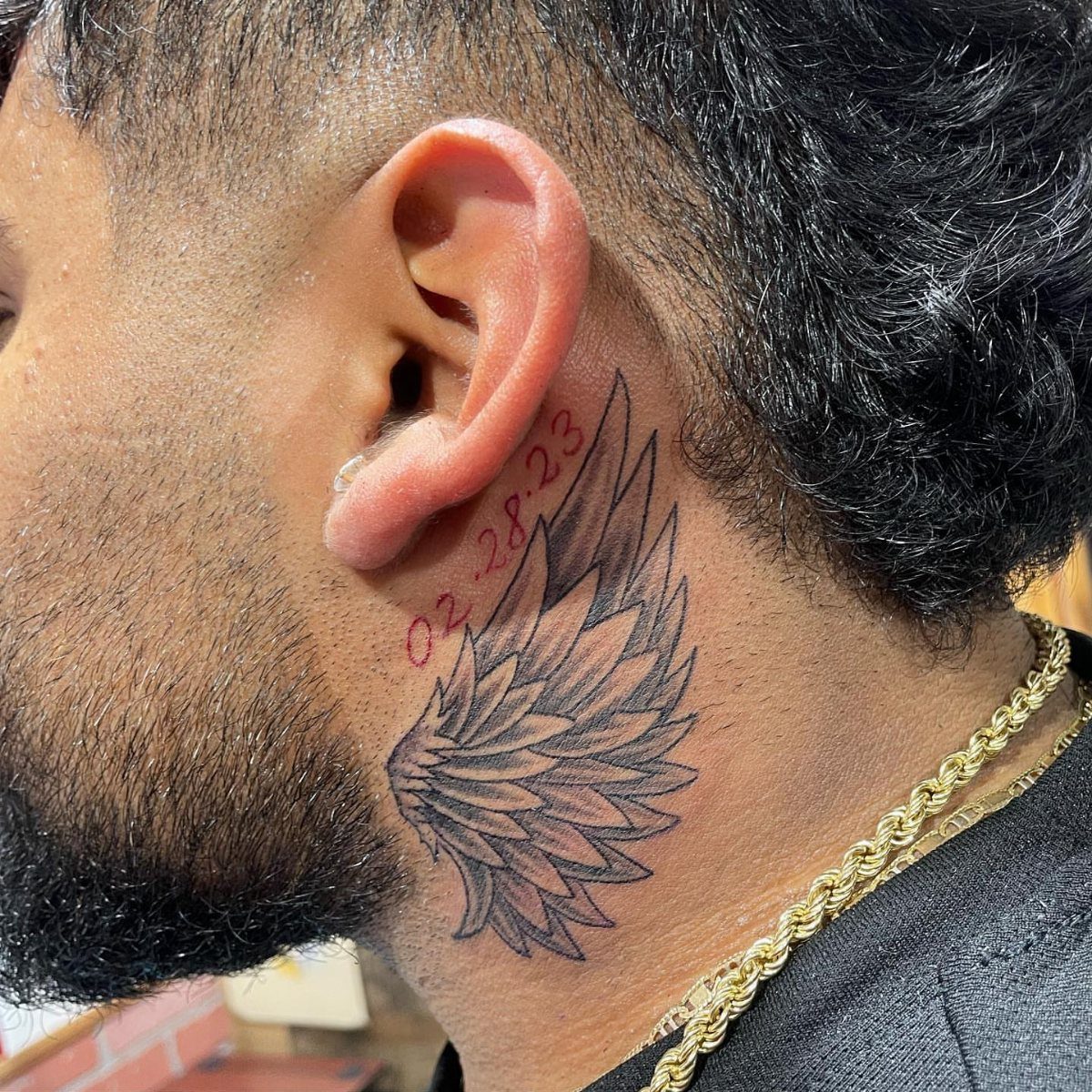
A single wing wrapping the ear creates motion that most behind-the-ear tattoos lack.
A wing with a date in red above it, 02.28.23, uses color to set priority: the black wing recedes, the date advances, so the memorial reads first and the symbol second.
You can keep both wings and stack them vertically, but one wing curving around the ear’s rim uses the anatomy instead of fighting it.
A halo or light rays behind the head are options the photo doesn’t show, and I’d skip them; the ear already provides enough context for the symbol.
This works as protection you carry, or as memory made visible only when you turn. The trade is that wing tattoos carry weight; make sure yours belongs to you.
Tiny tattoos tucked behind the ear are a fantastic option for a tattoo first-timer, since they’re discreet and easy to conceal if you need to.
— Glamour
11. Diamond
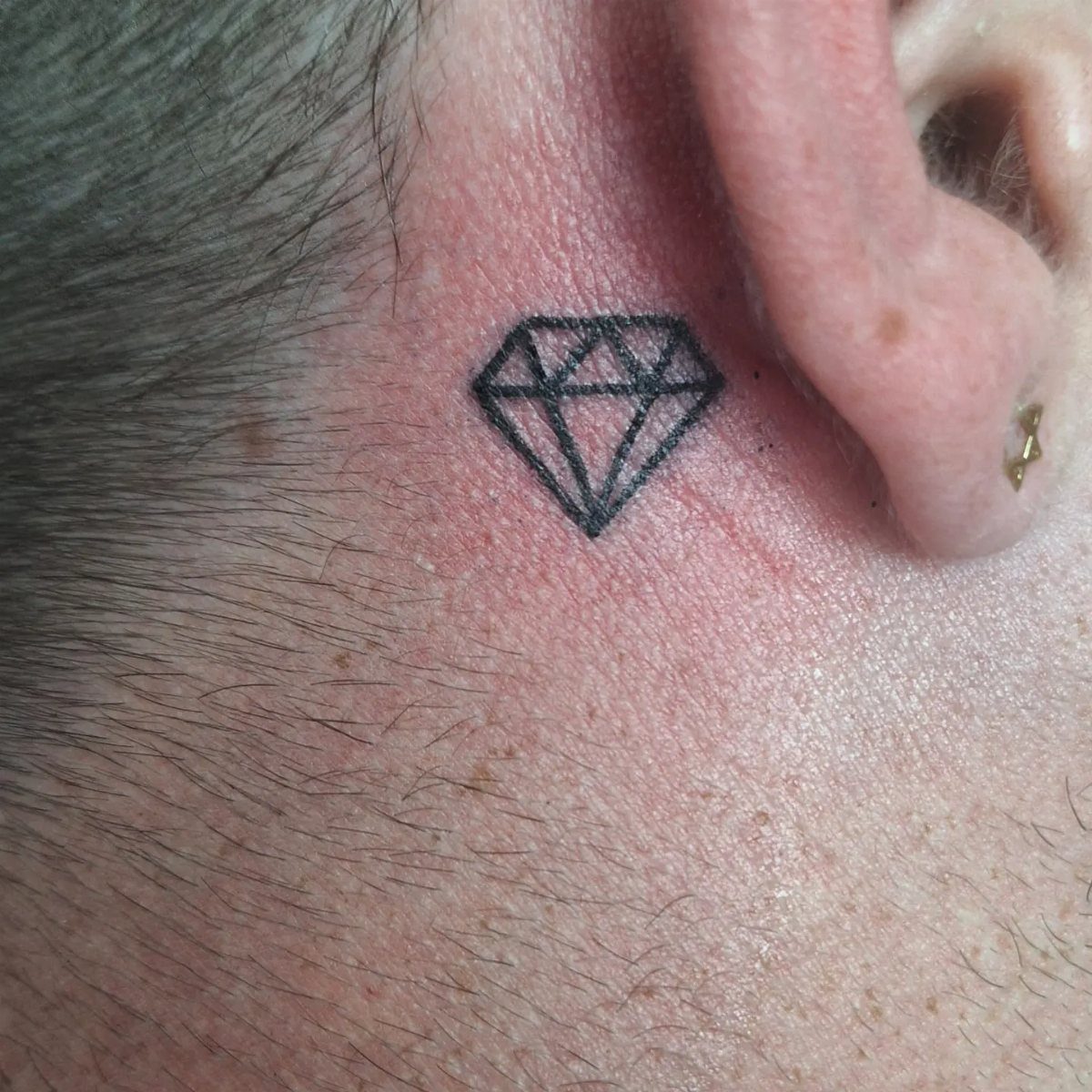
The diamond is pure line art: no fill, just facets drawn in black ink on reddened fresh skin. That geometry reads even at thumbnail size because the shape is familiar, and the bare outline keeps it light rather than heavy.
Facets are what make a diamond recognizable. A solid black diamond would look like a misshapen square; the lines suggesting cut surfaces catch light that isn’t there.
Short hair and a gold earring nearby place this in a zone of other small statements. I’d keep the tattoo smaller than the earlobe itself so it doesn’t compete.
This suits someone who wants resilience without the aggression of a dagger or the sentiment of a date. It is symbol as design first, meaning second, and that order is valid too.
12. Half Mandala
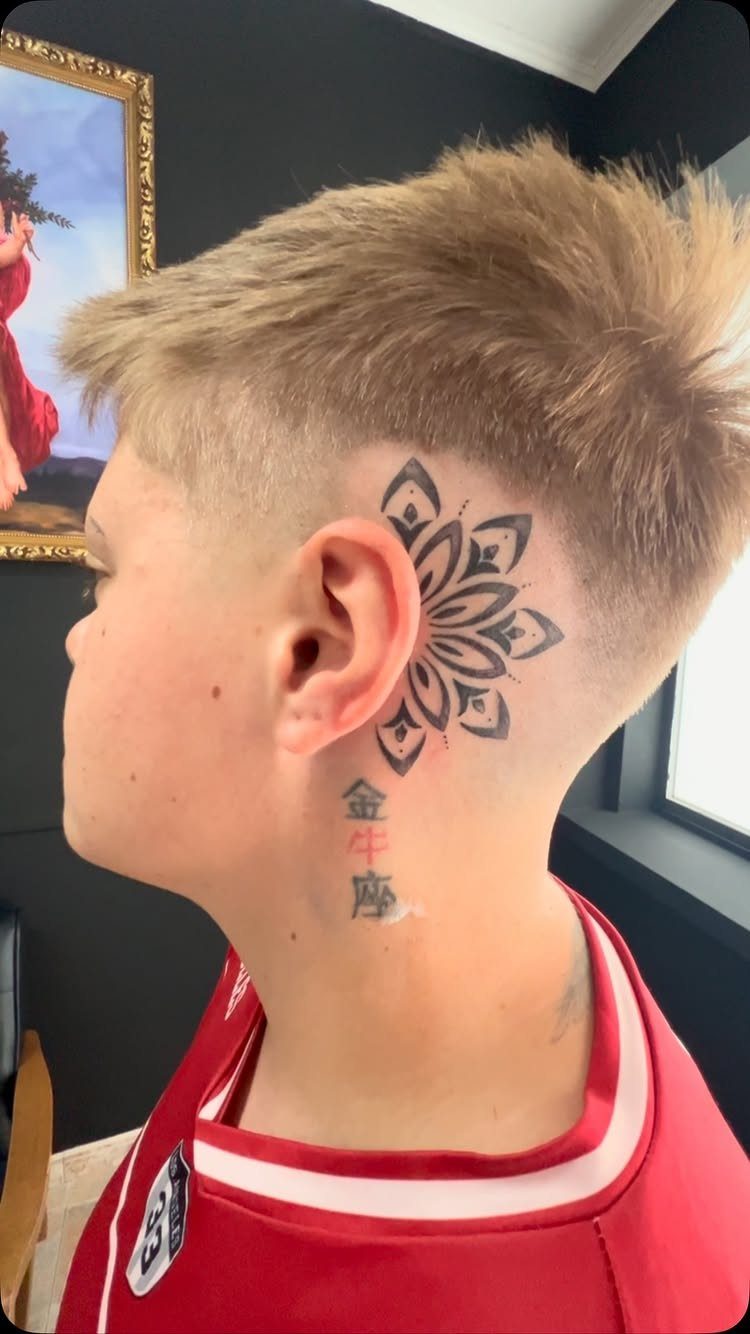
A full mandala would crowd behind the ear and lose its center. Half of one, cut vertically, fits the curve exactly: the flat edge follows the hairline, the round edge echoes the skull.
Black ink dense enough that the pattern reads from a few feet back, with a Chinese character tattoo below it on the neck.
That pairing works because the mandala is organic and the character is linear; two patterns of the same type would fight. The fade haircut keeps the area visible, which matters for a detail this fine.
I’d recommend this for someone who wants balance as a practice, not a state. The tattoo is half a whole by necessity, and that incompleteness is the honest part.
13. Roman Numerals
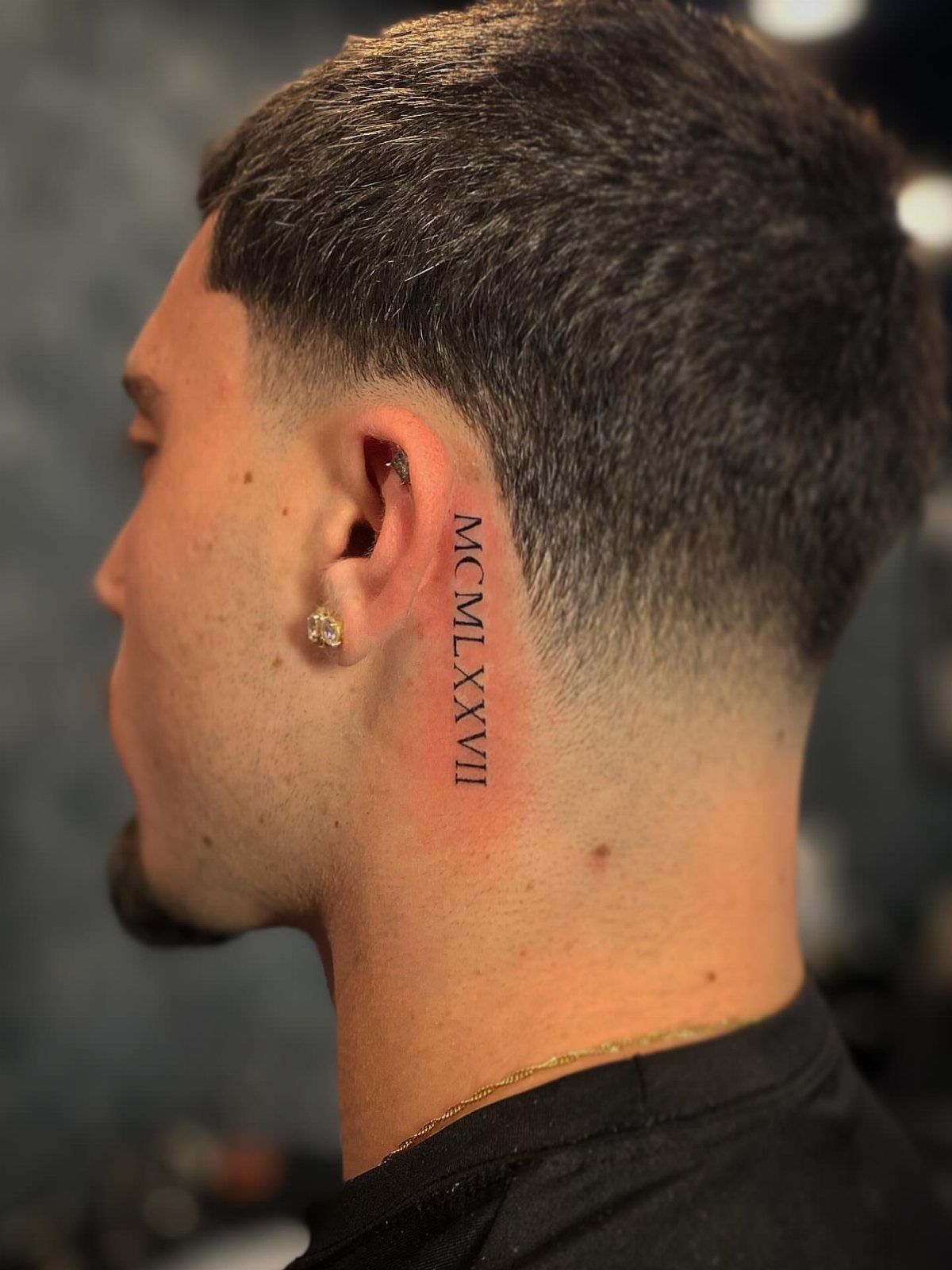
Roman numerals turn a birth year, anniversary, or any fixed date into a private code that sits flat against the skin behind the ear.
A roman numeral behind the ear drops straight down with the neck’s own line, so the numbers settle in without looking forced.
Block fonts hold up better here than thin scripts. Skin behind the ear sees friction from hair, hats, and pillow contact, so lines at 1.5–2mm stay readable past the first few years.
A single date keeps the tattoo narrow enough to hide with a short trim or show with a fade.
This idea trades storytelling for secrecy. Someone who wants a stranger to ask about the meaning will get silence; someone who likes carrying a date only they recognize keeps it close.
14. Simple Initial
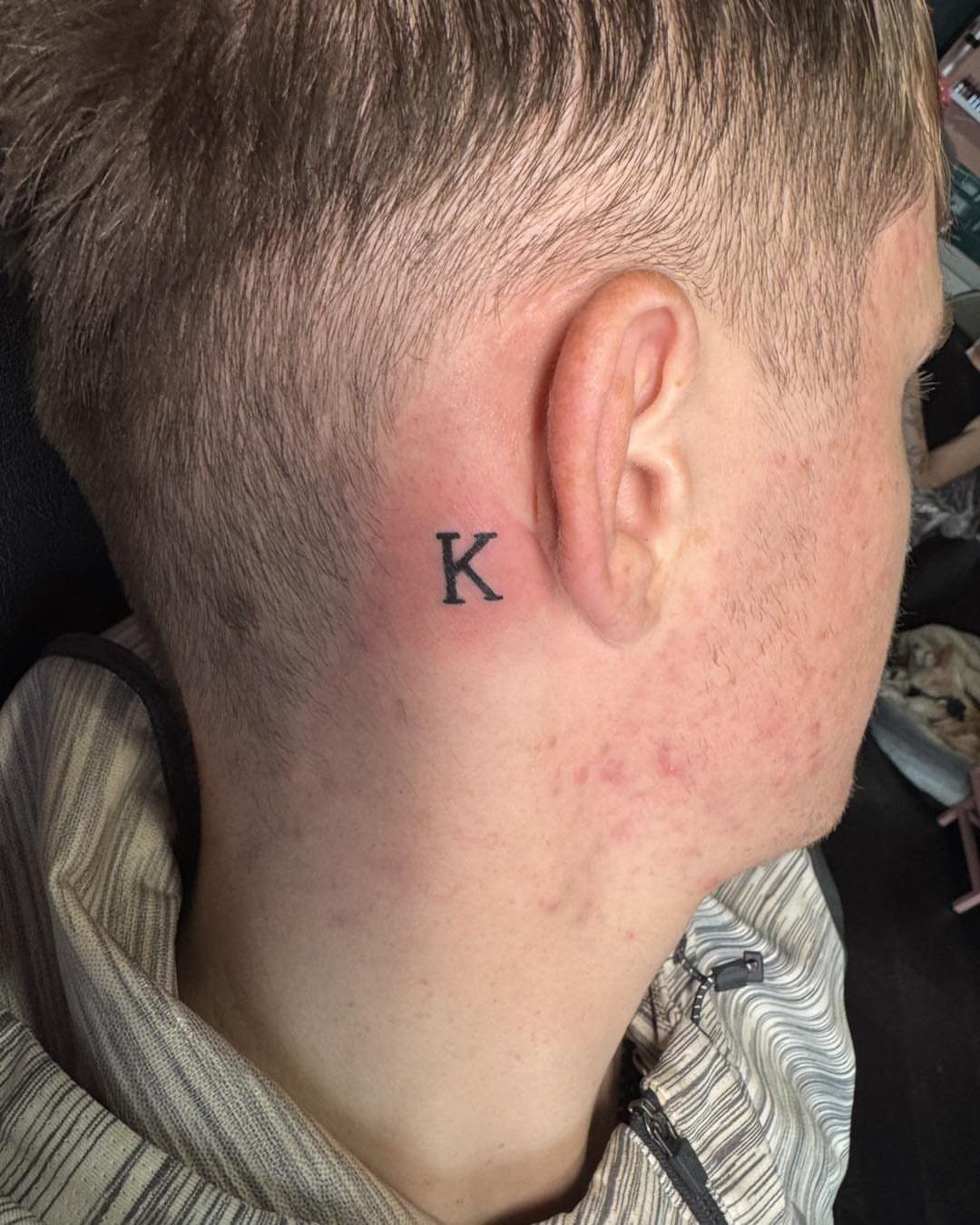
A single initial in a clean serif or script font carries a name without announcing it.
The space behind the ear suits one letter the way a lapel suits a pin: small, intentional, easy to miss unless the light catches it.
The font matters more than the letter itself. A feminine script with thin strokes looks delicate but risks blurring where the skin turns over fastest; a slightly heavier serif with defined terminals stays sharp longer.
Hector Daniels at Bang Bang sticks to work that still reads clean at ten years, and that standard applies here.
Men who need complete concealment for work should note that a buzz cut or high fade exposes this spot entirely. Longer hair on top with short sides gives control: show it, hide it, or let it peek through.
15. Cross with Script
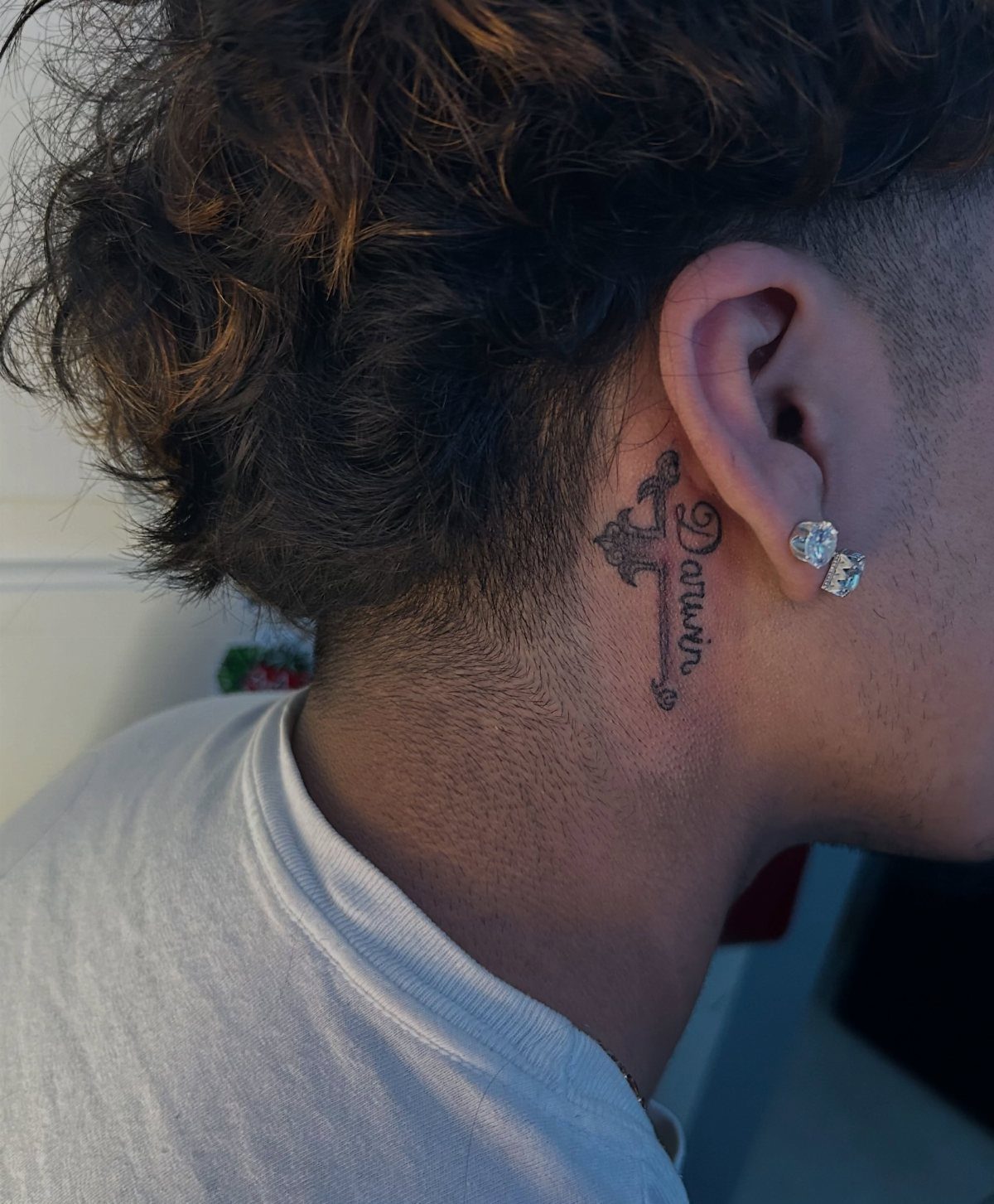
A cross behind the ear carries weight without shouting. Pair it with a name in vertical script and the two pieces read as one unit, the lettering running parallel to the neck’s natural line.
This layout needs balance more than size. A cross taller than it is wide keeps the script from drifting toward the hairline; anything much larger and the detail blurs with age.
Black ink holds up, color fades fast in this spot.
A child’s name, a family name, a date rendered in Roman numerals above the cross instead, each changes what the piece says. Script too ornate turns to mush here; a clean sans serif or simple serif survives better.
This one suits someone who wants meaning visible to himself in the mirror more than to strangers passing by. Coverage is the real concern: hair grows, and this placement disappears under anything longer than a fade.
Pain and Healing
Pain behind the ear runs 6-7 out of 10, but the quality is different from an arm or a leg.
The needle sits right on bone, so what you get is a sharp buzz you feel in your jaw more than a sting on the skin.
Most sessions finish in 30-60 minutes, which is short enough to stay still through but long enough that the vibration wears on you.
Haircut timing matters more than most men plan for. If you need a clean line for work, schedule the cut before the appointment, not after.
Visibility and Professionalism
This placement hides or shows based on hair length alone, which makes it one of the few tattoos you can toggle daily without clothing changes. A short business cut usually falls far enough to partly hide the spot.
Standard fades expose it. The control is in the haircut, not the wardrobe.
Men in law or finance use this to their advantage. The tattoo exists in full view on Saturday and disappears Monday morning with a slightly longer guard on the clipper.
That flexibility is the point of the placement, not a side benefit.
The history here runs through punk and rock communities, where hidden tattoos carried messages meant for insiders. That lineage still fits: the meaning is yours, the visibility is negotiated.
Design Longevity
Line weight matters more behind the ear than almost anywhere else.
Designs that follow the ear’s curve or the neck’s vertical line age better than shapes that fight the anatomy. A compass needle that runs with the neck reads clean for years.
One that crosses the grain starts to look like a smudge as the skin shifts.
Small clean shapes fit this well: a plain skull, compass points, Roman numerals, a single bold word. Each one reads clear from talking distance and stays readable.
Choosing the Right Size
You have roughly one to two inches of workable space back there. Within that, 1-1.5 inches is the zone where designs read clearly without crowding.
Go smaller and the detail disappears; go larger and the tattoo starts wrapping where the eye does not naturally follow.
Compact power symbols, anchors, arrows, or minimal animals, fit the 1-inch space and hold their shape. Extended text like coordinates or dates needs 1.5-2 inches and demands block fonts to survive.
Script in that size is a bet against time.
Connecting designs toward the neck or temple create a flow that reads as part of a larger plan, but the commitment shifts from hidden to visible. That is not a warning, just a threshold to recognize before the needle starts.
Frequently Asked Questions
What does a tattoo behind the ear mean for a male?
For men, a tattoo behind the ear usually signals mystery or personal significance rather than public declaration.
The spot hides easily under hair and reveals only when you choose, so the meaning stays yours unless someone stands close at the right angle.
Some designs carry tribute, like a date or initial; others carry identity, like a compass for travel or a rose with thorns for something earned. The placement itself is part of the meaning: visibility you control.
How painful is a back of the ear tattoo?
The skin behind the ear is thin and sits directly over bone, so the needle vibration travels.
Most men rate it moderate to high, around a 6 or 7 out of 10, with the needle near the skull’s edge stinging more than the softer hollow below.
The session is usually short because the space is small, which limits the total time. Bring headphones if your artist allows them; the buzz of the machine that close to your ear is its own discomfort.
What is the most attractive tattoo placement on a man?
Behind the ear ranks as attractive because it balances discretion with expression: visible when you want it, hidden for work or formal settings.
The placement draws attention only from people near enough to matter, which reads as confidence rather than broadcast. For men who need professional flexibility, it offers control that a forearm or neck piece cannot match.