
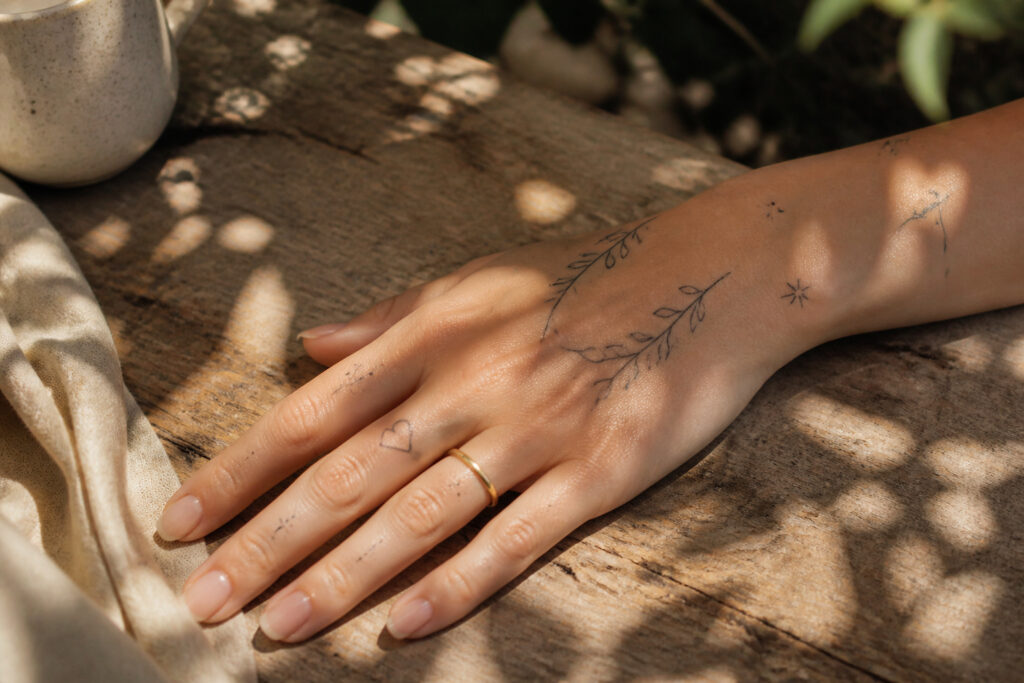
The best hand tattoos for women balance visibility with restraint, since ink on high-movement skin ages faster than anywhere else on the body. A single-needle stem or tiny heart holds its shape where dense shading would blur within a year, and that same tradeoff applies whether you are considering a finger whisper or a full hand composition. Rihanna’s visible Polynesian work on red carpets helped shift hand ink from fringe to mainstream around the early 2010s, but the design language changed too: jewelry-like fine lines replaced the heavy blackwork that dominated before.
1. Simple Hand Tattoos
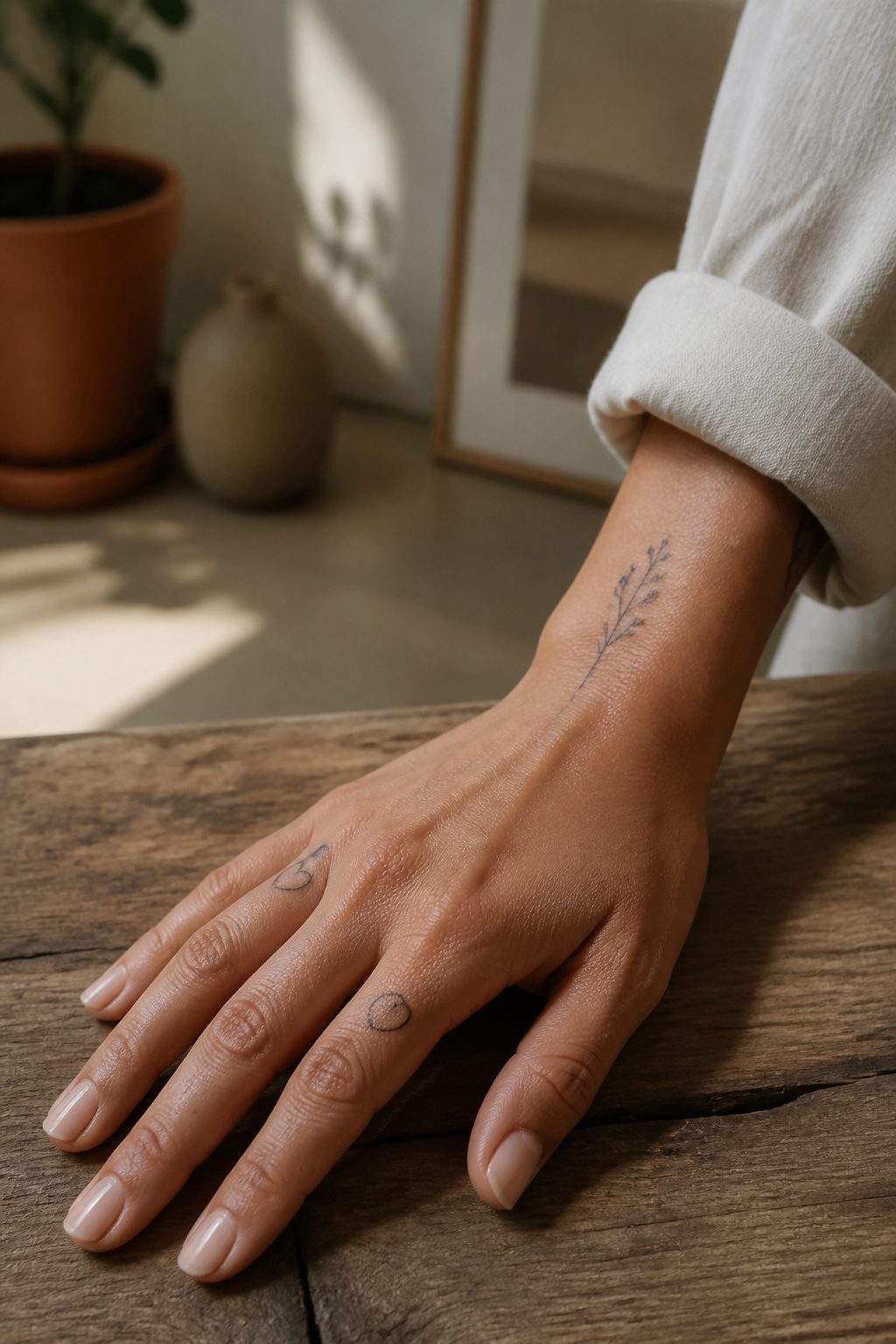
Fine line work sits especially well on hands because the placement is smaller than a back or thigh piece, so a spare design does not fight for room. A single stem, a crescent, or a tiny heart stays readable without crowding the knuckles or the side of a finger. These simple shapes age more gracefully on high-movement skin, too. Every time a hand closes or flexes, the surface shifts; thin, precise lines hold their form better than dense shading that can blur or soften where the skin works hardest. A skilled artist keeps the stroke light and the spacing deliberate, and the result feels understated rather than underdone. For someone who wants the tattoo to stay crisp past the first year, minimal ink is the safer bet.
2. Small Hand Tattoos
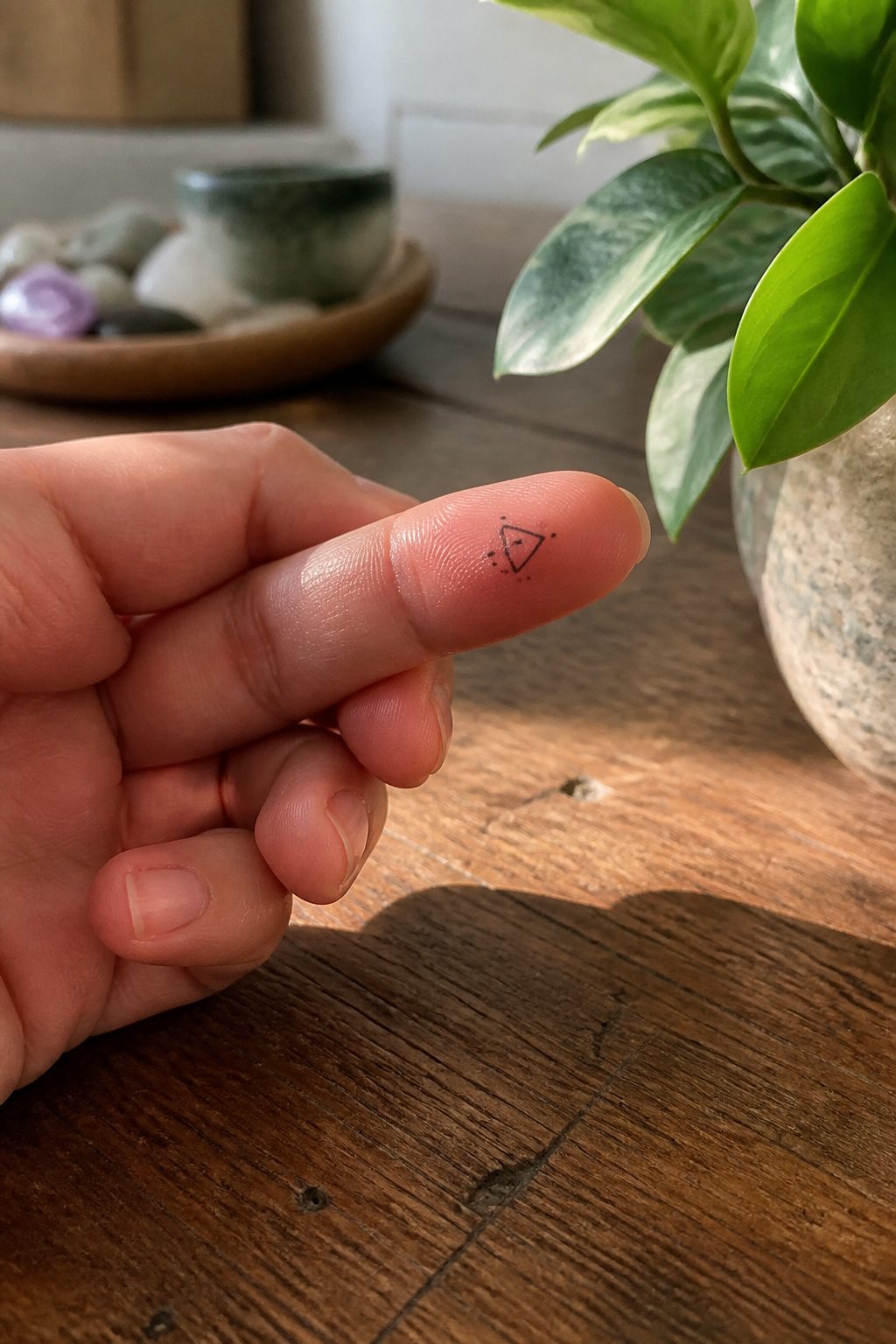
The finger pad carries a line so fine it reads like a whispered secret, and that is exactly the appeal. Skin here sheds and regenerates fast, so a simple symbol holds up where a portrait would blur into a gray smudge within two years. The knuckle edge offers slightly more stability, enough that a single word or tiny geometric mark can stay legible, though it will need a touch-up sooner than work tucked behind the ear. The wrist-to-hand transition is the trickiest real estate: movement and sun exposure team up to fade ink, which makes this spot better suited to a deliberate, open design than to something crowded with detail. Small scale means every millimeter counts. A dot too close to its neighbor becomes a blob; a line too thin disappears entirely. The artists who do this well treat the hand almost like a watch face, designing for the distance at which someone will actually see it.
3. Gorgeous Hand Tattoos
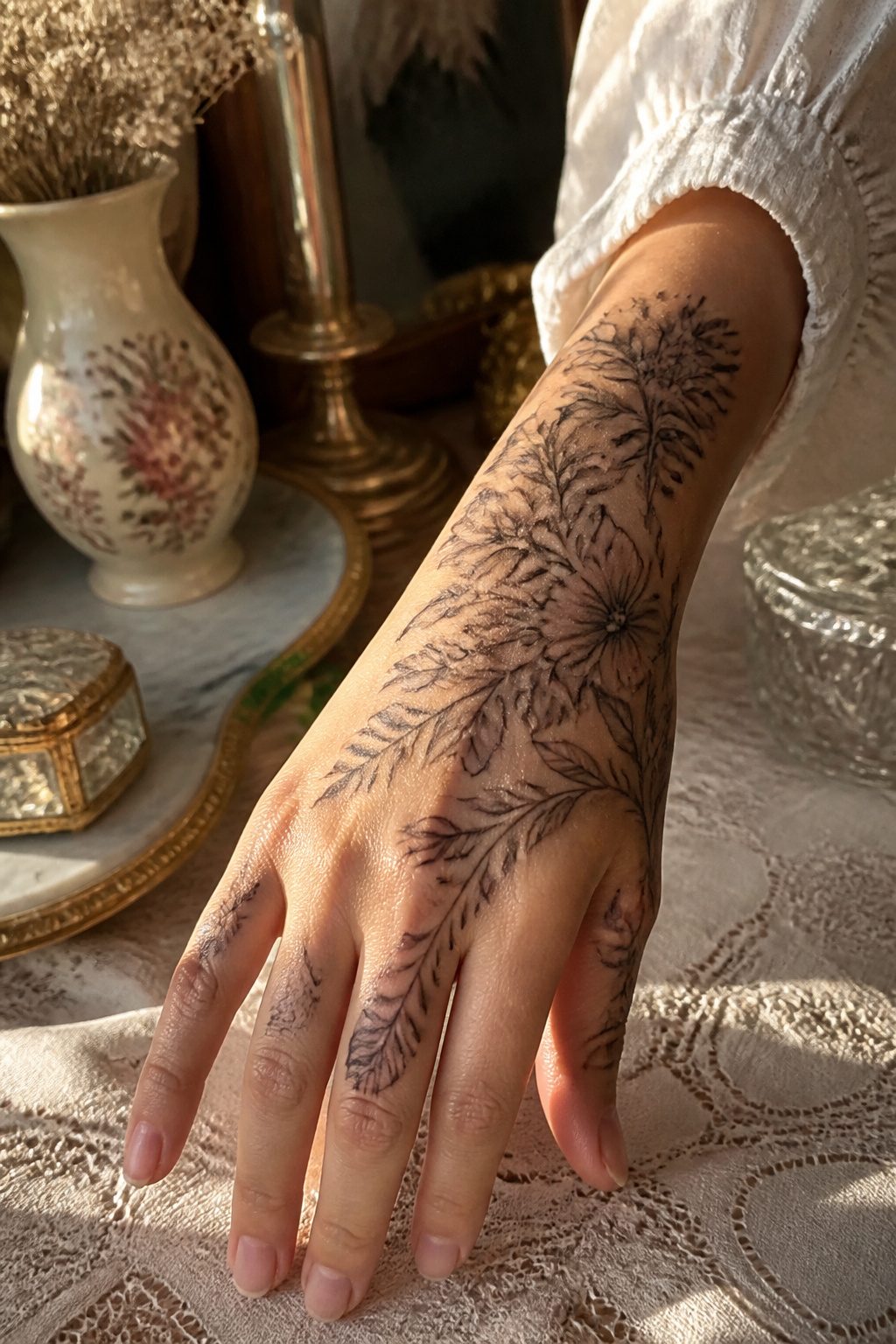
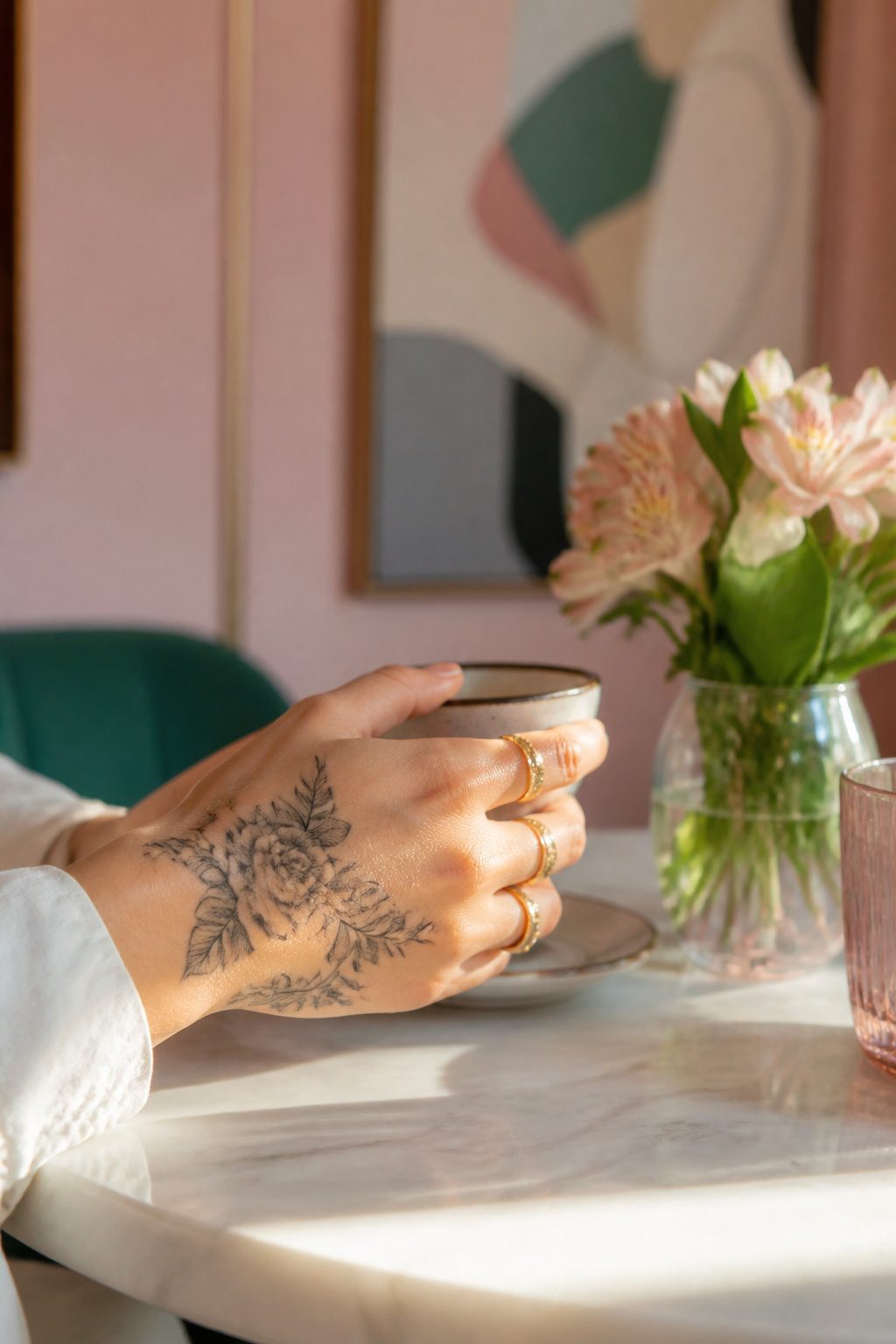
Elaborate floral work turns the hand into something closer to jewelry than skin art. Fine lines and symmetry follow the tendons and knuckles so the design moves with the gesture, not against it. Ornamental patterns, especially henna-inspired pieces, frame the natural architecture this way: a vine that starts at the wrist and splits across the back of the hand, or a mandala centered on the knuckles with filigree trailing toward each fingertip. These statement pieces that use the full hand canvas need balance to avoid looking like a glove. Black and grey shading adds depth without the overwhelm of color, and the contrast between dense blackwork and open skin keeps the hand readable. A full hand design for women tends toward the elegant side of that scale, lighter than the tribal or blackwork pieces usually associated with men. The risk is overbuilding. A hand moves constantly; too much ink and the pattern blurs into noise. The ones that last, visually, leave breathing room around the joints and let the bone structure do half the work.
4. Full Hand Tattoos
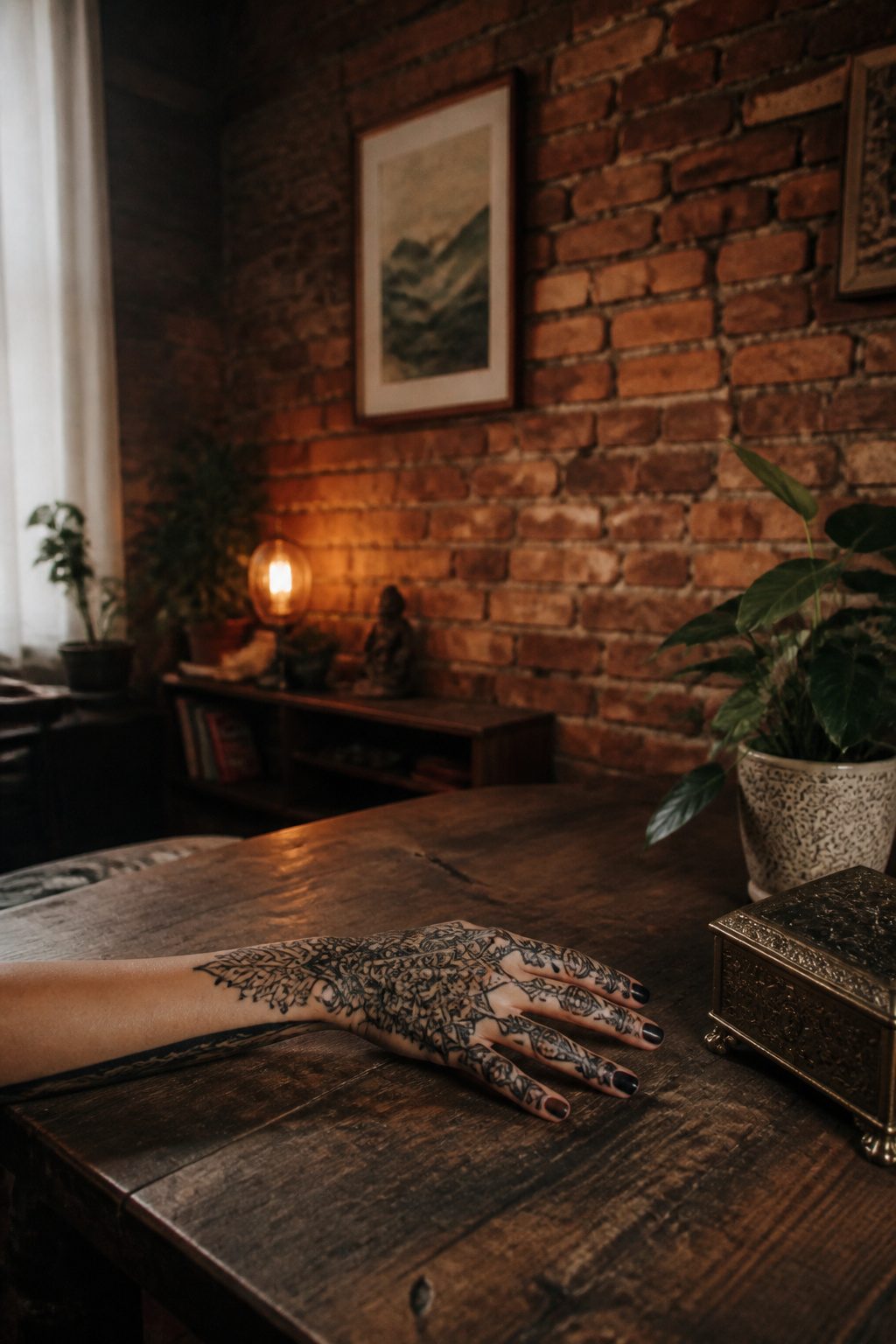
A full hand tattoo starts at the wrist and runs across every surface, fingers included, so the commitment is immediate and impossible to hide. What separates the strong designs from the scattered ones is treating the whole hand as one continuous composition rather than stitching separate images together. The knuckles, the webbing between fingers, the palm side, the back of the hand: each area moves differently and ages at its own rate, which means the artist has to plan how the lines flow when the hand is both open and closed.
Blackwork and tribal patterns have dominated this space for men, but the pieces that read as genuinely elegant on women tend toward finer linework and more deliberate negative space. Dense color everywhere can turn muddy as the skin on hands sheds and regenerates faster than almost anywhere else on the body. The tradeoff is real: a lighter, more decorative approach stays readable longer, though it may need touchups sooner than a bold traditional piece.
The visibility is the point and the price. These are not tattoos you reveal on your own schedule; they announce themselves in every handshake, every job interview, every family gathering. That permanence is what makes the composition matter so much. A sleeve can be covered with a long sleeve. A full hand piece is the decision, made visible, every day.
5. Tattoo Styles That Work
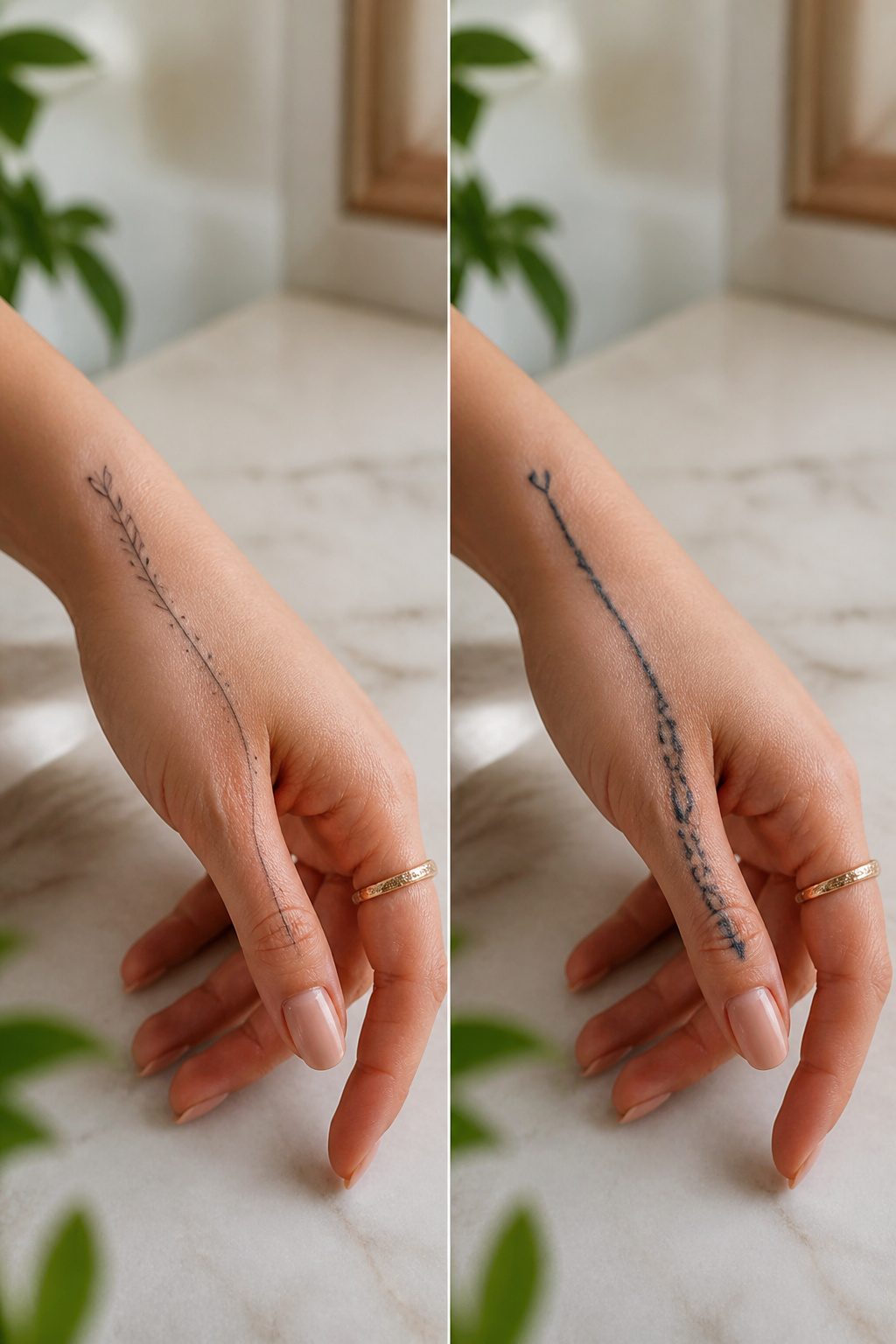
Fine line work relies on thin, precise strokes that sit lightly on the hand, forming flowers, symbols, or minimalist shapes with a softness that reads as feminine without trying too hard. The style ages well when the artist knows their machine, since single-needle lines blur fast in clumsy hands. Black and grey offers the opposite virtue: depth and sophistication built from shading rather than color, creating realistic roses or abstract patterns that hold up to daily hand washing and sun. A single line tracing the side of the hand, stretched clean from wrist to knuckle, turns the format itself into the statement; it is not a placement you see on every second Instagram scroll. Traditional and ornamental styles can work here too, though they fight harder against the hand’s limited flat real estate. Color demands more commitment on a canvas that sees this much friction, and minimalism lives or dies by the exactness of its geometry. Two ways to play this: let the fine line stay whisper-quiet, or let black and grey build shadow until the image almost lifts off the skin. The shading wins if you want the tattoo to read from across a room; the line wins if you prefer people lean in.
6. Where to Place It
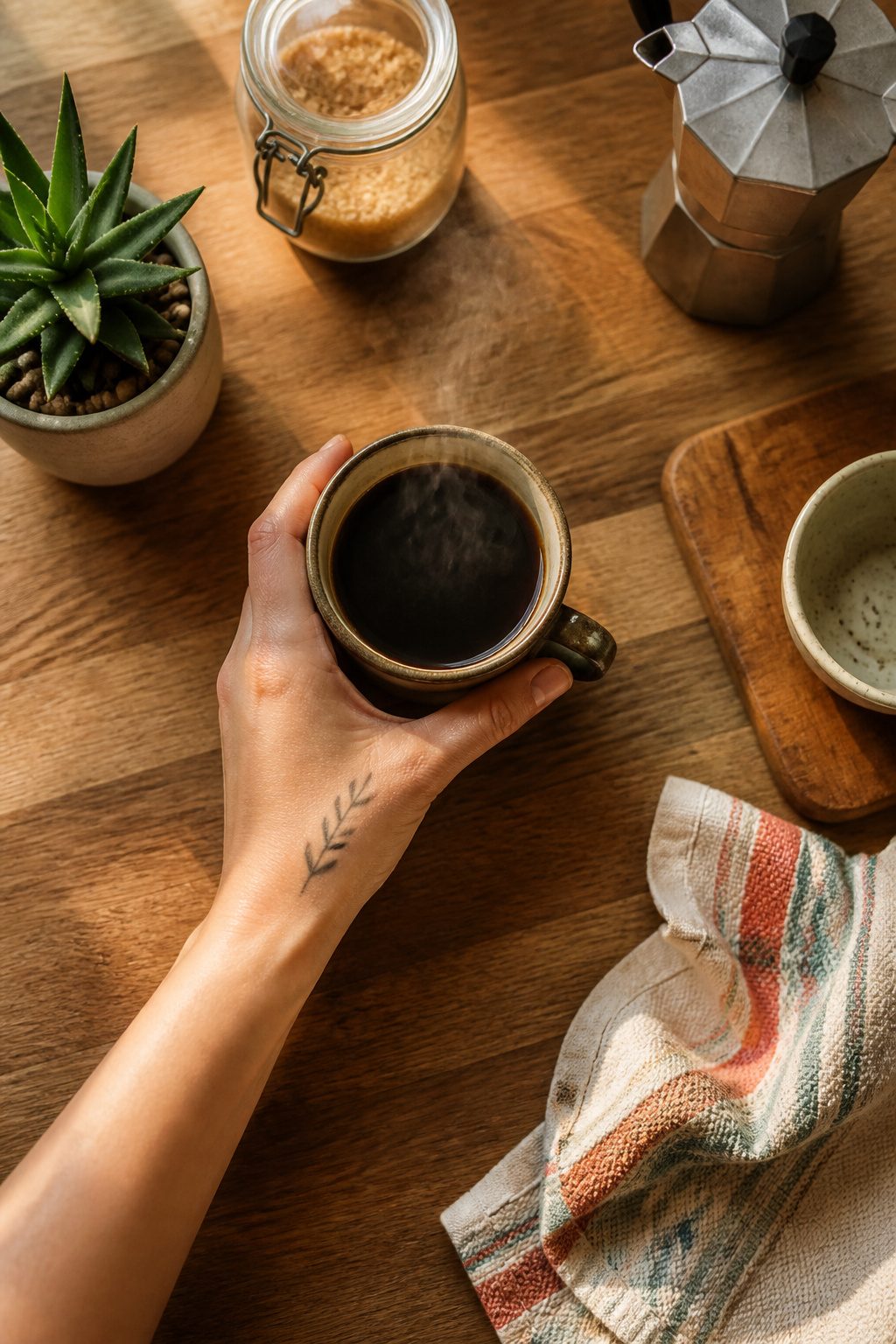
Finger placement turns a tattoo into the rings you never have to take off, which is why so many women start there. The skin stays busy though, so simple symbols or clean scripts hold up better than anything with fine lines packed tight. The back of the hand is the spot for detail work, flat enough that florals, geometry, or mandalas sit sharp and move naturally when you gesture. That visibility is the trade: your ink becomes part of every wave, every reach across a table. The side of the hand, running along the edge from wrist to pinky, gets less traffic and heals a touch easier, but it also hides faster in a relaxed pose. Picking between them comes down to whether you want the tattoo seen first or noticed second.
Hand Tattoo Aftercare
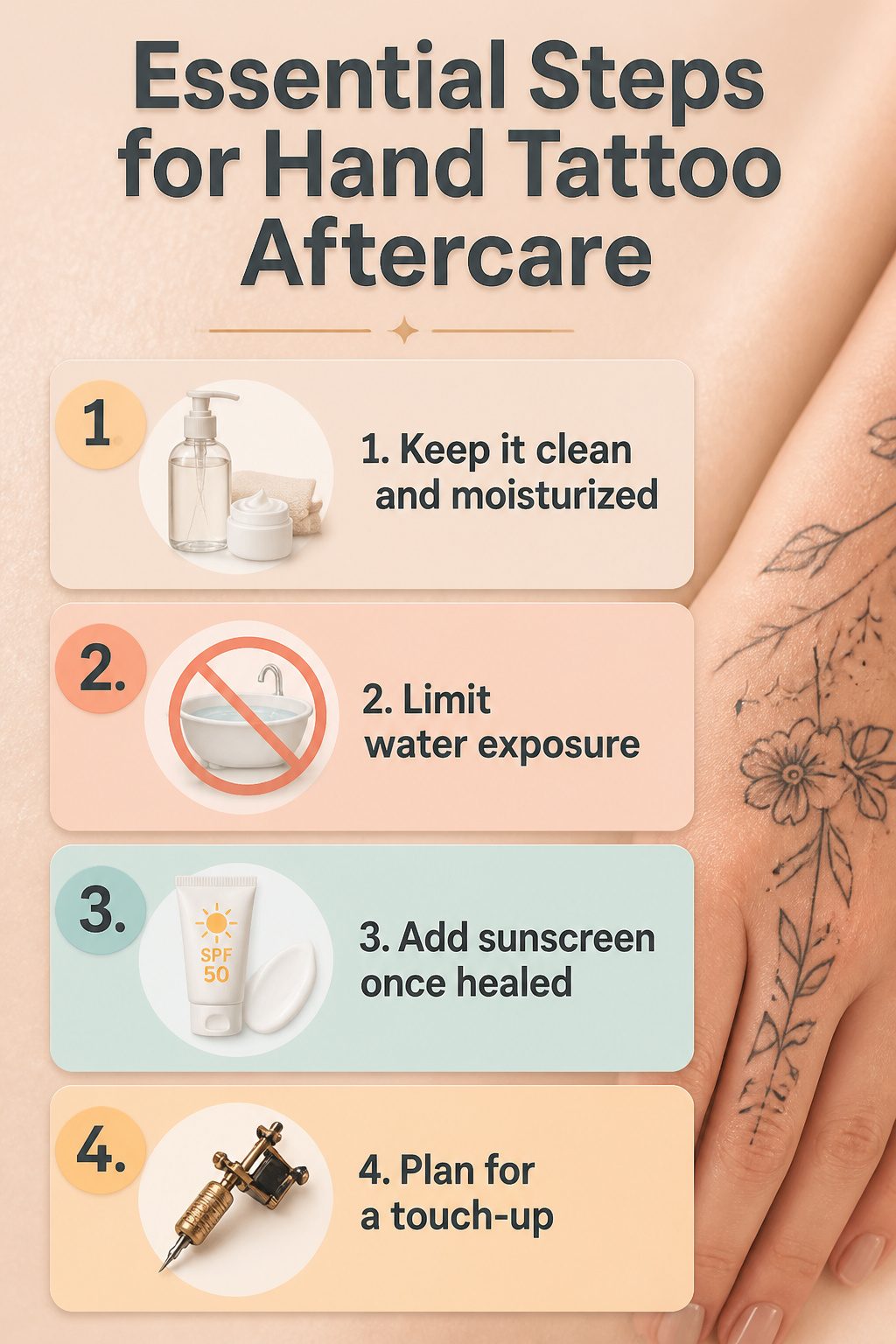
Hands heal differently than almost anywhere else on the body. Constant motion, friction, and sun exposure mean the skin turns over faster here, so a hand tattoo for women demands stricter aftercare than a shoulder or thigh piece if you want the lines to stay crisp.
- Keep it clean and lightly moisturized. Wash with mild, fragrance-free soap, then apply a thin layer of moisturizer. The goal is preventing dryness without drowning the skin in product.
- Limit water exposure. Soaking hands in dishwater, baths, or pools softens the healing skin and can pull ink out. Short showers are fine; prolonged submersion is not, especially in the first stage of healing.
- Add sunscreen once fully healed. Daily SPF becomes non-negotiable after the skin closes. Sun is the main driver of fading, and hands never get a break from it. A quick dab each morning keeps the work looking newer, longer.
- Plan for a touch-up. The combination of friction and rapid cell turnover on hands means some settling and fading is normal. Most artists recommend coming back after a few months to sharpen any spots that have softened.
What Hand Tattoos Mean
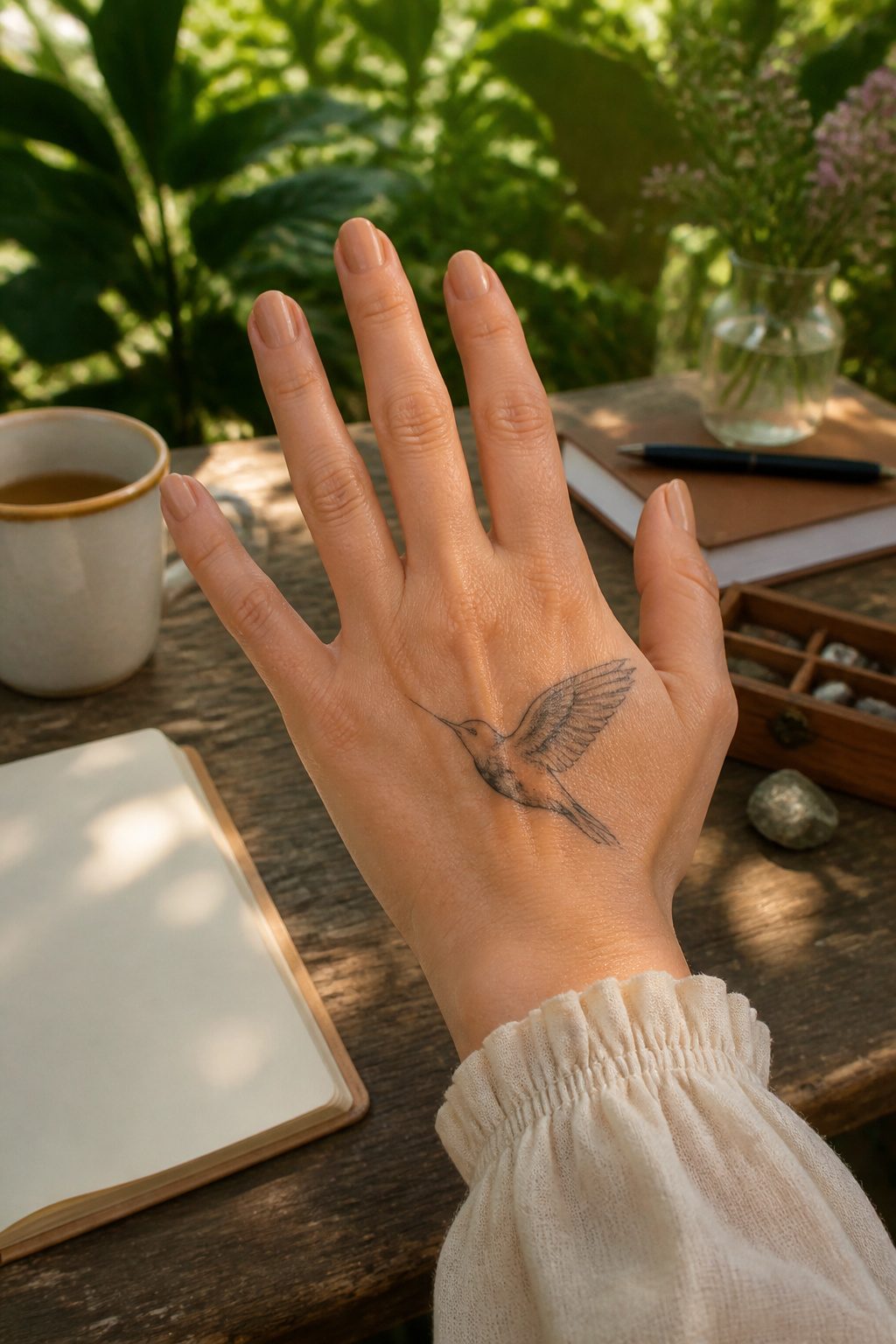
A bird in flight on the back of a hand reads as freedom because the posture is unmistakable: wings spread, body angled upward, the suggestion of movement frozen in ink. That meaning lands harder on a hand than on a shoulder hidden under a sleeve. The placement is the point.
Roses carry their own weight, and on a hand they become a statement worn through a handshake or while holding a coffee cup. A date rendered in fine script across the knuckles or tucked along a finger marks a milestone the wearer has chosen to carry in every gesture. The hand offers no retreat; the tattoo is always part of the conversation.
What separates hand work from back or arm placement is precisely this exposure. The canvas is smaller, broken by joints and tendons, with little flat space to work with. Sub-placements matter: the palm, the fingers, the thumb, or a design that flows across the whole hand. Women tend toward simpler, more decorative approaches here, lines that stay elegant under scrutiny because scrutiny is guaranteed. The result is ink that functions as identity rather than ornament, a story told in every visible moment.
Why Hand Tattoos Took Off
Hand tattoos for women used to sit at the edge of what felt acceptable, but that shifted somewhere around the early 2010s. Rihanna walked red carpets with her traditional Polynesian hand ink fully visible, and Cara Delevingne posted her first tattoo in 2013, a lion on her right index finger done by Bang Bang, tagging Rihanna in the caption. The placement mattered: these weren’t hidden under sleeves or tucked behind ears. They were right there in handshake range.
"It seems to have become a thing that people from all walks of life can get into… We’ve come to realise that visible tattoos don’t affect the person, and that it’s another way we can express ourselves and show a little more of our identity."
— Elle
What changed was the design language itself. The old elaborate hand pieces, the kind male football players and singers wore for decades, gave way to intricate and dainty work that reads more like jewelry than rebellion. Hailey Bieber’s strategically-placed ink, Zoë Kravitz’s tiny scattered artwork, Ariana Grande’s statement pieces: each one made the hand feel like available canvas rather than career risk. Social media accelerated what celebrity started. A hand tattoo in a selfie travels farther and faster than the same ink in a magazine spread, and the feedback loop between tattoo models, artists, and clients flattened the old hierarchy of who could wear visible ink. The result is that hand tattoos for women now register as mainstream self-expression, not fringe choice.
Frequently Asked Questions
What are some popular hand tattoo designs for women?
Fine line symbols, crescents, and tiny hearts work well for simple placements, while elaborate florals, ornamental mandalas, and henna-inspired vines use the full hand canvas. Black and grey roses or abstract patterns add depth without color, and single continuous lines from wrist to knuckle turn the format itself into a statement. Women tend toward lighter, more decorative approaches than the dense tribal or blackwork pieces usually seen on men.
How do I take care of my hand tattoo?
Wash with mild, fragrance-free soap and apply a thin layer of moisturizer to prevent dryness without oversaturating the skin. Avoid soaking hands in dishwater, baths, or pools during healing, since prolonged submersion can pull ink out. Once fully healed, daily sunscreen becomes non-negotiable; sun is the main driver of fading on a surface that never gets a break from exposure. Plan for a touch-up after a few months, as friction and rapid cell turnover on hands mean some settling is normal.
What do hand tattoos symbolize?
A bird in flight reads as freedom because the posture, wings spread and angled upward, lands harder on a hand than on a hidden shoulder. Roses become statements worn through every handshake, while dates in fine script mark milestones carried in every gesture. The meaning is inseparable from the placement itself: the hand offers no retreat, so the tattoo functions as identity rather than ornament, a story told in every visible moment.