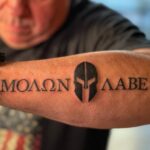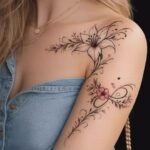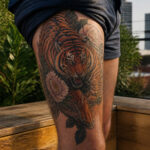

A patchwork tattoo sleeve builds up from individual designs rather than a single, unified theme planned from the start. The style demands patience and a clear plan for negative space, or the arm ends up looking like a sticker collection instead of a quilt. My artist started mine with a pencil sketch, then traced it in Sharpie on my arm so we could see how the gaps would close before any needle touched skin.
1. What Patchwork Tattoos Are
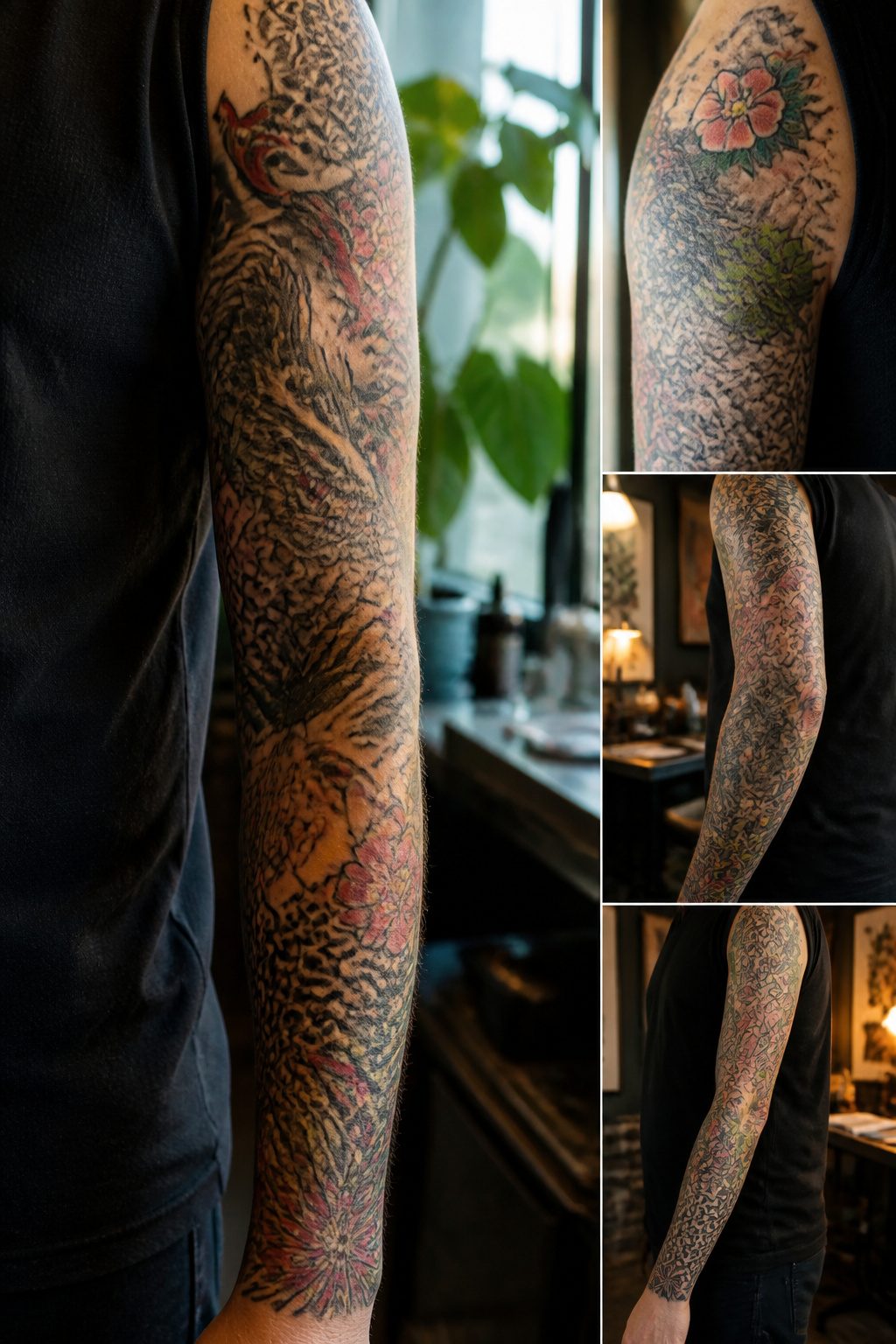
A patchwork tattoo sleeve builds up from individual designs rather than a single, unified theme planned from the start. Where traditional sleeves commit to one narrative, a Japanese dragon winding from shoulder to wrist or a consistent biomechanical style, patchwork lets each piece stand on its own while the collection eventually reads as one canvas.
The shift picked up momentum in the 1990s when flash tattoos, those pre-drawn designs hanging in shop windows, became more accessible. Collectors started mixing a skull from one sheet, a rose from another, a band logo from a third, letting personal taste override visual consistency. The result looks like a quilt: varied textures, different artists’ hands, years between sessions, all held together by the skin underneath.
What draws people to the style is the room for course correction. A themed sleeve locks you in; add one piece that breaks the mood and the whole arm looks off. Patchwork forgives that. A tattoo from your twenties sits beside one from your forties, a memorial piece beside a joke, fine line beside bold traditional. Each marks a specific year, a specific reason, without needing to fit a larger aesthetic plan.
2. Conceptualizing Your Design
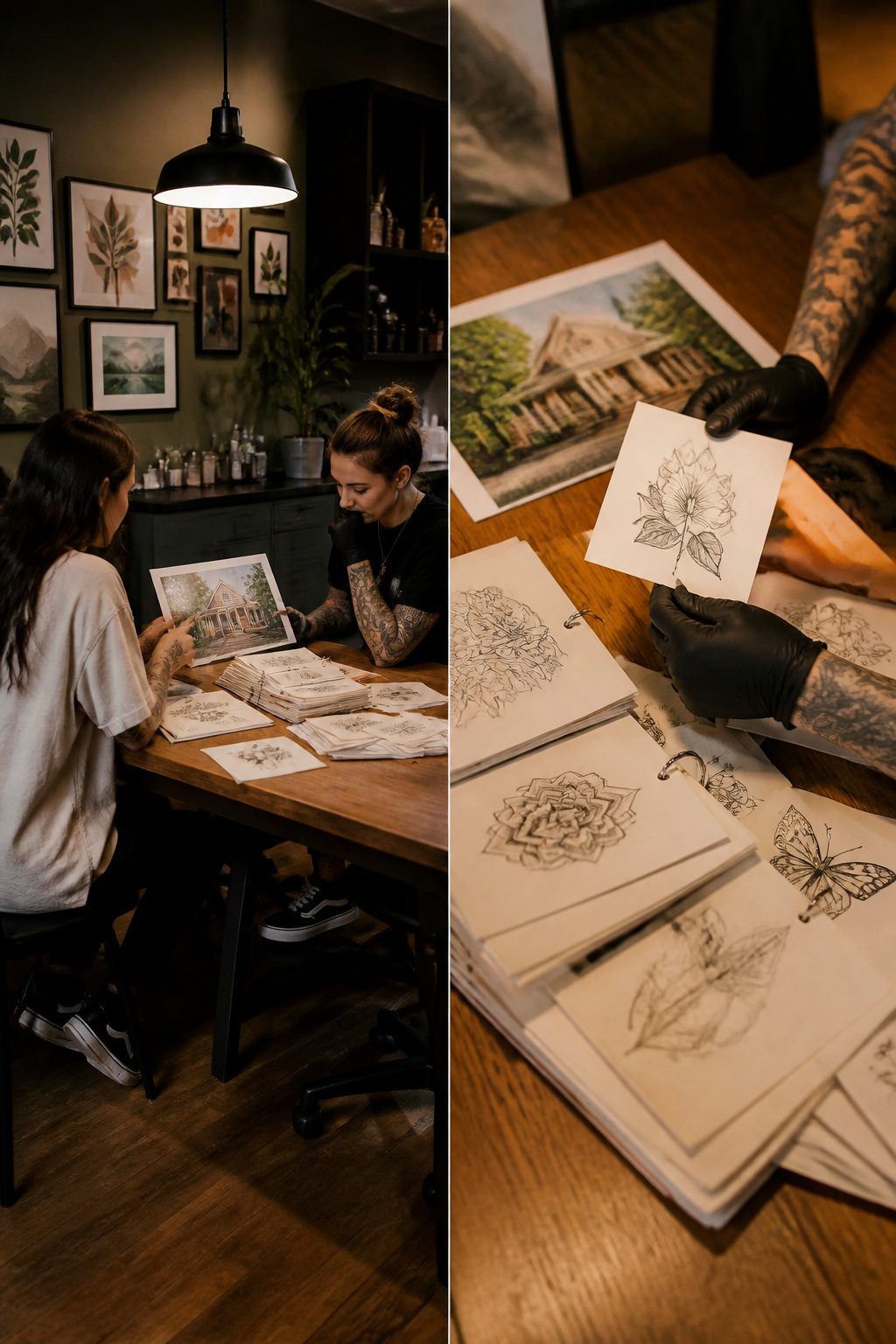
A patchwork tattoo starts with the stories you already carry, not with a blank arm and a Pinterest board. When I sat down with my artist for the first piece of what would become a sleeve, I had a list of three symbols: my grandmother’s gardenia, the coordinates of the house I grew up in, and a line from a poem I read at twenty-two. She asked which one mattered most right now, and that question became the filter for everything that followed.
Each piece in a patchwork sleeve should stand alone as its own chapter, not wait for the rest to give it meaning. The consultation is where you test whether a symbol holds up under that pressure. My artist pushed back on the coordinates, suggesting they would read as numbers to anyone else and fade faster than an image. We landed on a simplified gardenia for the first session, and that choice taught me the real discipline of this style: saying no to good ideas so the great ones have room to breathe.
The collaboration works best when you bring specific experiences rather than vague themes. "Travel" is a category; the night ferry from Haines to Juneau at 2 a.m. is a tattoo. Your artist can do something with the second one. Over time, the collection becomes a record of what actually shaped you, not what you wished had.
3. Sketching the Layout
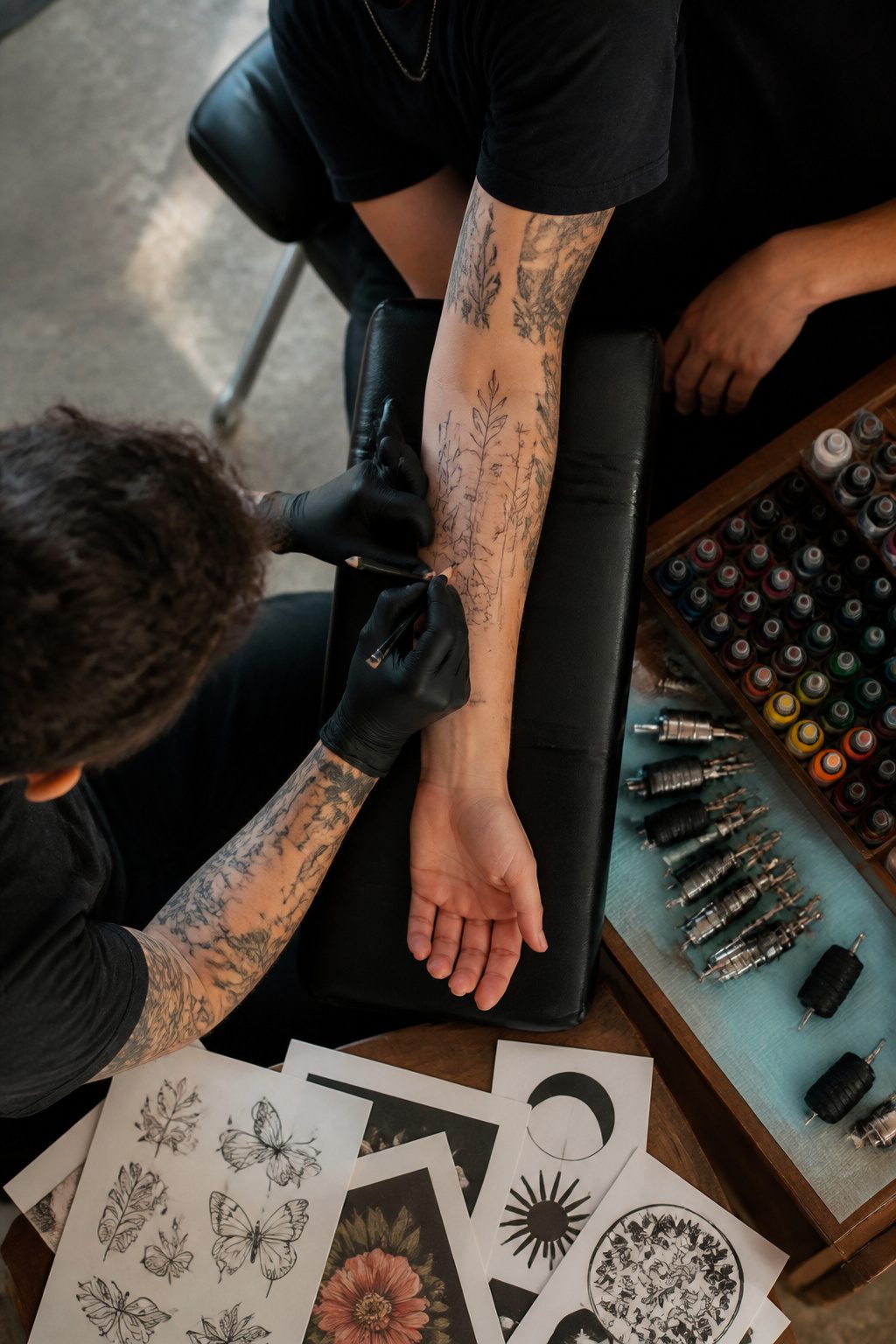
The artist’s layout is what turns a pile of separate tattoos into a sleeve that actually reads as one piece. Mine started with a simple pencil sketch on paper, then a Sharpie tracing on my arm so we could see how the gaps would close. Negative space is the glue: the un-inked skin between pieces shapes the overall pattern as much as the ink itself. Without planning for it, small tattoos drift apart and the arm looks like a sticker collection instead of a quilt.
Styles can mix, traditional beside neo-traditional beside blackwork, but the eye needs a path through the chaos. My artist grouped the mystic pieces, the ones I’d collected from travel, tighter in the inner forearm where I see them, and let the outer arm breathe with larger single images. That rhythm of density and rest is what makes patchwork feel intentional rather than accidental. The downside is the time cost: dozens of small pieces, each with its own stencil and needle change, rack up hours and dollars against a single-focus sleeve. But the payoff is a sleeve that can keep growing without a fixed endpoint, each new piece finding its place in the puzzle the artist mapped out before the first line went down.
4. The Tattooing Process
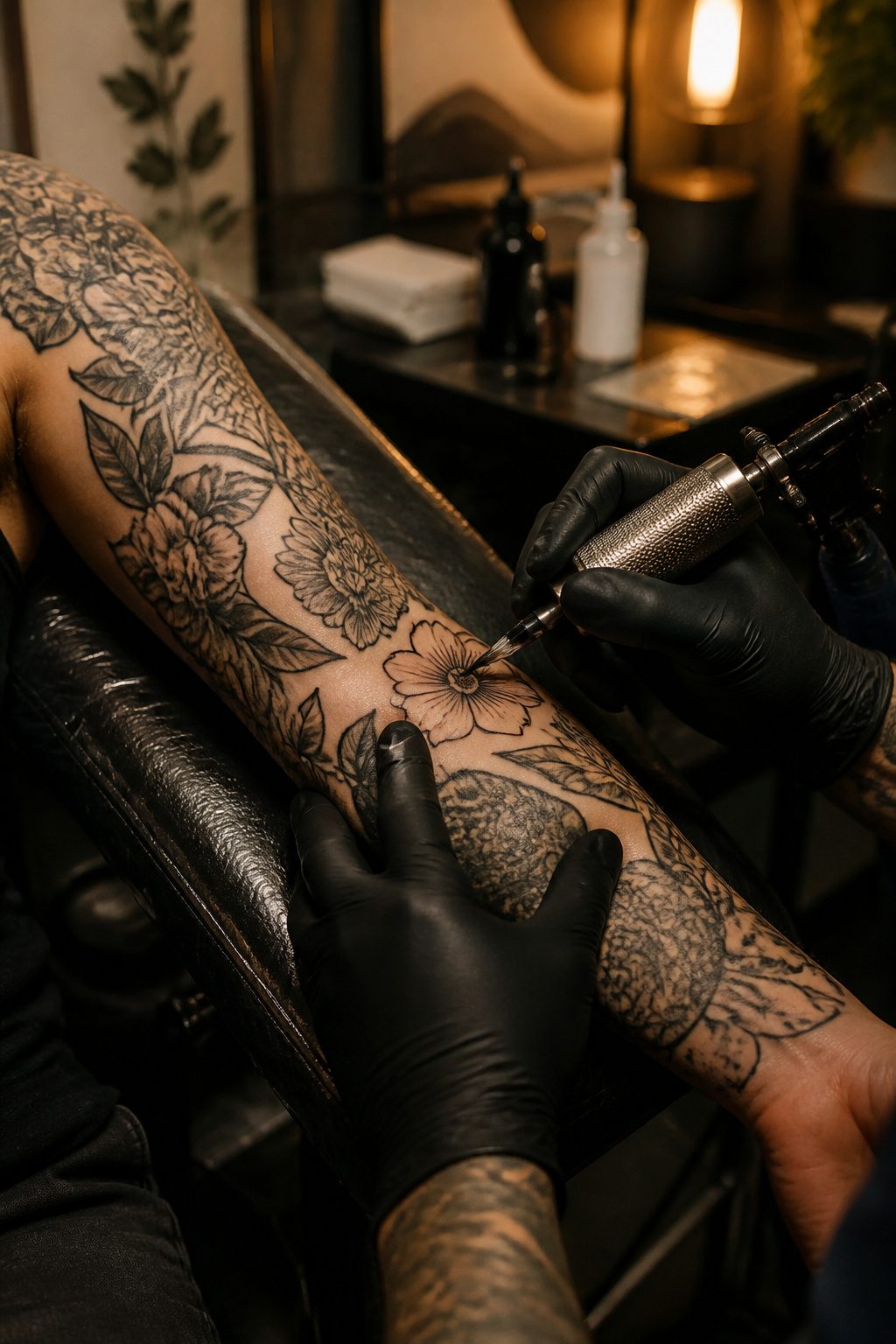
The patchwork effect lives or dies while the needle is running. Each piece gets inked with negative space left deliberately between the edges, not as an afterthought but as the design’s connective tissue. The artist maps placement so that the gaps themselves read as part of the pattern, turning the untouched skin into the thread that stitches disparate images into one sleeve.
Spacing tightens or loosens the visual rhythm. A quarter-inch gap reads as deliberate intention; skin showing through in irregular patches reads as a collection that never cohered. The tattooer works from a central anchor piece outward, adjusting density as the sleeve builds so that a fine-line botanical beside a heavy blackwork animal does not fight for dominance but settles into neighboring territory.
Style mixing complicates the fit. A traditional eagle with bold outlines wants more breathing room than a stippled geometric piece. The collector and artist settle these tensions session by session, sometimes holding back on a favored design because its scale would swallow the gap that keeps the patchwork legible.
5. Adding Pieces Over Time
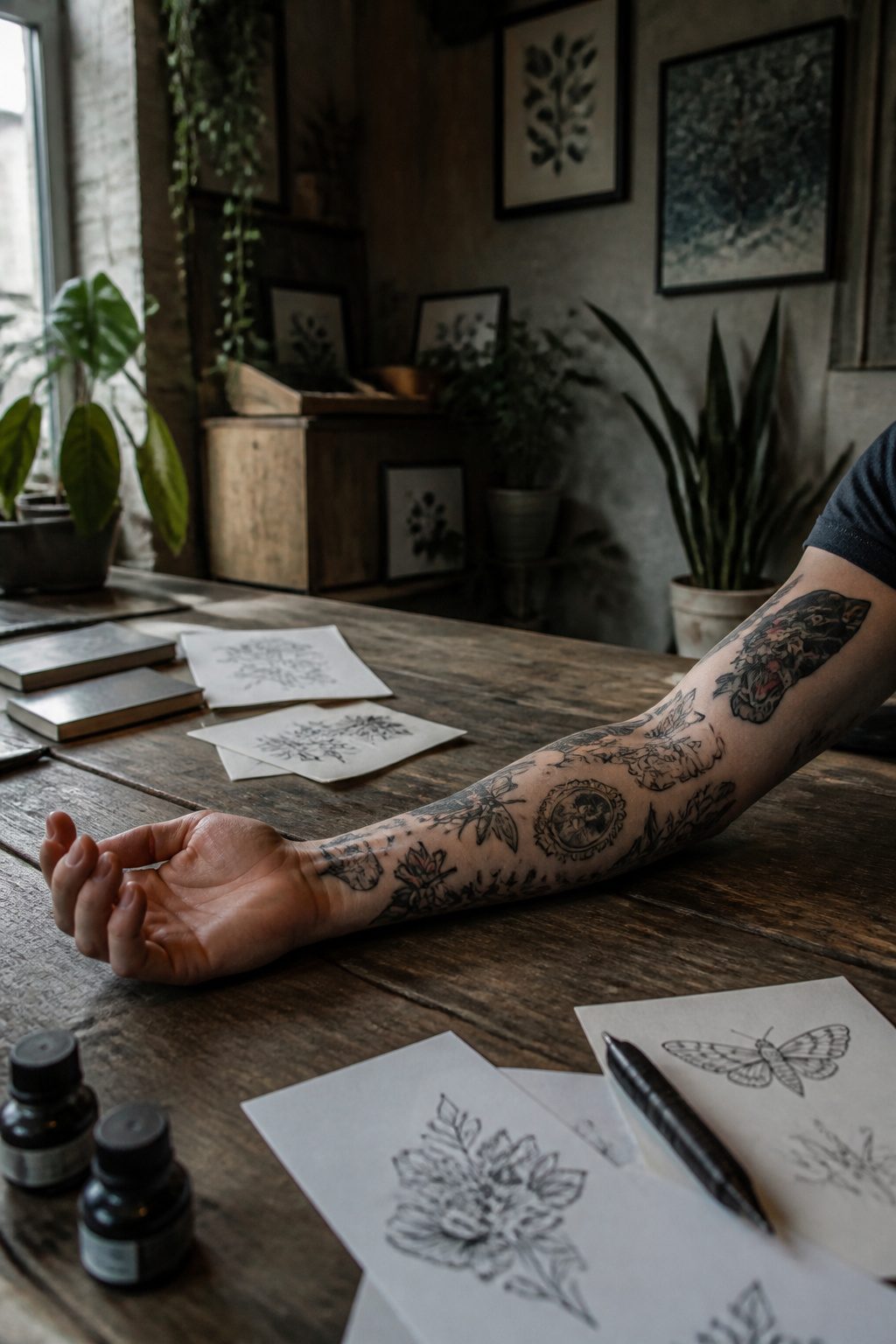
A patchwork sleeve never really finishes; it just reaches the next stopping point. Each new piece sits beside the ones already there, and the gaps between older tattoos become part of the design language rather than mistakes to fix. The spacing you left two years ago for "maybe something later" now shapes what can go there.
This living quality is what draws people to the style, though it demands patience. A traditional sleeve commits to one theme in a single push, but patchwork tattoos grow as your interests do, chapter by chapter. The dragon you wanted at twenty-five, the botanical piece after your garden took off, the small memorial when you needed one, each finds its place without breaking what came before.
The downside is real: dozens of smaller sessions cost more and take longer than one unified design, and placement choices compound. A piece that read fine alone can fight its neighbors once the arm fills in. Working with an artist who tracks the whole arm, not just the day’s stencil, keeps the later additions from looking like afterthoughts that landed wherever space remained.
Some collectors plan the negative space deliberately, leaving corridors of skin that let older pieces breathe. Others lean into density, accepting that the sleeve’s character will shift from sparse to saturated over years. Either path works; mixing them without intent is where patchwork sleeves go wrong.
6. Aftercare for Patchwork Tattoos
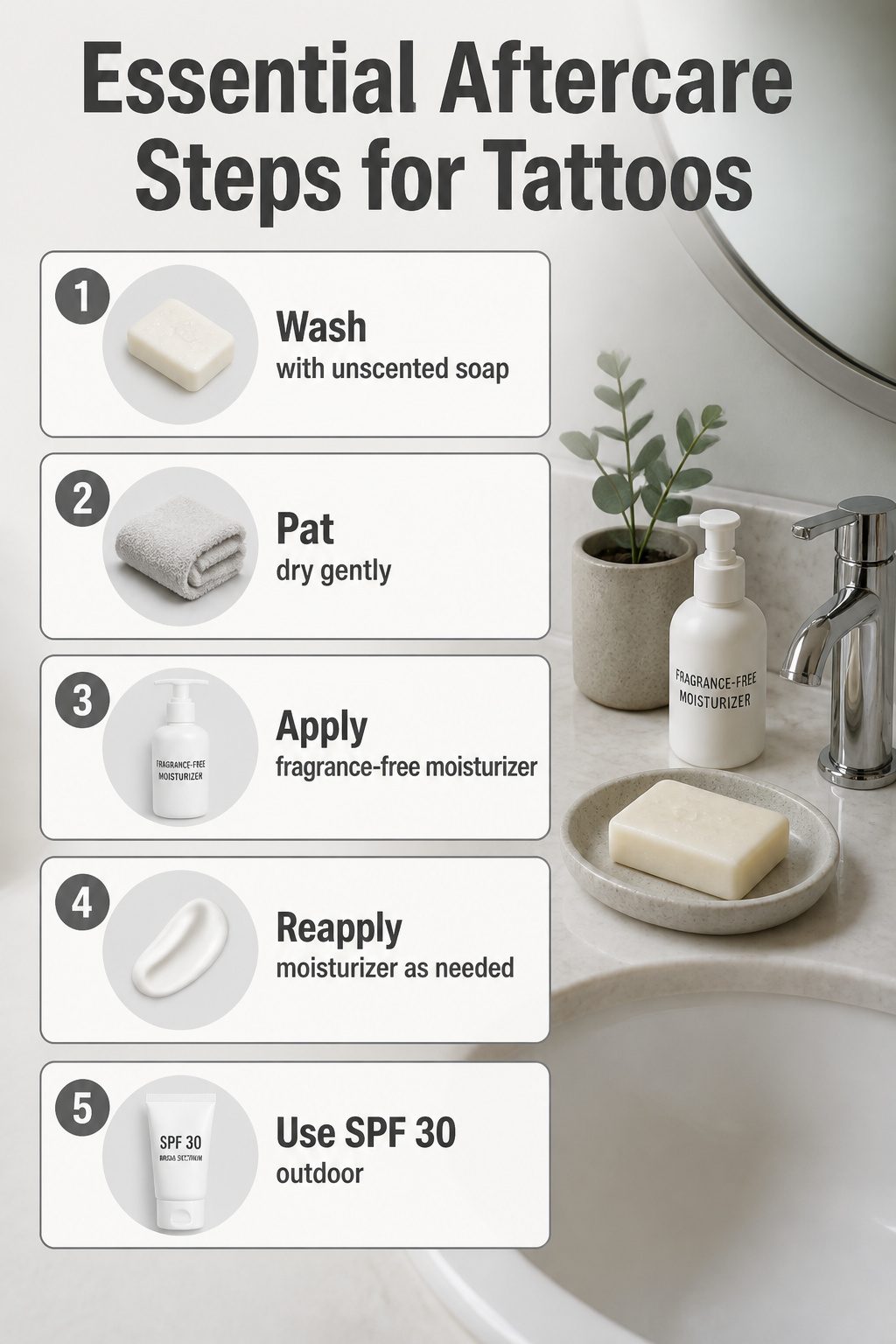
Fresh ink on a patchwork sleeve needs the same care as any other tattoo, just repeated across multiple sessions. Wash gently with unscented soap, pat dry, and apply a thin layer of fragrance-free moisturizer twice daily for the first two weeks. The healing skin tells you what it needs: tightness means more lotion, redness that stays hot after day three means a call to the artist.
Sun exposure is where patchwork work takes the biggest hit over time. UV breaks down pigment unevenly, and a faded patch stands out against its neighbors in a way a single solid sleeve rarely does. A mineral sunscreen of SPF 30 or higher, reapplied every two hours outdoors, keeps the contrast sharp.
Each healed patch becomes part of the larger plan, but only if the aftercare holds. The colors stay where they were placed, the lines stay where they were drawn, and the next artist has a stable surface to build against. Skip the aftercare on one piece and the whole sleeve carries the dull spot.
7. Design Types That Work
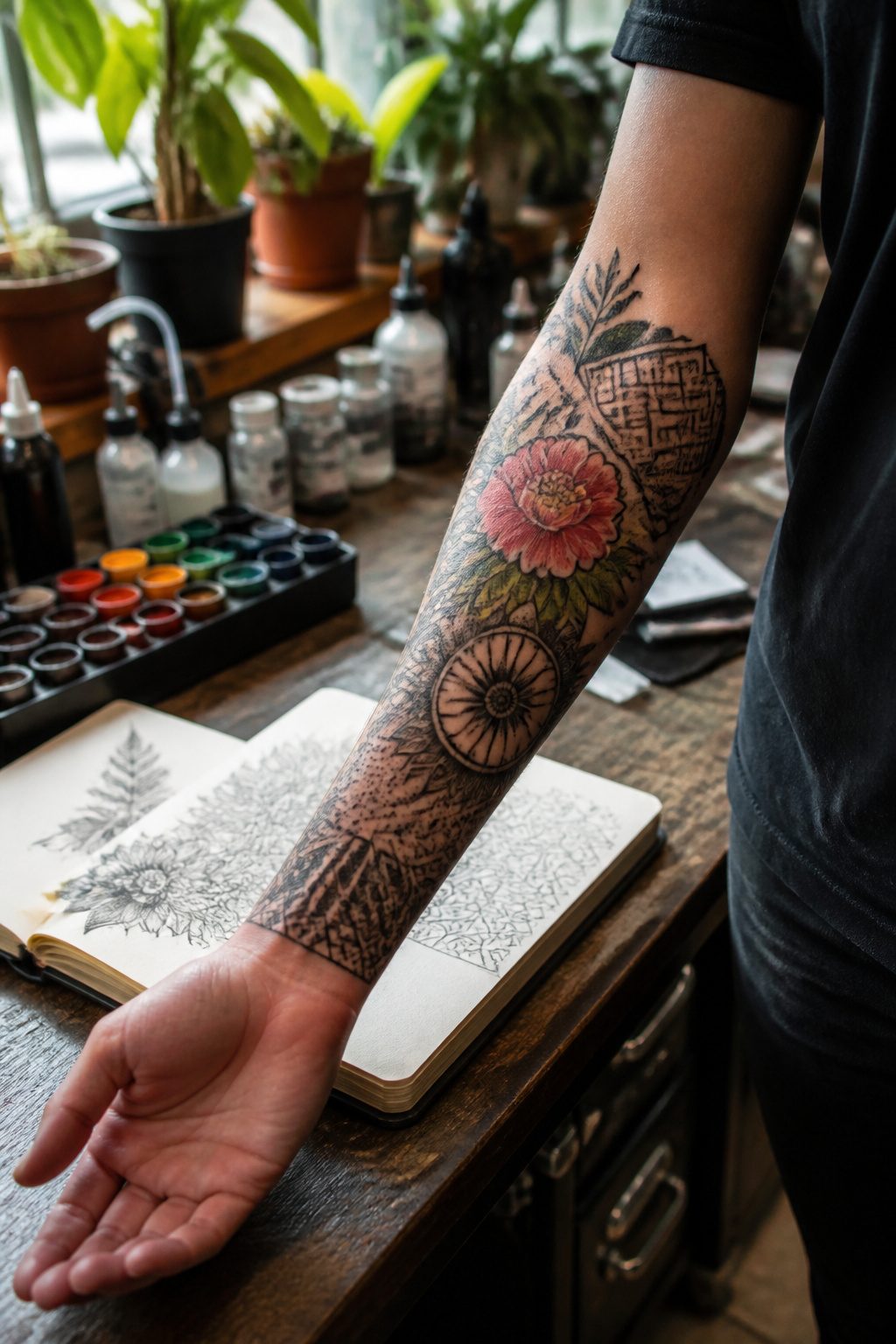
Certain motifs lend themselves better to the patchwork approach than others. Floral designs work because vines and stems can weave between separate pieces, making the gaps look intentional. Animal motifs carry the same flexibility; a wolf on the forearm and an owl on the shoulder read as related without needing to touch.
Geometric patterns offer a clean fallback. Lines, dots, and repeating shapes can frame other tattoos or stand alone without fighting for visual space. Symbolic tattoos, the kind that map to specific memories or phases of life, fit the format almost too well. Each piece marks its own date and story, and the arm becomes a timeline whether planned or not.
Abstract art sits at the other end. Without a recognizable anchor, it demands more from the artist to keep the sleeve from feeling like random marks. I would not start a patchwork sleeve there unless the collector already had a strong sense of how colors and forms would repeat across sessions.
8. Pros and Cons of the Style
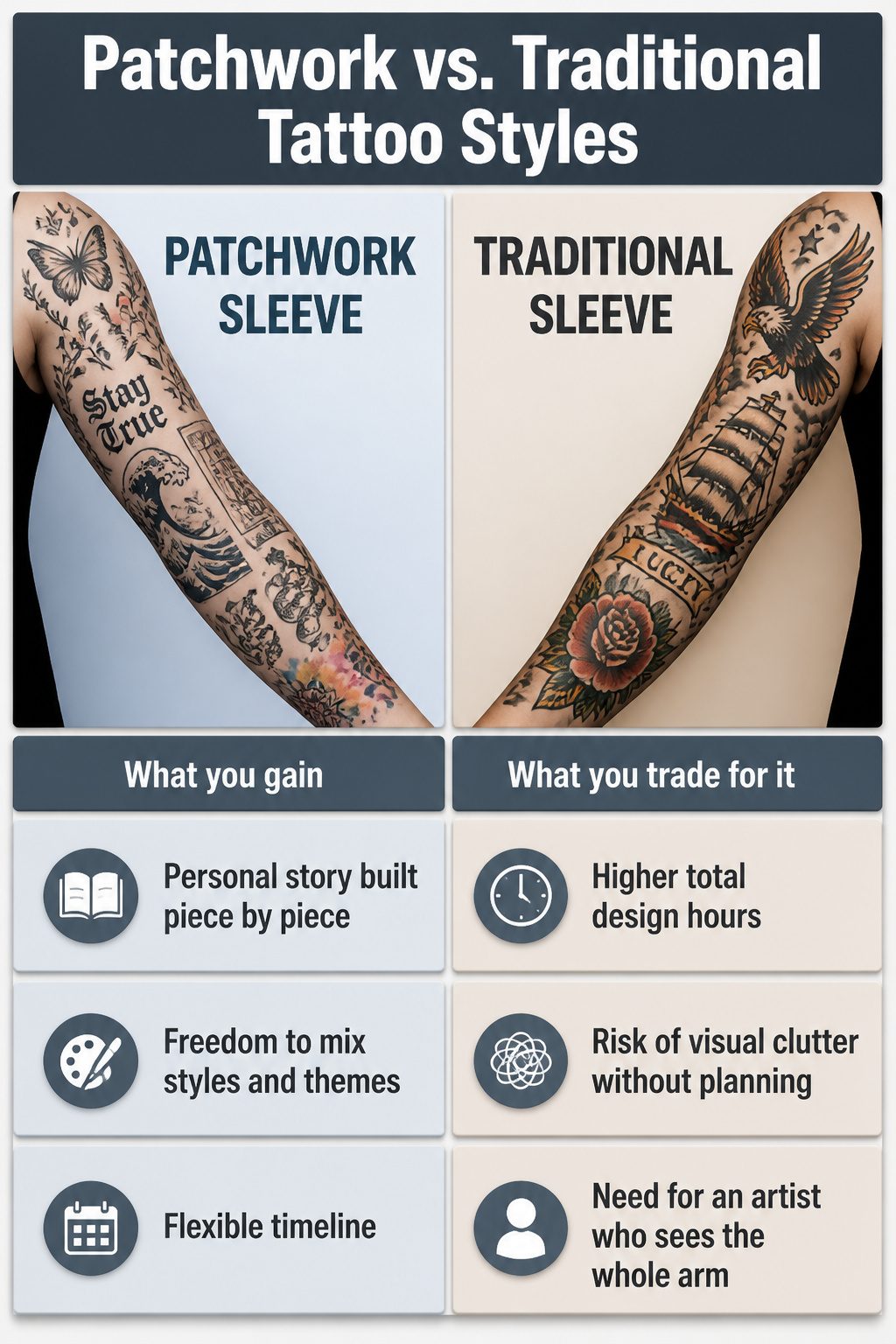
Patchwork sleeves reward the patient collector with room to let the design evolve as your life does, adding a new piece after a trip, a milestone, or a shift in taste without scrapping what came before. The gaps between tattoos can carry meaning too, marking time the way a photo album does. Creative freedom runs high: traditional Americana beside fine-line botanicals, blackletter text beside watercolor washes, all held together by placement and negative space rather than a single forced theme.
That same freedom is what makes the style risky. Without a unifying hand, a patchwork sleeve reads as thirteen random tattoos instead of one deliberate composition. The artist has to balance contrast against cohesion, which takes a broader skill set than replicating one flash sheet across an arm. Sessions often cost more in total than a planned sleeve because each piece needs its own design time, and touch-ups to neighboring work can multiply.
| What you gain | What you trade for it |
|---|---|
| Personal story built piece by piece | Higher total design hours |
| Freedom to mix styles and themes | Risk of visual clutter without planning |
| Flexible timeline, no single big commitment | Need for an artist who sees the whole arm, not just the day’s stencil |
History of Tattoo Sleeves
Tattoo sleeves started as cultural documents, not personal ones. Japanese irezumi and Polynesian tattoo arts each followed a single narrative rooted in tradition, with every element serving a unified story the wearer could not alter. That rigidity held for centuries.
The shift toward individual expression opened the format without changing its name. Flash tattoos in the 1990s supplied the real break: small, standalone designs collected from shop walls or conventions, each chosen on impulse rather than planned as part of a whole. Wearers began accumulating these pieces across an arm, letting the sleeve grow organically from separate moments and separate artists rather than one mapped-out vision.
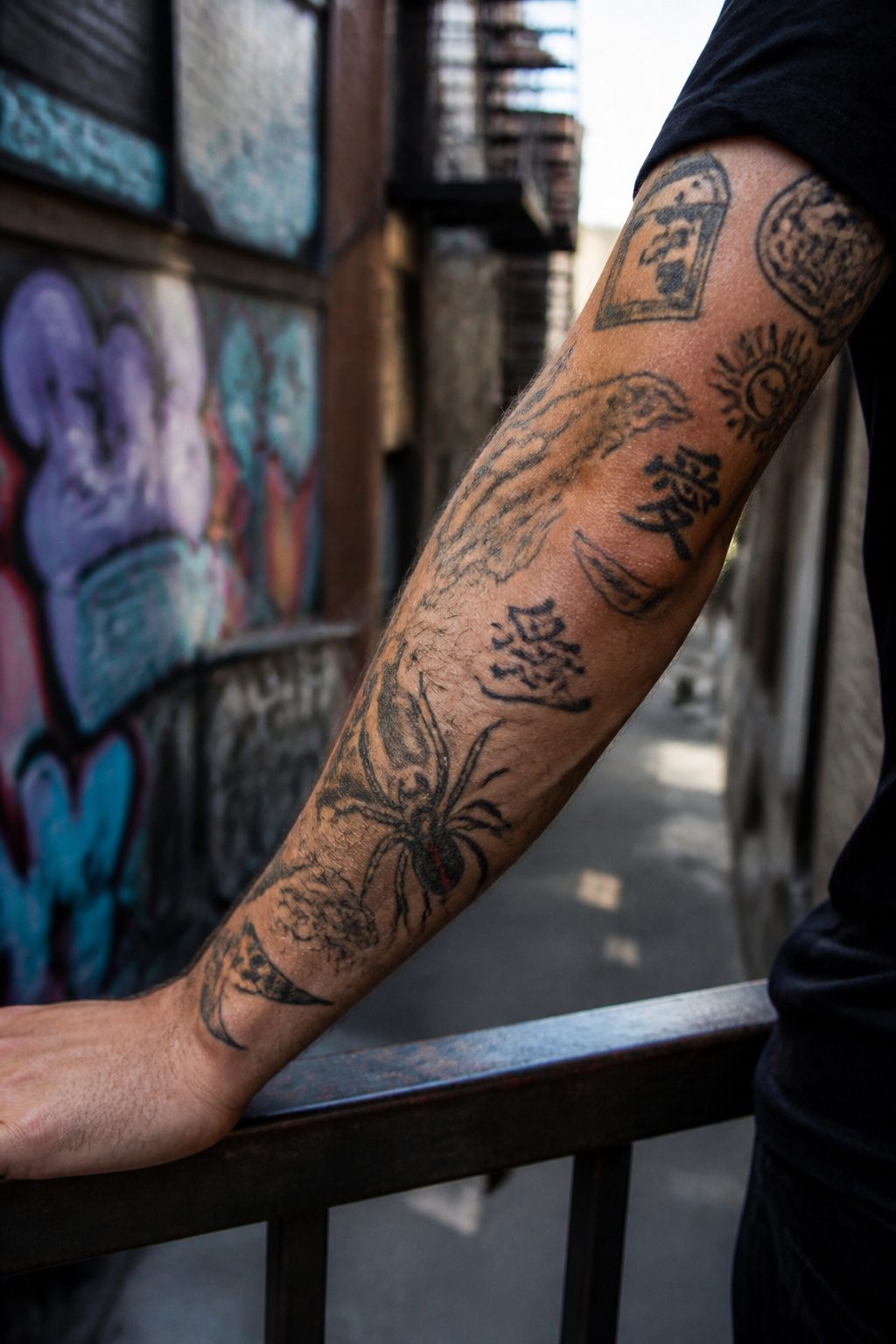
That accumulation style became what we now call patchwork tattoos. The arm still reads as a sleeve, but the cohesion comes from proximity, not theme. A kanji character from a Tokyo trip sits beside a spider picked out at a street shop back home; the link is the skin they share, not any story they tell together. For people who want their body art to record actual life as lived, the patchwork approach fits better than a sleeve designed in one sitting before any of that life happened.
Choosing the Right Artist
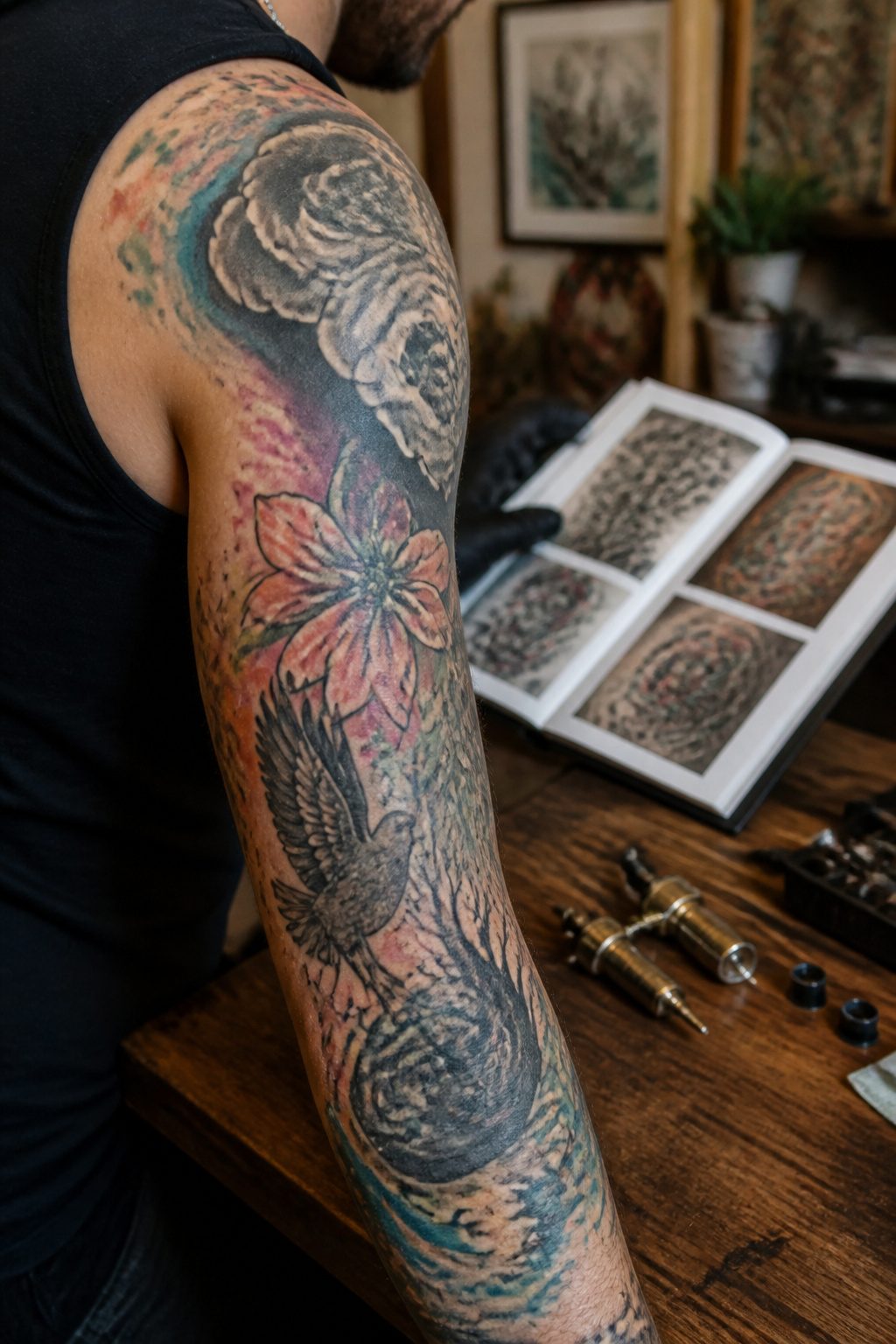
A patchwork sleeve lives or dies by the artist holding the machine. Someone who can move between styles without losing the thread is what separates a collected sleeve from a pile of random tattoos. The sources describe this as fitting pieces like a puzzle, and that only works when the artist plans the negative space as carefully as the ink.
I spent time scrolling portfolios before my first patchwork piece, and the difference showed up fast. Artists who specialize in single-style work, say American traditional or fine-line black and gray, often struggle when asked to let a watercolor flower sit next to a bold geometric piece. The ones who handle patchwork well leave evidence in their portfolios: sleeves that hold together even when one panel is a skull and the next is a botanical study.
The consultation matters more here than with a single large piece. You are not just describing one tattoo; you are describing the chapters you have not written yet. An experienced artist will ask about the gaps, the planned pieces, the ones you only half-know you want. They sketch the layout knowing a future tattoo needs a home. Without that foresight, you end up with beautiful individual pieces that refuse to speak to each other.
Reviews help, but look for the specific complaint or praise. "Great detail" tells you less than "fit my new piece around two existing tattoos without crowding them." The second reviewer actually got what patchwork requires.
Patchwork vs. Traditional Sleeves
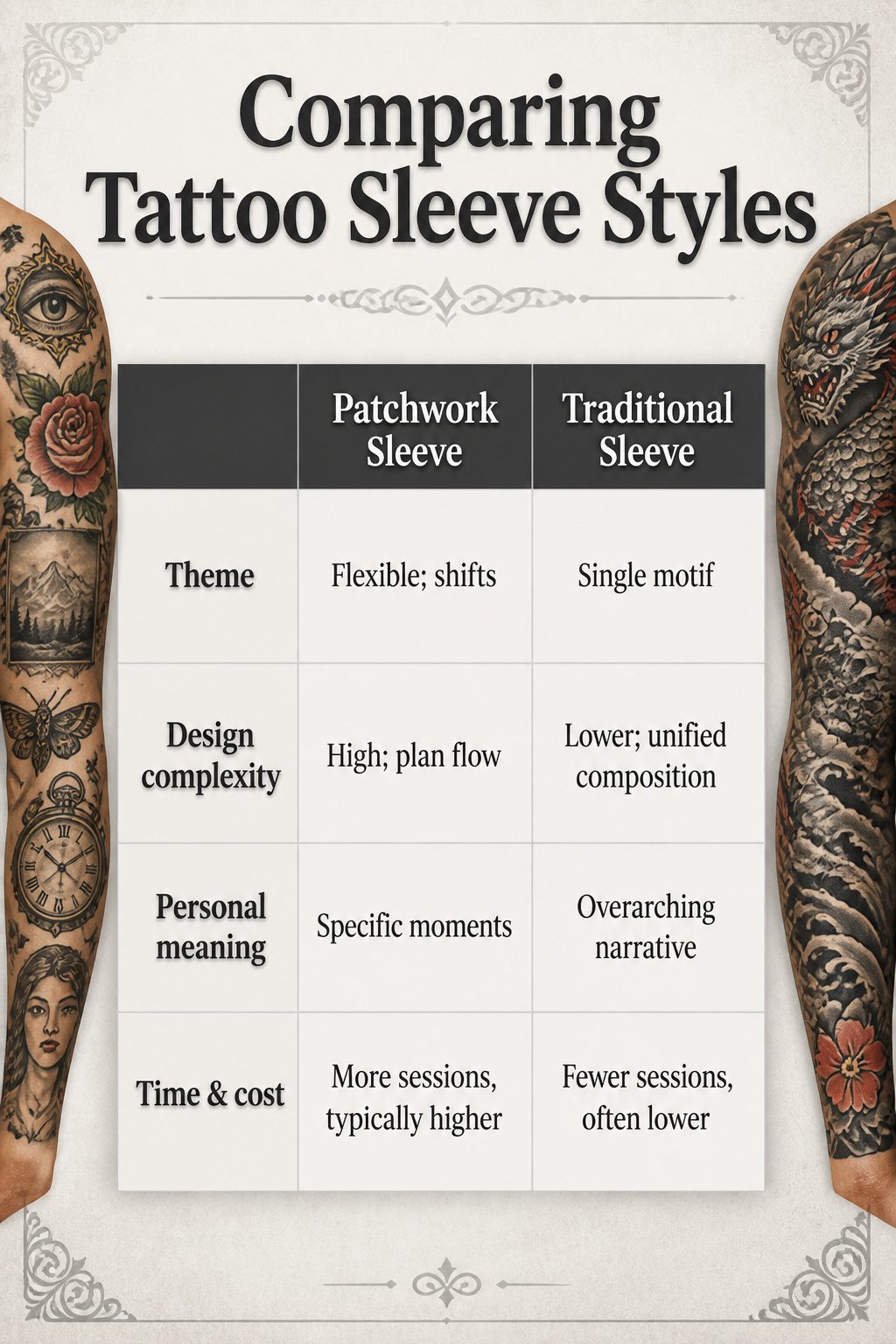
A traditional sleeve locks you into one theme from the start, while patchwork builds its story piece by piece. Japanese irezumi and Polynesian traditions shaped early sleeves as unified cultural narratives, but the 1990s flash tattoo movement cracked that open. Collectors began gathering standalone pieces from different artists and experiences, letting the arm become a record rather than a single statement.
The tradeoffs run deeper than looks. A patchwork sleeve demands careful placement so individual tattoos knit together instead of looking disjointed. Without that planning, the result reads as scattered rather than collected. Time and money shift too: dozens of smaller appointments add up against one focused sleeve project.
| Patchwork Sleeve | Traditional Sleeve | |
|---|---|---|
| Theme | Flexible; shifts with each piece | Single motif (dragon, floral, etc.) |
| Design complexity | High; must plan spacing and flow | Lower; unified composition |
| Personal meaning | Each piece marks a specific moment | One overarching narrative |
| Time & cost | More sessions, typically higher total | Fewer sessions, often lower total |
For someone who already knows they want a dragon winding from shoulder to wrist, traditional wins. For the rest of us, patchwork keeps the door open.
Frequently Asked Questions
What are patchwork tattoos?
Patchwork tattoos build a sleeve from individual designs rather than a single unified theme planned from the start. Each piece stands alone while the collection eventually reads as one canvas, like a quilt of varied textures, different artists’ hands, and years between sessions. The style grew out of 1990s flash tattoo culture and appeals to people who want room for course correction as their tastes and lives change.
What are some examples of patchwork tattoos?
Common examples include small flowers, animals, or symbols placed closely together to create a larger overall design. A sleeve might feature mystic-themed tattoos collected from different countries, or mix traditional Americana with fine-line botanicals, blackletter text with watercolor washes, or neo-traditional pieces beside blackwork. Geometric patterns, floral designs with vines that weave between pieces, and animal motifs all work well because they can stand alone while contributing to the whole.
What are the pros and cons of patchwork tattoos?
Pros include personal significance built piece by piece, freedom to mix styles and themes, and a flexible timeline with no single big commitment. Cons include higher total design hours across dozens of sessions, risk of visual clutter without careful planning, and greater need for an artist who sees the whole arm rather than just the day’s stencil. Sessions typically cost more in total than a planned sleeve, and placement choices compound over time.